Last Updated on November 23, 2026 by unidus
A brand palette reaches an acoustic boards in one of four ways, and the route decides how much sound that board still absorbs. Dyeing the fibre, wrapping it in fabric, printing on the face, and coating it after manufacture each behave differently, which makes colour a specification question rather than a finishing one.
Key Takeaways
- The colour method decides the acoustic result. Dyed-through fibre leaves absorption untouched; a coating applied later can close it.
- Digital printing reproduces a palette most closely, and it is the only route for logos and artwork.
- Saturated colours read softer on textured fibre, so shades need sign-off against a physical sample under site lighting.
- Reception walls, meeting rooms, cafeterias and lift lobbies return the most brand visibility per square metre.
- An absorption figure means little without the mounting depth it was tested at.
What an Acoustic Board Does in a Branded Interior
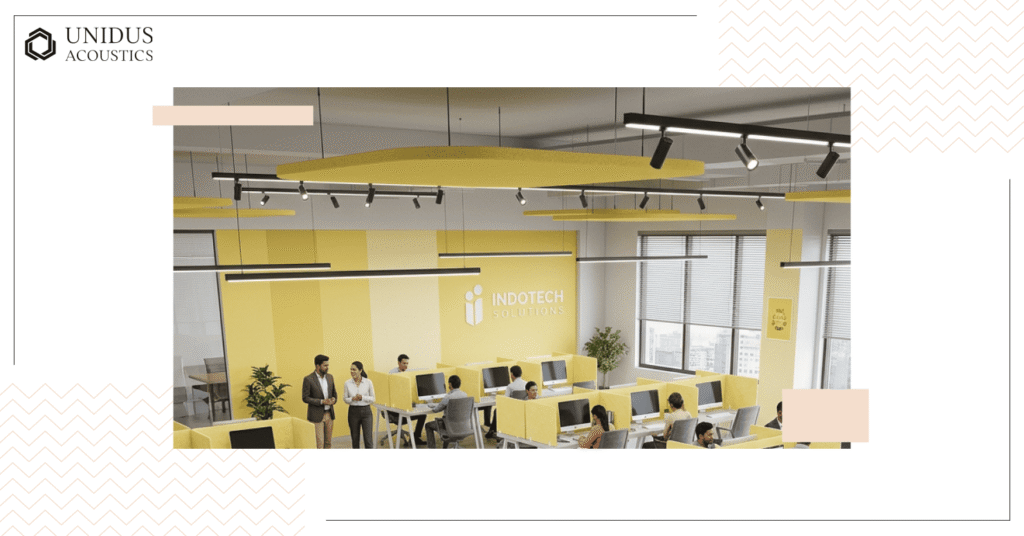
An acoustic board is a porous panel, usually built from polyester fibre, mineral fibre, timber or wood wool, that converts sound energy into heat inside its own thickness instead of reflecting it back into the room.
Absorption happens in the body of the board. Colour sits on its face. Sound has to pass that face to reach the material doing the work, so anything closing it reduces what gets absorbed.
Boards are a category rather than one product, and the build-ups sit in the architect’s guide to acoustic boards. A 9mm polyester fibre board takes dye through its full section. A veneered timber one carries colour in the top fraction of a millimetre, which is why its finish matters as much as its rated absorption.
The 4 Ways Colour Gets Onto an Acoustic Board
Each one is a manufacturing decision taken at a different point in the process, which is why the choice has to be settled before the boards are made.
1. Dyeing the Fibre
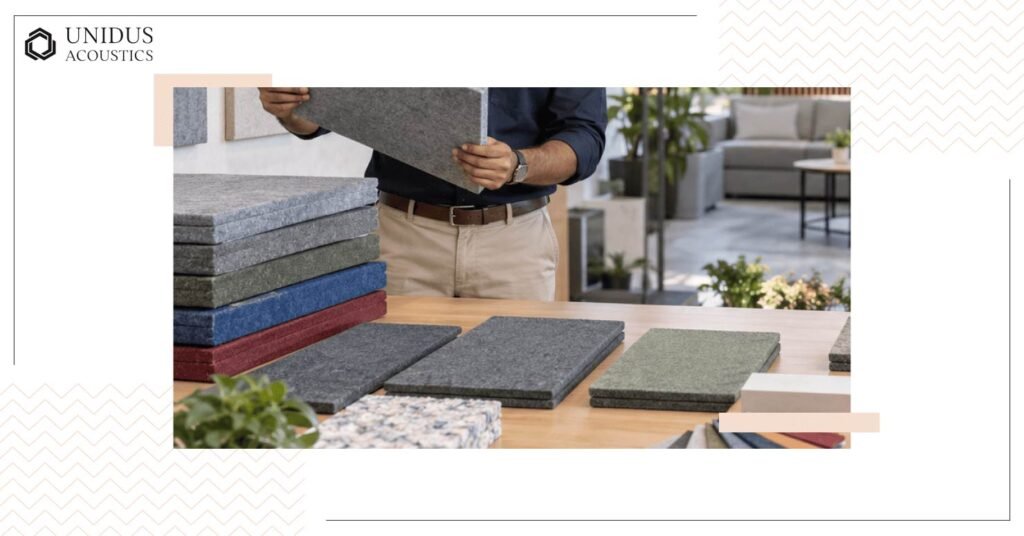
Polyester fibre boards can be produced from pre-dyed fibre, so colour runs through the full thickness. Cut the board and the edge matches the face. Nothing sits on the surface, absorption is unaffected, and the colour cannot scuff off in a busy corridor.
The constraint is the palette. Each shade is a production run of fibre rather than a tint mixed to order, so the range is set rather than open. Panels made from recycled polyester fibre work the same way.
2. Wrapping It in Fabric
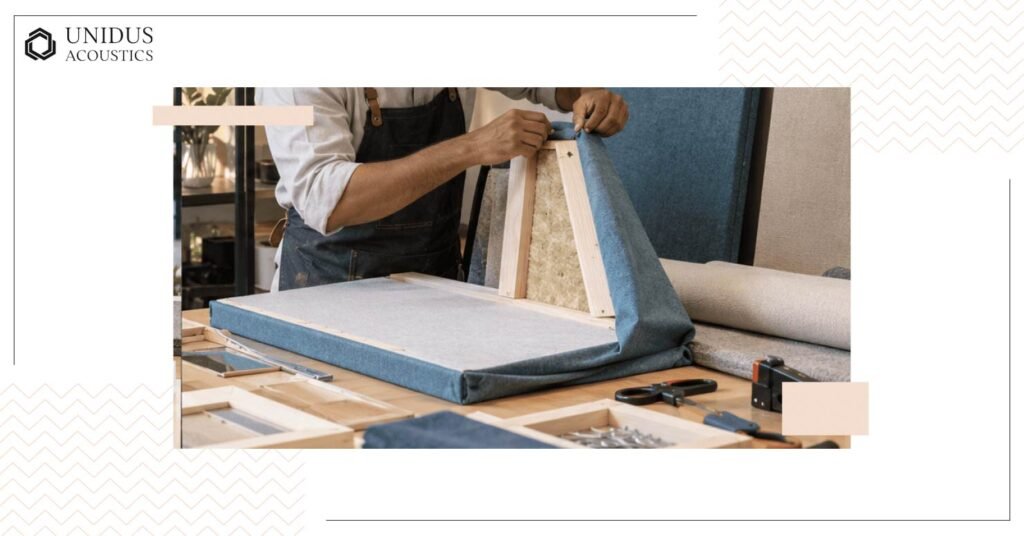
A fibre or mineral core gets wrapped in an acoustically transparent fabric. The fabric carries the colour, the core does the absorbing, and the palette widens because fabric ranges are bigger than fibre ranges.
Two things need checking. The cloth has to be rated acoustically transparent, which not every upholstery fabric is, and a dense weave pulls down absorption at higher frequencies. A pale fabric near a cafeteria counter also marks faster than a fibre face.
3. Printing on the Face
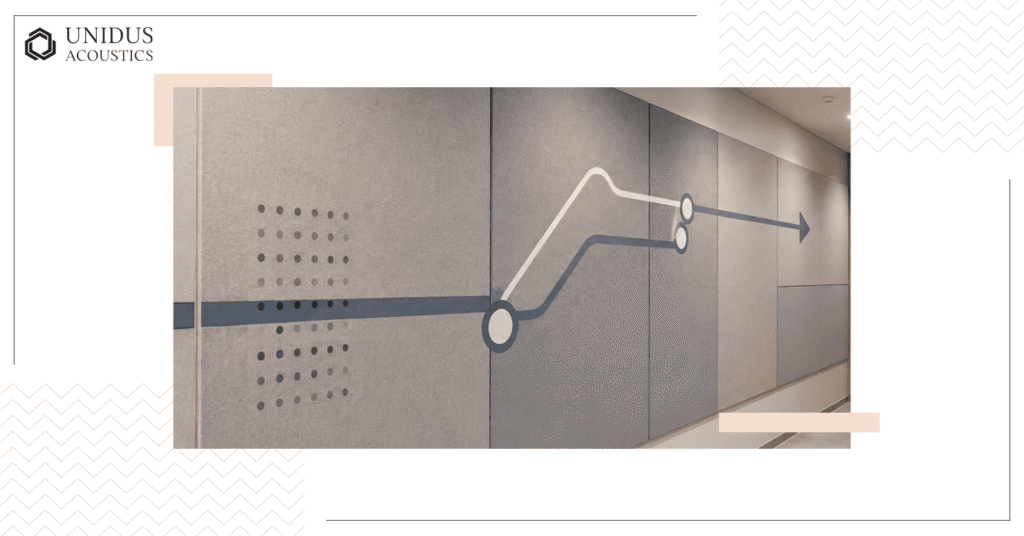
Digital printing puts artwork straight onto a fibre or fabric face. It reproduces a palette more closely than anything else, because the ink is mixed to the file rather than picked from a range, and it is the only route for a logo or a photographic wall. The article on printed panels and brand identity covers the design side.
The acoustic variable is ink coverage. Type, line work and open patterns sit lightly on the surface. A wall flooded edge to edge in dense saturated colour lays down enough ink to start closing the pores underneath it.
4. Coating After Manufacture
Sometimes the colour lands after the acoustic boards exist, usually because a palette was confirmed late in the programme or a shade did not read as expected under the installed lighting. Spray coating is then the only route left.
Acoustically it is the weakest of the four. Paint bridges the pores and perforations sound needs to travel through, and the loss grows with each coat. Perforated timber is the most exposed, since a film that partly closes a 4mm hole changes the panel more than one on an open fibre face. Absorption is rated under ISO 11654, and a coated board is effectively a new product against that rating.
Comparing the 4 Colour Methods
| Method | Palette | Effect on Absorption | Suits | Check |
|---|---|---|---|---|
| Dyed-through fibre | Set range | None | High-traffic walls, large areas | Whether the brand colour exists in the range |
| Fabric wrapping | Wide, adds texture | Slight at high frequencies | Boardrooms, reception, quiet rooms | Transparency rating and cleanability |
| Digital printing | Closest match | Rises with ink density | Logos, graphics, feature walls | Ink coverage across the design |
| Coating after manufacture | Any colour | Largest reduction | Late palette changes | Breathability and coat count |
Where Branded Acoustic Treatment Earns Its Place
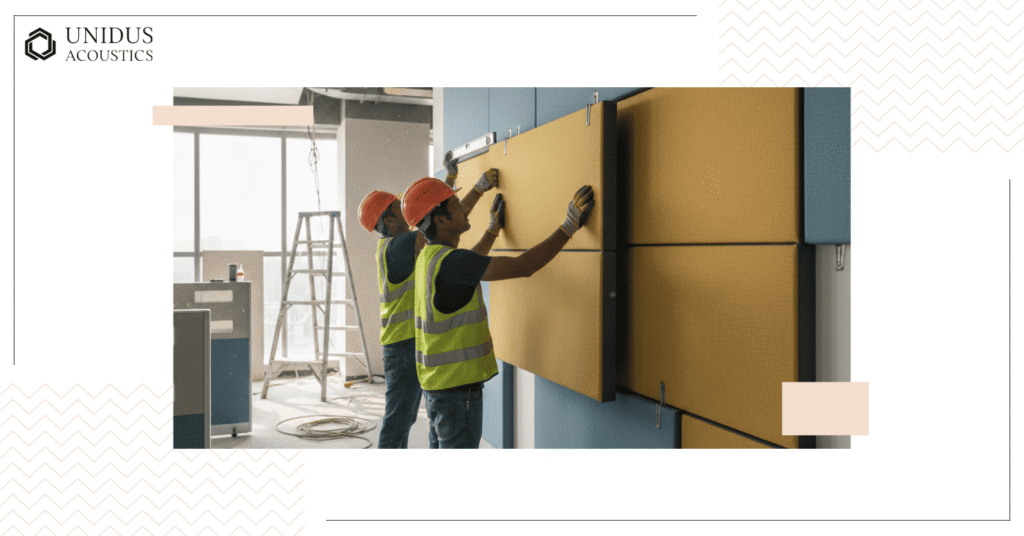
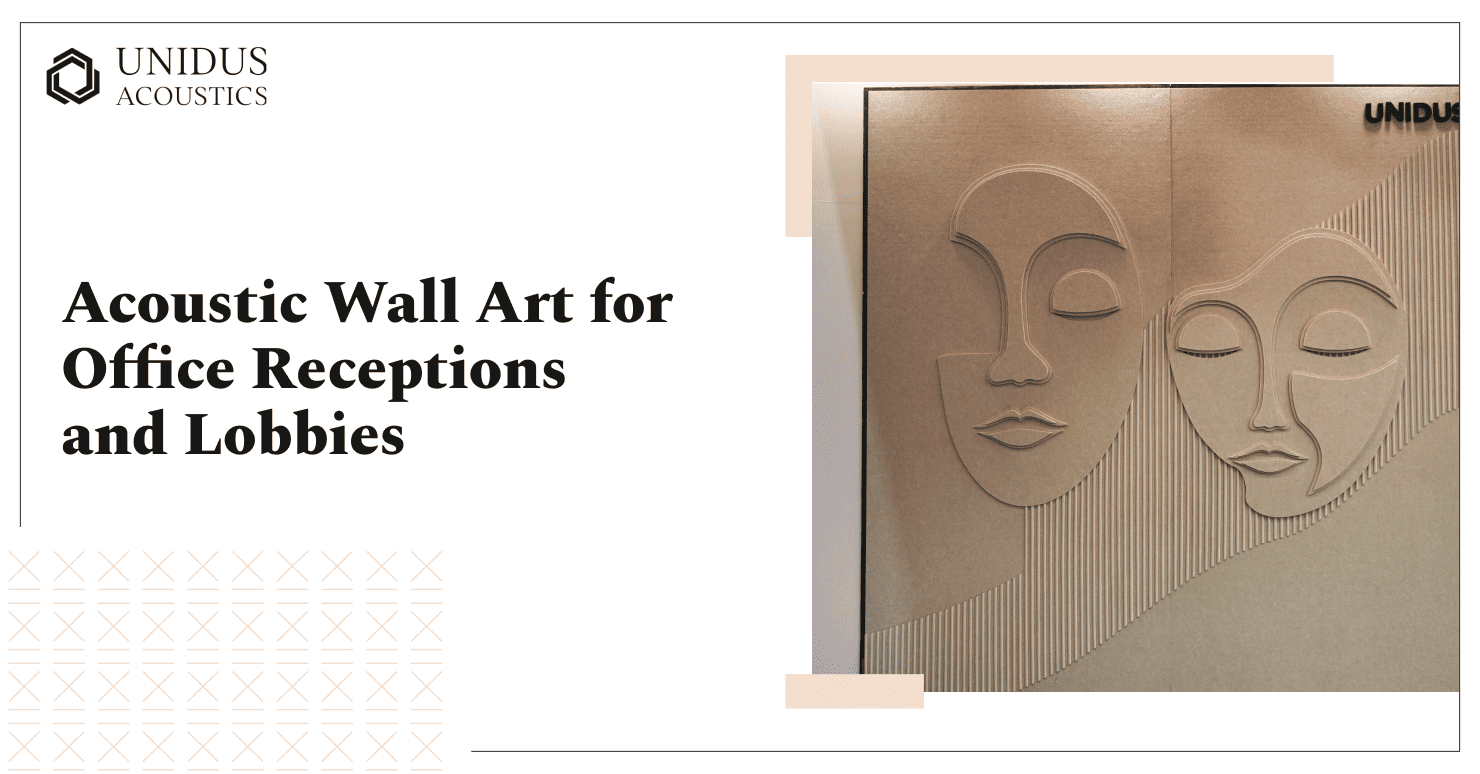
The walls that deserve brand colour tend to be the ones where acoustics already needed attention. Reception and lobby walls carry the most visibility and are usually hard enough to need absorption anyway, which is why acoustic wall art in receptions gets specified there. Meeting rooms do the most work per square metre, cutting reverberation while putting the palette in frame on every call that leaves the building.
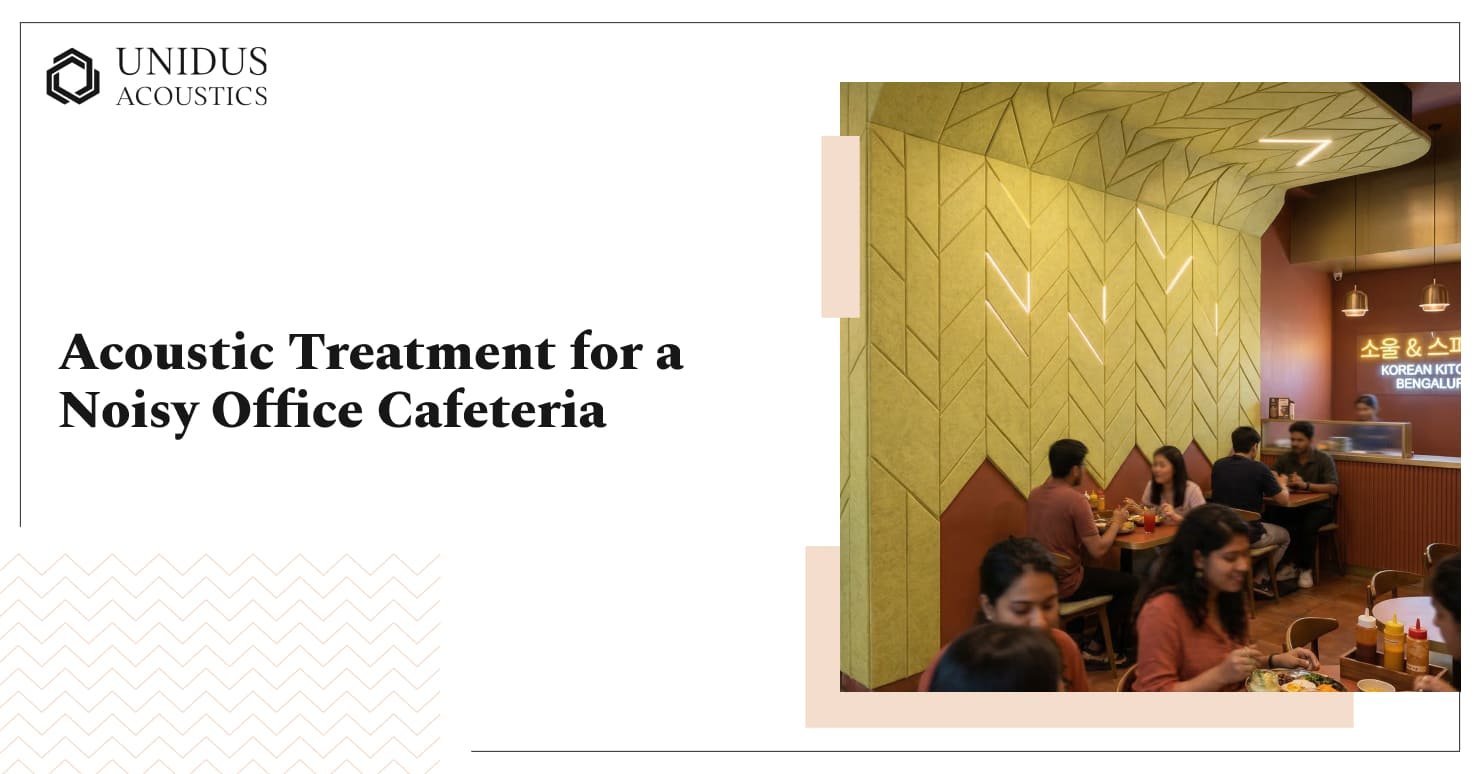
Cafeterias are the loudest rooms in most offices and the most forgiving of strong colour, though the quantities involved in treating a noisy office cafeteria are larger than most people expect. Corridors and lift lobbies get overlooked: long, narrow, hard and busy, so modest panel areas work hard for their footprint. Deep shades hold up well there, though it helps to know how dark-toned panels perform first.
What a Brand Palette Can and Cannot Reproduce
Texture scatters light, so a saturated colour on fibre or fabric reads a little softer than the same value on a lacquered surface or a monitor. That is the material rather than a matching failure, and a physical sample settles it.
Metallics, fluorescents and anything depending on gloss are the harder asks. A brushed-gold accent does not exist as a dyed fibre, and printing it gives a flat approximation. Where a palette leans on those, hold them for signage and joinery and let the acoustic surfaces carry the primaries.
Batch consistency is the last thing to plan around. Fibre shades run in batches, so a top-up ordered months later can sit marginally off the original. Ordering the full area at once with a small attic stock avoids it, and the wider limits on size, shade and perforation sit in this note on what can and cannot be customised.
How Unidus Acoustics Approaches Brand Colour Work
We treat colour as part of the specification, so the shade conversation runs alongside thickness, size, perforation and edge detail rather than trailing them. The range covers 84+ shades in five hue families, and panels are made to the drawing, so the shade is set by the project rather than a stock list.
Where a brand colour sits outside the range, prototyping and sampling happen before production, so sign-off is against a physical board under the site’s own lighting. Products are tested through SGS, Intertek and TÜV Rheinland at accredited laboratories. Production sits in our own 1 lakh sq ft plant, and that plant, with 40 years of expertise behind it, is what makes custom colour work something we can commit to on a dated programme.
Brand colour and acoustic performance stop competing once the colour method is chosen at specification stage rather than at handover. Dyed fibre, fabric, print and coating each sit at a different point on that trade-off.
If you want shades tested against your own site lighting before anything is committed, Unidus Acoustics can walk you through the range and send samples across. Contact us now.
Frequently Asked Questions
1. Can acoustic boards be matched to an exact brand colour reference?
Printing comes closest, because the ink is mixed to the file. Dyed fibre and fabric are selected from ranges, so the match is a near neighbour rather than an exact value.
2. Does printing a logo reduce a board’s performance?
Lightly, and only where ink coverage is heavy. Type, line work and open patterns have minimal effect. A wall flooded in dense saturated colour loses more, because the ink film closes the pores it sits on.
3. Which colour method lasts longest in a high-traffic area?
Dyed-through fibre. Colour runs through the full section, so knocks do not expose a different shade underneath. Fabric faces look better for longer where nobody brushes past them.
4. Can existing panels be recoloured on site?
They can be spray coated, but it costs absorption, and the loss is hard to predict without testing. Where performance was specified and signed off, replacing the affected panels is safer.
5. Do dark colours absorb more sound than light ones?
No. Colour has no bearing on absorption. What matters is the material, its thickness, the mounting depth and how open the face is. Two panels of identical construction perform identically whatever their shade.
6. How early should brand colours be fixed on a fit-out programme?
Before the order is raised. Shades, sizes, perforation patterns and edge details are production inputs, so a palette change after cutting starts affects the panels already made and the delivery date with them.