When architects specify custom acoustic wall panels for commercial projects in India, the question of what can be changed comes up early. Unidus Acoustics works through these conversations regularly, and the pattern is consistent: the ask is reasonable, but the assumptions behind it aren’t always accurate. Not all parts of an acoustic wall panel are equally flexible. Some changes are purely aesthetic and carry no performance consequence; others, particularly around core thickness and material composition, directly affect acoustic and fire safety performance. This article maps out which is which.
Key Takeaways
- In custom acoustic wall panels for commercial projects in India, colour, surface finish, panel shape, and size are flexible without any performance trade-off.
- Core thickness is not a visual detail. It directly determines the panel’s NRC value, so requesting a thinner panel to reduce visual bulk lowers acoustic performance.
- Fire rating is a property of the core material composition, not the surface or fabric. It cannot be maintained if the core is swapped for a cost alternative.
- Mounting configuration, edge profiles, and panel layout can all be varied to suit the design brief while keeping performance specs intact.
- Specifying acoustic panels starts with the performance requirement, then the aesthetic. Reversing that order often creates problems that are expensive to correct mid-project.
What You Can Customise in Acoustic Wall Panels
Most of what architects care about visually is customisable. These are the parameters you can adjust without touching the panel’s acoustic or fire safety performance.
1. Colour and Surface Finish

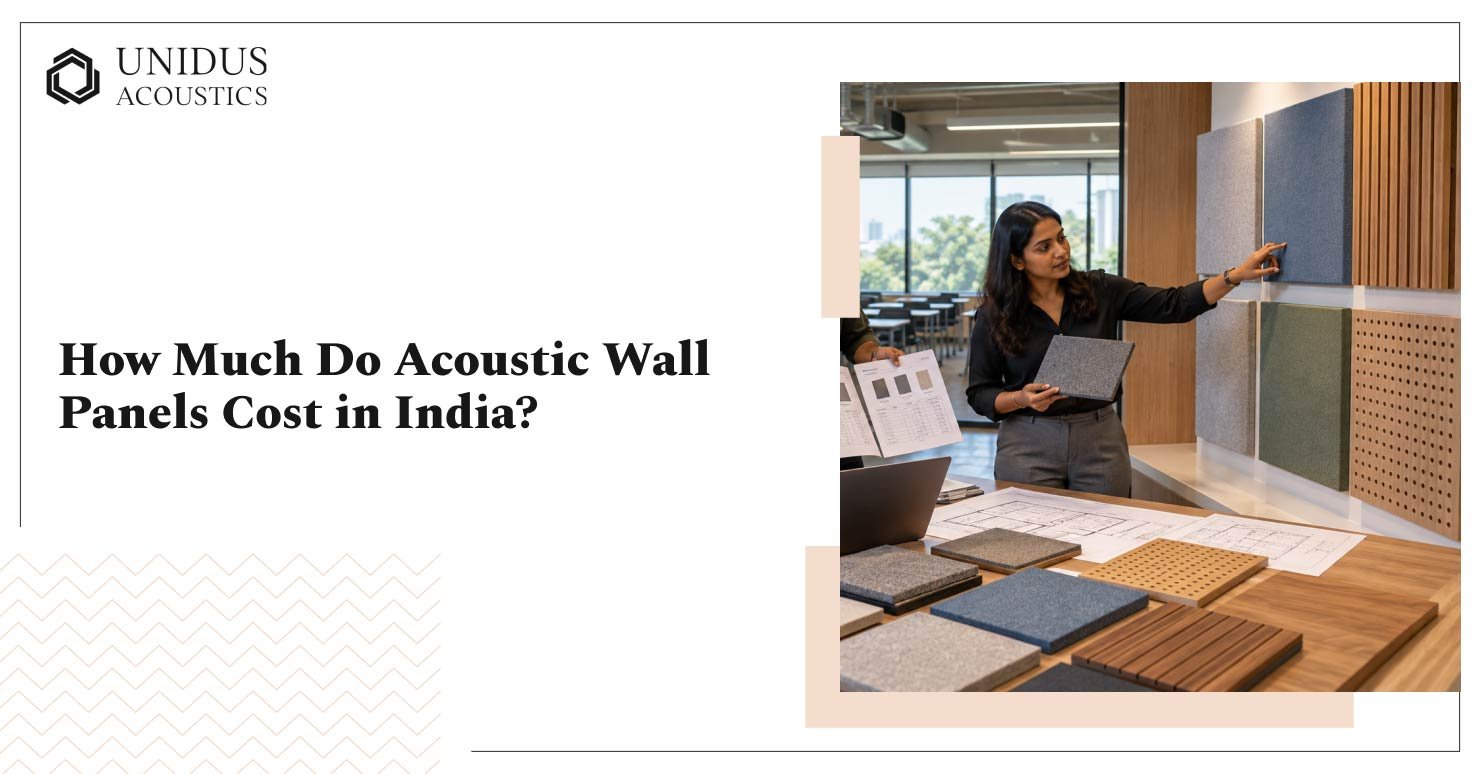
The outer surface of an acoustic panel, whether fabric, felt, or painted finish, is independent of the acoustic core. Fabric-wrapped acoustic panels from Unidus Acoustics come in an extensive range of shades and colourways, from neutrals and architectural tones to bolder options for spaces where the panel is a design element rather than a background one. The fabric wrapping process keeps the core and its performance properties intact, and the same logic applies to acoustic felts and painted polyester fibre boards: the colour decision doesn’t constrain the NRC or fire rating.
One thing worth understanding at the brief stage is how the finish on an acoustic board relates to its NRC rating, specifically, what the finish can and cannot change about performance.
2. Panel Shape and Profile
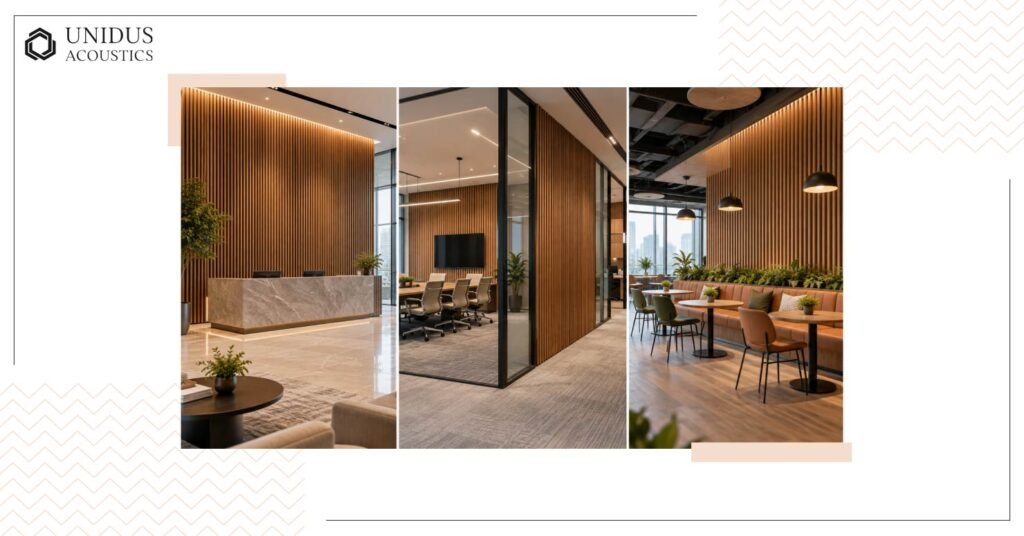
Acoustic panels aren’t limited to rectangles. Hexagons, squares, angled shapes, and irregular geometric cuts are all achievable in polyester fibre board and fabric wrap formats. Shape is determined by how the core is cut, so it doesn’t affect the NRC value per unit area. What changes with unusual shapes is the total coverage area on a wall, and that’s worth factoring into the acoustic design budget.
Fluted acoustic panels are a case where the surface profile carries some acoustic logic: the fluted grooves contribute to sound diffusion rather than absorption. That’s a meaningful distinction in spaces where you want to preserve some liveliness rather than deadening the room.
3. Panel Size and Dimensions
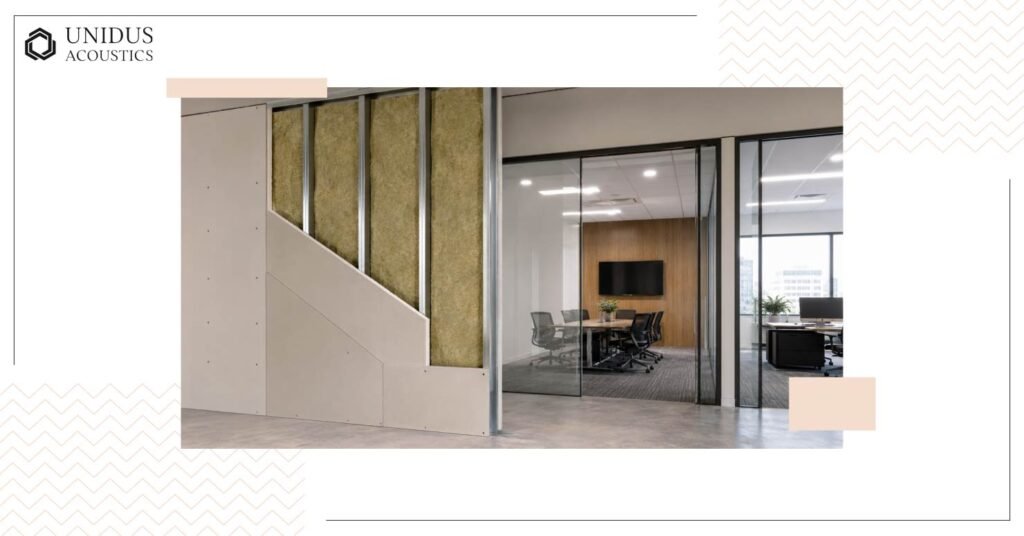
Standard acoustic panels come in fixed module sizes, but custom dimensions for a specific wall run or ceiling height are achievable within manufacturing limits. Cutting panels to a non-standard width or height to avoid awkward joins or to match skirting and cornice heights is standard practice. The constraint is that thickness must remain constant across both standard and custom-cut panels; a custom-sized panel is not a thinner one.
4. Mounting Configuration
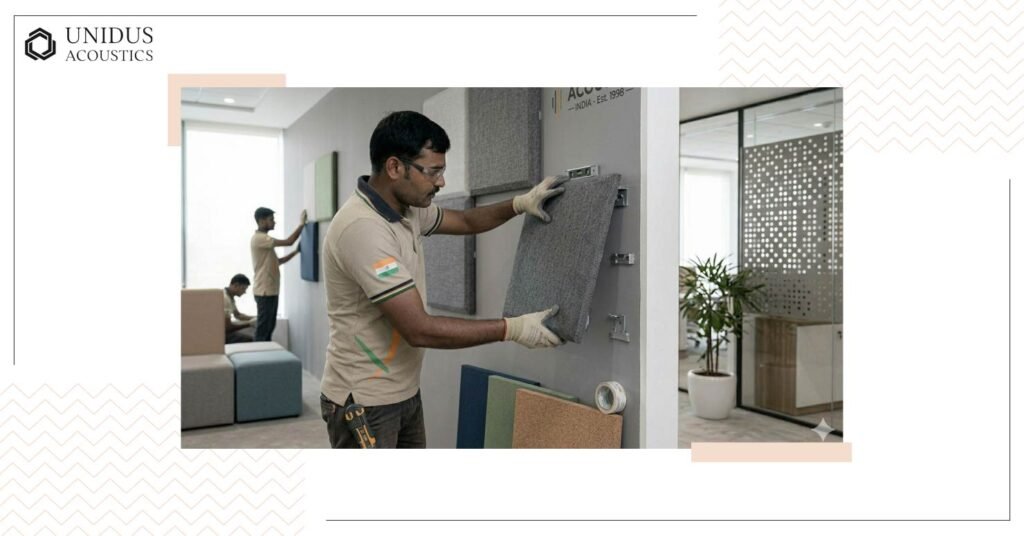
The same acoustic panel core can be specified for different mounting applications. Acoustic baffles and ceiling clouds are ceiling-hung configurations of essentially the same core material used in wall panels. Changing the mounting approach doesn’t affect the panel’s intrinsic NRC value, though it does affect how much of the sound path the panel is treating. The acoustic design should account for where panels are placed, not only which panels are used.
What You Cannot Customise Without Affecting Performance
This is where well-intentioned specification decisions most often create problems. The parameters below aren’t aesthetic choices; changing them changes the performance of the panel itself, and in some cases, its safety classification.
1. Core Thickness and NRC Performance
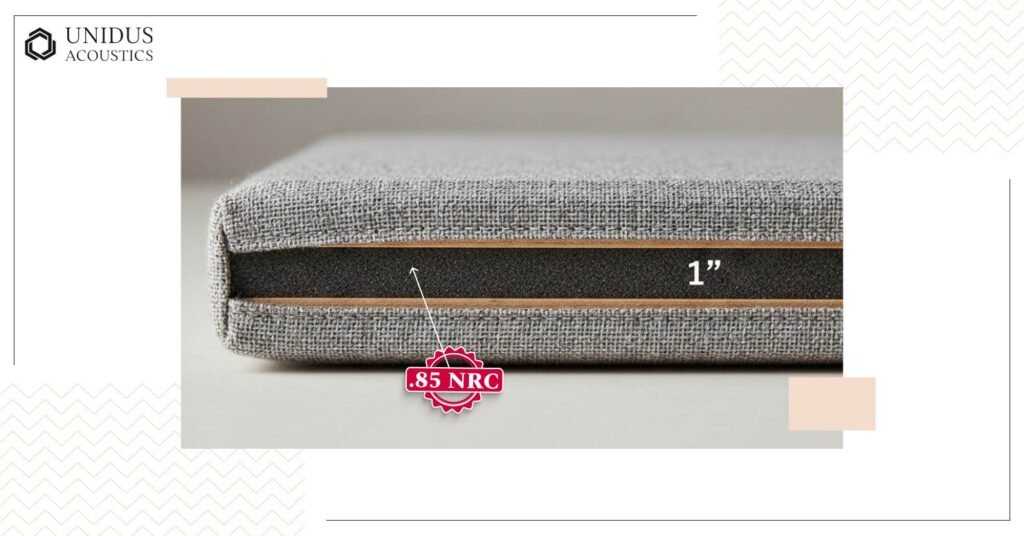
NRC (Noise Reduction Coefficient) is the primary measure of acoustic panel performance, and it is directly determined by the core material’s thickness and density. A 50 mm polyester fibre core at a given density has an NRC value that reflects those two properties, tested under standardised laboratory conditions. Request a 25 mm panel instead, citing space constraints or a preference for a flatter wall profile, and you’re not getting the same panel in a slimmer form. You’re getting a different panel with a measurably lower NRC.
This trade-off comes up frequently in high-density office fit-outs and hospitality projects where wall depth is limited. The discussion should happen before the acoustic design is signed off, not after the panels are on the wall and the space still sounds wrong. When to invest in acoustic consultancy covers what the specification process should include at the design stage. It’s also worth noting that how long an acoustic panel maintains its performance is directly tied to whether it was correctly specified at the outset.
2. Fire Rating and Core Material
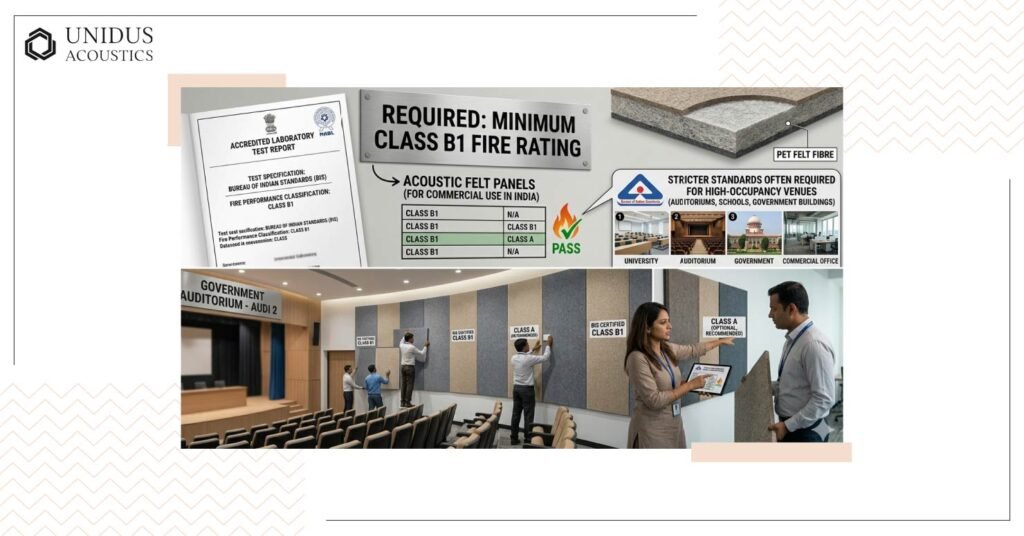
The Class B1 fire rating on certified acoustic panels is a property of the core material itself, not of the fabric or finish applied over it. Swap the core for a cheaper alternative to reduce panel cost, and the fire rating on the original specification no longer applies to what’s installed.
In commercial projects across India, the fire safety classification of wall and ceiling materials is scrutinised at project handover, particularly across corporate offices, government-occupied buildings, healthcare facilities, and educational campuses. Substituting core materials mid-specification without reconfirming the fire rating is a risk that sits with the project team, not the panel manufacturer.
NRC Values Across Different Material Types
This is a subtler point but worth noting. Different acoustic panel materials have different NRC characteristics at the same thickness: wood wool, polyester fibre board, fabric wrap over a glass wool core, and mineral fibre each perform differently even at the same panel dimension. A material substitution is never acoustically neutral.
How to Brief a Supplier for Custom Acoustic Panels
When briefing a supplier for custom acoustic wall panels in India, lead with the performance requirement: the NRC target, the fire rating required, and the available wall depth. Everything after that, such as colour, shape, size, and edge profile, is a design decision you can make freely within that performance envelope.
This order matters because reversing it (choosing the visual first and hoping the panel can be made to meet an acoustic target) often results in a specification that either accepts a performance compromise or needs a redesign. Choosing the right acoustic board manufacturer covers the right questions to ask before committing, specifically around what is fixed versus flexible in a manufacturer’s product range.
Conclusion
There’s a clean way to think about what’s customisable in an acoustic wall panel: anything that changes how it looks is within the design brief; anything that changes how it works is a performance decision. Colour, surface texture, shape, size, and mounting approach can all be varied freely. Core thickness, material composition, and fire rating sit on the other side of that line. Change any of those, and you’re specifying a different product, whether or not it looks like the original on the wall.
For commercial projects in India, where acoustic performance is designed to a target and fire safety documentation is part of handover, getting this distinction right at the brief stage is considerably less expensive than discovering it mid-project.
Unidus Acoustics works with architects and interior designers through the specification process for commercial acoustic projects across India. For guidance on panel options, NRC targets for specific space types, or sample review, contact our team.
Frequently Asked Questions
1. Can acoustic panels be made in custom colours without affecting their performance?
Yes. The outer fabric or finish of an acoustic panel is independent of the acoustic core. Changing the colour, texture, or fabric type has no effect on the panel’s NRC value or fire rating, provided the core material and thickness remain unchanged.
2. Does reducing panel thickness to save wall space lower acoustic performance?
It does, measurably. Core thickness is one of the two primary determinants of NRC, the other being core density. A panel specified at 25 mm will have a lower NRC than the same core material at 50 mm. If wall depth is a constraint in the design, the acoustic target for the space should be revisited alongside the thickness decision, not after panels are installed.
3. Can the fire rating of an acoustic panel be changed by the supplier?
No. A fire rating is a result of testing the specific core material composition. If the core is changed, the fire classification no longer applies without fresh independent testing. A supplier who offers a “certified” panel at a reduced price through material substitution should be asked to provide the test certificate for the actual substituted core, not the original one.
4. Are custom-shaped acoustic panels less effective than rectangular ones?
Shape doesn’t directly reduce acoustic performance, but it does affect total coverage. A non-rectangular panel covers less wall area per panel at a given face size. Since treatment effectiveness is partly a function of total treated surface area, non-rectangular layouts typically require more panels to achieve the same acoustic outcome. Factor this into the acoustic design at the brief stage.