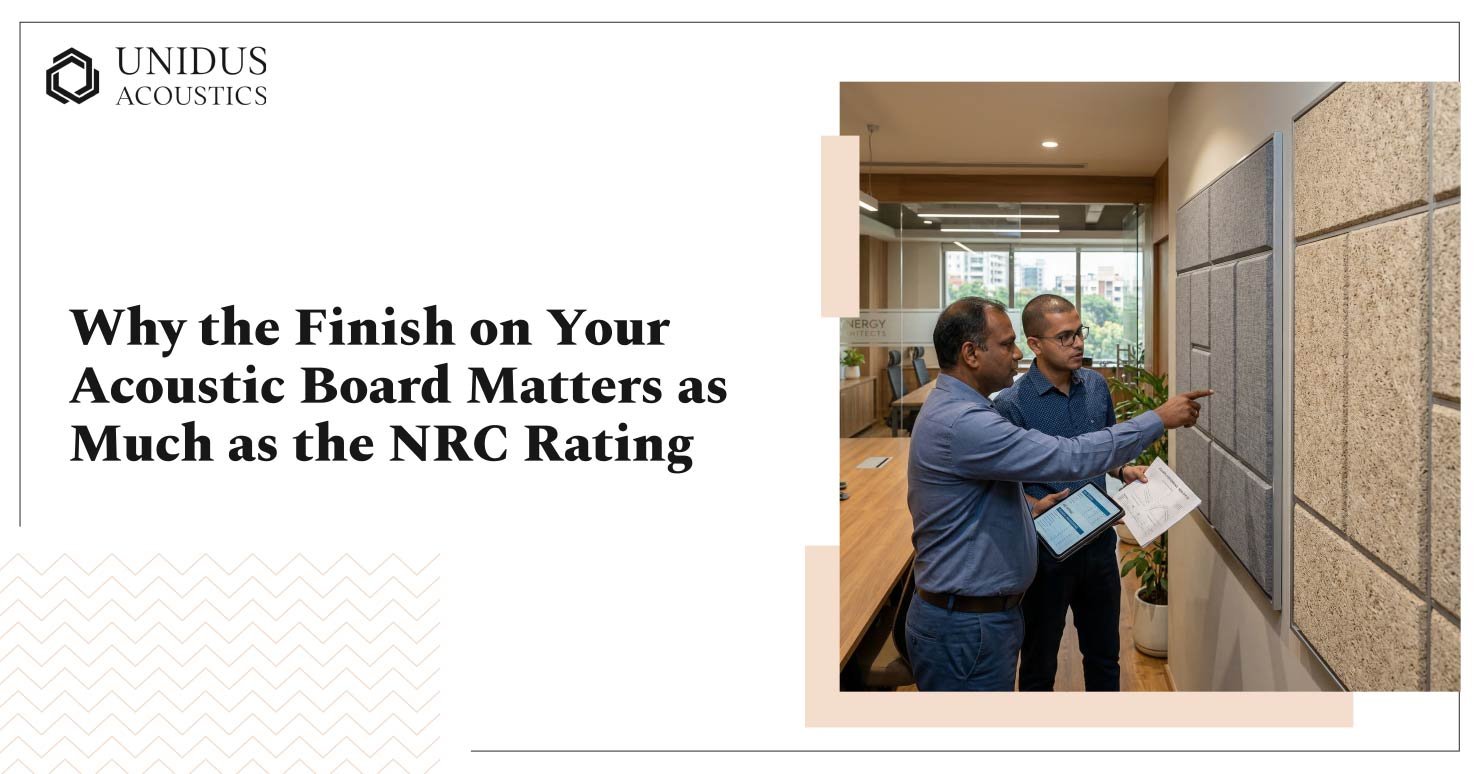
The finish on an acoustic board matters as much as its NRC rating because a finish that blocks the board’s surface also blocks the sound from reaching the absorptive material behind it. Painted, fabric-wrapped, and perforated finishes each affect performance differently.
This is worth understanding at the specification stage, not after installation.
Key Takeaways
- A finish that blocks the face of an acoustic board also blocks the sound pathway to the absorptive material behind it, which can drop NRC even when the spec sheet still shows the original rating.
- Painted surfaces are the most common way performance gets compromised on-site. A film-forming coat of paint over the board can meaningfully reduce NRC.
- Fabric wrapping preserves acoustic performance reliably, but only if the fabric itself is open-weave. Tightly woven or coated fabric reduces sound transmission to the core.
- Perforated wood, metal, and gypsum facings depend on the perforation ratio, the percentage of open area, to determine how much sound reaches the absorptive layer.
- The finish also affects durability. High-traffic zones need different surface specifications than boardroom walls, and fabric panels need different maintenance than metal-faced ones.
- Confirming NRC, fabric transparency, perforation ratio, and use-context (humidity, cleaning, footfall) before locking a spec prevents rework later.
How the Surface Finish Affects Acoustic Board Performance
Sound absorption works because energy passes into a material and gets converted to heat through friction inside its fibrous or cellular structure. The surface finish controls how much sound gets that chance.
A finish that blocks the face of the material also blocks the pathway. This is why the same acoustic board can deliver very different NRC values depending on what covers it.
Painted Surfaces

Spraying or rolling paint over an acoustic board is one of the most common ways performance gets compromised on-site. Even a single coat of latex paint, if it films over the surface rather than penetrating it, can drop the NRC of a fabric or fibre board meaningfully. The panel looks the same. The spec sheet still shows the original NRC. But the space doesn’t behave the way the acoustic model predicted.
If a painted finish is required, perforated facings or paints specifically formulated to remain acoustically transparent are the right route. This is worth flagging to clients early, particularly when repainting is planned during fit-outs or refurbishments. Fabric wrapping handles the same challenge differently, and generally more reliably.
Fabric Wrapping

Fabric-wrapped acoustic boards remain one of the most reliable ways to maintain NRC performance while offering genuine design flexibility. The key variable is the fabric itself: an open-weave textile allows sound to pass through to the absorptive core, while a tightly woven or coated fabric reduces that transmission considerably.
This means the fabric spec matters, not only the colour or texture. When sourcing custom colours for a project, confirming the acoustic board transparency of the fabric before sign-off is a step that occasionally gets missed under deadline pressure.
For projects where the brief calls for a harder material, perforated facings introduce a different set of variables worth understanding.
Perforated Facings

Wood, metal, and gypsum perforated acoustic panels work differently. They rely on the perforation ratio (the percentage of open area) to determine how much sound reaches the absorptive layer behind them. A higher perforation ratio generally gives better mid-to-high frequency absorption; lower ratios shift the performance curve or reduce it.
This becomes a genuine design variable. A wood perforated panel with a 15% open area will look and behave very differently from one at 25%. When the brief calls for a warm material aesthetic alongside acoustic performance, understanding this relationship helps make better decisions at the concept stage rather than the remedial one. The same logic applies to acoustic wall panels with perforated wood or metal facings, where the perforation ratio is a specification decision, not a visual one.
Acoustic Board Finishes at a Glance
| Finish Type | Effect on Acoustic Performance | Best Suited For |
|---|---|---|
| Painted surfaces | Can meaningfully drop NRC if paint films over the surface instead of penetrating it. | Only with perforated facings or acoustically transparent paint; flag early if repainting is planned. |
| Fabric wrapping | Preserves NRC well if the fabric is open-weave; tightly woven or coated fabric reduces transmission. | Projects needing custom colour and genuine design flexibility. |
| Perforated facings (wood, metal, gypsum) | Performance depends on the perforation ratio; a higher ratio gives better mid-to-high frequency absorption. | Projects wanting a harder material aesthetic alongside acoustic performance. |
The Finish as a Design Decision, Not an Afterthought
Acoustic boards live on walls and ceilings. They occupy a significant surface area. In a well-designed commercial space, they’re not background elements; they’re part of the material palette.
This is where the finish choice does double duty. It needs to perform acoustically and sit within the spatial concept without looking like something bolted on to fix a problem.
1. Matching Material Palettes

Getting perfectly customised acoustic solutions that integrate with a specific material palette is harder than it should be. Standard catalogues offer a range, but projects often call for something more specific: a particular tone of fabric to complement a joinery detail, a perforation pattern that references a geometry elsewhere in the space, or a printed panel that carries a brand graphic without sacrificing absorption.
This is not an unusual ask. It’s where acoustic specification meets interior design in the most direct way.
2. Durability and Maintenance Considerations
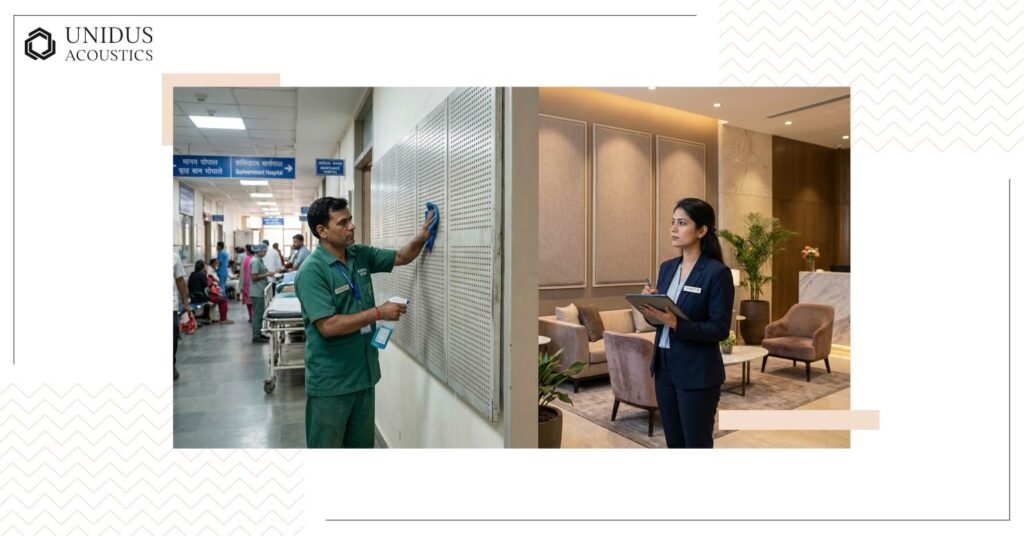
The finish also determines how the panel ages. High-traffic zones need different surface specifications than boardroom walls. A fabric-wrapped panel in a hospital corridor will show wear differently from one in a hotel lobby. Metal-faced panels can be wiped down; fabric panels need more careful maintenance protocols.
Specifying without this lens risks a product that performs well at handover and looks compromised eighteen months later.
Getting the Specification Right
Treat the finish as a technical specification, not a styling choice. That’s the practical takeaway.
When reviewing acoustic board options, confirm these before locking in a specification:
- Does the intended finish maintain the NRC rating shown in the data sheet, or is that figure based on a different surface condition?
- What is the acoustic transparency of the proposed fabric?
- If a perforated facing is involved, what is the perforation ratio, and how does that affect frequency response?
- How does the finish perform given the specific use context: humidity levels, cleaning requirements, and footfall?
These questions don’t add complexity to the process. They prevent rework.
How Unidus Acoustics Approaches This
With 40 years of expertise in acoustic solutions, Unidus Acoustics works across the full range of surface finishes: fabric-wrapped wall panels, perforated wood and metal facings, PET panels, printed acoustic panels, and more. The approach is to specify and manufacture based on both acoustic requirements and design intent, never one at the expense of the other.
U-TONE wall panels, acoustic ceiling systems, and baffle solutions are available with custom finishes. The team provides technical documentation, including NRC ratings and fire certificates for tender submissions, making the specification process as useful to the design workflow as possible.
If you’re specifying acoustic boards for an upcoming project, we’d be glad to partner with you on getting the finish right. Contact us now!
Frequently Asked Questions
1. Can paint reduce the NRC rating of an acoustic board?
Yes. Even a single coat of latex paint can meaningfully drop NRC if it films over the surface instead of penetrating it. The panel looks the same and the spec sheet still shows the original rating, but the room won’t perform the way the acoustic model predicted.
2. What should I check before specifying a fabric-wrapped acoustic board?
Confirm the fabric’s acoustic transparency, not just its colour or texture. An open-weave fabric lets sound reach the absorptive core; a tightly woven or coated fabric reduces that transmission.
3. What is a perforation ratio, and why does it matter?
It’s the percentage of open area on a wood, metal, or gypsum facing. A higher ratio generally gives better mid-to-high frequency absorption, while a lower ratio shifts or reduces the performance curve.
4. Does the finish on an acoustic board affect how it ages?
Yes. High-traffic zones need different surface specifications than boardroom walls. Metal-faced panels can be wiped down, while fabric panels need more careful maintenance protocols.
5. What questions should I ask before locking in an acoustic board finish?
Whether the finish maintains the NRC rating shown in the data sheet, what the fabric’s acoustic transparency is, what the perforation ratio is for perforated facings, and how the finish holds up to the space’s humidity, cleaning, and footfall conditions.