
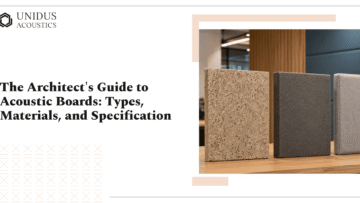
Noise is the most common complaint inside Indian offices, and it rarely comes from outside the building. Speech interference, not machinery, not traffic, is usually the biggest driver of lost focus in an open-plan space. Most of that problem gets solved, or made worse, at the specification stage, long before anyone moves a desk into the finished space. Acoustic boards are usually where that decision gets made.
At Unidus Acoustics, this is the conversation we have most often with architects: not whether a space needs acoustic treatment, but which board actually solves the problem in front of them.
Key Takeaways
- Acoustic boards absorb sound inside a room; they do not stop it from travelling into the next one, and mixing up the two leads to the wrong specification.
- Three material families cover most commercial projects in India: recycled polyester fibre boards, soft fibre boards with a glass wool core, and wood wool boards.
- NRC, density, and fire rating say more about real-world performance than thickness alone.
- The same core material gets engineered into different forms, flat wall boards, ceiling tiles, baffles, and clouds, depending on the surface and the finish the design calls for.
- Fire classification and disinfectability carry more weight in healthcare, education, and hospitality projects than in a typical corporate office.
- Specifying boards at brief stage, rather than after the false ceiling is already fixed, is what keeps a project on budget and on schedule.
What Is an Acoustic Board?
An acoustic board is a rigid or semi-rigid panel. It’s engineered to absorb sound energy inside a room, cutting down echo and reverberation. It does not stop noise from passing between spaces.
That one-line distinction carries more weight than most specification sheets let on.
Absorption vs Isolation: Why the Distinction Matters
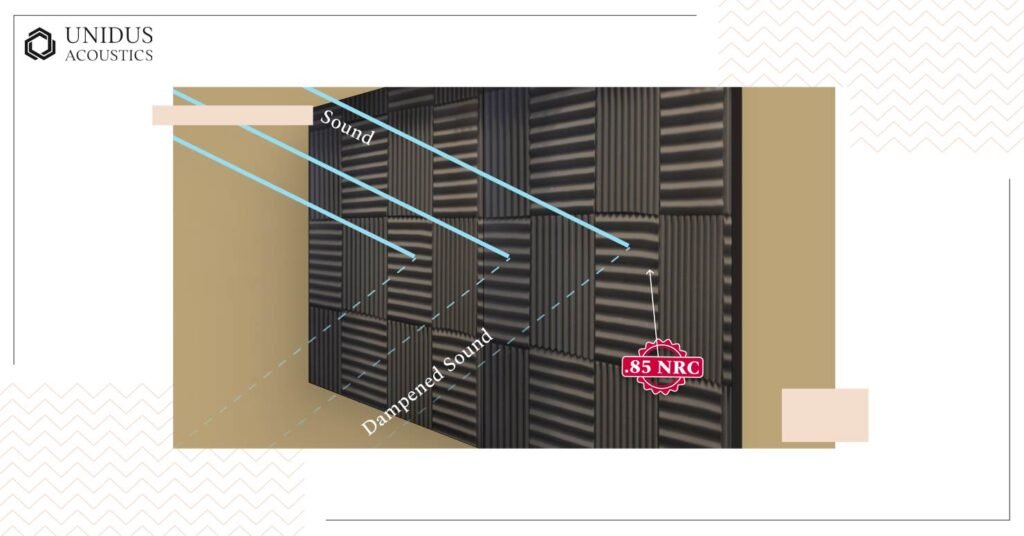
Acoustic boards absorb sound. They do not isolate it. Line a boardroom with acoustic boards and the room will sound calmer. Voices come through clearer, and it stops feeling like sound is bouncing off every hard surface. But those same boards do very little to stop a loud call in that room from reaching the corridor outside. Isolation is a separate job. It’s usually handled by dense materials, such as mass loaded vinyl, built into a wall or ceiling assembly, not by a board sitting on the surface.
Get the two confused at brief stage and the project ends up specifying the wrong product for the wrong complaint. Then everyone’s left wondering why the site results don’t match the datasheet. Most conference rooms and CXO offices need both jobs done, and the two are usually specified together rather than one standing in for the other. For a longer look at where the two meet, see our guide to sound insulation and isolation.
Types of Acoustic Boards by Material
Once the absorption role is settled, the next question is what the board is actually made from. Three material families cover most commercial specifications, with a fourth worth knowing for grid-ceiling retrofits.
Recycled Polyester Fibre Boards
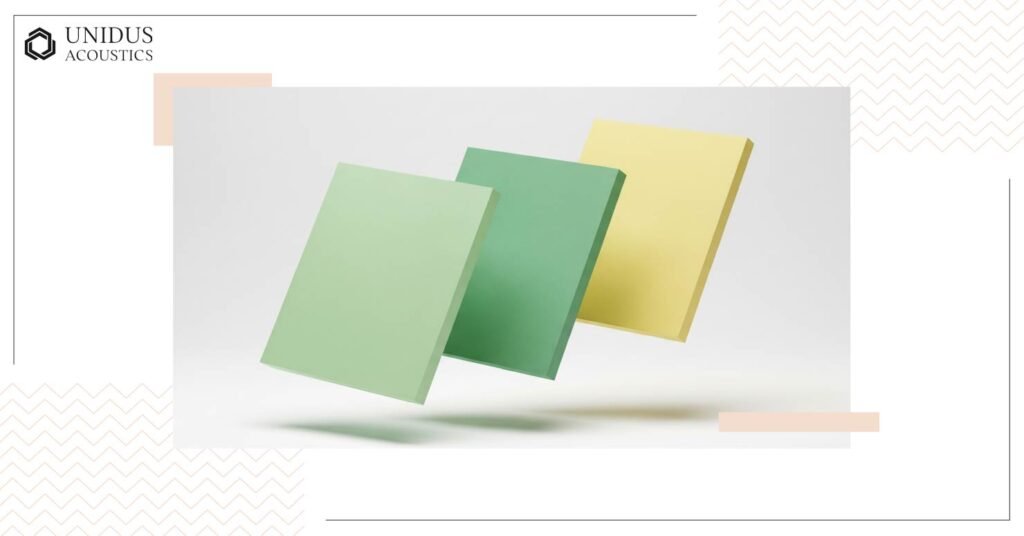
Polyester fibre boards are made from recycled PET, the same plastic used in water and soft drink bottles. They’re the most commonly specified acoustic board in Indian commercial interiors today. A typical board runs 9-12mm thick, comes in sheet sizes around 2440x1220mm, and sits in a density range of 180-200kg/m³ with an NRC between 0.70 and 0.90.
The surface can be fog, spray, or wipe disinfected, so this material shows up often in hospitals, schools, hospitality projects, and healthcare-adjacent facilities, anywhere hygiene protocols matter as much as acoustic performance. We offer these boards in dozens of shades and cut to custom sizes, which is why they turn up as often in decorative wall panels as in plain acoustic treatment. See our range of acoustic wall panels for how this plays out on site.
Soft Fibre Boards With a Glass Wool Core
A second family uses a soft fibre core, commonly a glass wool insulation layer, finished with a decorative face and a tissue-lined back. These run lighter than polyester boards, with densities closer to 90-110kg/m³. They’re typically supplied as ceiling tiles (595x595mm or similar grid sizes) rather than wall boards.
NRC values reach up to 0.90, and the fire classification on these tiles is often a step higher than polyester alternatives. That’s why they show up in cinemas, home theatres, libraries, and conference rooms, spaces where both sound absorption and fire safety genuinely matter. The trade-off is handling: glass wool cores are softer and need more care on site than a polyester board of similar thickness.
Wood Wool Boards
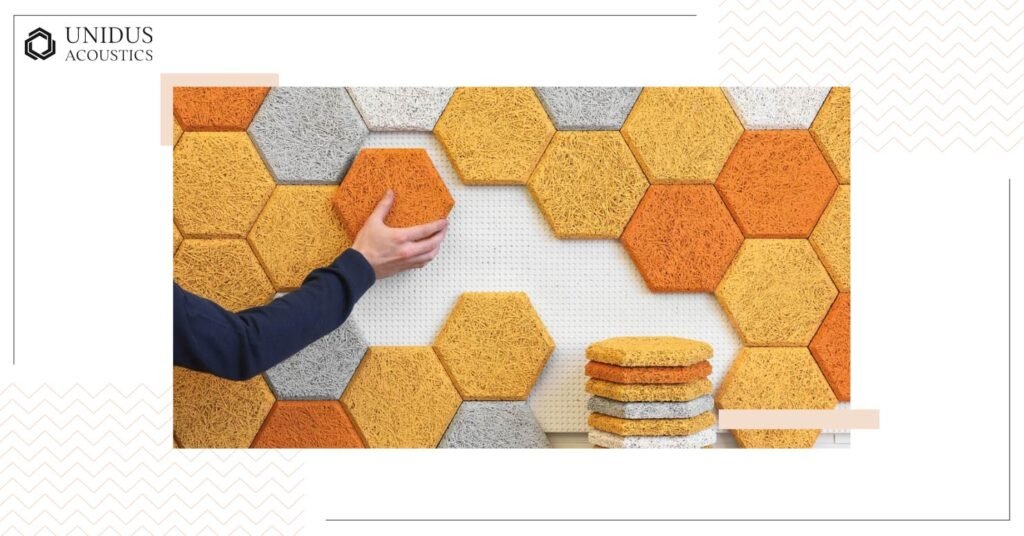
Wood wool boards are made from long strands of wood fibre bound with cement, pressed into a rigid board that fixes directly to a wall or ceiling. Density sits much higher here, around 400kg/m³, with thickness typically 15-25mm and NRC ratings up to 0.90.
What makes wood wool worth knowing is the dual role it plays. It absorbs sound and adds thermal insulation at the same time, and its visible textured grain means it can be left exposed as a design feature rather than hidden behind a finish. It’s also one of the more eco-friendly board options on the market, since the base material is a byproduct of timber processing rather than a synthetic fibre. Read more on wood wool acoustic panels and where architects tend to specify them.
Gypsum and Mineral Fibre Tiles
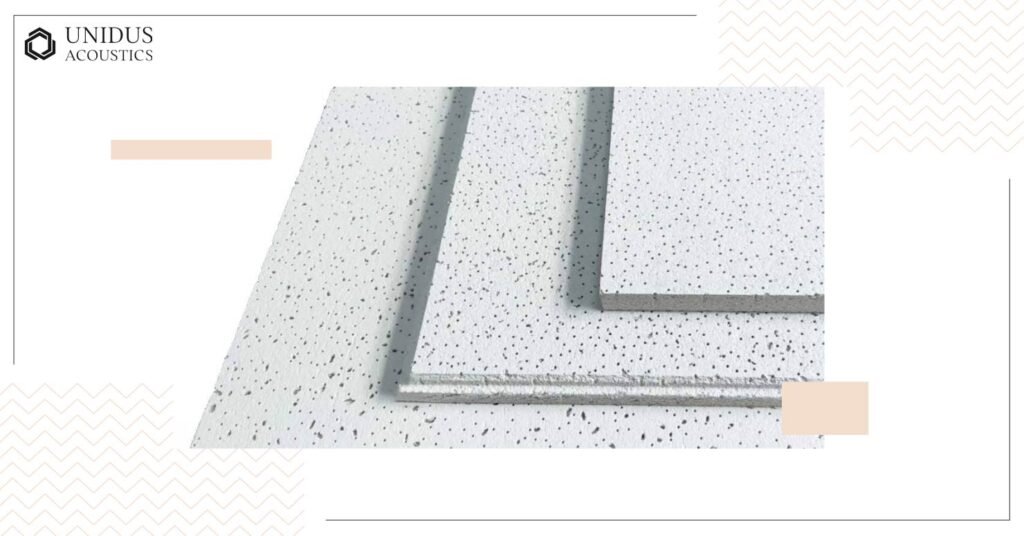
A fourth option worth knowing, particularly for government and PSU projects that specify standard grid ceilings, is the gypsum or mineral fibre tile. These sit in a false ceiling grid, run around 12-20mm thick in a 595x595mm format, and reach NRC values up to 0.90 depending on the perforation pattern. They’re less of a design statement than the other three families and more of a dependable, tender-friendly option, where the ceiling grid itself carries the visual language of the space, not the tile finish.
Types of Acoustic Boards by Application and Form
Material is one axis of the decision. Form is the other. The same core material gets engineered differently depending on whether it’s going on a wall, a ceiling, or hanging in open air above a room.
Wall-Mounted Boards and Panels
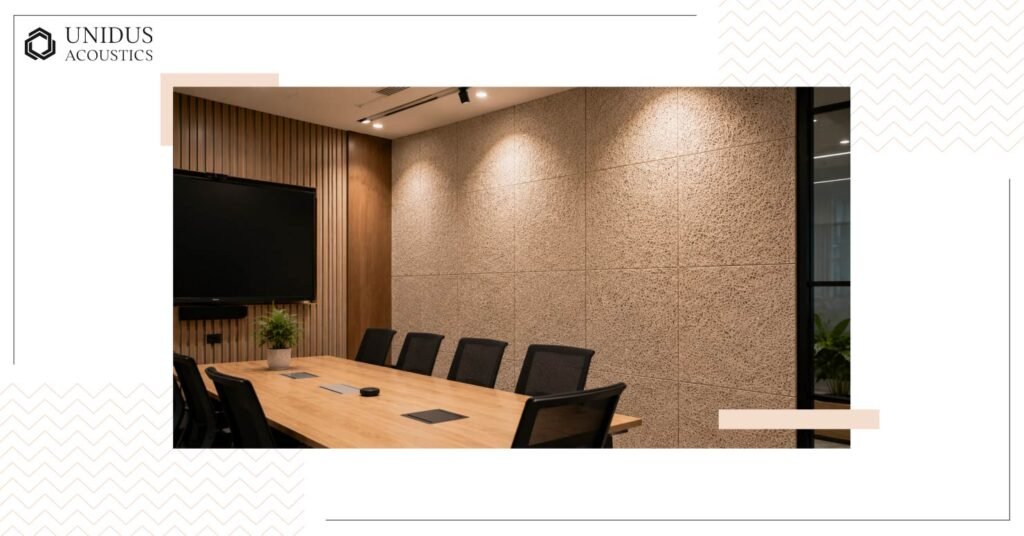
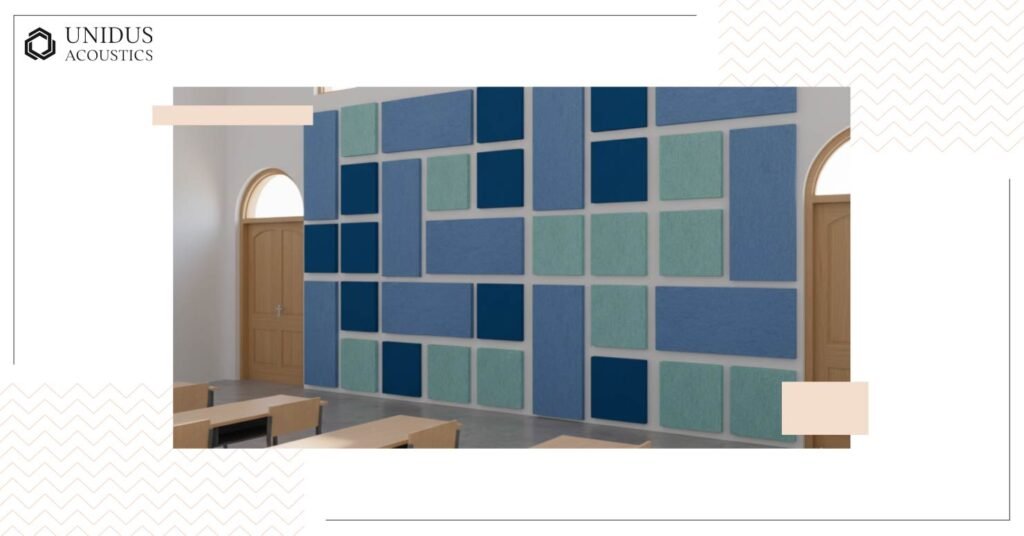
Flat boards fixed to walls are the most straightforward application, and the one most designers picture first when someone says “acoustic board.” These come in printed, fluted, grooved, inlay, and 3D textured finishes, all built on the same polyester or fabric-wrapped core. That’s what lets a corporate office and a CXO room use materially similar boards while looking nothing alike.
Ceiling Tiles, Baffles, and Open Cell Systems
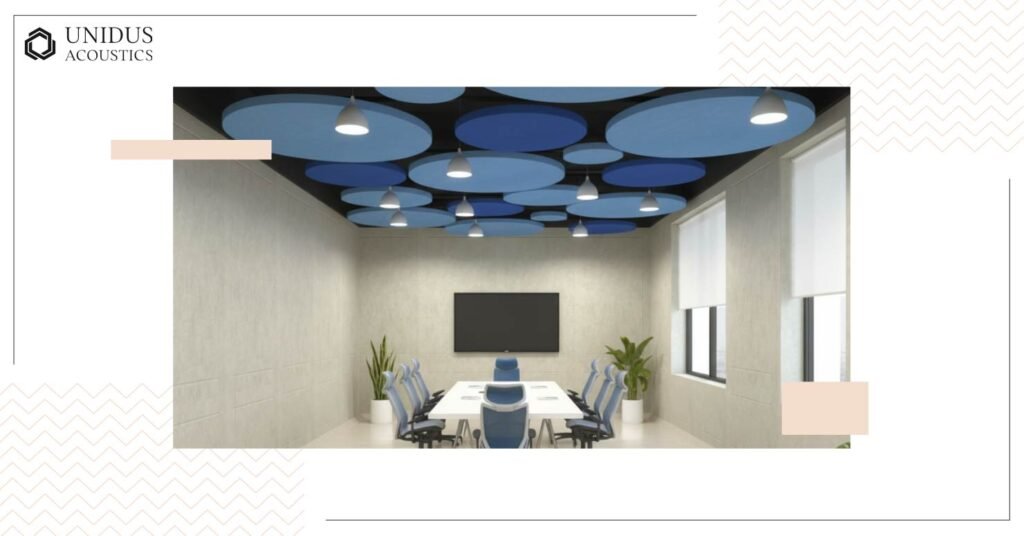
Ceilings absorb the largest surface area in most rooms, which is why ceiling treatment often does more acoustic work than wall treatment of the same size. Flat tiles sit inside a standard grid. Baffles hang vertically and suit spaces with height to spare, auditoriums and double-height lobbies in particular. Open cell systems create a geometric centrepiece effect while still absorbing sound across the ceiling plane. Each format uses largely the same NRC-rated core material, just arranged differently in space. Our acoustic false ceiling solutions page walks through how these formats get chosen for a given room.
Fabric-Wrapped and Decorative Boards
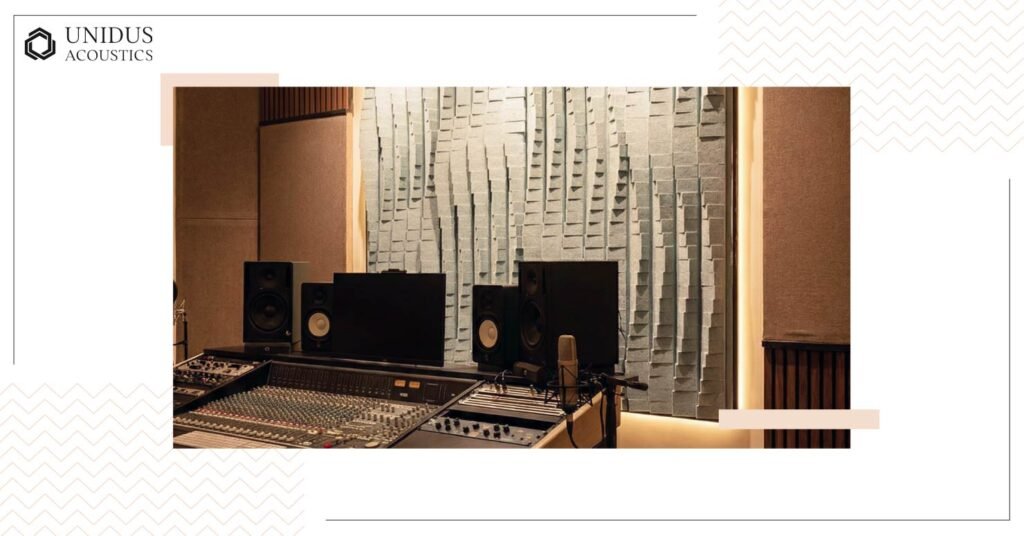
Wrapping a polyester or fibre core in acoustic-rated fabric softens both the look and, a little, the sound performance at higher frequencies. These are common in meeting rooms and reception areas, anywhere a hard, visibly “acoustic” surface would clash with the interior design brief.
Acoustic Board Materials at a Glance
| Material | Typical NRC | Typical Density | Fire Rating | Best Suited For |
|---|---|---|---|---|
| Recycled Polyester Fibre | 0.70 – 0.90 | 180 – 200 kg/m³ | Class B1 | Offices, healthcare, hygiene-sensitive spaces |
| Soft Fibre (Glass Wool Core) | Up to 0.90 | 90 – 110 kg/m³ | Class A | Cinemas, auditoriums, conference rooms |
| Wood Wool | Up to 0.90 | ~400 kg/m³ | – | Exposed ceiling designs, sustainability-focused projects |
| Gypsum / Mineral Fibre Tile | Up to 0.90 | ~8.5 kg/m² (tile wt.) | – | Grid ceiling retrofits, government/institutional projects |
Key Specifications to Check Before You Specify
A material family narrows the field considerably. Getting the actual numbers right is what determines whether the board performs once it’s on site, not just on the datasheet.
NRC (Noise Reduction Coefficient)
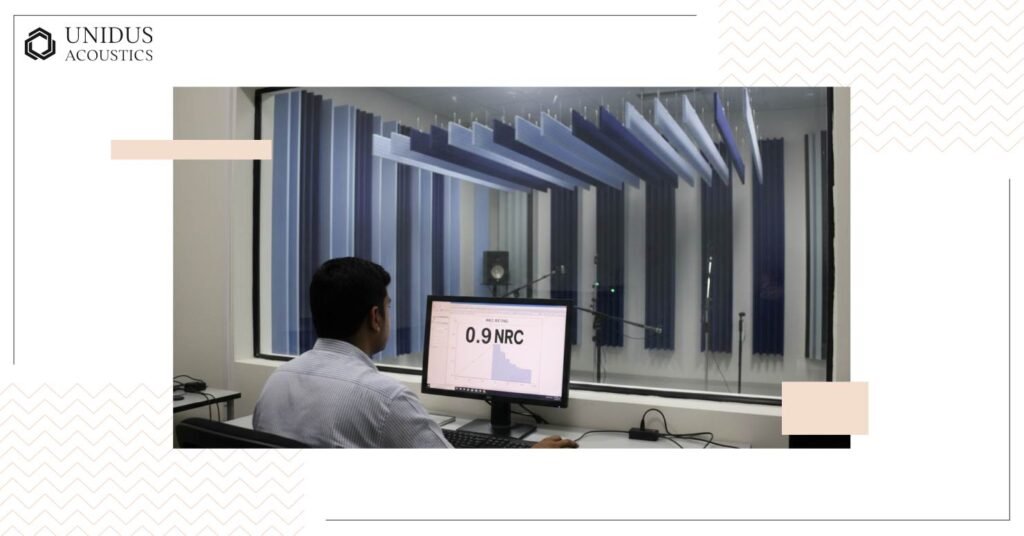
NRC is tested using the ASTM C423 reverberation room method. It’s expressed as a single number between 0 and 1, representing the average percentage of sound absorbed across the 250Hz to 2000Hz range. A rating of 0.80 means the board absorbs roughly 80% of the sound energy that hits it and reflects the rest.
As a rough planning guide, conference rooms and meeting spaces benefit from 0.80 and above, where speech clarity matters most. Lobbies and reception areas can work well at 0.60-0.75, where a little liveliness in the room isn’t necessarily unwanted. Our detailed guide on how NRC is measured and what NRC testing results actually tell you goes into this in more depth.
Density and Thickness
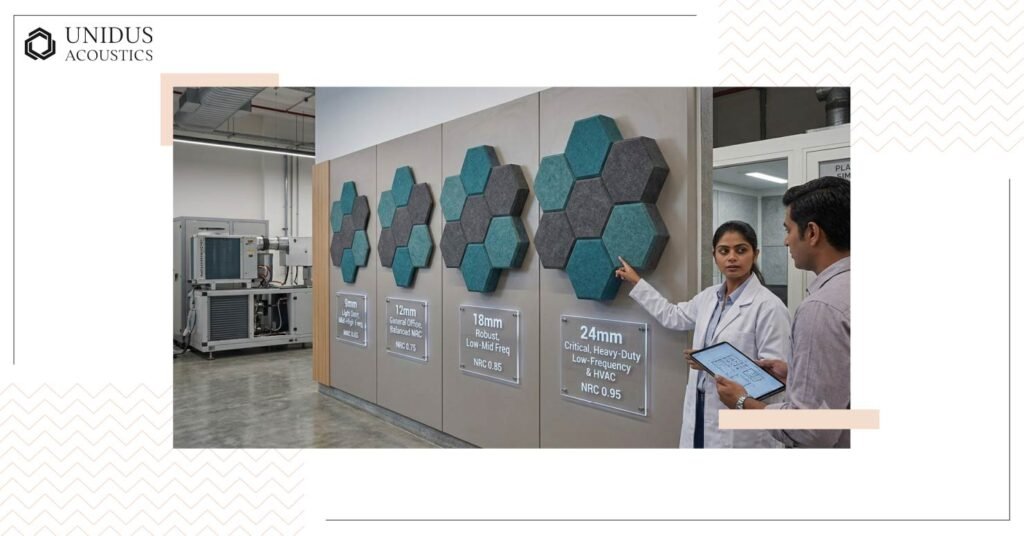
Denser, thicker boards generally absorb lower frequencies better. That matters in spaces with HVAC hum, footfall, or AV equipment noise. Lighter boards, glass-wool-cored tiles in particular, perform well against speech-range frequencies at a fraction of the weight, useful when the ceiling structure can’t take much additional load.
There’s no single correct answer here. It depends on which frequencies are causing the problem in that specific room. That’s why understanding how acoustic installations actually work on site matters as much as reading a datasheet.
Fire Rating and Disinfectability
Most polyester fibre boards carry a Class B1 fire rating, while glass-wool-cored tiles typically achieve Class A, per the National Building Code of India’s fire safety provisions. That’s a meaningful difference in auditoriums, hospitals, and any space governed by strict fire code.
Disinfectability is whether a board can be fog, spray, or wipe cleaned without degrading. It’s become a standard question in healthcare and hospitality briefs since 2020, and it’s worth confirming on the datasheet rather than assuming.
Choosing the Right Acoustic Board for Your Project
Material family, NRC, and form only get a specification so far. The room type itself narrows the choice further, since a boardroom, an auditorium, and a cafeteria are rarely solving for the same acoustic problem.
Corporate Offices and CXO Rooms
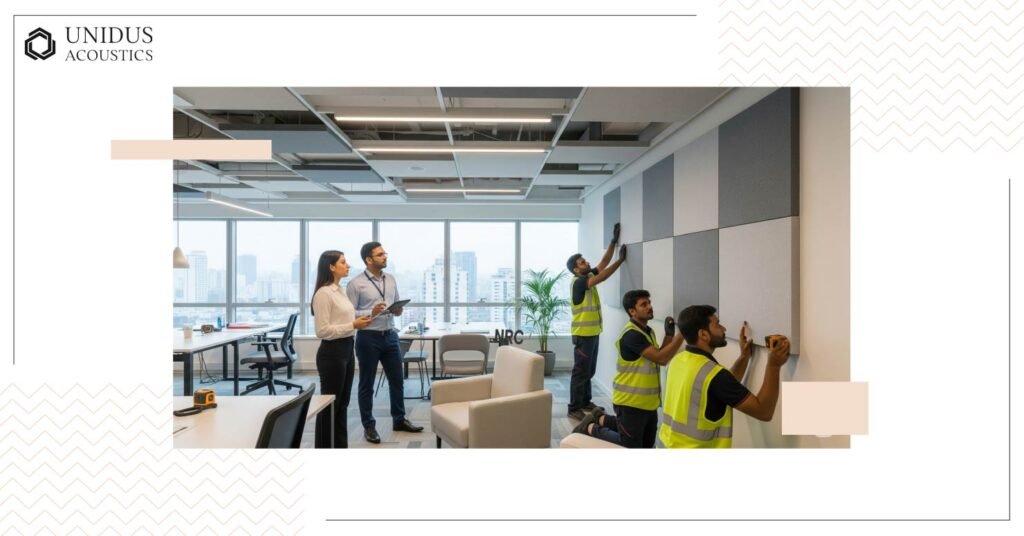
Polyester fibre wall boards and fabric-wrapped panels dominate here, largely because the colour and finish range lets the acoustic treatment disappear into the interior scheme rather than announce itself.
Auditoriums and Conference Rooms
Ceiling baffles and clouds, often paired with wall boards at a higher NRC rating, are the standard approach for auditorium acoustic treatment. These rooms need both wall and ceiling treatment working together to control reverberation across a larger volume.
Cafeterias and High-Footfall Spaces

Wood wool and mineral fibre options tend to work well here. Both offer decent NRC performance while standing up to higher footfall, moisture, and cleaning frequency better than a purely decorative board might.
Frequently Asked Questions
1. What is the difference between acoustic boards and acoustic panels?
In practice, the two terms overlap heavily and are often used interchangeably in India. Where a distinction is made, “acoustic board” usually refers to the raw or semi-finished absorptive core material, while “acoustic panel” refers to the same material once it’s been finished, framed, or wrapped for a specific wall, ceiling, or decorative application.
2. What NRC rating should I specify for a meeting room?
Most meeting and conference rooms perform well at an NRC of 0.80 or above, particularly where speech clarity and privacy both matter. Ceiling treatment should match or exceed whatever NRC rating is used on the walls, since a mismatch between the two surfaces tends to undercut the result.
3. Can the same acoustic board go on both walls and ceilings?
Many polyester fibre and wood wool boards can be installed on either surface, though ceiling applications sometimes call for lighter formats or additional support depending on the span and the mounting system used. Confirm the mounting method with your supplier before finalising the ceiling detail.
4. Are acoustic boards fire safe for commercial buildings in India?
Most commercial-grade acoustic boards carry a Class A or Class B1 fire rating, which should be confirmed on the datasheet and matched against your project’s specific fire code requirements, particularly for auditoriums, healthcare facilities, and high-occupancy spaces.
5. How thick does an acoustic board need to be for an auditorium?
Auditoriums typically call for boards in the 12-24mm range, often paired with baffles or clouds at greater depth to control low-frequency reverberation across a larger room volume. The right thickness depends on room size, ceiling height, and the specific reverberation time being targeted.
6. Do acoustic boards need maintenance or replacement over time?
Well-installed acoustic boards generally need very little beyond routine cleaning appropriate to the material: fog or wipe cleaning for polyester and glass-wool-cored boards, dusting for wood wool. Replacement is rare outside of visible damage, water exposure, or a change in the room’s use that calls for a different NRC target altogether.
Getting the Specification Right, Not Just the Aesthetic
Unidus Acoustics has spent over 40 years working through exactly this kind of specification decision with architects across India. We manufacture our polyester, wood wool, and glass wool cored boards in-house, which is what allows for the custom sizes, shades, and finishes that most commercial projects eventually ask for.
If you’re specifying acoustic boards for an upcoming project and want to talk through NRC targets, fire ratings, or material choice for a specific room, get in touch with us.