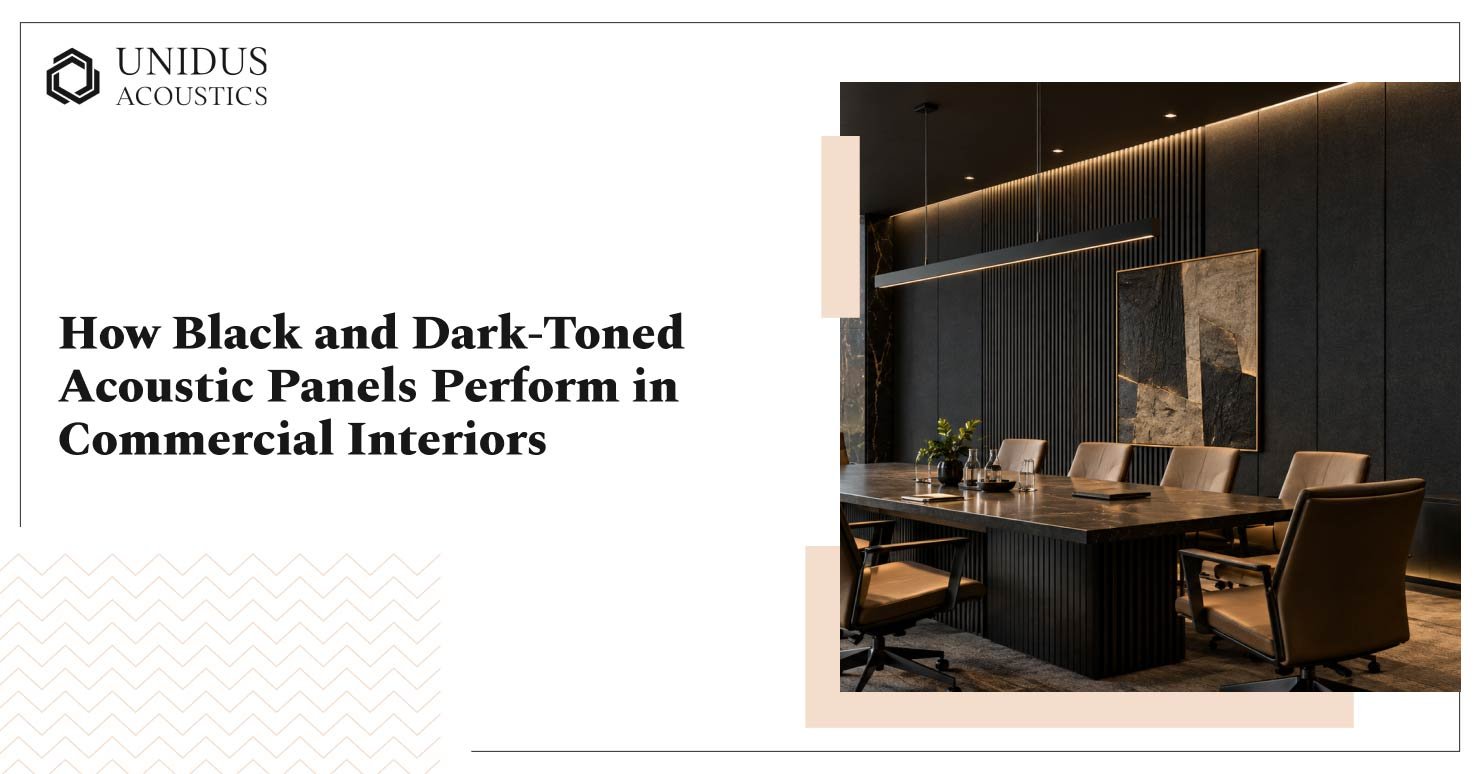
Architects and designers usually hesitate over acoustic panels at the colour stage, not the performance stage. Black and dark grey finishes look sharp in a boardroom or a CXO cabin, but there’s a common assumption that darker panels absorb sound differently, or come with more upkeep than lighter ones. Some of that holds up under scrutiny. Most of it depends on what the panel is made of, not what shade it wears.
Unidus Acoustics works with architects across corporate offices, auditoriums and meeting rooms, and knows where dark-toned acoustic panels pull their weight, and where they need a bit more planning around them.
Key Takeaways
- Colour has no bearing on how well acoustic panels absorb sound; performance comes from the core material, thickness and density.
- Dark-toned acoustic panels work well in CXO cabins, boardrooms, screening rooms and lounge zones where a moodier, high-contrast finish fits the brief.
- Dust and fingerprints show up sooner on black or charcoal panels in high-traffic areas, though the cleaning itself doesn’t change.
- Lighting plans need a second look wherever dark panelling covers a large surface, since dark colours absorb more light than they reflect.
- Fading from direct sun is more visible on dark fabric than on light neutrals, so panel placement relative to glazing matters.
Does Colour Change How Acoustic Panels Absorb Sound?
No. Sound absorption is a function of the panel’s core material, its thickness, its density, and how much of its surface is open to sound through perforation or fabric permeability. Pigment or fabric dye sits on the surface and plays no part in that.
Take acoustic wall panels for office spaces: a charcoal grey panel and an off-white panel from the same line, at the same thickness, carry the same Noise Reduction Coefficient (NRC) rating. A fabric-wrapped panel’s weave or coating can change with colour, but on any well-specified acoustic panel range, performance stays constant across the colour options. If a supplier can’t confirm that a dark shade performs identically to a light one, that’s worth asking before it gets specified.
Where Dark-Toned Panels Earn Their Place
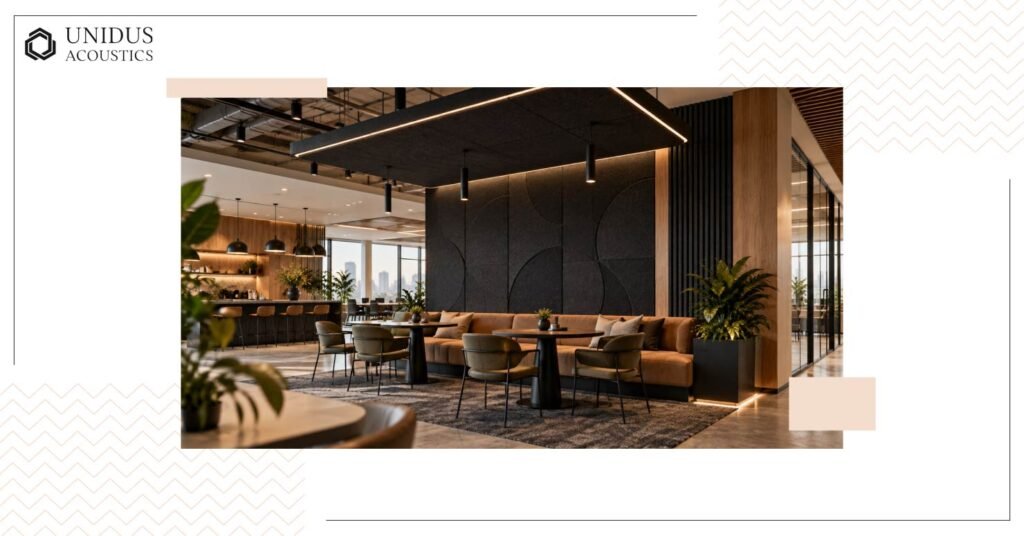
Dark acoustic panels tend to work best where the room already leans moody or high-contrast: CXO cabins with warm wood panelling, boardrooms with a statement wall, screening rooms, and lounge or breakout areas with a lighter palette elsewhere on the floor. They also read well against exposed ceilings and matte black hardware, now common in newer corporate fit-outs.
On open-plan floors and cafeterias, dark panels generally work better as an accent than as the dominant treatment: a feature wall, or a ceiling cloud over a specific zone rather than the whole ceiling. Paired with acoustic slat panels or a lighter wall treatment, dark tones add contrast without changing how the entire floor plate feels.
The Trade-Offs Worth Planning For
None of the points below are performance issues. They’re planning issues, and each has a straightforward fix once it’s flagged early.
Dust and Fingerprints Show Up Sooner
Dust and handprints are more visible against black or charcoal fabric than against beige or grey. This matters most in high-traffic zones such as reception areas and busy corridors. It doesn’t mean dark panels need more cleaning, just that the gap between “due for a clean” and “visibly needs one” is shorter.
Lighting Design Needs a Second Look
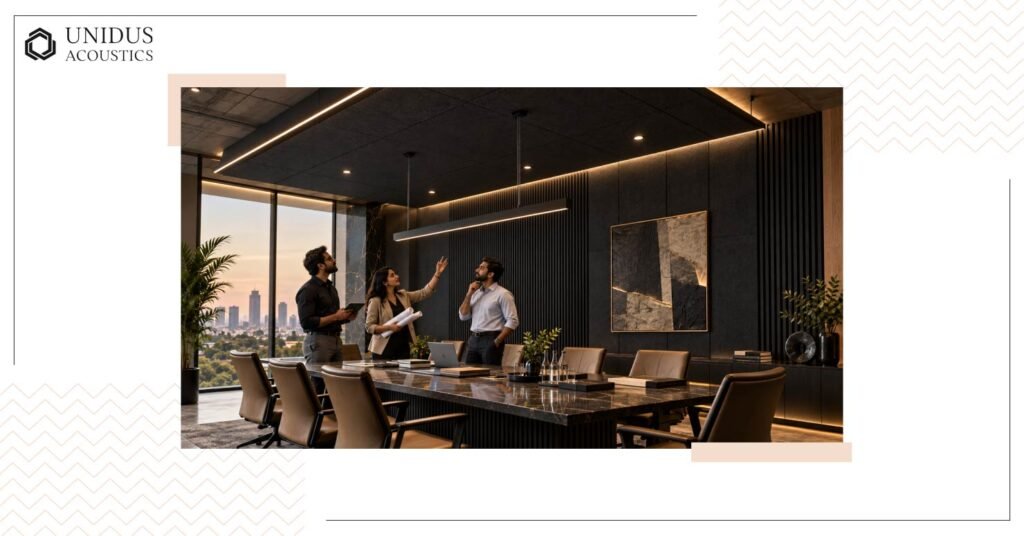
Dark surfaces absorb more visible light than they reflect, which is part of what’s known as Light Reflectance Value. A room with a significant amount of black or charcoal panelling reads dimmer than a lighter room lit at the same wattage. Raise this with the lighting consultant as soon as the panel colour is finalised, ideally before the false ceiling grid is locked in. It’s a coordination point, not a limitation, but an easy one to miss.
Fading Is More Noticeable on Dark Fabric
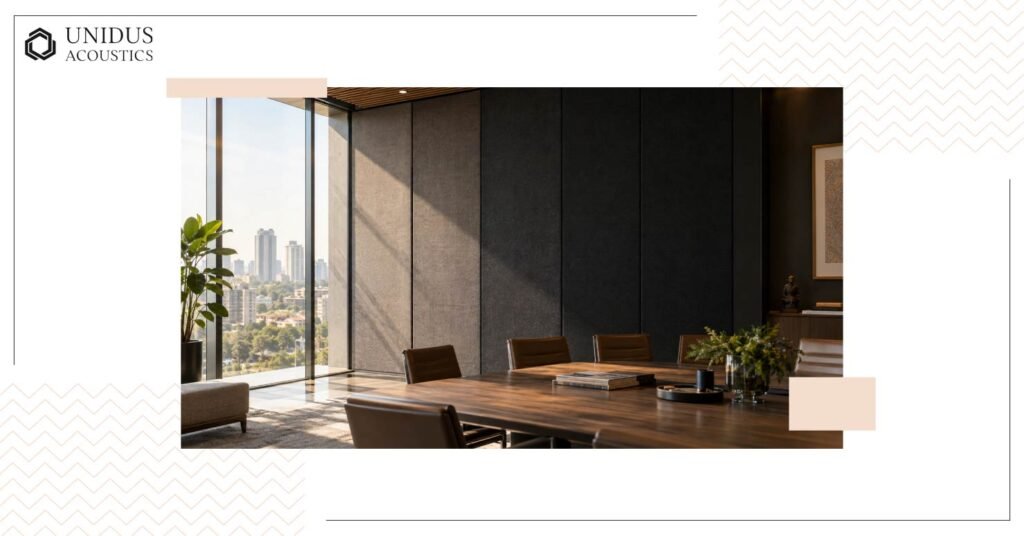
UV exposure fades every colour over time, but the shift is far more visible on black and deep tones than on light neutrals, where fading barely registers. Panels facing large, unshaded windows or skylights are the ones to watch. Positioning dark panels away from direct sun, or checking for a UV-stable fabric grade, avoids most of the fading architects worry about.
Maintenance Isn’t Harder, Just More Visible
Cleaning requirements for fabric-wrapped or board panels don’t change with colour. What changes is how quickly a mark becomes obvious to someone walking past. Facilities teams managing dark panels in busy corridors or lobbies usually move them into a slightly tighter cleaning rotation, rather than a different cleaning method altogether.
Dark-Toned vs Light-Toned Panels at a Glance
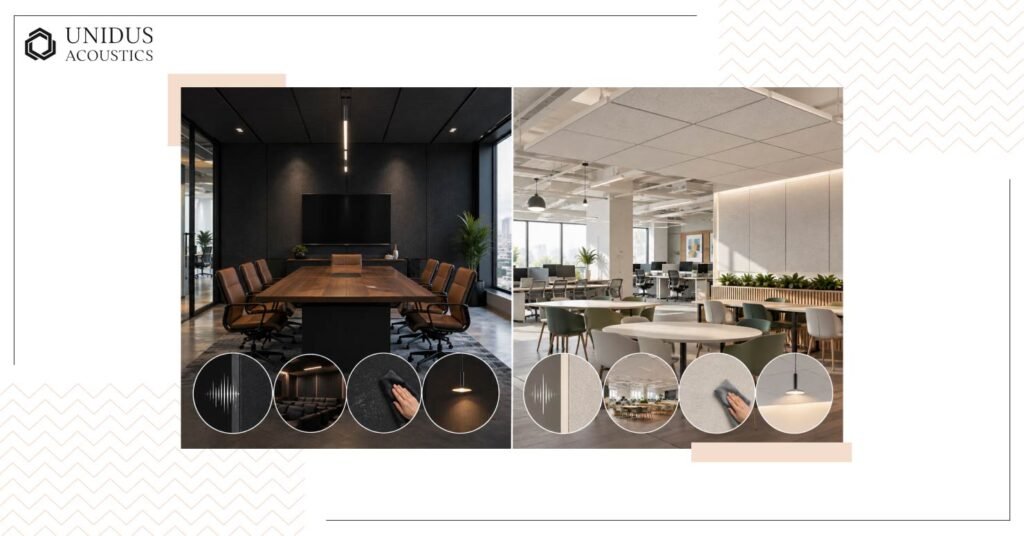
The real differences are about where and how a panel gets used, not what it’s made of.
| Factor | Dark-Toned Panels | Light-Toned Panels |
|---|---|---|
| Sound absorption (NRC) | Same as light tones on the same product line. | Same as dark tones on the same product line. |
| Best-fit spaces | CXO cabins, boardrooms, screening rooms, accent walls. | Open offices, cafeterias, classrooms, large floor plates. |
| Visible dust and marks | Shows sooner in high-traffic zones. | Less visible between cleaning cycles. |
| Lighting impact | Needs a lighting review alongside the panel spec. | Reflects more ambient light with less rework. |
| Fading in direct sun | More noticeable over time. | Less noticeable over time. |
| Room perception | Can read smaller in large, unbroken expanses. | Reads larger and more open in large expanses. |
Specifying Dark Acoustic Panels Without the Guesswork
Getting dark-toned panels right on a commercial project usually comes down to a handful of decisions made early, not after installation.
- Confirm the NRC and fire rating for the room’s actual use case first, and treat colour as a separate decision made second.
- Loop the lighting consultant in as soon as the panel colour is finalised, not as an afterthought once the adaptive workspace layout is set.
- Reserve dark panels for feature walls, ceiling baffles or CXO zones rather than covering an entire open floor in one tone.
- Ask the supplier whether the dark shade is UV-stable if it’s going anywhere near glazing.
Unidus Acoustics offers dark tones across its fabric and board finishes, alongside a wider shade range, so architects working a mixed palette don’t need to switch suppliers between a dark accent wall and a lighter treatment beside it. The acoustic ceiling company selection guide and the ceiling baffles guide cover the ceiling side of the same decision.
Frequently Asked Questions
1. Do black acoustic panels absorb less sound than lighter ones?
No. Sound absorption depends on the panel’s core and construction, not its colour. A black and an off-white panel from the same product line, at the same thickness, perform identically.
2. Are dark acoustic panels harder to maintain?
Not harder, just more visible when they need attention. Dust and marks show up sooner on black or charcoal fabric, so dark panels in high-traffic areas usually sit on a slightly tighter cleaning rotation.
3. Can dark-toned panels be used on ceilings as well as walls?
Yes, though a large dark ceiling absorbs more light and can make a room feel lower or more enclosed. Many architects use dark tones on ceiling clouds or baffles over a specific zone rather than the full ceiling.
4. Do dark acoustic panels make a small room feel smaller?
They can, since dark colours absorb more light than they reflect. Balancing a dark accent wall with a lighter ceiling or floor treatment, and reviewing the lighting plan alongside the colour choice, usually offsets this.
The Short Version
Colour is a design decision, and performance depends on what’s underneath the fabric, the core material and construction doing the work regardless of what shade the panel wears. Keeping the two separate, and confirming both with whoever supplies the panels, is what lets black and dark-toned acoustic panels do their job in a commercial interior without the trade-offs turning into surprises after installation. If you’re specifying acoustic panels for a boardroom, lounge or CXO project,
Unidus Acoustics can walk through NRC, fire rating and shade options for the specific room. Contact us now.