Last Updated on November 23, 2026 by unidus
Most acoustic panel deliveries don’t slip because a factory ran late. They slip because something upstream of the factory was still open: a shade that hadn’t been signed off, a test report the consultant was waiting on, a work front that was never cleared, or a ceiling grid that wasn’t ready to receive material.
On a fit-out programme, that distinction decides whether the date can be recovered. Knowing a delivery is late tells you very little; knowing which stage is holding it usually buys back a week, and most of those stages are set long before dispatch, by how the panels were specified in the first place.
Key Takeaways
- Most of the time between order and dispatch is spent in approval cycles rather than on the production floor.
- Custom sizes, shades and perforation patterns run on a different timeline from standard stock items.
- Test reports and product documentation are often requested after the order is placed, which pushes the whole sequence back.
- Site readiness decides when panels can land, because finished panels cannot sit on an active fit-out floor.
- Asking for the dispatch dependency list at quotation stage removes most of the guesswork later.
What a Delivery Delay on an Acoustic Panel Order Actually Means
A delivery delay on an acoustic panel order is the gap between the date the programme assumed material would reach site and the date it did. That gap is seldom one event. It is a chain of approvals and site dependencies, each waiting on the one before it, and it only becomes visible at the end of the chain.
This is worth separating from a manufacturing delay, which is what most people assume has happened. Production is the one stage with a known duration. Almost everything around it moves. Once the order is read as a sequence rather than a single transaction, the recoverable stages become easy to spot, and the process of getting acoustic material onto a commercial floor stops looking like a black box.
Approval Cycles Take Longer Than They Look
Between the purchase order and the first cutting instruction sits a set of approvals nobody budgets time for, because on paper they look like formalities.
Sample and Shade Approval

Commercial fit-outs rarely order from a catalogue image. The design team wants a physical sample seen against the floor finish, the joinery and the lighting temperature in the actual room, and that sample has to travel, get reviewed, come back signed, and sometimes go out a second time. Where a range carries a wide shade library, a colour that looked settled on the drawing often shifts once it is seen under site lighting.
Each round of that cycle costs calendar time rather than factory time. Two rounds is normal on a corporate interior. A third happens when the client’s brand team joins the review late, which is a timeline issue rather than anybody’s oversight. A programme that builds a realistic implementation window into the schedule absorbs this without drama.
Test Reports and Product Documentation

The second approval stage is paperwork. Consultants and project managers now routinely ask for acoustic test data and fire test certificates as part of the material submittal, and they want them from an accredited laboratory rather than an internal sheet. In India that means a lab holding NABL accreditation, and a report that has to be freshly generated rather than pulled from file carries its own queue.
Much of the performance language in these specifications traces back to the acoustics section of the National Building Code of India. Checking which certifications a panel already holds before the submittal is raised saves more time than any other step here, as does confirming how a fire classification is worded on the certificate.
Where the project is chasing a green rating, the submittal grows again. Rating systems such as IGBC Green Interiors expect recycled content data and material declarations, and those documents sit with the manufacturer rather than the supplier. If the specification named a rating target but the submittal list arrived after the order was placed, documentation lands in the middle of production.
Custom Panels Don’t Run on the Stock Timeline
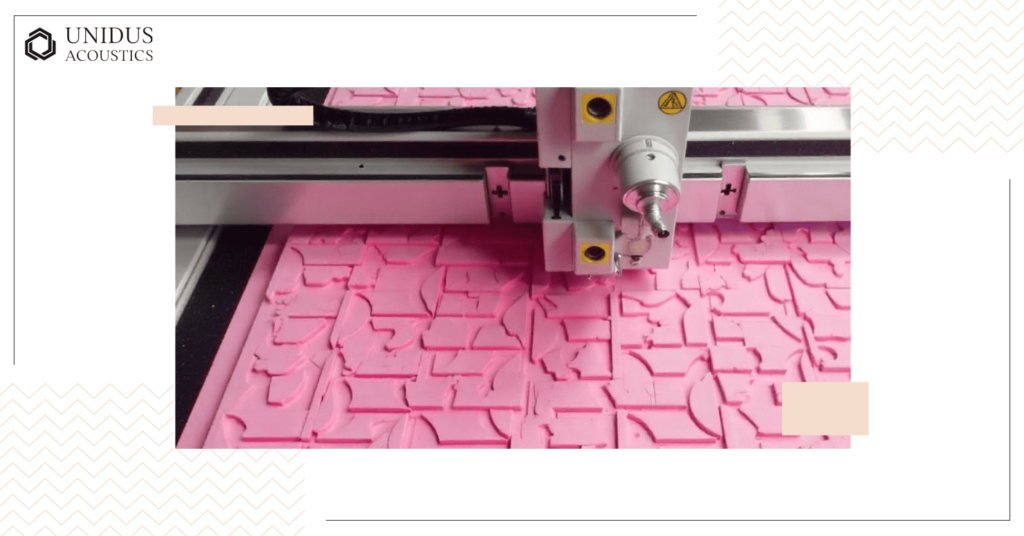
Size, shade, perforation pattern, edge detail, print and thickness are all variables, and each one that moves away from a standard adds a step before cutting starts. A non-standard module changes the sub-frame too, pulling the ceiling contractor back into a conversation that was meant to be closed.
None of this argues for standard panels. Most of what a commercial interior actually needs is custom, so the useful move is to name the custom elements at quotation stage rather than during approvals.
Knowing what can and cannot be customised in advance keeps that conversation short, and writing the specification tightly at the outset prevents the mid-production change that costs the most time of all.
Site Conditions Decide When Material Can Land

Acoustic panels arrive as finished goods, with a face that cannot be touched up on site. Wet trades, painting, grid levels and service coordination above the ceiling all have to be far enough along for panels to go up soon after they arrive.
Most fit-out floors have nowhere safe to store finished material, so dispatch gets held back deliberately, and that hold is a sequencing decision rather than a supply problem. Buildings that stay operational through the fit-out add another layer, because delivery vehicles and lift access are restricted to defined windows and work fronts are released in sections rather than all at once. Long-haul road movement and monsoon weeks shift the picture again.
Where the Date Usually Moves
Most fit-out programmes lose time at one of six points. This is where each one sits, and what tends to push it.
| Stage | What It Waits On | What Usually Moves the Date |
|---|---|---|
| Quotation to order | Scope freeze and final drawings | Area changes after the layout is revised |
| Sample and shade approval | Physical sample reviewed on site | A second or third review round |
| Documentation and submittal | Test reports and product declarations | Reports requested after the order is placed |
| Production | Confirmed sizes, shades and perforation | A specification change mid-run |
| Dispatch | Site readiness, storage and access | Grid or wet trades still incomplete |
| Installation | Cleared work front | Access shared with other trades |
How Unidus Acoustics Plans Around These Dependencies
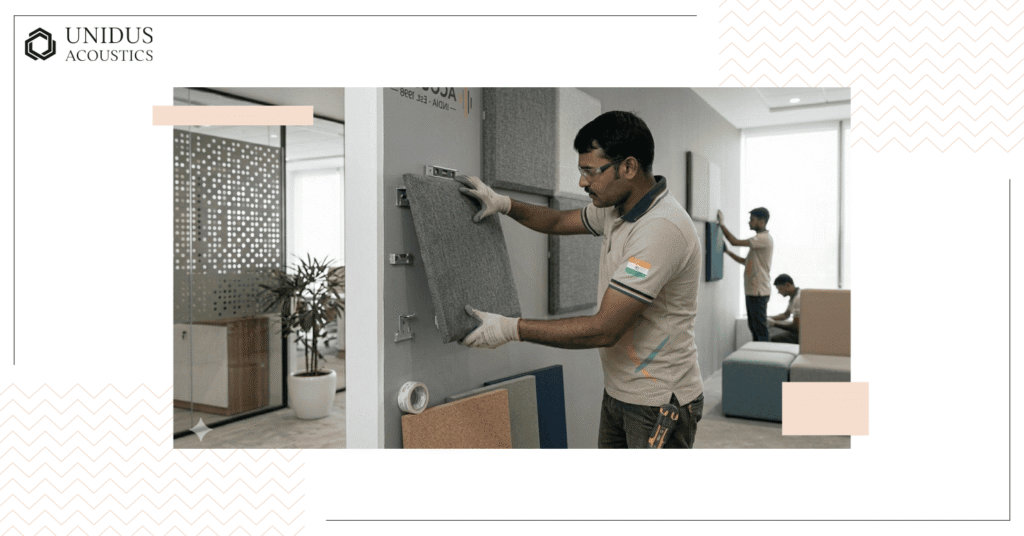
We work backwards from the installation date rather than forwards from the order date, which changes what gets asked for first. Sample sets and the documentation pack can go out with the quotation instead of after the order, so the two longest approval stages run alongside drawing finalisation rather than after it.
Because production sits in our own plant, sizes, thicknesses, perforation patterns and shades are set to the drawing rather than to a stock list. That holds whether the job calls for UNISTEEL metal ceiling systems, soft fibre glasswool tiles, U-TONE wall panels or fluted wall panels, and it makes the production window something we control rather than forecast. That is what makes on-time delivery a commitment we can hold to on custom acoustic solutions, where the panel count and the shade belong to one room and cannot be pulled off a shelf.
Where a project needs a phased release, we hold material at our end and dispatch against cleared work fronts rather than against the original single date. The supply route matters too, since an order routed through an intermediary adds an approval loop a direct order does not have.
Conclusion
Delivery dates on a fit-out hold when the dependency chain is visible from the start. Approvals, documentation, site readiness and transport access are the stages that actually move, and each can be planned for if it is named in week one rather than discovered in week six.
We have mapped that sequence on enough fit-outs to know where it usually bends. Unidus Acoustics can mark it up against your job before you commit to a programme, and 40 years of expertise working to other people’s site calendars goes into that read. Write to enquiry@unidusindia.com with your drawings and target handover date.
Frequently Asked Questions
1. What is the single most common reason an acoustic panel delivery slips?
Sample and shade approval. It looks like a short step but depends on a design review the supplier cannot schedule, and two rounds are common on commercial interiors.
2. Do custom panels always take longer than standard ones?
Not always, but they carry more dependencies. A custom size with a stock shade often moves faster than a standard size in a bespoke colour, because the shade is what triggers a fresh approval round.
3. When should test reports and certificates be requested?
At quotation stage, before the order is raised. Requesting them later means documentation runs concurrently with production, and any gap found at that point stops the line rather than delaying a drawing.
4. Can panels be delivered before the ceiling grid is ready?
Technically yes, but it is rarely wise. Finished panels have faces that cannot be repaired on site, and an active fit-out floor has nowhere to store them safely.
5. Does a shade change after approval reset the production timeline?
If production has started, usually yes for the affected panels. This is why shade sign-off against site lighting matters more than sign-off against a drawing.
6. What should a purchase manager ask for at quotation stage?
The dependency list: what has to be approved, what documents are needed, who signs them off, and what site conditions must be met before dispatch. A manufacturer who answers all four upfront is a reliable signal.