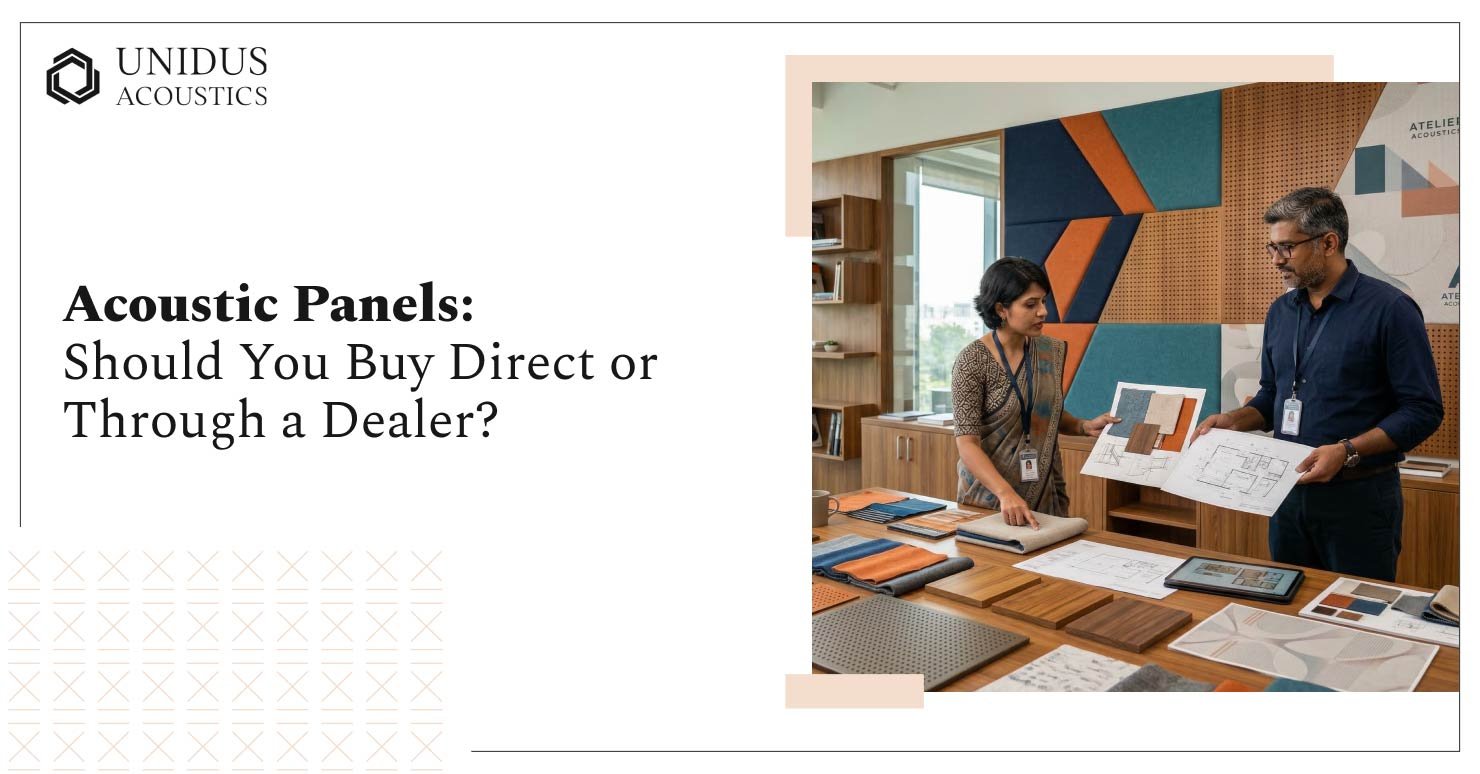
Every architect and facility team specifying acoustic panels for a project eventually hits the same fork in the road. Do you order acoustic wall panels from the manufacturer directly, or route the purchase through a dealer or supplier? Unidus Acoustics hears this question often, usually from procurement managers. They compare two quotes that look similar on paper but behave differently once the project starts moving.
Neither route is wrong on its own. What changes is who owns the customisation and who answers when something needs fixing after installation. It also affects how much room you have if the brief shifts midway. Here is what differs between the two, so you can match the route to the job instead of guessing.
Key Takeaways
- Buying acoustic panels direct from a manufacturer gives more control over customisation and technical input; useful for bespoke or large-format projects.
- A dealer or authorised partner tends to work faster for standard, off-the-shelf orders and smaller retrofits where custom engineering isn’t the priority.
- Pricing structures differ: manufacturer quotes usually reflect production cost plus one margin, while dealer quotes carry an added channel margin.
- Warranty and after-sales support depend on how responsibility is split between the manufacturer and the dealer before the order is confirmed.
- Test certificates (SGS, Intertek, TÜV Rheinland, or similar) are worth verifying against the manufacturer’s own records, regardless of which route you buy through.
What Changes Depending on Where You Buy From
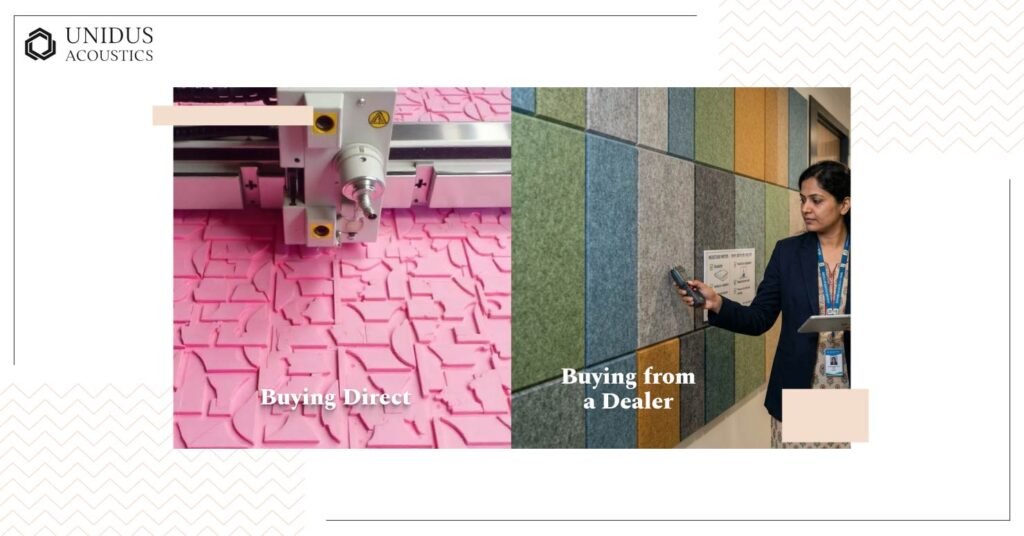
Buying direct means placing the order with the manufacturer that engineers and produces the panels. Buying through a dealer means routing that same order through an authorised reseller who either stocks standard sizes or relays custom specifications back to the manufacturer on your behalf.
The real difference shows up once the order moves off a PDF and onto a real site. If you are specifying acoustic panels for a commercial project, here is where manufacturer-direct and dealer purchases usually diverge.
For a broader industry view, this breakdown of direct versus distributor buying is worth a skim.
When Buying Direct From the Manufacturer Makes the Most Sense
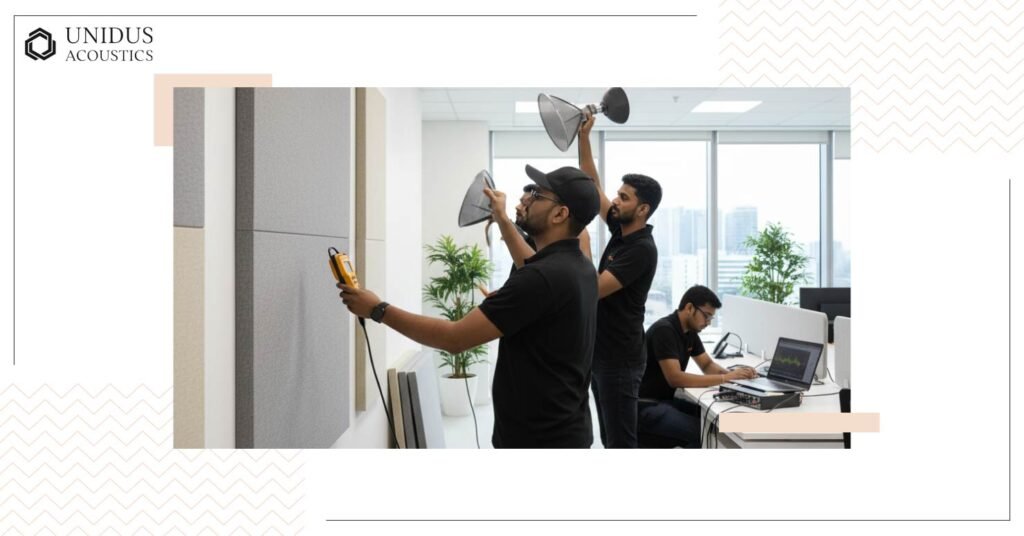
Direct engagement earns its cost when the requirement is not something you can pick off a shelf. It tends to make sense when:
- The project has a specific NRC or reverberation target needing a lab-tested material and thickness, not a catalogue pick. Our note on specification mistakes architects should avoid covers this.
- The design calls for a shade, finish, or shape outside the standard range, say a wood wool ceiling matched to the interior palette, not a stock tile.
- The order volume is large enough that even a small per-unit saving changes the total cost; this is where pricing on volume acoustic panel orders gets complicated.
- The project needs site visits, mock-ups, or on-site measurement before production, and you would prefer to work directly with that team.
When a Dealer or Authorised Partner Works Better
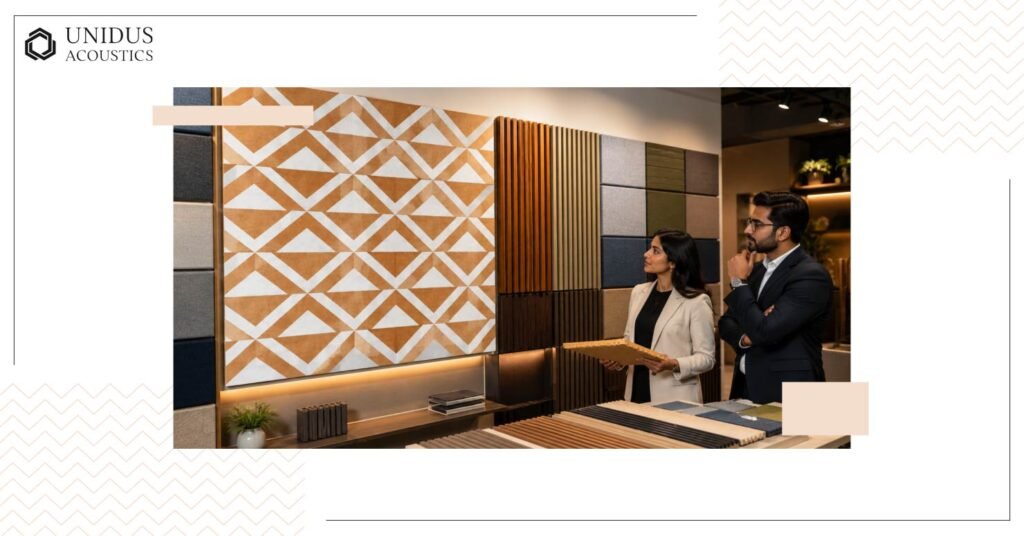
A dealer is not a downgrade. For smaller, straightforward jobs, it is often the sensible choice.
- You need a handful of standard acoustic ceiling panels for a single room, and waiting on a full production queue is not worth it.
- Your city has a stockist carrying metal ceiling panels or the finish you need, cutting delivery time.
- The job is a quick office retrofit instead of a new build, where a dealer’s existing contractor relationship covers installation.
- You are comparing acoustic boards and panels across a few brands, and a multi-brand dealer can show you several side by side.
Questions Worth Asking Before You Decide
Whichever route you lean towards, these questions tend to expose the gaps before they become your problem.
- Who is legally responsible for the warranty, the manufacturer or the dealer, and is that written into the order confirmation?
- Can the seller show original test certificates instead of a generic specification sheet? This helps tell marketing claims from tested performance, and an independent reverberation-room test is the closest thing to proof.
- If the finish or shade you want is not in current stock, how many extra weeks does that add? Who confirms the revised date?
- Does the quote include site measurement and installation, or are those handled by a separate vendor you must coordinate?
- If something arrives damaged or does not match the sample, who resolves it, and how long does that usually take?
Where Unidus Acoustics Fits Into This
Unidus Acoustics has manufactured custom acoustic solutions for 40+ years. An in-house test and research centre backs the wall panels, ceilings, baffles, and phone booths we make. Architects and design teams working on bespoke or large-format projects generally deal with us directly. Most of our range, including fabric-wrapped U-TONE panels across 84+ shades and our full specification guide for perforated panels, is built to the project brief.
That said, if what you need is a small, standard order, a nearby partner might move faster. That is a reasonable call too. The right route depends on the brief in front of you, not on which option sounds more official.
Frequently Asked Questions
1. Is it more expensive to buy acoustic panels directly from a manufacturer?
Not always. Direct pricing usually reflects production cost plus one margin, while a dealer’s price adds a channel margin on top. On small, standard orders, a dealer can still come out less expensive because of local stock and lower shipping costs. On large or bespoke orders, direct pricing is usually more transparent.
2. Do dealers offer the same warranty as the manufacturer?
That depends entirely on the agreement between the dealer and the manufacturer. Get this in writing before you order, specifically who handles a warranty claim and within what timeframe.
3. Can architects get custom NRC ratings or finishes only by buying direct?
Most manufacturers reserve fully custom engineering, specific NRC targets, and non-standard finishes for direct orders. That level of design input is hard for a dealer to provide on the spot.
4. How long does a direct manufacturer order take compared to a dealer order?
A dealer can often ship standard stock within days. A direct order for custom sizes or finishes typically needs a longer production run. Build that into your project schedule instead of assuming it moves at retail speed.
5. Can I switch from a dealer order to a direct manufacturer order partway through a project?
Not easily. Production queues and stock allocations work differently for each route, and switching mid-order usually means restarting the process rather than transferring it. Decide the route before you place the order, not after.
Conclusion
There is not one correct answer between buying direct and buying through a dealer. What matters is being honest about what the project needs. Sometimes that is a fast standard order. Other times it is a custom acoustic panel solution that needs an engineering conversation before a delivery date. Whichever route fits, get warranty terms and test certificates in writing before you sign off. If you are scoping a project with non-standard acoustic requirements, Unidus Acoustics can walk you through the direct-order process. Contact us now.