Soundproof fabric doesn’t get much attention in specification documents. It usually shows up as a colour selection, and then the conversation moves on to NRC ratings and mounting heights. But the fabric in a fabric-wrapped acoustic panel, or in a fabric-faced ceiling system, is doing something specific, and getting it wrong leads to systems that underperform against their specified ratings.
At Unidus Acoustics, this is one of the more common specification gaps we encounter on commercial briefs.
Key Takeaways
- “Soundproof fabric” covers two distinct categories: acoustically transparent fabric and sound-blocking fabric. They are not interchangeable.
- Acoustically transparent fabric lets sound pass through to the absorptive core behind it. The core does the acoustic work, not the fabric.
- Sound-blocking fabric is denser and is used in curtains, screens, and movable partitions where some transmission loss is needed.
- Specifying a standard upholstery or canvas fabric over an absorptive panel core can measurably reduce the panel’s NRC rating.
- Fire rating, air flow resistance, and cleanability must be confirmed with the manufacturer before the fabric goes on the schedule.
What “Soundproof Fabric” Actually Means
The phrase is used loosely in commercial contexts to describe two different categories of material. Confusing them is the source of most specification errors on acoustic soundproof fabric.
Acoustically Transparent Fabric
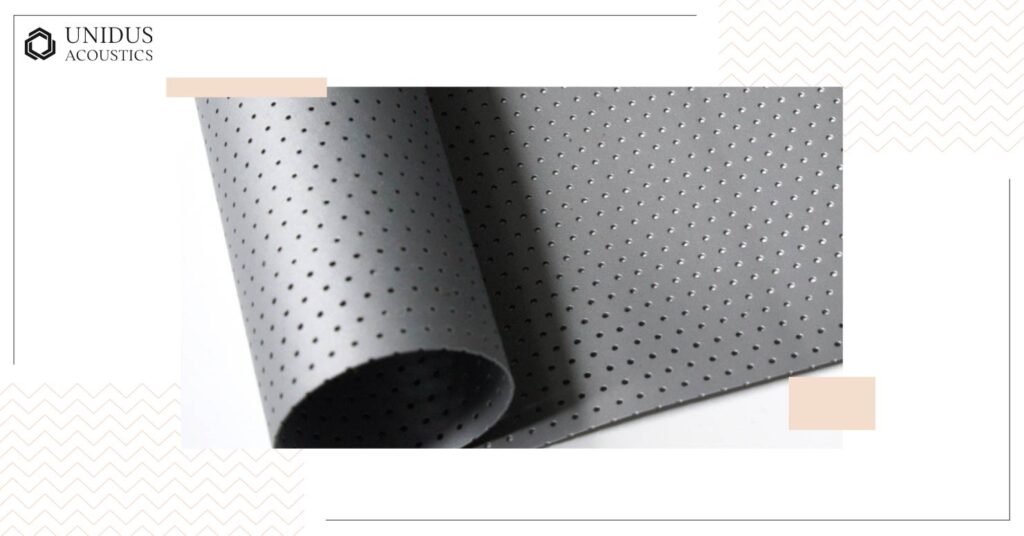
This type of fabric is designed to allow sound waves to pass through it with minimal resistance, so that the absorptive core material behind it can do its job. The fabric itself contributes negligibly to acoustic performance; its only job is to cover the absorber without impeding it.
Acoustically transparent fabrics are lightweight and open-weave. When stretched across a wall or ceiling panel, sound passes through to the mineral wool or polyester fibre core, which converts it to heat. The visual finish and colour are the fabric’s primary contributions to the installation; the acoustic work happens in the core behind it.
Sound-Blocking Fabric
This is a denser, heavier material, sometimes combined with a mass-loaded vinyl layer, designed to reduce the transmission of sound from one space to another. Unlike acoustically transparent fabric, its function is to reflect and block sound rather than allow it through.
In commercial acoustic installations, sound-blocking fabric appears in movable acoustic curtains, heavy partition screens, and temporary room dividers. These are used where permanent walls aren’t possible and some isolation, not just absorption, is needed.
How Soundproof Fabric Works in Practice
When sound waves hit a fabric-wrapped panel in a conference room, the majority of that energy passes through the outer fabric layer. Inside the panel, the porous core material (typically recycled polyester fibre or stone wool) converts the sound energy to a negligible amount of heat through air molecule friction within the fibrous structure. Only a small fraction of the original sound is reflected back into the room.
This is what sound absorption means in technical terms. Sound absorption means preventing reflected sound from building up inside the room. It has nothing to do with stopping sound from entering. The NRC rating of a fabric-wrapped panel assembly describes the proportion of incident sound energy absorbed.
The fabric’s contribution to the NRC number is minimal, which is precisely why fabric selection matters. Specifying a standard upholstery fabric or canvas backing, rather than an acoustically transparent weave, can reduce the effective NRC of the assembled panel enough to notice in a critical listening environment.
Where Acoustic Fabric Is Used in Commercial Installations
Acoustic fabric shows up across several product types in commercial interiors, and the application largely determines which category of fabric belongs there.
Fabric-Wrapped Wall Panels
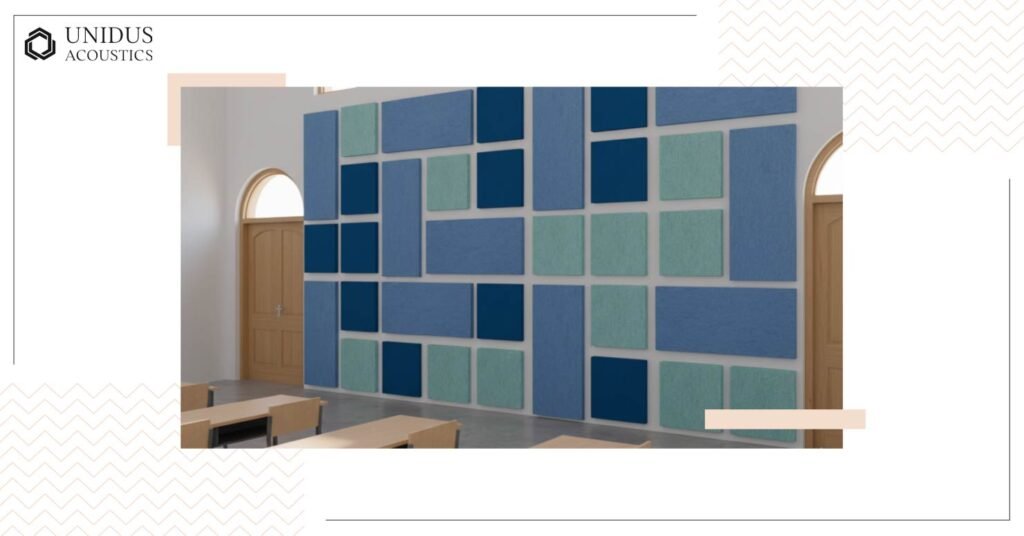
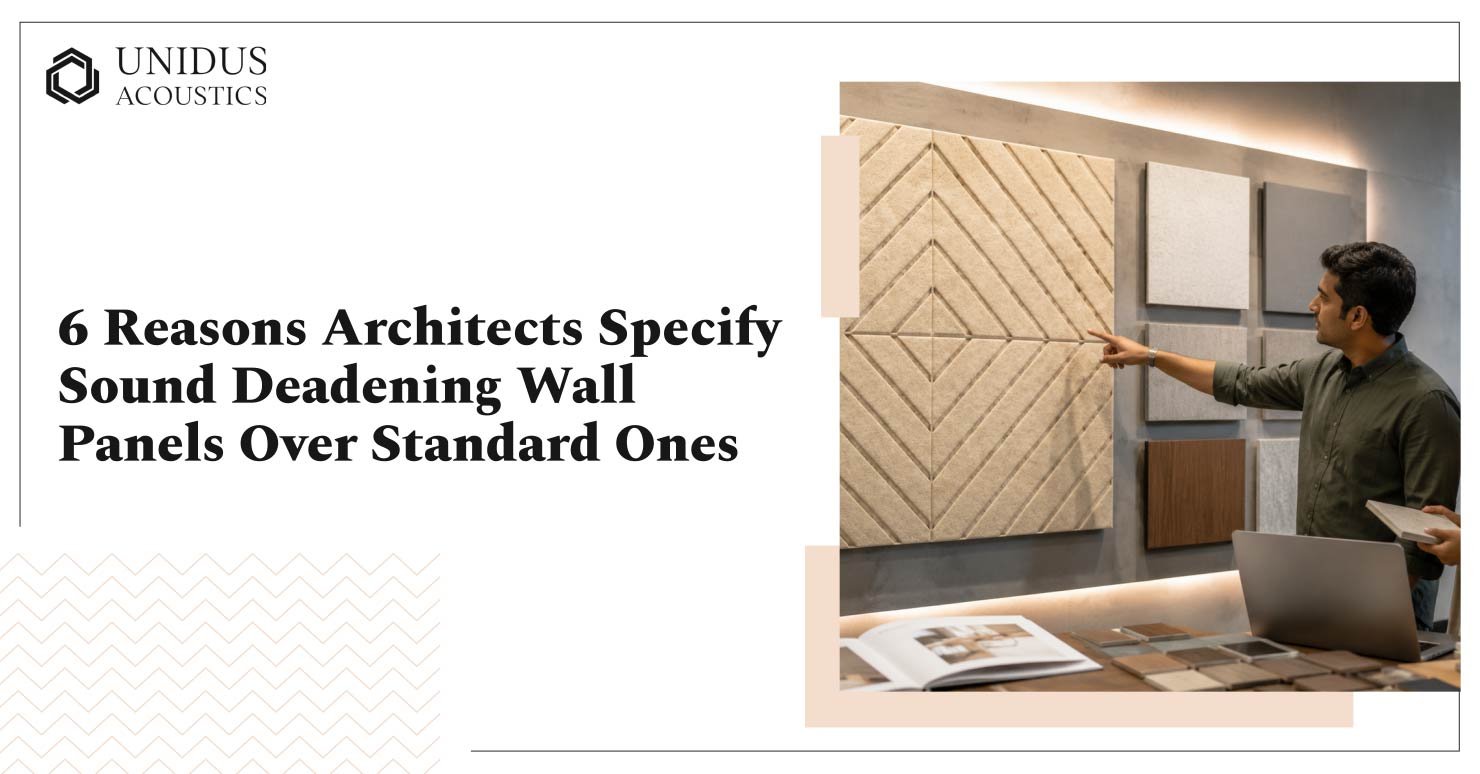
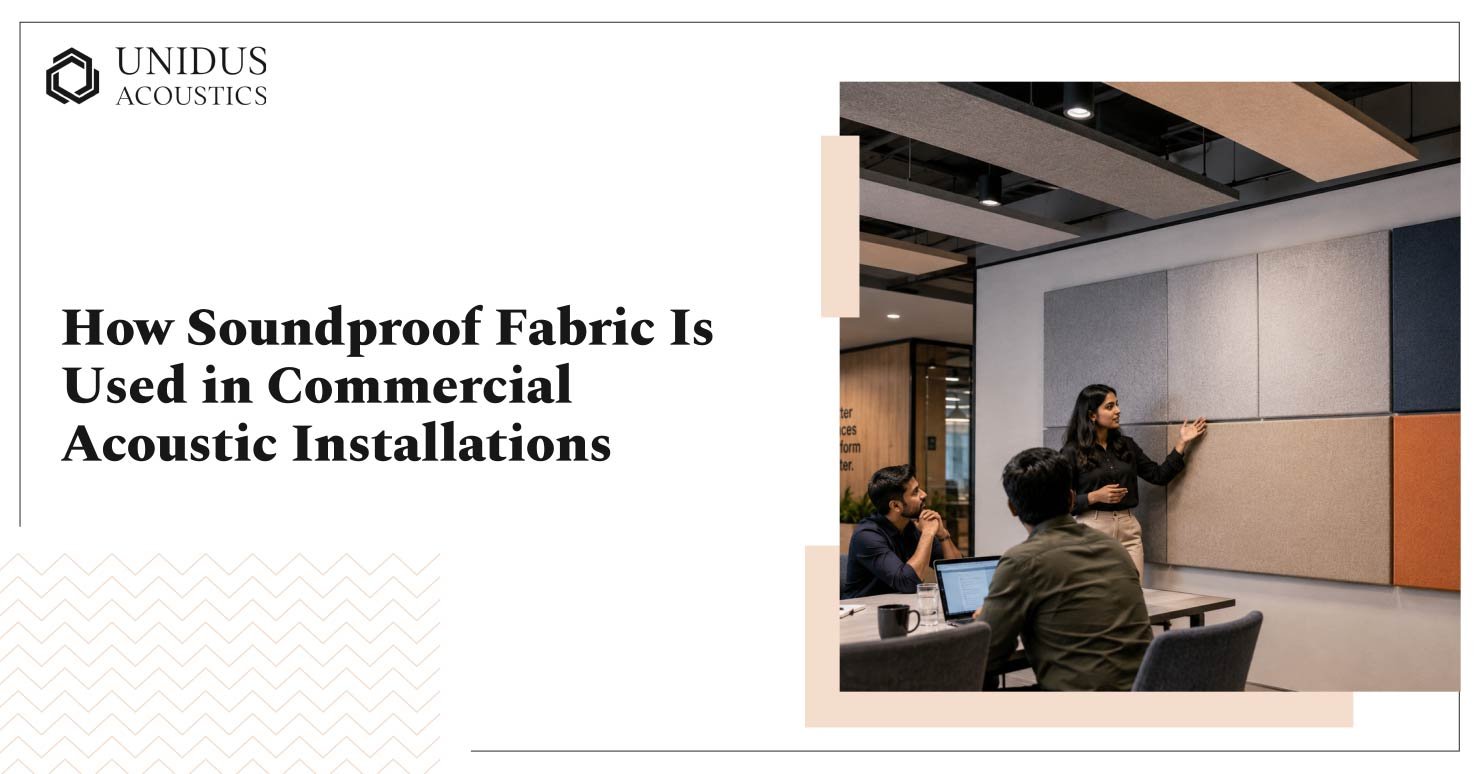
The most common application of soundproof fabric in commercial interiors is as the outer covering on wall-mounted absorption panels. These panels sit flat against walls, are recessed into joinery, or hang slightly proud of the surface on concealed fixings. In corporate offices and hotel meeting facilities, fabric-wrapped panels are specified because they deliver acoustic performance without looking like industrial acoustic treatment.
Fabric-wrapped panels are available in a wide range of colours, textures, and custom sizes. A panel wrapped in a tight-weave polyester behaves differently at the surface from one wrapped in a loose-weave wool, even when both fabrics look similar in a sample swatch.
Fabric-Faced Ceiling Systems
Fabric can be stretched across ceiling assemblies, particularly in applications where a smooth, seamless overhead surface is preferred over visible tile joints. These systems are used in auditoriums, boardrooms, and hospitality spaces where standard mineral fibre ceiling tiles would look too institutional for the brief.
The acoustic performance of stretched-fabric ceilings depends entirely on the insulation layer above, not the fabric. The soundproof fabric must be acoustically transparent for the system to function as designed.
Baffles, Clouds, and Hanging Panels
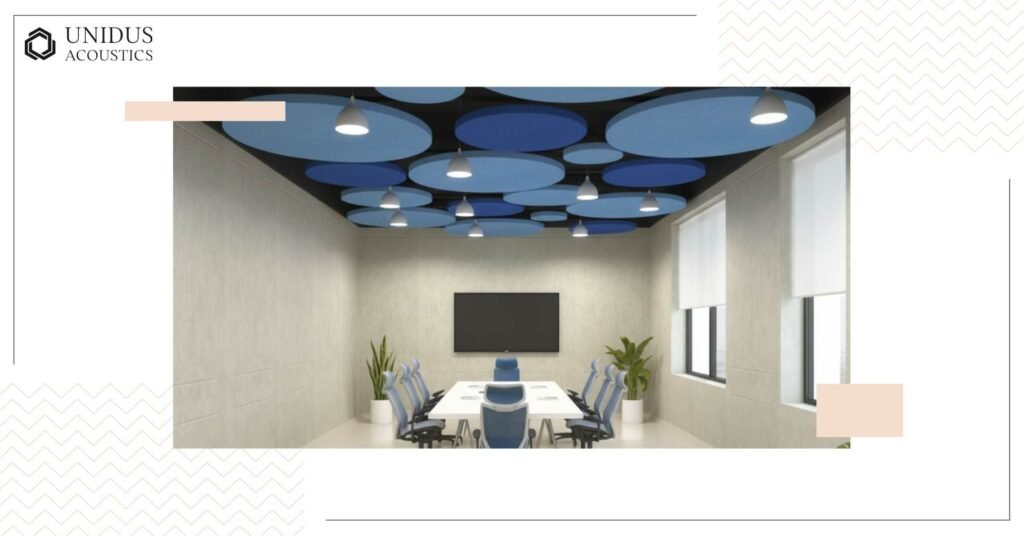
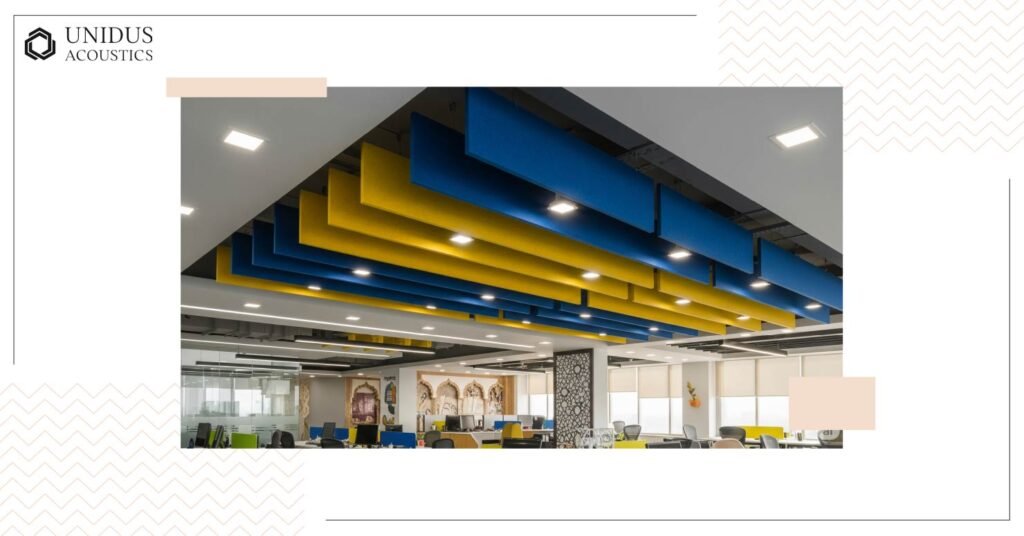
In large open volumes, fabric-wrapped panels are deployed as ceiling baffles or clouds, suspended horizontally or vertically from the ceiling structure. In open-plan offices with exposed concrete soffits, hanging fabric-wrapped baffles are often the only practical route to introducing absorption. The fabric finish allows these elements to function as design features rather than visible acoustic interventions.
Space Dividers and Movable Partitions
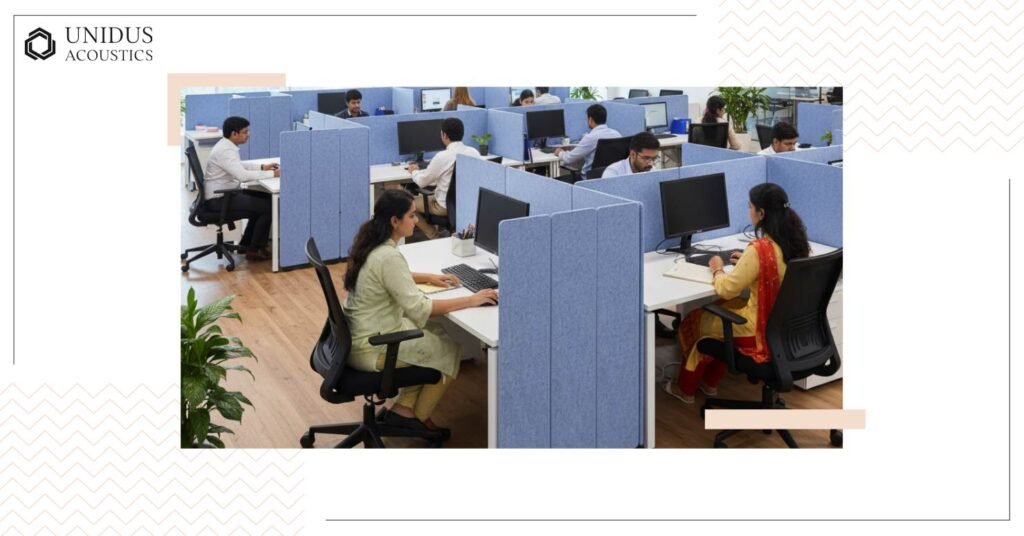
In flexible commercial layouts (co-working spaces, multi-function halls, training rooms), fabric-covered acoustic screens and movable partitions create temporary zone boundaries. These differ from wall panels in that they are freestanding or track-mounted, and their acoustic function combines absorption and partial sound blocking, depending on the core construction. A thin foam core provides absorption. With a dense mineral wool core, the panel adds some transmission loss on top of that.
What to Check When Specifying Acoustic Fabric

The soundproof fabric specification matters, but within a narrow set of parameters. The following are worth confirming before a product goes onto the schedule:
- Air flow resistance: Acoustically transparent fabric should have low air flow resistance. Fabrics with tight weaves or heavy coatings act partially as sound reflectors, reducing the assembly’s NRC.
- Weight and density: For sound-blocking applications (acoustic curtains, partition screens), heavier fabrics perform better. Weight per square metre is a useful comparator when evaluating options.
- Fire rating: In commercial and institutional buildings, wall and ceiling fabrics must meet fire classification requirements. Confirm the manufacturer’s test certificate for the specific fabric to the relevant standard. Don’t assume that a fabric marketed as acoustic or commercial is automatically fire-rated for public buildings.
- Cleanability: In high-traffic commercial environments, the ability to vacuum or wipe fabric surfaces without affecting acoustic performance is a practical requirement that gets overlooked in specifications. Confirm the cleanability method with the manufacturer.
Where Fabric-Based Acoustic Systems Have Limitations
Fabric-wrapped panels provide sound absorption, not sound isolation. They reduce echo and reverberation within the room; they do not stop sound from passing through walls or partitions to adjacent spaces. A conference room with a full wall of fabric-wrapped panels will still have speech transmission problems if the partition structure is lightweight and poorly sealed.
Soundproof fabric surfaces also accumulate dust over time. In very dusty environments, this can marginally reduce acoustic performance and create ongoing maintenance requirements. In humid environments, certain fabric types may develop mould, which means breathability and material compatibility with the specific space need to be considered during product selection, not assumed after installation.
Frequently Asked Questions
1. Can I use any soundproof fabric to wrap an acoustic panel?
Not if you want the panel to perform as rated. The fabric must be acoustically transparent, meaning it allows sound to pass through with minimal resistance. Standard furnishing fabrics, tight-weave textiles, and vinyl-backed materials all reduce the effective NRC of the panel beneath. Ask the panel manufacturer which fabric specifications have been tested with their core material.
2. How do I verify if a fabric is fire-rated for commercial use?
Request the fire classification test certificate from the manufacturer for the specific fabric, tested to the relevant Indian Standard (IS 1642) or the applicable international standard for the project. Do not assume a fabric sold as “acoustic” or “commercial” is automatically fire-rated for public buildings. This is a common gap in specification and is worth closing before ordering.
3. Are there sustainable soundproof fabric options?
Yes. Acoustic panels with recycled polyester fibre cores paired with recycled or low-impact fabric coverings are available and are increasingly specified on IGBC and LEED-aligned projects. Confirm the recycled content percentages and certifications with the manufacturer rather than accepting general sustainability claims.
Conclusion
Acoustic fabric is a small specification decision that has a measurable impact on how a panel system performs. Getting the category right, confirming fire ratings, and checking air flow resistance before ordering takes less time than resolving an underperforming installation after the fact.
With 40+ years in acoustic solutions, Unidus Acoustics has in-house capability to engineer and deliver bespoke fabric-wrapped panels and ceiling systems for commercial interiors. The U-Tone acoustic panel range is available in 64+ shades, with a recycled polyester fibre core, NRC ratings of 0.70–0.90, and a Class B1 fire rating. Beyond panels, Unidus works across wall systems, ceiling baffles, clouds, space dividers, and acoustic pods, covering the full range of applications discussed in this guide. For architects and designers working through a current specification, contact us.