
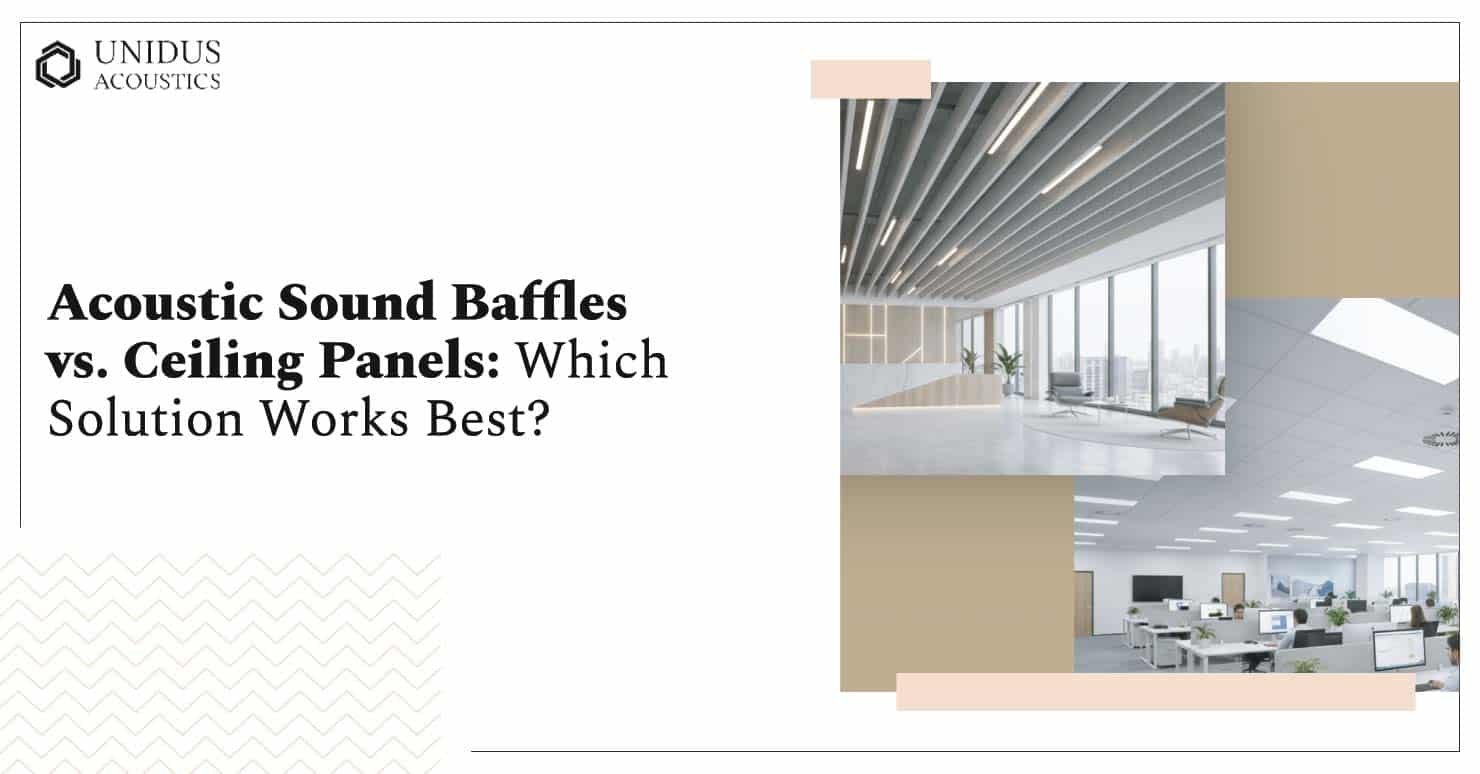
Acoustic sound baffles are vertically suspended panels hung from the ceiling to intercept sound waves before they scatter across a space. Acoustic ceiling panels are horizontal, grid-installed tiles that provide uniform sound absorption across the floor area below them. The core difference: baffles intercept sound from multiple directions and suit open or high-ceiling spaces; ceiling panels deliver consistent, predictable coverage in enclosed rooms.
Key Takeaways
- Acoustic sound baffles are suspended vertically and work best in open-plan offices, high-ceiling spaces, and design-led projects where visual integration matters.
- Ceiling panels sit horizontally in a grid and deliver consistent, cost-effective sound absorption in enclosed rooms like meeting rooms and classrooms.
- The main performance difference is NRC: high-performance baffles reach 0.90–1.00; standard ceiling panels typically sit at 0.50–0.75.
- Baffles integrate naturally with linear LEDs and pendant lights; ceiling panels pair with recessed downlights in standard grid layouts.
- Many commercial projects use both in combination, with baffles over open zones and ceiling panels in enclosed areas.
Understanding Acoustic Challenges in Commercial Spaces
Before choosing between acoustic sound baffles and ceiling panels, it’s important to understand the challenges that poor acoustics create in commercial spaces.
1. How Noise Affects Productivity in Commercial Spaces
Noise in commercial environments is more than a distraction. Conversations, background chatter, or the hum of equipment can create constant disruption. This reduces focus, lowers productivity, and makes collaborative work more difficult.
2. How Poor Acoustics Affects Comfort and Wellbeing
Poor acoustics also lead to echo, muffled speech, and lack of clarity. Over time, this contributes to stress, fatigue, and dissatisfaction, directly affecting both employee wellbeing and client experience.
From Traditional Ceiling Panels to Modern Acoustic Baffles
Ceiling panels have long been the standard for managing acoustics in commercial spaces, offering reliable performance and cost-effective installation. They remain a practical choice for many conventional projects.
As commercial environments evolved, the limitations of panels, particularly in open layouts, high ceilings, and modern designs, became more apparent. This led architects and designers to explore acoustic sound baffles, which provide greater flexibility and design integration while addressing complex acoustic challenges.
Understanding the strengths of both options allows decision-makers to select the solution, or combination, that best balances functionality, aesthetics, and productivity.
Acoustic Sound Baffles: A Modern Solution for Open Designs
Among the modern alternatives, acoustic sound baffles have quickly emerged as a preferred choice. Acoustic sound baffles are suspended vertically from ceilings, intercepting sound waves before they scatter. They are especially effective in open or high-ceiling spaces.
- Superior sound absorption: Target mid-to-high frequencies, reducing echo.
- Design integration: Available in custom shapes, colours, and finishes to blend with modern interiors.
- Minimal disruption: Quick installation without heavy structural work.
- Spatial flexibility: Allow natural light, ventilation, and creative lighting integration.
In offices, studios, and hospitality venues, baffles combine functionality with visual elegance, creating quieter environments without compromising aesthetics.
Ceiling Panels: A Reliable Traditional Approach
While sound baffles bring flexibility and a modern design edge, ceiling panels remain a tried-and-tested solution that continues to deliver dependable results in many commercial environments
Ceiling panels have long been the go-to solution for noise control. Installed in horizontal grids, they provide uniform coverage across entire spaces.
- Consistent performance: Reliable noise absorption across large areas.
- Material versatility: Options in fabric, wood, metal, or mineral fibres.
- Cost-effectiveness: Ideal for straightforward projects with limited design demands.
However, panels are less effective in very large or irregularly shaped spaces. They also limit ceiling design flexibility, making them less suitable where modern open designs are a priority.
Acoustic Sound Baffles vs Ceiling Panels: A Quick Comparison
| Features | Acoustic Baffles | Acoustic Ceiling Panels |
|---|---|---|
| Installation | Suspended vertically from the ceiling | Horizontal, grid-mounted |
| Best for | Open-plan offices, high ceilings, atriums | Enclosed rooms, classrooms, meeting rooms |
| Sound absorption | Targets mid-to-high frequencies; high NRC possible | Consistent, uniform absorption across flat areas |
| Design flexibility | High – custom shapes, colours, finishes | Moderate – material variety, limited form |
| Lighting compatibility | Integrates with linear LEDs and pendant fixtures | Works with recessed downlights and troffers |
| Cost | Higher (custom fabrication) | Lower (standard grid systems) |
| Ceiling height | Performs better in taller spaces | More effective in standard ceiling heights |
With both baffles and ceiling panels offering distinct advantages, the real challenge lies in knowing which option works best for a given environment. Understanding when to choose one over the other helps architects, designers, and businesses make informed decisions that balance cost, functionality, and aesthetics
When to Choose Acoustic Sound Baffles
When deciding where acoustic sound baffles are most effective, it helps to consider the type of space and the specific acoustic challenges it presents. The following scenarios highlight where baffles provide the greatest benefit:
1. Acoustic Sound Baffles for Large Open-Plan Offices
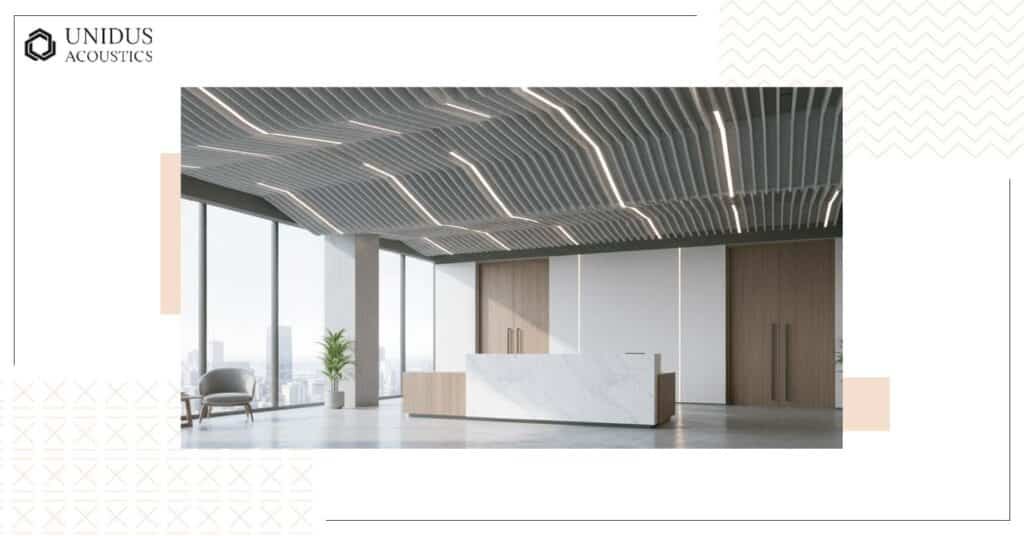
Open-plan layouts promote collaboration, but they also amplify noise. Echoes from conversations and background sounds quickly travel across these spaces, reducing productivity. Acoustic sound baffles absorb these reflections without obstructing the open-ceiling design, creating a quieter and more focused environment.
2. Acoustic Sound Baffles for High-Ceiling Spaces
In auditoriums, cafeterias, and studios, sound waves travel longer distances before being absorbed, which increases echo. Suspended baffles, arranged at varying heights, break up these reflections and improve speech clarity. They are particularly effective in large venues where maintaining acoustic comfort is essential for usability.
3. Acoustic Sound Baffles for Design-Led Projects
For projects where aesthetics and performance must align, baffles provide the perfect solution. Available in a variety of shapes, finishes, and colours, they double as decorative elements. Architects and designers often use them to add rhythm and texture to ceilings while maintaining superior noise reduction.
͏͏When to Choose Ceiling Panels
When considering spaces where ceiling panels are most effective, it’s important to focus on practical needs and room characteristics. The following scenarios highlight where panels provide reliable and cost-efficient acoustic control:
͏1. Acoustic Ceiling Panels for Smaller Enclosed Rooms
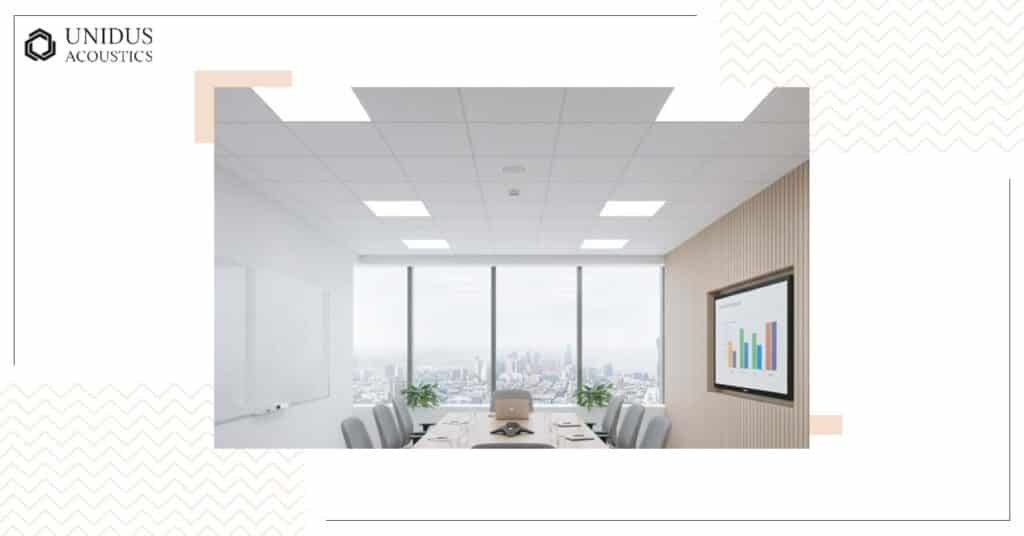
Spaces such as classrooms, meeting rooms, or private offices often need consistent and straightforward noise control. Ceiling panels, with their uniform grid layout, provide reliable coverage that keeps echoes under control in these compact environments.
2. Acoustic Ceiling Panels for Projects on a Budget
For businesses prioritising cost-effectiveness, ceiling panels are often the practical choice. They deliver dependable sound absorption at a lower price point, making them ideal for projects where budget constraints outweigh the need for high-end design features.
3. ͏Acoustic Ceiling Panels for Flat-Ceiling Spaces
Ceiling panels integrate seamlessly into flat or suspended ceilings. Their grid installation provides broad coverage without interfering with lighting, ventilation, or other building services. This makes them especially suitable for conventional office layouts or spaces with standard ceiling structures
By understanding the nature of the space, decision-makers can balance cost, functionality, and design. Often, a hybrid approach works best — combining baffles with wall panels or ceiling elements to achieve layered acoustic performance.
How Architects and Designers Decide Between Baffles and Panels
Once the acoustic needs of a space are understood, architects and designers carefully weigh the merits of baffles and ceiling panels. Their choice is shaped by performance, aesthetics, and practicality.
Why They Choose Acoustic Sound Baffles
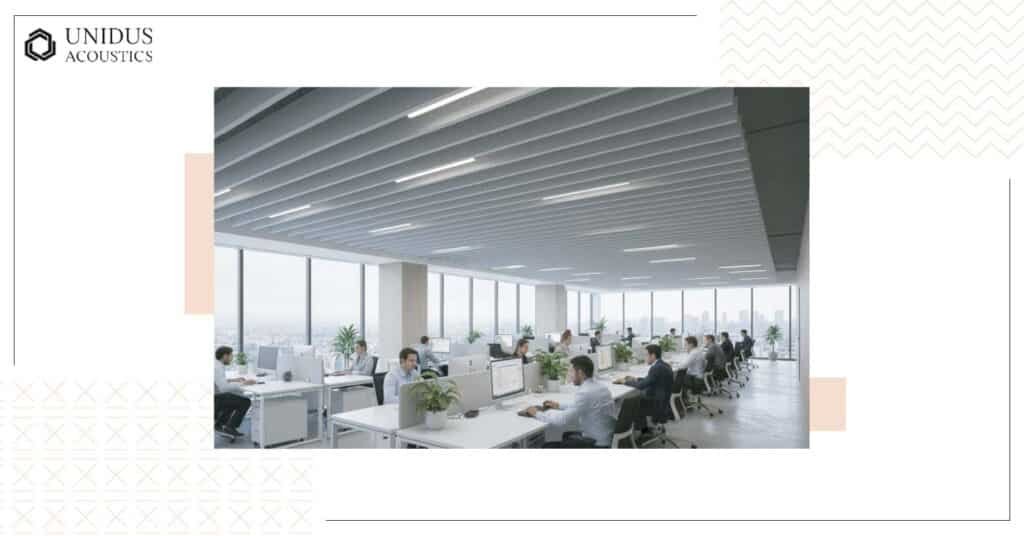
In open-plan offices, studios, or high-ceiling venues, baffles deliver targeted sound absorption while complementing contemporary design. Architects prefer them for their seamless integration with lighting, ventilation, and open-ceiling concepts. Designers value their flexibility in shape, finish, and colour, which transforms them into both functional and decorative elements.
Why They Choose Ceiling Panels
When consistency and cost-effectiveness are priorities, ceiling panels become the natural choice. Architects favour their grid-based installation that provides reliable coverage across entire rooms. Designers recommend panels in projects where simplicity and uniformity matter most, such as classrooms, meeting rooms, and private offices
Many projects require a balance between functionality and visual appeal. Architects often combine acoustic baffles with ceiling panels or wall treatments to achieve layered sound control while preserving design intent.
Smaller or budget-focused spaces lean toward ceiling panels, while large-scale, design-led environments benefit from baffles. The choice ultimately balances resources, space, and long-term acoustic goals.
Frequently Asked Questions
1. Are acoustic sound baffles better than ceiling panels?
Neither is universally better. Acoustic sound baffles perform better in open-plan offices, high-ceiling venues, and design-led projects where visual impact matters. Ceiling panels are more cost-effective and reliable for enclosed spaces like meeting rooms and classrooms. Many projects use both in combination.
2. What is the NRC rating of acoustic sound baffles vs ceiling panels?
High-performance acoustic baffles can achieve an NRC of 0.90 to 1.00, absorbing nearly all incident sound. Standard acoustic ceiling panels typically range from NRC 0.50 to 0.75. The gap is most significant in large or reverberant spaces.
3. Can acoustic baffles replace ceiling panels in commercial offices?
In open-plan offices with high ceilings, baffles can replace ceiling panels entirely. In lower-ceiling enclosed offices, ceiling panels often remain the more practical choice. A hybrid approach (baffles over open areas, panels in enclosed rooms) is common in large commercial fit-outs.
4. Do acoustic ceiling panels work with integrated lighting?
Yes. Acoustic ceiling panels pair well with recessed LED downlights and troffer fittings in a standard grid layout. Acoustic baffles integrate with linear LEDs and pendant fixtures. Both approaches allow the ceiling to serve sound control and illumination simultaneously.
5. Which is better for auditoriums – baffles or ceiling panels?
Auditoriums generally benefit more from acoustic baffles, particularly suspended baffles at varying heights. The longer sound travel distance in high-ceiling performance spaces means baffles intercept reflections more effectively than flat horizontal panels. Custom ceiling clouds are also commonly used for this application.
Conclusion
When it comes to acoustic sound baffles vs. ceiling panels, the right solution depends on the unique needs of each project. Ceiling panels remain dependable in straightforward spaces where consistency matters, while acoustic sound baffles shine in modern, open, and design-driven environments.
With over 40 years of expertise, Unidus Acoustics delivers tailored solutions that harmonise sound, design, and functionality, transforming offices, studios, and commercial spaces into environments where people can focus, collaborate, and thrive. Every project is approached with precision, ensuring that acoustic comfort enhances both productivity and aesthetics. Partnering with us means more than installing sound solutions; it’s about creating spaces that inspire, support well-being, and leave a lasting impression.
Are you ready to transform your commercial space into a productive and acoustically balanced environment? Contact us to explore our tailored acoustic solutions that combine functionality with design.