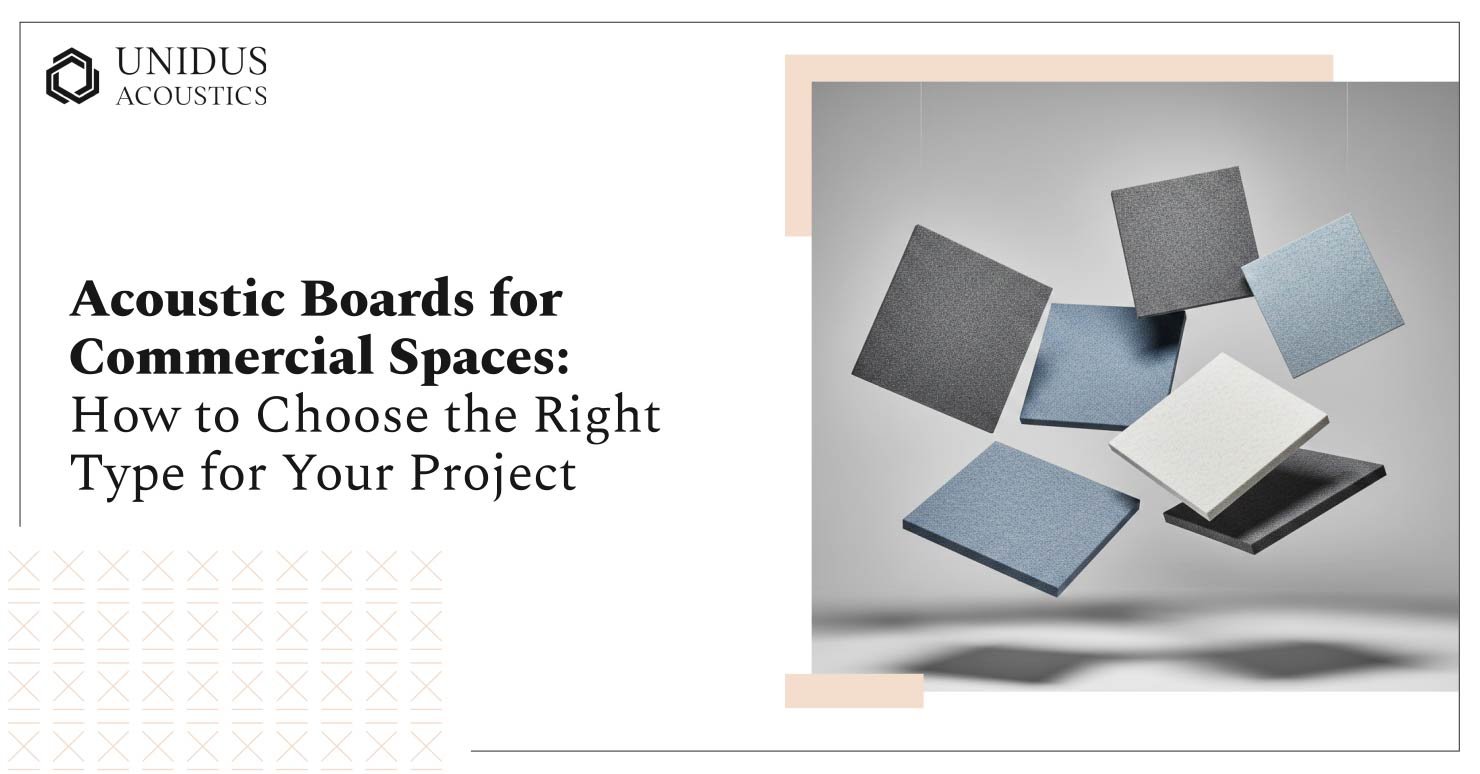
Acoustic boards are sound-absorbing panels installed on walls, ceilings, or as suspended elements to reduce reverberation, control echo, and improve speech clarity within a space. In commercial settings, they are specified in offices, educational institutions, hospitality venues, healthcare facilities, and auditoriums where noise control affects occupant productivity and experience. Unlike soundproofing barriers (which prevent sound transmission between rooms), acoustic boards address how sound behaves within a room.
Key Takeaways
- Acoustic boards absorb sound within a room to reduce reverberation and echo. They don’t block sound transmission between rooms, that’s a separate structural problem.
- The four main material families for commercial projects are mineral fibre, polyester fibre (PET), wood-based, and fabric-wrapped panels. Each serves a different combination of performance, aesthetic, and sustainability requirements.
- NRC (Noise Reduction Coefficient) is the primary performance measure. For most commercial spaces, an NRC of 0.75 or above on ceiling treatment is a practical minimum.
- Material selection, installation method, and fire rating need to be decided together, not independently. A board that performs well acoustically but fails a fire compliance check is unusable in commercial projects.
- Specifying on cost alone is the most common mistake on commercial acoustic projects. Board performance, durability, and aesthetic integration affect the total cost over the building’s operational life.
Understanding What Acoustic Boards Actually Do
Acoustic boards absorb sound energy to reduce reverberation and control noise levels within a space. They work by converting sound waves into minimal heat through friction as the waves penetrate porous or fibrous materials.
The distinction matters because many people confuse sound absorption with soundproofing. Acoustic wall panels and ceiling systems primarily address sound within a room (reverberation, echo, speech clarity). They don’t typically prevent sound transmission between rooms. That’s a different challenge requiring mass-loaded barriers and isolation strategies.
In commercial spaces, acoustic boards solve several common problems:
- Excessive echo in large open areas with hard surfaces.
- Poor speech intelligibility in meeting rooms or conference areas.
- Noise distraction in open-plan offices.
- Acoustic discomfort in hospitality or retail environments.
The board you choose needs to match the specific acoustic issue you’re addressing.
4 Key Selection Criteria for Acoustic Boards in Commercial Spaces
Let’s have a look at four key criteria for selecting acoustic boards for commercial spaces.
1. Material Composition and Core Structure
Acoustic boards come in several material families, each with distinct characteristics:
Mineral Fibre Boards
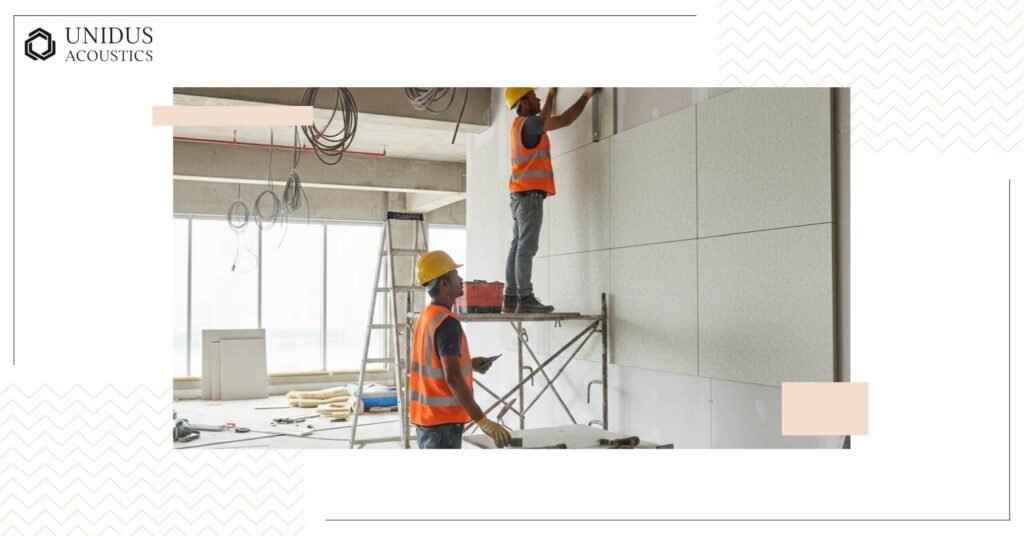
Fibreglass or mineral wool cores deliver excellent sound absorption across a broad frequency range. They’re particularly effective for speech frequencies, making them suitable for offices, meeting rooms, and educational spaces. Fire resistance is strong (typically Class A or Class 1 ratings), which matters for commercial code compliance.
Polyester Fibre Boards
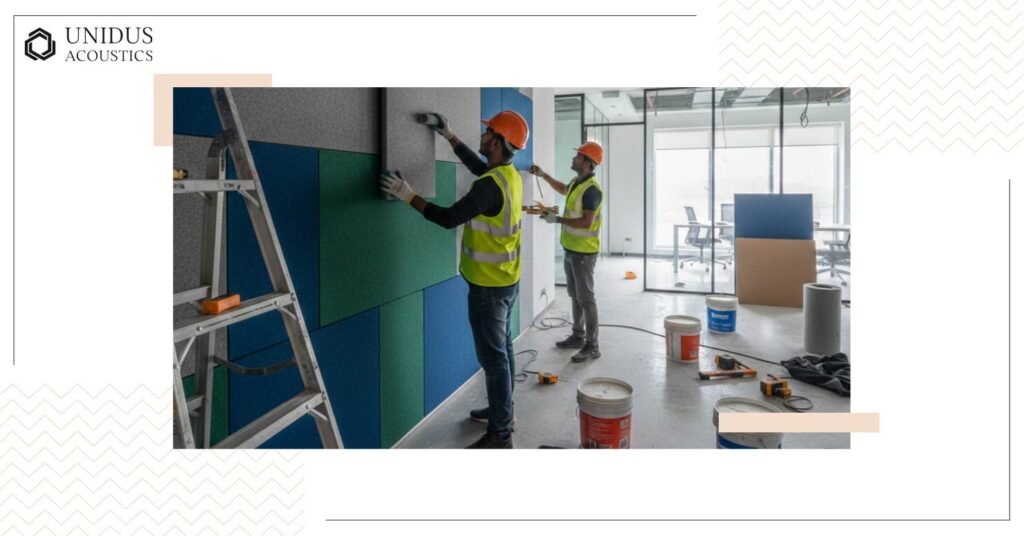
They offer similar acoustic performance but with environmental advantages. Made from recycled PET bottles in many cases, they appeal to projects with sustainability goals. They’re lighter weight than mineral fibre options, which can simplify installation.
Wood-based Acoustic Boards
Wood-based acoustic boards (including wood wool and perforated wood panels) bring warmth and natural materiality. They work well in hospitality, high-end corporate, or wellness-focused environments where the acoustic solution should feel organic rather than technical. Acoustic performance varies more widely in this category depending on perforation patterns, backing materials, and panel thickness.
Fabric-wrapped acoustic boards
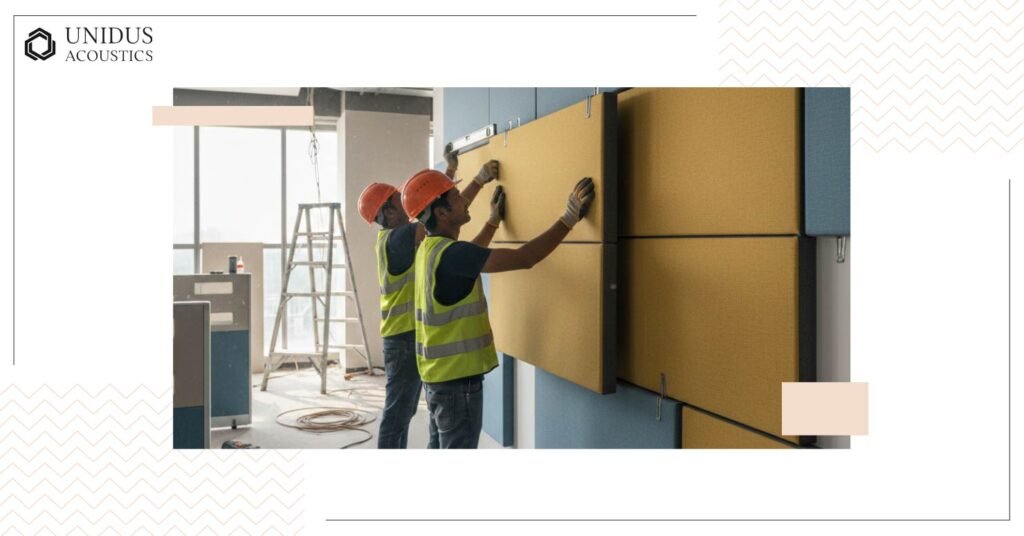
These types of acoustic boards use a core material (typically fibreglass or polyester) wrapped in acoustic-transparent fabric. The fabric provides nearly unlimited colour and texture options, making these boards highly customisable for projects with specific palette requirements. This is where bespoke acoustic solutions truly shine—we can match any design intent while maintaining acoustic performance.
2. Acoustic Performance Specifications
Two numbers matter most when evaluating acoustic boards for commercial spaces:
Noise Reduction Coefficient (NRC)
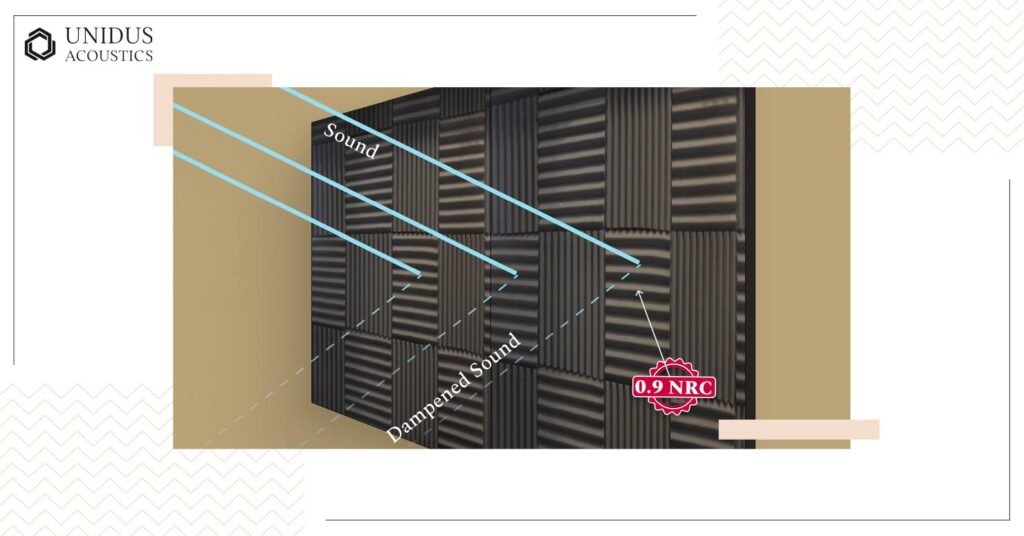
NRC measures how much sound a material absorbs, averaged across speech frequencies. The scale runs from 0 (perfect reflection) to 1.0 (perfect absorption). For commercial applications:
- NRC 0.60–0.75: Adequate for moderate acoustic control.
- NRC 0.75–0.90: Good performance for most commercial needs.
- NRC 0.90+: Excellent absorption for challenging acoustic environments.
Don’t assume higher is always better. A ceiling completely covered in NRC 1.0 material may make a space feel acoustically dead. Balance absorption with some reflective surfaces to maintain spatial liveliness.
Fire Safety Ratings
These ratings aren’t optional in commercial work. Look for boards with Class 1 or Class A fire ratings. Some materials also carry additional certifications for low smoke generation and non-toxic combustion, which matter in occupied commercial buildings.
3. Aesthetic Integration Considerations
Acoustic boards affect the visual character of a space significantly. Several factors influence how well they integrate with your design intent.
Colour Consistency
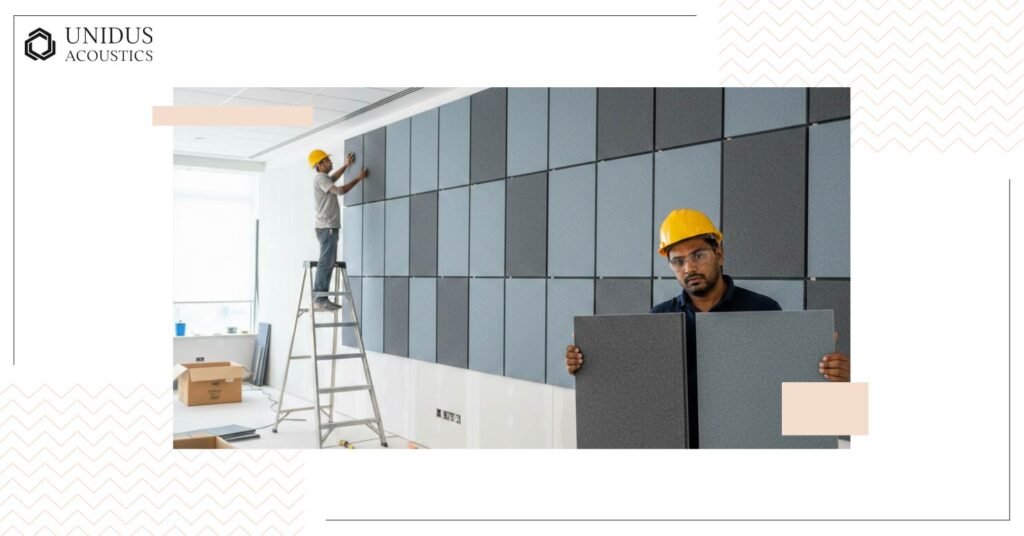
Colour consistency matters more than many designers expect. Some acoustic materials (particularly mineral fibre boards) can show colour variation between production runs. If you’re covering large areas, verify colour consistency guarantees from manufacturers. Our custom manufacturing process ensures batch-to-batch colour matching—critical for large commercial installations.
Edge Details
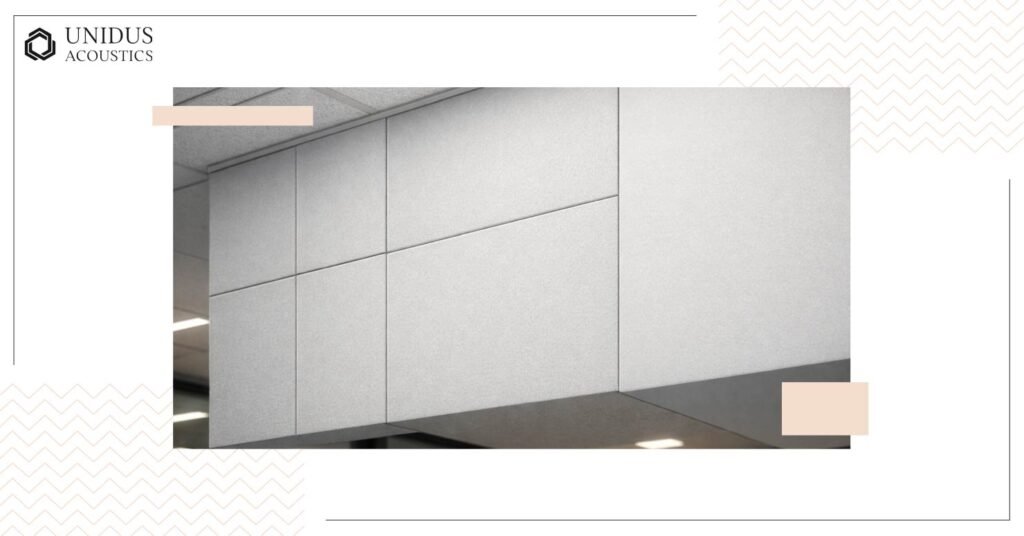
Edge details change the visual impact dramatically. Square edges create a grid pattern that reads as ceiling tiles. Bevelled or eased edges soften transitions. Concealed edge systems can create a monolithic appearance if that suits your design language.
Surface Texture and Finish Options
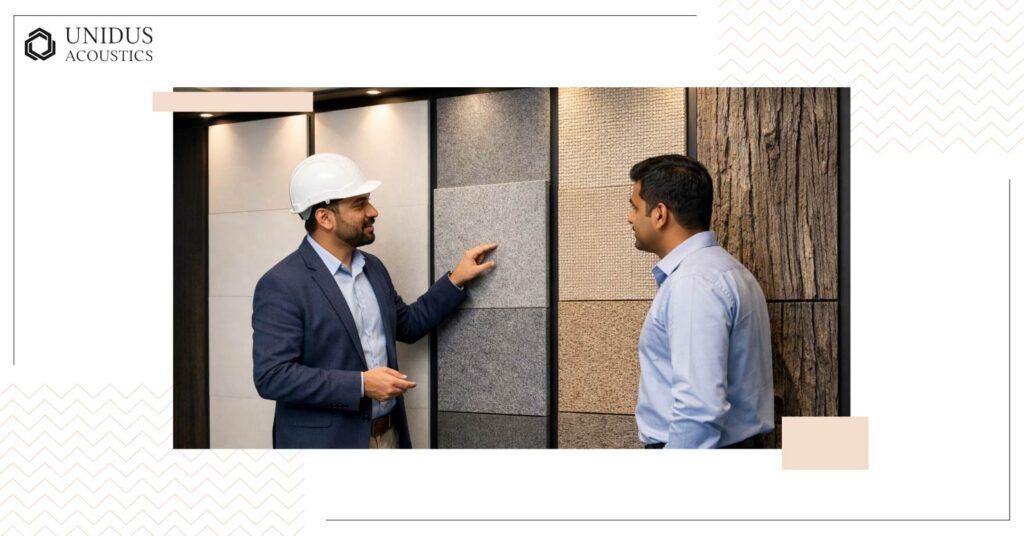
Surface texture and finish range from smooth to highly textured. Textured surfaces can hide minor imperfections and add visual interest through shadow play. Smooth surfaces read cleaner but show every installation flaw.
Thickness
Thickness affects both acoustic performance and visual presence. Thicker boards (25mm to 50mm) generally perform better acoustically, especially at lower frequencies. But in spaces with limited ceiling height or where you want minimal visual weight, thinner options (12mm to 25mm) might be necessary.
4. Installation Method and Flexibility
How acoustic boards mount influences both cost and design possibilities.
Suspended Ceiling Systems
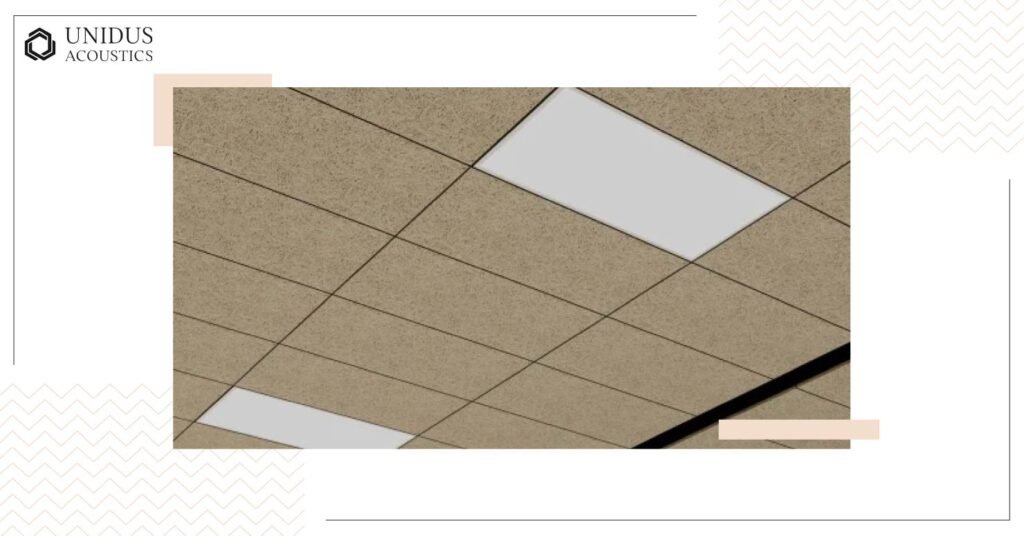
T-grid installations are economical and allow easy access to plenum spaces for maintenance. They work well in commercial offices, healthcare, and educational facilities. The trade-off is a utilitarian appearance that doesn’t suit every project’s aesthetic.
Direct-mount Applications
They attach boards to walls or ceilings using adhesive or mechanical fasteners. This approach offers more design flexibility (you can create patterns, spacing, and feature walls) but costs more in labour. Access to building systems becomes more complicated.
Baffle and Cloud Installations
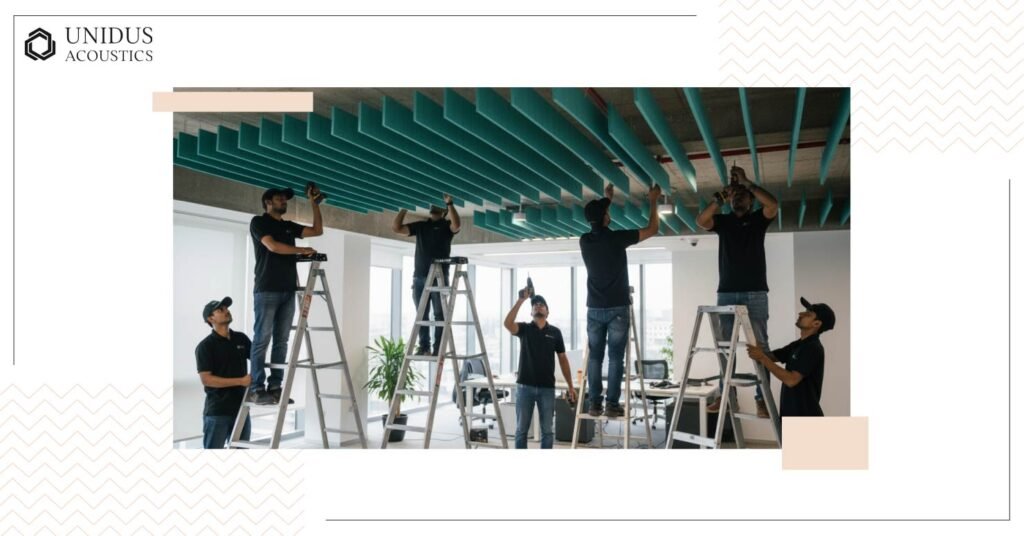
Ceiling Baffle and cloud installations suspend individual acoustic elements from the ceiling at varying heights. This strategy works particularly well in spaces with high ceilings or exposed structure where traditional ceiling systems aren’t appropriate. It also allows you to place acoustic treatment exactly where it’s needed rather than covering entire surfaces.
Comparing Acoustic Board Materials for Commercial Projects
| Material | Typical NRC Range | Best Fit | Key Advantage | Limitation |
|---|---|---|---|---|
| Mineral fibre / Stone wool | 0.75–0.90 | Offices, healthcare, education | Strong fire rating, excellent speech frequency absorption | Less design flexibility in finish options |
| Polyester fibre (PET) | 0.70–0.90 | Sustainable projects, high-visibility spaces | Recycled content, lightweight, customisable surface | Higher upfront cost than basic mineral fibre |
| Wood-based (wood wool, perforated wood) | 0.50–0.80 | Hospitality, wellness, high-end corporate | Natural materiality, warm aesthetic | Performance varies by perforation pattern and backing |
| Fabric-wrapped panels | 0.75–0.95 | Brand-driven fit-outs, custom colour projects | Near-unlimited finish options | Fabric needs periodic cleaning or replacement |
4 Common Selection Mistakes in Commercial Projects
Several missteps happen repeatedly across commercial acoustic projects.
1. Choosing Based Solely on Cost

The cheapest acoustic board rarely delivers the best value. Poor acoustic performance means you need more coverage area (negating the savings). Aesthetic compromises might require expensive workarounds elsewhere. Fire rating issues can derail entire projects.
2. Ignoring Installation Context
Acoustic boards that work beautifully in one application might fail in another. High-humidity environments (pools, commercial kitchens) need moisture-resistant options. High-traffic areas need durable surface finishes. Areas with regular cleaning requirements need wipeable or washable surfaces.
3. Forgetting About Maintenance and Lifecycle
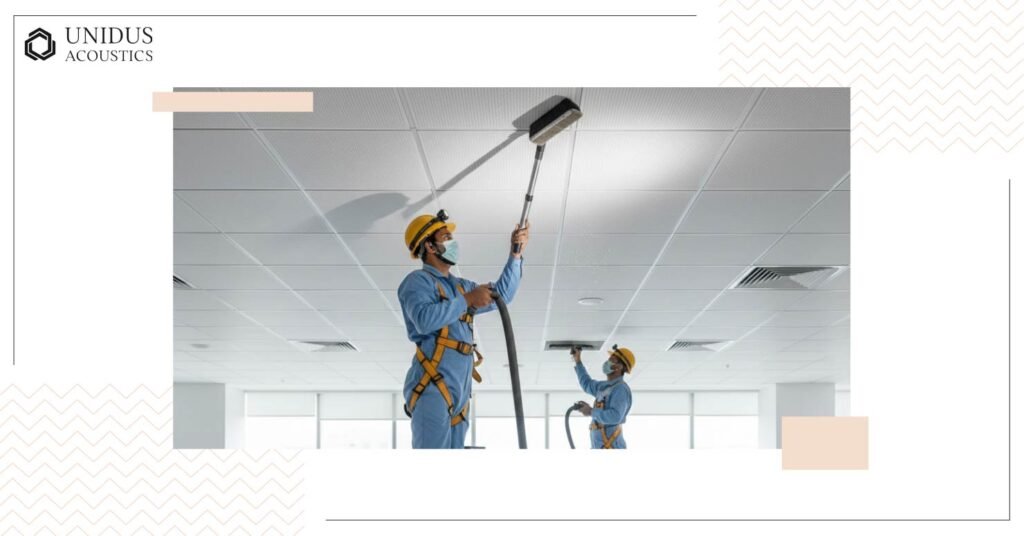
Some acoustic materials degrade over time (sagging, discolouration, dust accumulation). In commercial spaces with long operational lives, consider how boards will look and perform five or ten years after installation. Our institutional-grade materials are designed for durability in high-use commercial environments.
4. Specifying Without Testing
Product data sheets show lab performance. Real-world results depend on installation quality, room geometry, and how the acoustic treatment interacts with furnishings and occupancy patterns. For critical applications (performance venues, broadcast studios, high-end corporate), acoustic testing and modelling justify the investment.
Frequently Asked Questions: Acoustic Boards for Commercial Spaces
1. What is the difference between acoustic boards and soundproofing panels?
Acoustic boards absorb sound within a room to reduce echo and reverberation. Soundproofing panels (or barriers) are designed to block sound transmission between rooms. Most commercial acoustic projects need absorption first; soundproofing is a separate structural requirement.
2. What NRC rating should I specify for an open-plan office?
For open-plan offices, an NRC of 0.75 or above is generally adequate. For spaces with harder surfaces (glass, concrete, polished floors), aim for 0.85 or higher on the ceiling treatment to compensate.
3. Can acoustic boards be used outdoors or in high-humidity commercial spaces?
Standard mineral fibre and polyester fibre boards are not suitable for outdoor use or high-humidity environments like pools or commercial kitchens. Moisture-resistant variants with sealed edges and appropriate backing are available but need to be specified explicitly.
4. How thick should acoustic boards be for a commercial installation?
Panel thickness typically ranges from 12mm to 50mm. Thicker panels (25mm–50mm) perform better at lower frequencies. For spaces with height constraints or where visual weight matters, 12mm–20mm panels offer a compromise. The right choice depends on the room’s acoustic problem, not a universal specification.
5. Are acoustic boards fire-rated for commercial projects in India?
Fire rating varies by material and manufacturer. Mineral fibre and stone wool boards commonly achieve Class 1 fire ratings. Polyester fibre boards meet fire safety standards with appropriate treatment. Always request test certificates (third-party verified) when specifying for institutional or government projects where tender compliance is required.
Conclusion
Unidus Acoustics has worked on commercial acoustic projects across offices, hospitality, healthcare, and institutional spaces for 40 years across 16+ cities. Our product range covers all four material families discussed here, with custom manufacturing for colour matching, thickness specifications, and fire-rated variants. For architects and designers working on complex fit-outs, we can provide material samples, NRC test documentation, and fire certificates suitable for tender files.
Need acoustic boards for commercial spaces that deliver both performance and design flexibility
Get in Touch with our team to discuss product recommendations, technical specifications, and installation approaches that fit your project requirements.