

Wood wool acoustic panels look simple on a material board: a name, a texture swatch, sometimes an NRC number sitting next to it. Unidus Acoustics fields specification queries on this product most weeks, and they tend to arrive late, once the finish is locked in and the project timeline leaves...
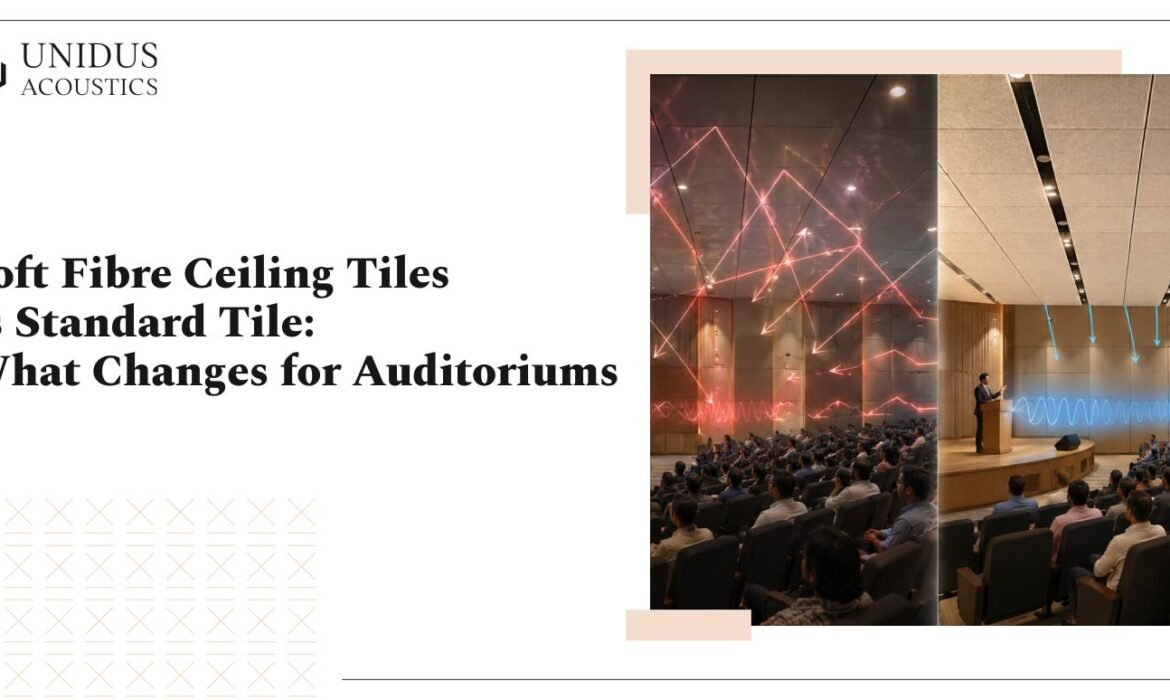
Soft Fibre Ceiling Tiles vs Standard Tile: What Changes for Auditoriums
An auditorium ceiling does more acoustic work than any other surface in the room. Swap a standard mineral fibre tile for a soft fibre one, and the change isn't cosmetic. It's how much sound the ceiling absorbs versus how much it bounces straight back at your audience. For a space...
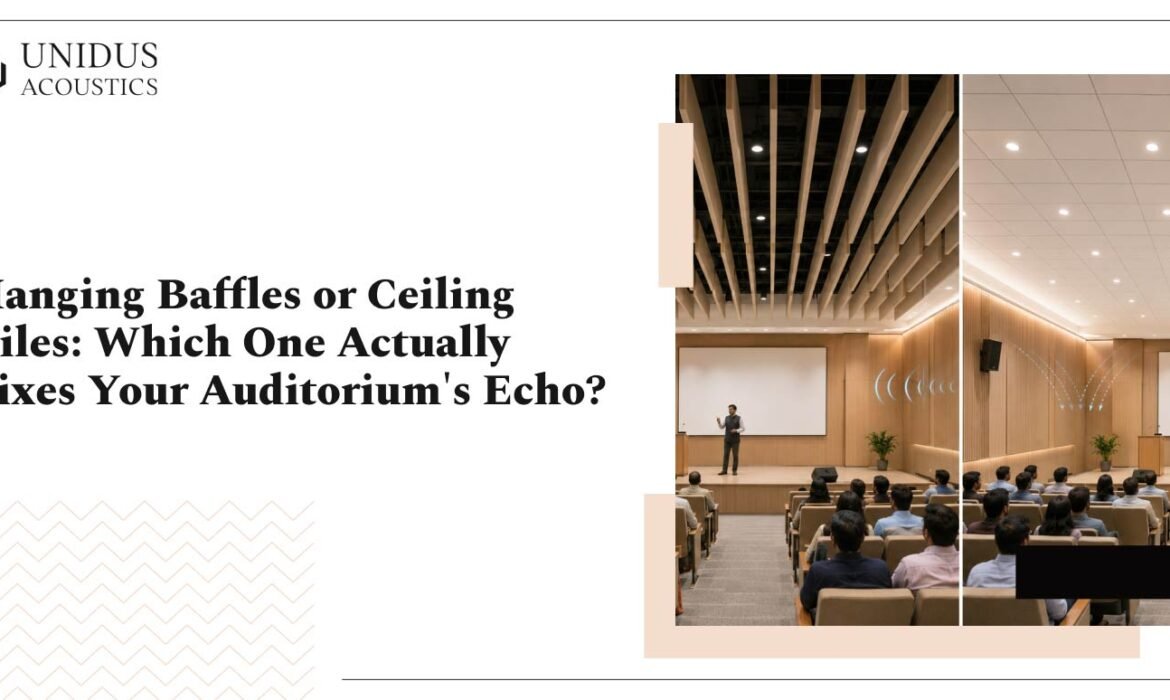
Hanging Baffles or Ceiling Tiles: Which One Actually Fixes Your Auditorium’s Echo?
If your auditorium still sounds like a train station after the acoustic panels went up, the ceiling is probably why. Walls catch some of the noise, but sound bounces off a flat, hard ceiling and keeps travelling across the room. That's what turns speech into a blur and applause into...
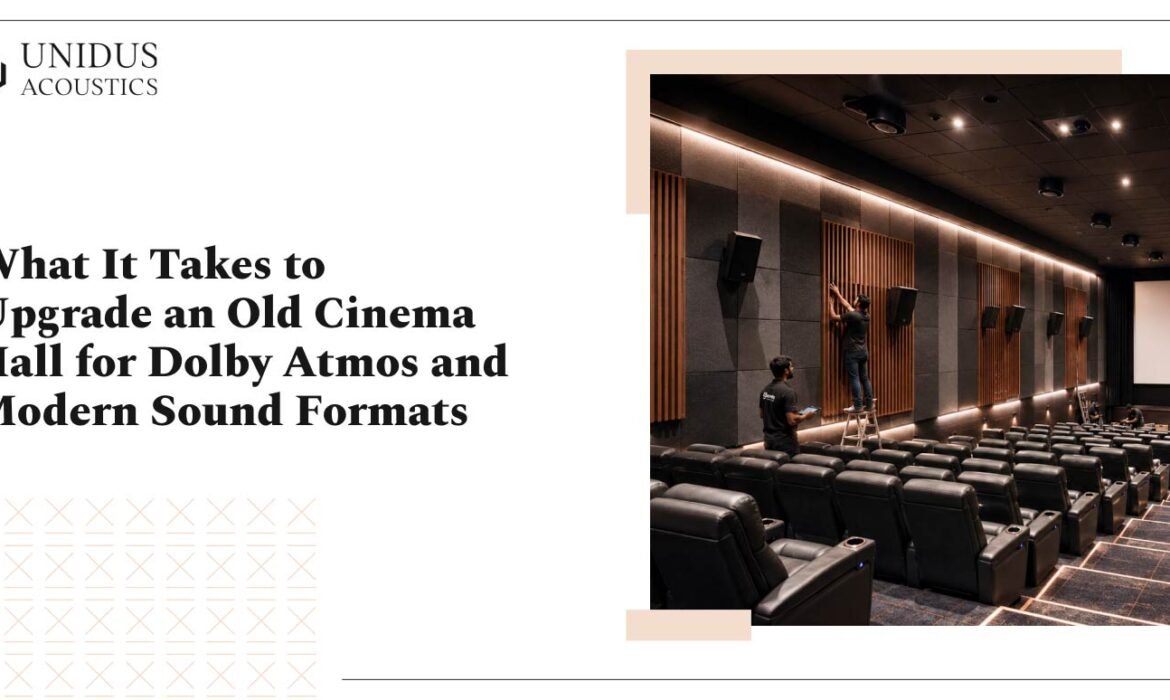
What It Takes to Upgrade an Old Cinema Hall for Dolby Atmos and Modern Sound Formats
Upgrading an old cinema hall for Dolby Atmos starts with the room, not the speakers. Dolby's own specification requires absorptive treatment around screen speakers and the side walls near them, and older auditoriums built for stereo or 5.1 sound rarely meet that already. Unidus Acoustics has seen this play out...
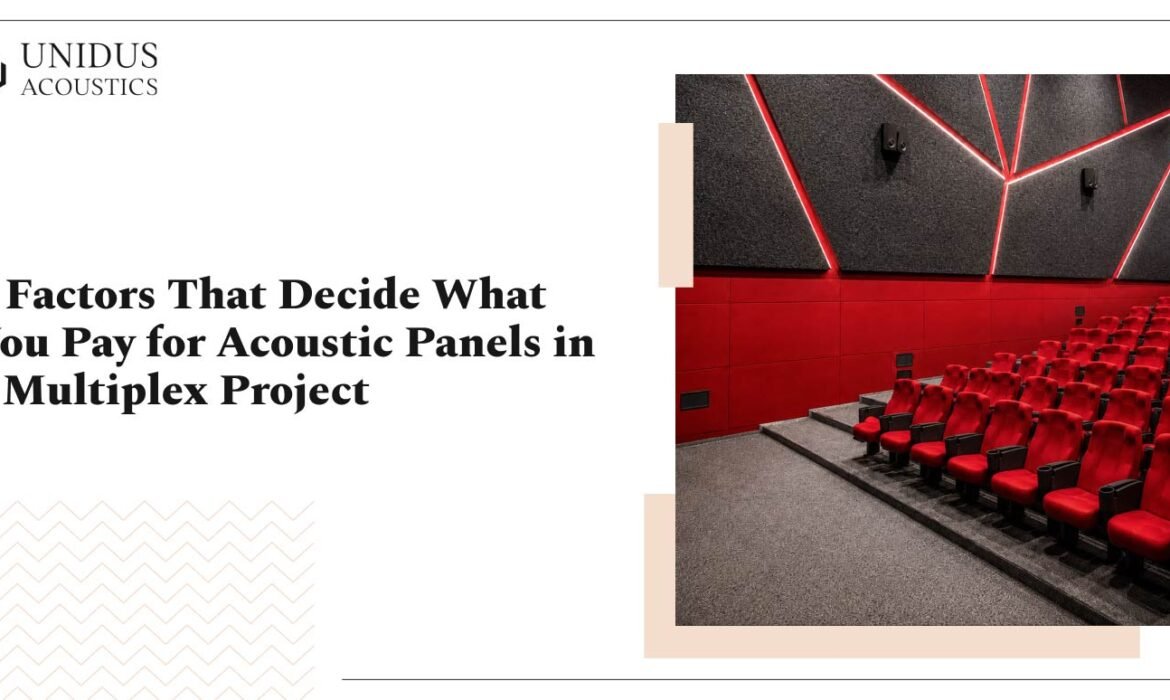
7 Factors That Decide What You Pay for Acoustic Panels for Multiplex Projects
The price of acoustic panels for multiplex projects depends on more than square footage. Material choice, fire rating, and finish customisation move the cost as much as area does. A gypsum tile and a fabric-wrapped polyester panel can carry the same NRC rating and still land at different price points....

Acoustic Solutions for Hotels and Hospitality Spaces: What Architects Need to Specify
Every hotel brief treats acoustics differently by space. Guest rooms need privacy, restaurants need warmth without echo, and banquet halls need to handle a wedding band one night and a boardroom the next. At Unidus Acoustics, we work with architects to match the right acoustic solution to each space before...