Last Updated on October 19, 2026 by unidus
When someone asks whether SGS and TÜV certified acoustic panels are worth a higher price, the question underneath it is simpler: can you trust a manufacturer’s performance claims without independent verification? Unidus Acoustics, with 40+ years of expertise in acoustic solutions for commercial spaces across India, has supplied panels to projects at both ends of this decision.
This article covers what these certifications test, where the risk sits without them, and how the cost actually works out in a commercial project.
Key Takeaways
- SGS, Intertek, and TÜV Rheinland certifications verify sound absorption performance and fire safety through independent laboratory testing, not manufacturer self-assessment.
- An uncertified acoustic panel can publish a high NRC value, but no independent record confirms it holds under standardised conditions.
- For commercial fit-outs in India, certified panels come with the technical documentation that procurement teams and project handover packages increasingly require.
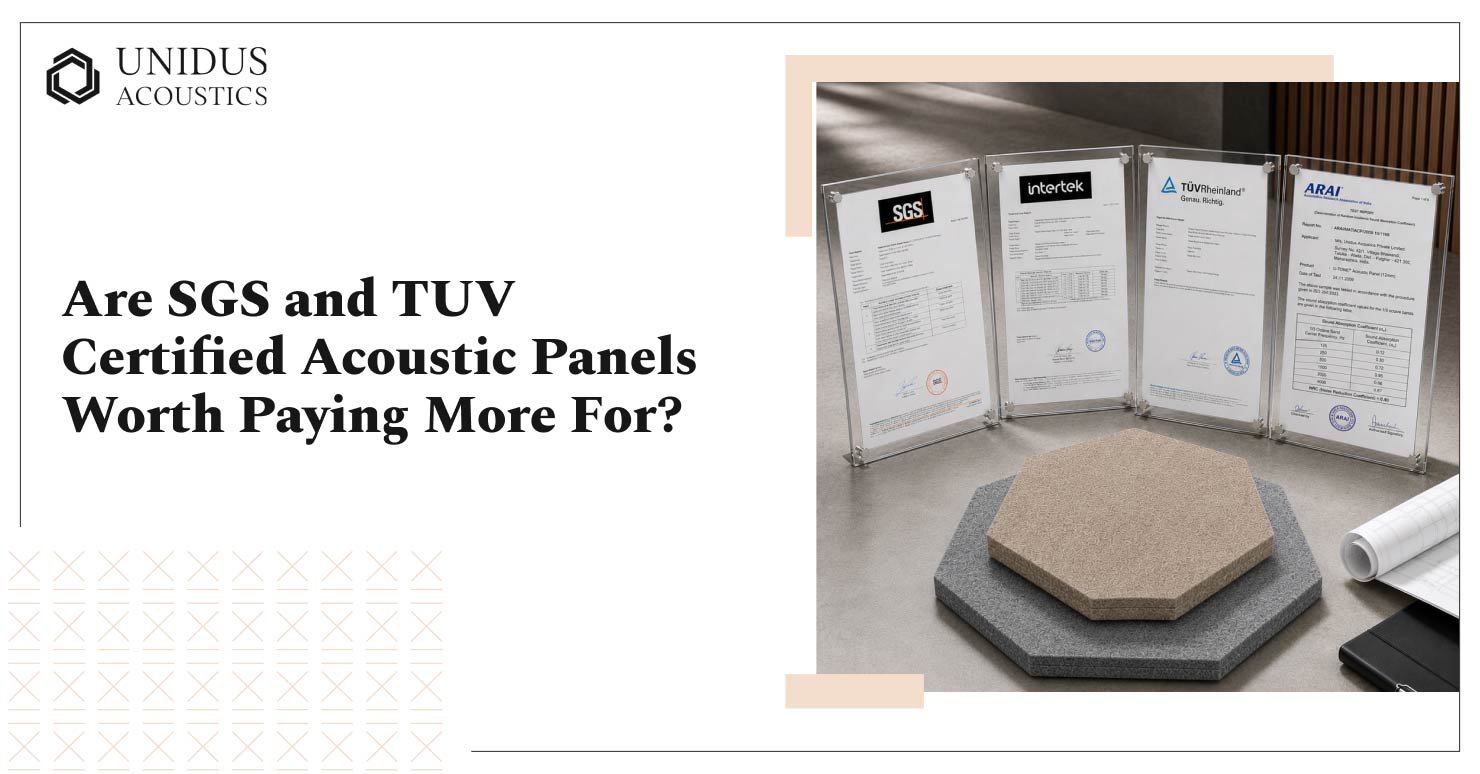
- Unidus Acoustics’ U-TONE panels carry SGS, Intertek, and TÜV Rheinland certifications, with independently verified NRC values between 0.70 and 0.90 and a Class B1 fire rating.
- The cost of acoustic panels SGS TÜV certified in India reflects the overhead of independent testing, not just a material difference.
What SGS and TÜV Rheinland Actually Test
Certification from SGS, Intertek, or TÜV Rheinland is not a badge programme. These are globally recognised third-party testing organisations that run independent laboratory evaluations of submitted products, and their results go on record separately from anything the manufacturer publishes. For acoustic wall panels, testing typically spans three areas.
Sound Absorption Performance
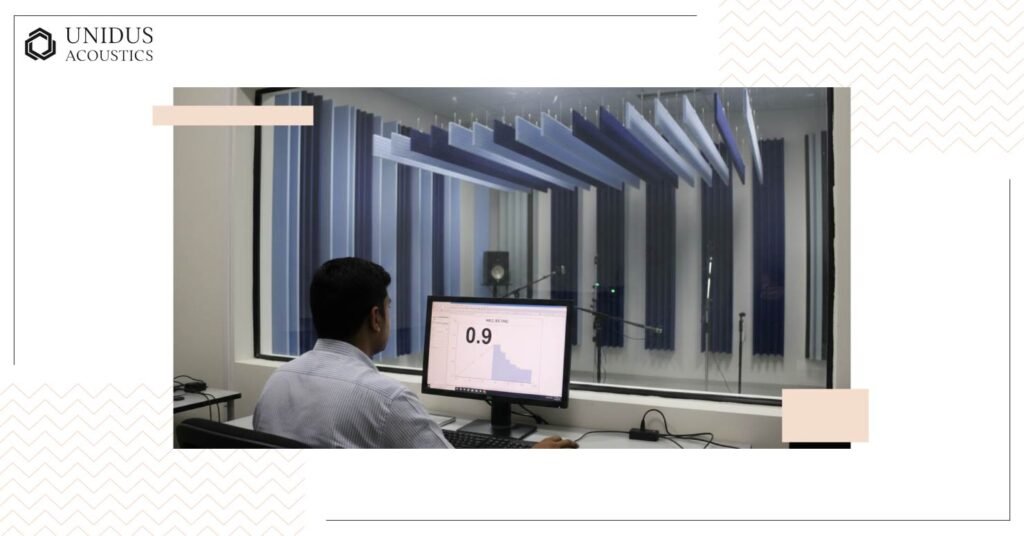
The central metric for any acoustic panel is its Noise Reduction Coefficient (NRC): a number between 0 and 1 that represents how much sound energy the panel absorbs rather than reflects. Manufacturers can publish self-reported NRC values, but SGS and TÜV Rheinland certification means those values were confirmed in an accredited laboratory under standardised conditions.
If a 50 mm polyester fibre panel claims NRC 0.85, certification confirms whether that number holds when tested by someone with no stake in the result. This matters where acoustic performance is designed to a specific target, since a gap between claimed and actual NRC in a boardroom or a classroom means the space never performs the way it was meant to.
Fire Safety Classification
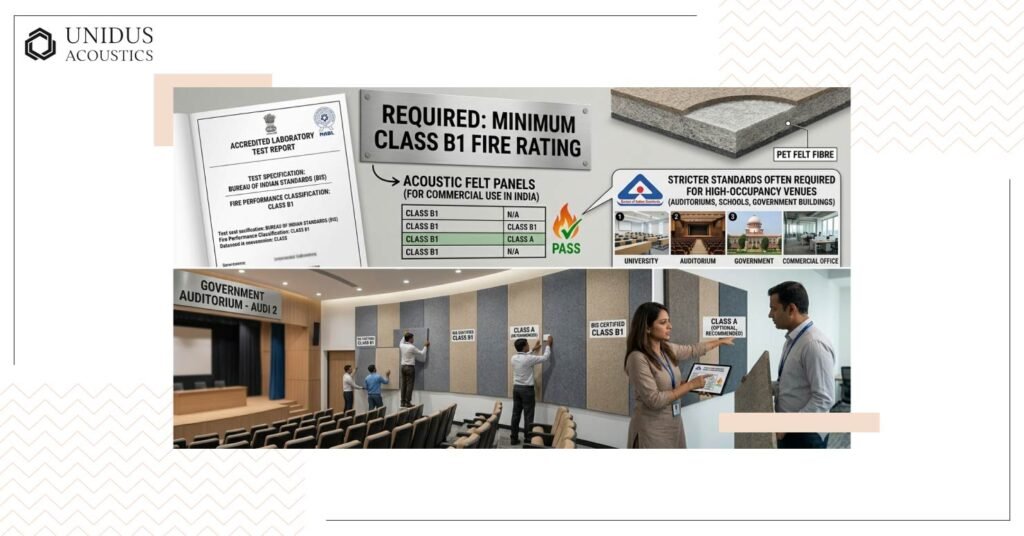
The Class B1 fire rating on U-TONE panels is independently tested: the material is flame-retardant and self-extinguishing, verified through TÜV Rheinland and SGS fire performance testing rather than an in-house evaluation.
In commercial fit-outs across India, fire safety documentation is increasingly part of the project handover package, and certified panels come with test reports that satisfy this cleanly. Fire performance also intersects with sustainability targets, and green building certification requirements for acoustic performance spell out what that documentation needs to cover.
Material Quality and Indoor Safety
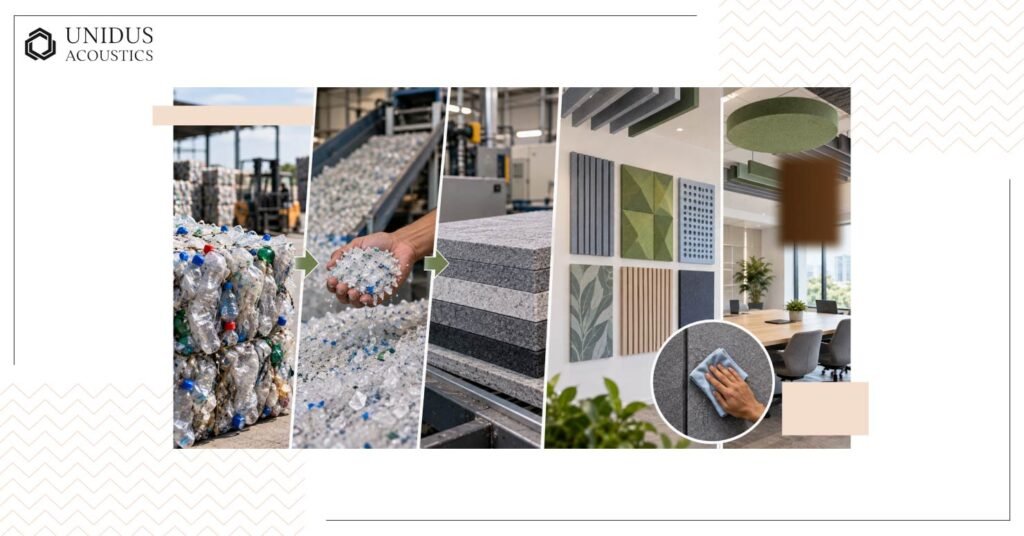
Certification bodies also test for VOC (volatile organic compound) emissions and material batch consistency. Acoustic panels sit at occupant height and remain in place for years, so independent testing confirms what ships from the factory matches what was evaluated. This is particularly relevant for fabric-wrapped acoustic panels and polyester fibre products, where the adhesives and backing materials contribute to overall emissions alongside the core.
Why This Matters More in Commercial Projects
For a home recording setup or a temporary installation, certification is less pressing. For commercial fit-outs, acoustic panel specification carries a longer accountability chain: architects, project managers, facility managers, and often the building owner or end tenants.
The Risk of Specifying Without Certification
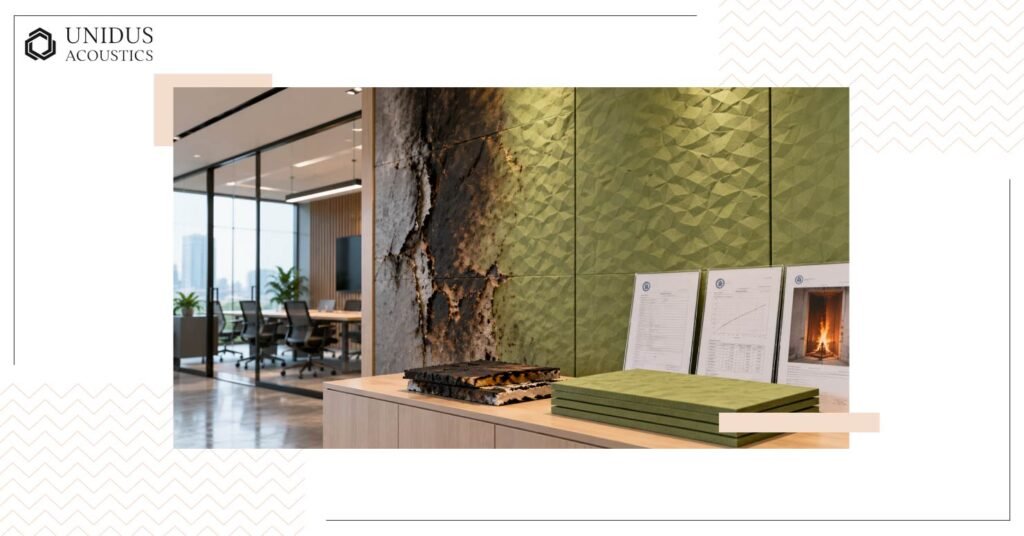
Uncertified panels are not automatically made from inferior materials, but they carry a specific documentation gap. If acoustic treatment fails to hit its design target because the NRC values were optimistic self-reports, the project team has no third-party test report to point to, and that gap tends to surface during handover rather than earlier, when it’s easier to fix, often alongside other common specification mistakes on acoustic panel projects in India.
Independent certification transfers some of that risk to an organisation that had no stake in the outcome. It doesn’t eliminate accountability, but it gives everyone on the project documented evidence that the product performed at the level it was specified for.
What Procurement Teams in India Are Starting to Require
Larger commercial clients in IT and healthcare are increasingly requesting test certificates as part of procurement documentation. Projects for clients like TCS, Infosys, AIIMS, and SBI already run this way, with technical documentation expected alongside pricing. Certified panels slot into that process cleanly; panels backed only by manufacturer self-reported data create friction at the documentation stage, which is why knowing what to ask when choosing an acoustic board manufacturer matters before committing.
Does Certification Actually Cost More?
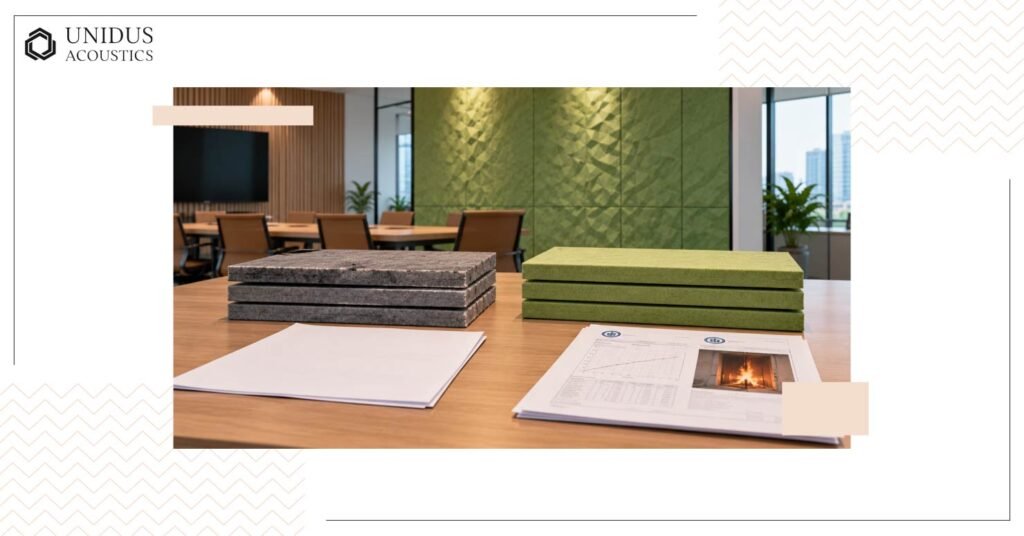
Sometimes, yes. Certified acoustic panels carry the overhead of independent laboratory testing and ongoing compliance audits, and that overhead is priced into the product.
But the comparison isn’t straightforward. An uncertified panel at a lower per-unit price carries a different cost: the cost of specification risk. If NRC values aren’t independently confirmed, the acoustic design may not perform as intended, and uncertified fire ratings carry the same documentation gap. Acoustic panel lifespan matters here too, since the material standards certification reinforces have a direct bearing on long-term performance, not just on day-one inspection.
For projects where rework gets expensive fast, the price difference between certified and uncertified panels is rarely the decisive variable.
Certification Is a Baseline, Not a Premium Tier
This framing matters. Certification from SGS, Intertek, or TÜV Rheinland isn’t a luxury feature reserved for high-budget projects; it’s a baseline quality control mechanism. In mature acoustic markets globally, specifying uncertified panels for commercial use is the exception. India’s commercial construction sector is moving the same way, with architects and procurement teams taking a more structured approach to material documentation as client expectations rise.
How Unidus Acoustics Approaches Certification
U-TONE acoustic panels from Unidus Acoustics carry SGS, Intertek, and TÜV Rheinland certifications across the product range. Sound absorption is independently verified at NRC values between 0.70 and 0.90 depending on panel configuration, and the Class B1 fire rating is maintained as a standard across the line rather than applied selectively to certain configurations.
For architects and designers evaluating acoustic panel options, certification coverage across the full product range, not just flagship SKUs, is a meaningful indicator of how a supplier treats compliance. That range also covers fluted acoustic panels and sound deadening wall panels, among other ceiling and wall solutions developed under the same certification framework.
If you are specifying for a project that requires acoustic performance documentation or fire-rated panel options, reach out to us.
Frequently Asked Questions
1. What does SGS certification test for in acoustic panels?
SGS evaluates acoustic panels across performance and safety parameters. For acoustic products, this typically includes sound absorption coefficients measured under standardised laboratory conditions and, depending on the product category, fire resistance and material safety testing. The specific tests depend on the certification standard applied.
2. Is TÜV Rheinland certification mandatory for acoustic panels in India?
TÜV Rheinland certification is not legally mandated for acoustic panels in India. It’s a German quality assurance standard applied globally, and for commercial clients who require third-party validation, it serves as a strong specification differentiator. It’s increasingly requested as part of commercial project documentation, particularly in corporate and institutional procurement.
3. Are certified acoustic panels always more expensive than uncertified options?
Certified panels typically carry a price premium reflecting the cost of independent testing and compliance audits, and the difference varies by supplier. For commercial projects, the more relevant comparison is the full cost of specification, not just the per-unit price.
4. What is the difference between SGS, Intertek, and TÜV Rheinland certification?
All three are globally recognised third-party testing and certification organisations. SGS and Intertek operate worldwide testing networks across multiple industries, while TÜV Rheinland is a German certification body known for product safety and materials testing. A panel holding certifications from more than one body has been independently evaluated across different accredited systems.