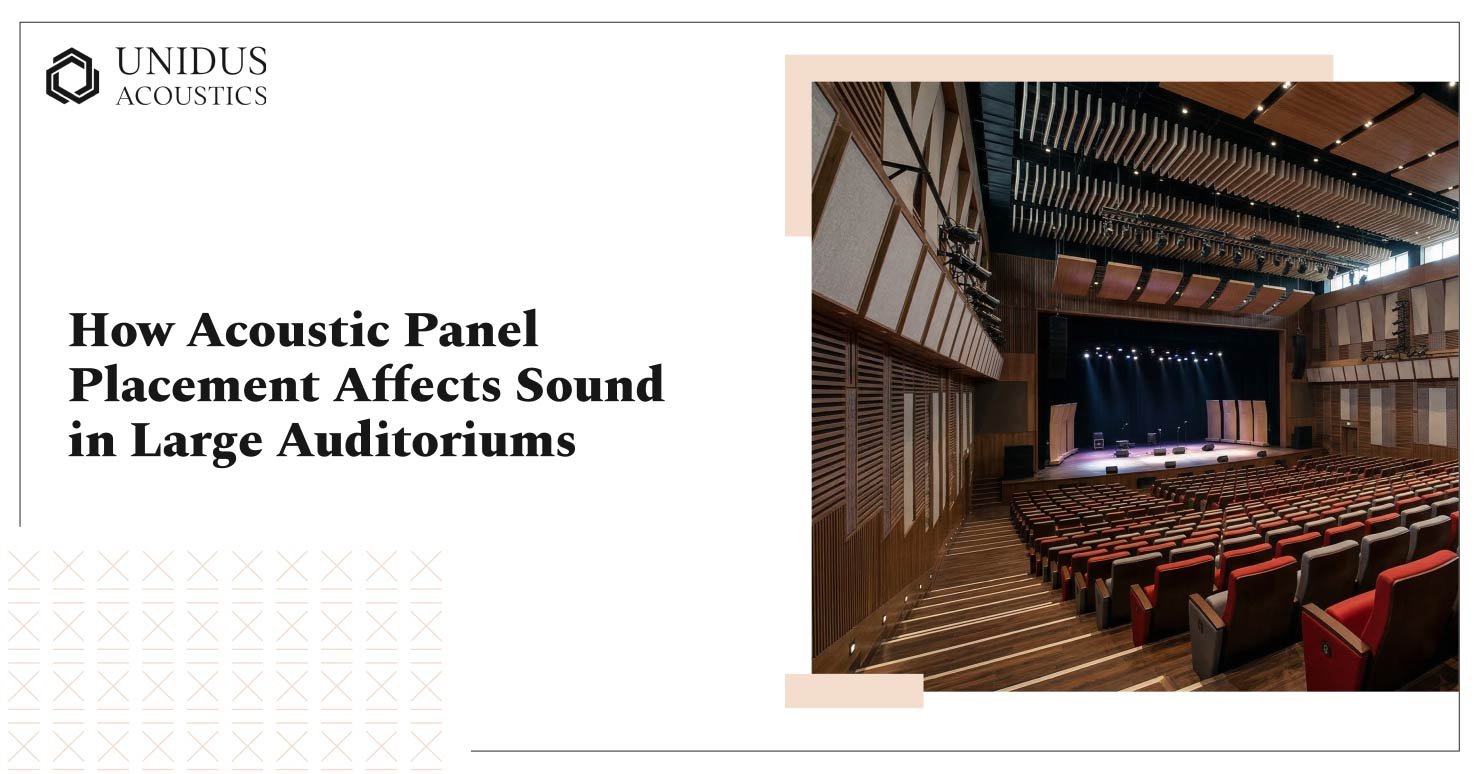
Acoustic panel placement affects sound in large auditoriums by controlling which reflections reach the audience, and when. The same set of panels can produce two completely different acoustic outcomes depending on where they’re placed. Architects deal with this contradiction constantly: a space that looks extraordinary can sound terrible if acoustic panel placement isn’t considered early in the design process.
This guide walks through the principles that govern how panels should be positioned in auditorium environments, and why getting this right from the start saves everyone significant rework later.
Key Takeaways
- Acoustic Panel placement, not just panel selection, determines whether an auditorium’s sound is clear or muddled. Identical panels can produce very different results depending on where they sit.
- Four zones drive most acoustic problems in large halls: rear walls, side walls, the ceiling, and audience seating.
- Rear walls need heavy absorption, or diffusion in an already over-damped room, to prevent the delayed “slap echo” this surface causes.
- Side walls need to break up parallel surfaces with angled or diffusive treatment to avoid flutter echo.
- Ceiling treatment works best as a hybrid: reflective panels near the front to project sound to the back rows, absorptive elements further back.
- Two mistakes repeat across projects: concentrating all absorption on one surface, and placing panels for visual symmetry rather than acoustic need.
Why Acoustic Panel Placement Matters
The most common misconception is that acoustic treatment is primarily a product selection problem. Pick panels with a good NRC rating, install enough of them, and the space will perform well. In practice, that’s rarely how it works.
Two auditoriums with identical panels can have completely different acoustic outcomes depending on where those panels are placed. Sound in a large room behaves predictably. It travels outward from the source, reflects off surfaces, and builds up as overlapping reflections. The goal of acoustic panel placement isn’t to eliminate all reflections. It’s to control which ones reach the audience, and when.
A space that absorbs too much feels dead and uncomfortable. One that absorbs too little produces echo, long reverberation tails, and muddled speech clarity. Placement determines that balance.
The Four Zones That Govern Auditorium Acoustics
Understanding where to place panels starts with understanding the surfaces that cause the most acoustic problems in large halls.
1. Rear Walls
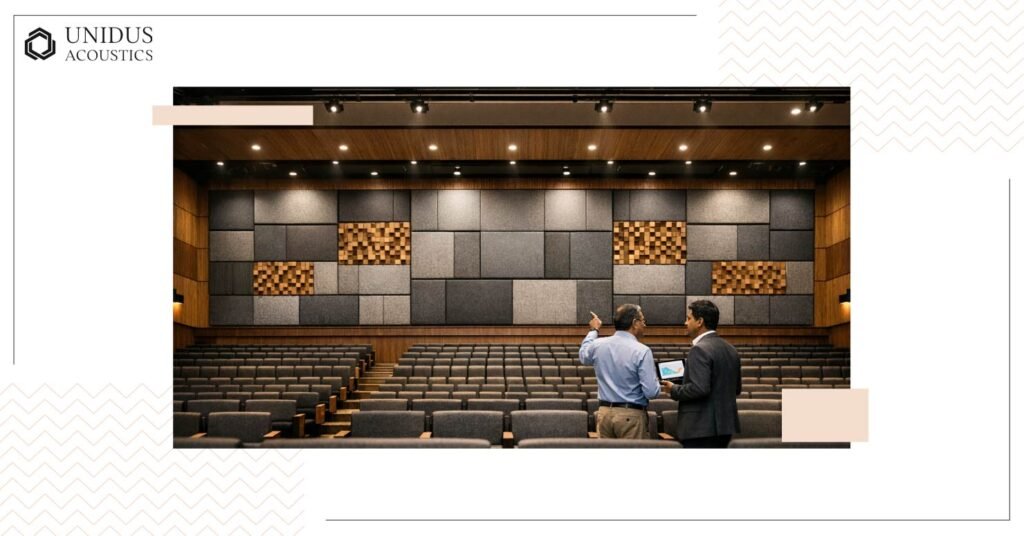
The rear wall is the most problematic surface in any auditorium. Sound from the stage travels the full length of the room, reflects off the rear wall, and returns toward the audience and stage with a significant delay. This delayed reflection is what causes the characteristic “slap echo” in poorly treated auditoriums.
Heavy absorption on the rear wall, or diffusion if the room is already over-damped, is non-negotiable in most large hall designs.
2. Side Walls
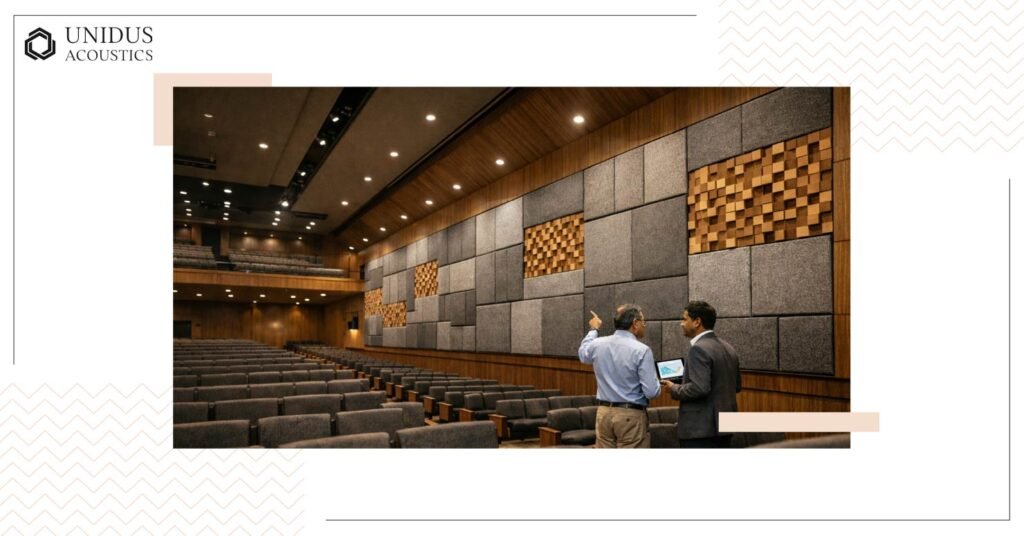
Side wall treatment depends heavily on room geometry. Parallel side walls create flutter echo, the rapid back-and-forth repetition of a sound that makes speech in particular extremely difficult to follow. Breaking up this parallelism with angled panels, fabric-wrapped wall panels, or alternating absorptive and diffusive surfaces is standard practice.
For auditoriums with tiered seating, the lower sections of side walls near the stage need more absorption than the upper sections, where sound pressure levels are lower.
3. The Ceiling
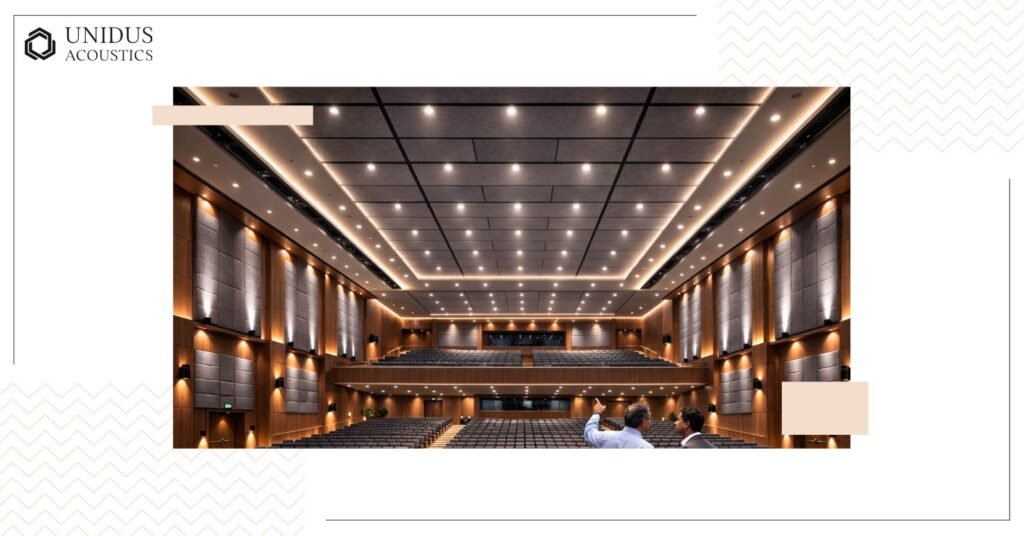
Ceiling treatment in auditoriums is where acoustic panel placement becomes most technically nuanced. A completely absorptive ceiling kills the useful early reflections that help sound reach the back rows. A completely reflective ceiling amplifies reverberation problems.
The typical approach is a hybrid: reflective panels near the front of the ceiling (to direct sound toward the audience) and absorptive elements further back. Products like U-TONE acoustic baffles and ceiling clouds are designed specifically for this kind of suspended ceiling application, where both performance and visual integration matter. This is also where computational design becomes valuable, because the optimal ceiling geometry varies significantly between rooms.
4. The Seating Variable
Audience seating provides significant absorption on its own, which means it functions less like a surface to treat and more like a design variable to account for. Designs that work well during an empty sound check can perform differently during a sold-out event. This variability is worth accounting for during the specification stage.
Auditorium Zone Treatment at a Glance
| Zone | Primary Problem | Recommended Treatment |
|---|---|---|
| Rear Walls | Delayed reflection causing “slap echo.” | Heavy absorption, or diffusion if the room is already over-damped. |
| Side Walls | Flutter echo from parallel surfaces. | Angled panels, fabric-wrapped panels, or alternating absorptive and diffusive surfaces. |
| Ceiling | Balancing early reflections against reverberation. | Hybrid approach: reflective panels near the front, absorptive elements further back. |
| Seating | Absorption varies between an empty room and a full house. | Account for this variability at the specification stage. |
Acoustic Panel Placement Mistakes That Show Up Repeatedly
Even in well-designed spaces, certain errors appear often enough to be worth calling out directly.
The first is concentrating all absorption in one area, usually the rear wall, and leaving other reflective surfaces untreated. This creates uneven acoustic conditions across the room. People seated in different areas have completely different listening experiences.
The second is placing panels purely for visual reasons. Acoustic panels are increasingly part of a room’s design language, which is a good thing, but panels positioned symmetrically for aesthetic balance don’t always align with where the acoustic problems actually are. Good acoustic panel placement starts with a room analysis, not a mood board.
Absorption, Diffusion, and When to Use Each
Absorption reduces the energy of a sound wave. Diffusion scatters it. Both are useful tools, but they solve different problems.
Absorption is appropriate where you need to reduce overall reverberation time or eliminate specific reflected sound paths. Diffusion is useful where you want to break up strong reflections without making a surface feel acoustically dead.
In large auditoriums, the rear and upper side walls often benefit from absorptive treatment, while the front ceiling and stage-flanking surfaces benefit from diffusion. Fabric acoustic wall panels, wood wool panels, and PET panels are commonly used for wall absorption and are effective for ceiling treatment.
Getting this mix right requires working through the room’s intended use. A space designed for speech clarity needs a shorter reverberation time than one designed for orchestral performance. The acoustic wall panels specified for an auditorium will differ significantly based on this intended use.
A Practical Approach to Acoustic Panel Placement
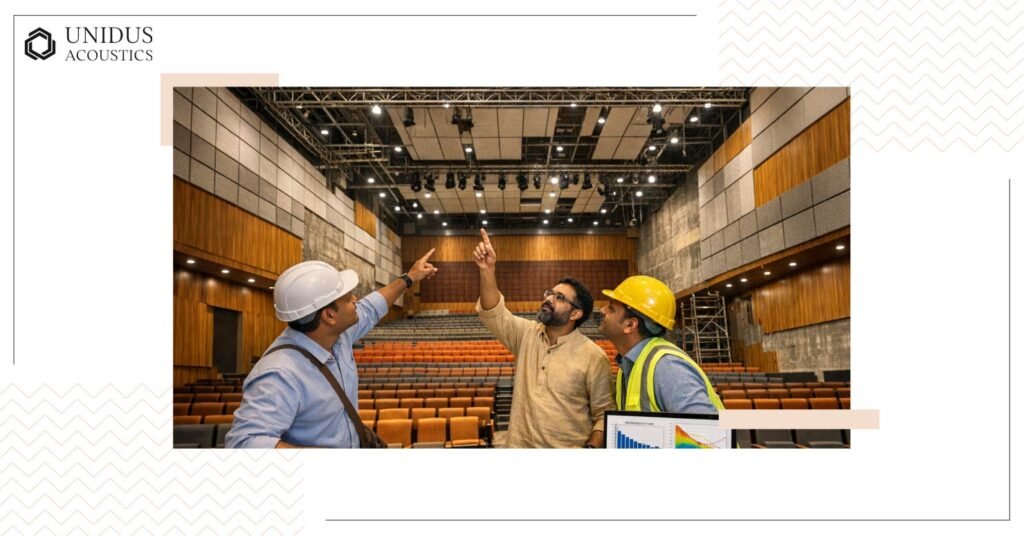
Start with a room analysis before selecting any product. Identify the primary reflection paths, calculate target reverberation times for the room’s use case, and map the surfaces that need treatment.
From there, work zone by zone: rear wall first, then side walls, then ceiling. Specify absorption coefficients that match the frequency range where the room has the most problems. Selecting the right acoustic materials for an auditorium means accounting for frequency performance, not just surface coverage. Most large auditoriums struggle in the mid and low-mid frequencies, which means panel thickness and density matter as much as surface area.
Early coordination with structural and MEP teams avoids conflicts between ceiling panels, lighting rigs, and HVAC ducts. When acoustic vendors are brought in after these decisions are locked, the placement options become limited.
Frequently Asked Questions
1. Why does acoustic panel placement matter more than just picking panels with a good NRC rating?
Two auditoriums with the same panels can sound completely different depending on where those panels sit. Placement controls which sound reflections reach the audience and when, which is what determines clarity.
2. What causes “slap echo” in auditoriums, and how is it fixed?
Slap echo happens when sound travels the length of the room, reflects off the rear wall, and returns with a noticeable delay. Heavy absorption on the rear wall, or diffusion if the room’s already over-damped, is the standard fix.
3. Why do parallel side walls cause problems in large halls?
Parallel side walls create flutter echo, a rapid back-and-forth repetition of sound that makes speech hard to follow. Angled panels or alternating absorptive and diffusive surfaces break up that parallelism.
4. Should the ceiling in an auditorium be fully absorptive?
No. A fully absorptive ceiling kills the early reflections that help sound reach the back rows, while a fully reflective ceiling worsens reverberation. Most auditoriums use a hybrid: reflective panels near the front, absorptive elements further back.
5. When should acoustic panel placement be planned in a project?
As early as possible, before structural and MEP decisions lock in ceiling geometry, lighting rigs, and HVAC ducts. Bringing in acoustic vendors after these decisions locks limits the placement options available.
Getting It Right the First Time
Acoustic panel placement in large auditoriums is one of the few areas where early involvement genuinely changes what’s achievable. Retrofitting a poorly performing hall costs significantly more than treating it correctly from the start, and the results are almost always a compromise.
At Unidus Acoustics, we’ve worked on large-format spaces for clients across auditoriums, conference facilities, and institutional halls. With 40 years of expertise and a team that includes computational design capabilities, we help design teams specify and place acoustic solutions that work with the room’s geometry rather than against it.
If you’re working on an auditorium project and want product recommendations that fit your design intent, including technical specs, NRC data, and fire certifications for your tender documentation, get in touch with us.