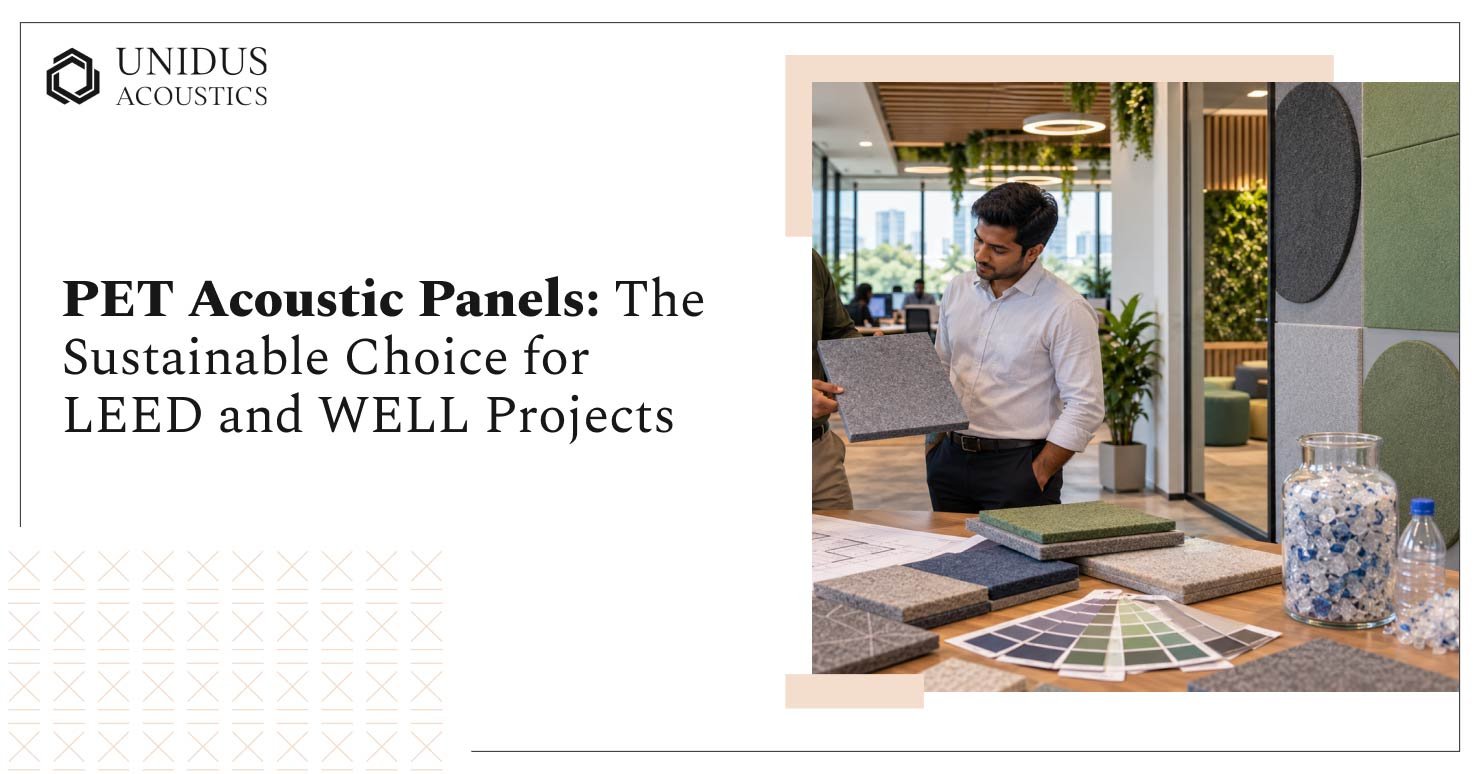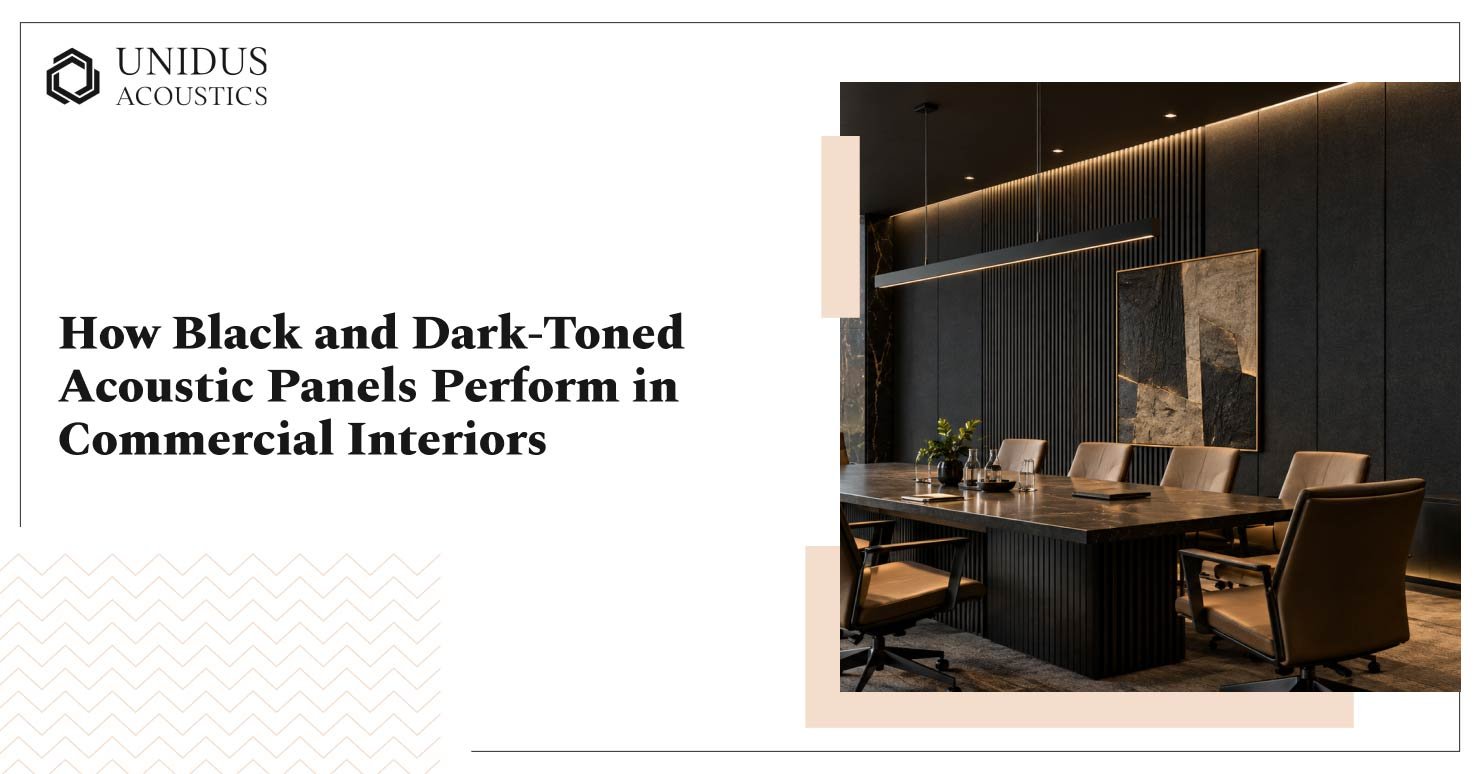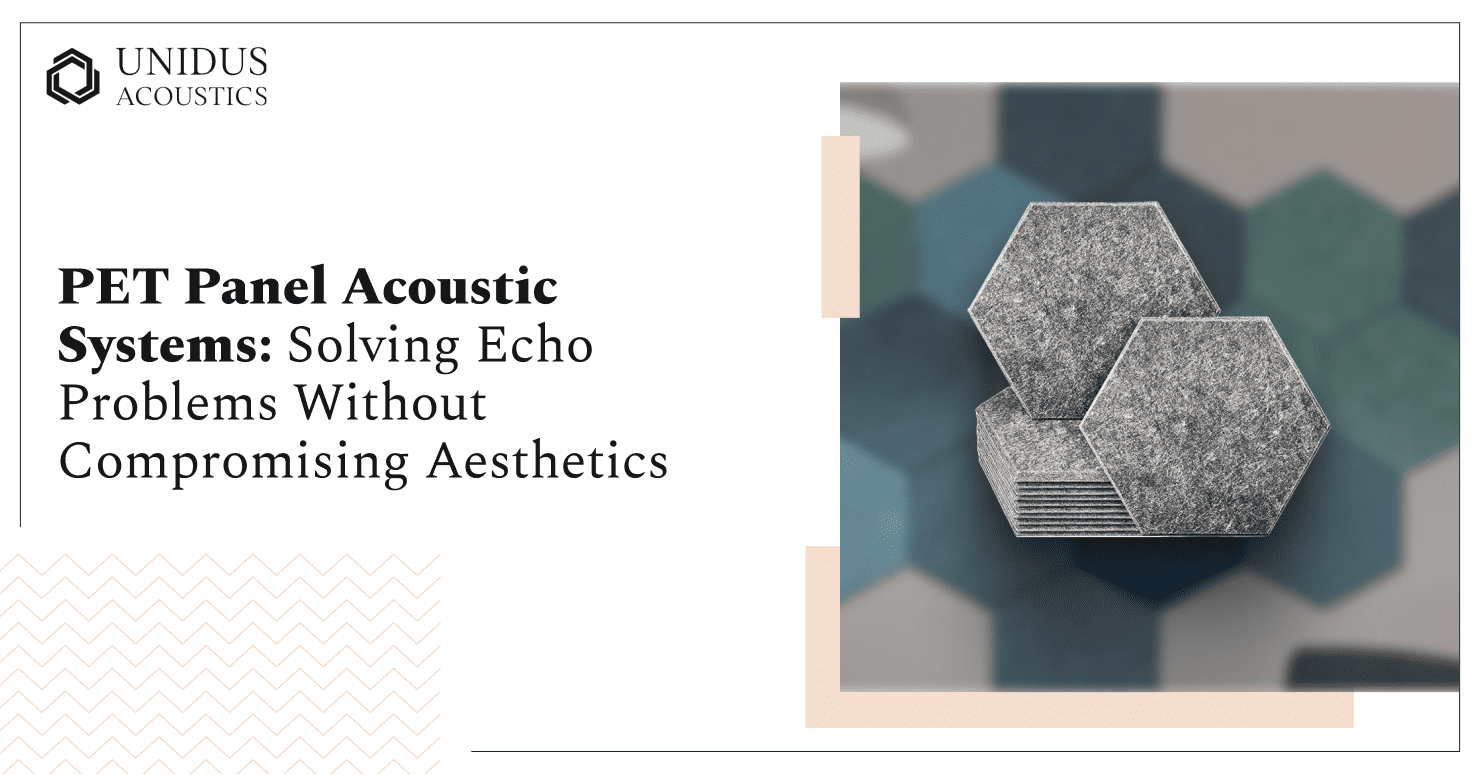
An acoustic PET panel system is a sound-absorbing installation made from compressed polyethylene terephthalate (PET) fibres, most commonly sourced from recycled plastic. In commercial interiors, PET panels are specified as wall-mounted panels, ceiling clouds, suspended baffles, and room dividers to reduce reverberation and control echo within a space.
They do not block sound transmission between rooms. PET is chosen over fibreglass and mineral fibre alternatives for three reasons: its design flexibility (it can be laser-cut, thermoformed, and digitally printed without losing acoustic performance), its low VOC emission profile, and its sustainability credentials. NRC ratings for PET panels typically range from 0.85 to 1.0, depending on thickness and density.
Key Takeaways
- PET panels are manufactured from recycled polyester fibres and are fully recyclable at the end of service life, a specification advantage for green building projects.
- Acoustic PET panels absorb sound within a room to reduce echo and reverberation. They don’t replace soundproofing; they address the acoustic environment inside the space.
- NRC ratings for PET panels range from 0.85 to 1.0, among the highest available in the acoustic panel category, particularly effective for speech frequencies.
- PET can be laser-cut, thermoformed, and digitally printed, which makes it the most design-flexible acoustic material currently available for commercial interiors.
- The material is moisture-resistant, low VOC, and free from glass fibres, making it suitable for occupied environments including schools, healthcare facilities, and hospitality venues.
What Makes PET Panel Design So Versatile
Unlike hard surfaces that reflect sound waves back into a room and build up echo, PET panels absorb that energy and convert it into negligible heat through friction within the fibre. The process is invisible. The panels sit quietly in the space, looking like a deliberate design choice, while cutting reverberation in the background.
What makes PET panels particularly attractive to design professionals is that they can be used in so many different ways.
For example, the material can be laser-cut, thermoformed, and digitally printed without affecting how well it works as an acoustic material. Instead of having to work around acoustic limitations, architects may choose acoustic solutions that fit perfectly with their design goals.
PET panel systems achieve NRC ratings of 0.85 to 1.0, meaning they absorb up to 100% of sound energy while sitting in a space as an intentional design feature rather than a remedial fix.
This means that they absorb up to 100% of sound energy while appearing as intentional design features rather than remedial additions.
PET Panels: Beyond Traditional Acoustic Treatment
In commercial spaces, traditional acoustic materials often create environments that have the look and feel of being clinical or temporary. PET panels, by contrast, can be engineered to become architectural features that do not compromise either the look or the purpose for the feel.
So, you can perfectly harmonise the aesthetics and functionality of the space.
Consider the modern corporate headquarters, for example. Glass partitions and polished concrete floors do create the desired contemporary aesthetic, but that also means significant acoustic challenges.
In such cases, rather than retrofitting with obvious acoustic treatments, custom PET panel systems can be integrated as branded art installations, geometric ceiling features, or sculptural room dividers.
Therefore, two birds with one stone. It solves acoustic problems while reinforcing the company’s design identity.
Every space has distinct acoustic requirements and aesthetic goals, which is exactly where PET’s material flexibility earns its keep. We don’t offer one-size-fits-all products because every space has distinct acoustic requirements and aesthetic goals.
This customisation allows architects and interior designers to specify acoustic solutions that support their vision rather than compromise it.
Acoustic PET Panels vs Common Alternatives: A Specification Comparison
| Criteria | PET Panels | Fabric-Wrapped Panels | Mineral Fibre / Stone Wool | Acoustic Foam |
|---|---|---|---|---|
| NRC Range | 0.85–1.0 | 0.75–0.95 | 0.75–0.90 | 0.50–0.80 |
| Design Flexibility | Very high (laser-cut, printed, thermoformed) | High (fabric colour/texture) | Low to moderate | Low |
| Moisture Resistance | High | Low to moderate | Moderate | Low |
| VOC / Air Safety | Low VOC, no glass fibres | Low VOC | Low VOC | Varies; often higher |
| Sustainability | Recycled PET; fully recyclable | Varies by fabric and core | Partially recycled content | Petroleum-derived |
| Maintenance | Wipe-clean surface; doesn’t trap dust | Fabric needs periodic cleaning | Low maintenance | Dust accumulates in cells |
| Best Commercial Fit | Offices, hospitality, healthcare, education | Brand-driven fit-outs, conference rooms | Standard commercial ceilings | Studios, small enclosed rooms |
PET Panels: Transforming Problematic Spaces
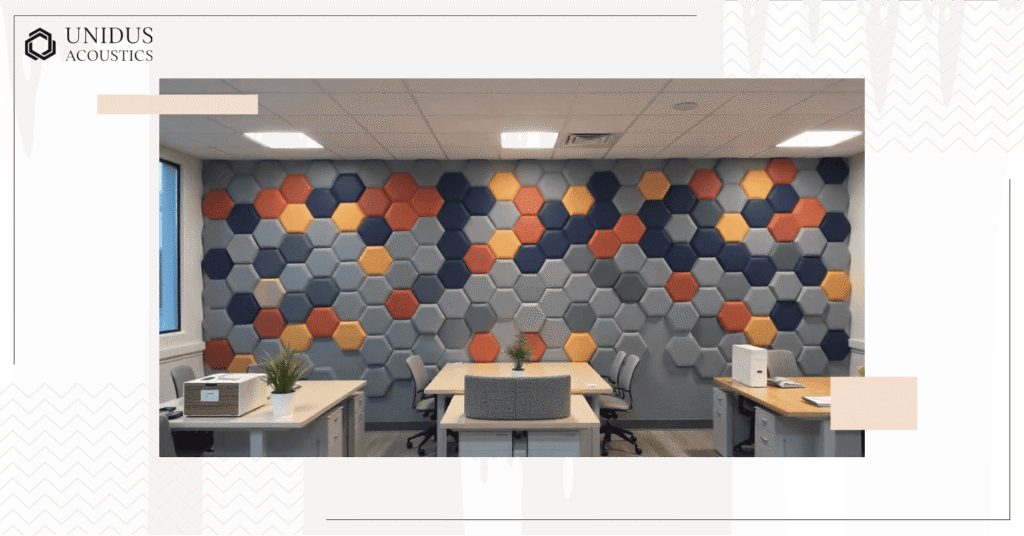
The most rewarding projects often involve spaces where echo problems seemed insurmountable without major renovations. However, open-plan offices with soaring ceilings, restaurants with hard surfaces throughout, and conference facilities with expansive glass walls all present acoustic challenges that PET panels can address elegantly.
In a corporate setting, excessive reverberation doesn’t just create discomfort; it actively undermines productivity and well-being. Phone calls become difficult, concentration suffers, and employee fatigue increases.
To solve this, PET acoustic panels strategically positioned as ceiling clouds or wall installations can reduce reverberation times significantly while appearing as deliberate design elements.
Additionally, hospitality venues face the additional challenge of maintaining an atmosphere while controlling noise levels. A restaurant needs enough acoustic energy to feel lively and social, but excessive echo makes conversation impossible and drives away customers.
To fight this, Custom PET panel systems can be designed as decorative ceiling features, branded wall installations, or artistic room dividers that fine-tune the acoustic environment without diminishing the venue’s character.
PET Panels: Design Integration Possibilities
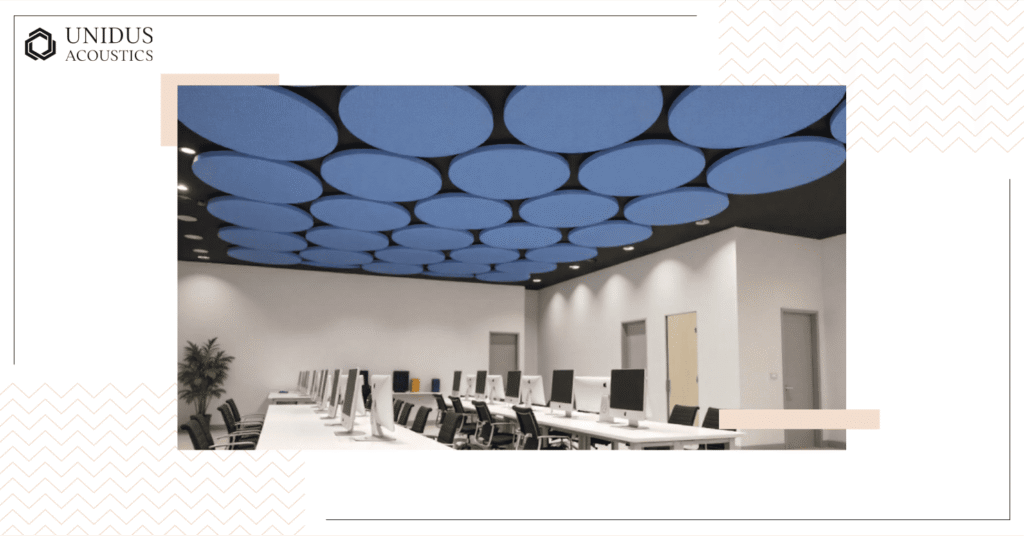
The versatility of PET panels extends far beyond basic rectangular installations. Unidus Acoustics offers computational design capabilities to create acoustic solutions that push creative boundaries with a sharp focus on performance:
Suspended Installations
Ceiling-mounted PET panels can be configured as geometric patterns, organic shapes, or branded graphics that appear to float in space. These installations provide excellent sound absorption for the critical ceiling reflection zone while serving as striking visual focal points.
Wall-Mounted Systems
Vertical PET installations can incorporate lighting, create texture through three-dimensional patterns, or display custom graphics. These systems are particularly effective in reception areas, conference rooms, and collaborative spaces where both acoustic performance and visual impact matter.
Space Division Solutions
PET panels excel as room dividers and acoustic screens that define spaces without completely isolating them. These solutions are invaluable in open-plan environments where acoustic zoning is essential, but permanent walls aren’t desirable.
Integrated Lighting
Our light customisation capabilities allow PET panels to incorporate LED systems that create dramatic effects while maintaining acoustic performance. These integrated solutions reduce the need for separate lighting fixtures while enhancing the overall design cohesion.
PET Panels: Material Advantages and Sustainability
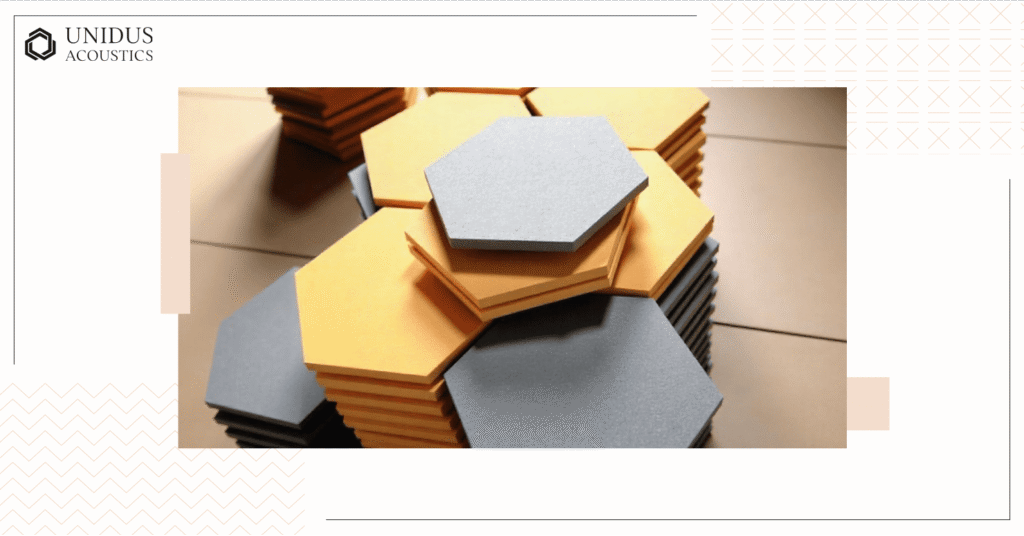
PET acoustic panels offer significant practical advantages as well. The material is inherently mould and moisture-resistant, making it suitable for high-humidity environments like swimming pool areas or tropical climates.
Unlike fabric-wrapped panels, PET systems don’t trap dust or odours, reducing maintenance requirements in commercial applications.
From a sustainability perspective, also, PET panels are manufactured from recycled polyester fibres and remain fully recyclable at the end of their service life. This aligns with the growing emphasis on sustainable design practices while delivering exceptional value for money.
Unidus Acoustics has its own local manufacturing capabilities with an emphasis on quality. This is to ensure consistent quality control and reliable, on-time delivery. Such manufacturing proximity allows for rapid prototyping when custom shapes or colours are required, simultaneously supporting the fast-paced timelines of modern construction projects.
Applications Across Industries
Design-build firms particularly appreciate PET panels’ versatility across different project types.
- Educational facilities use them to manage classroom acoustics while incorporating school colours and branding.
- Healthcare environments benefit from their hygiene advantages and ability to create calming, comfortable spaces.
- Retail installations utilise their visual impact potential while controlling ambient noise levels that affect customer comfort.
- The technology sector has embraced PET acoustic solutions for their clean aesthetic and high performance. Tech campuses often feature PET installations that incorporate company branding, support collaborative work styles, and demonstrate environmental responsibility through material selection.
Frequently Asked Questions: PET Acoustic Panel Systems
What does PET stand for in acoustic panels?
PET stands for polyethylene terephthalate, a polyester plastic most commonly associated with bottles and food packaging. In acoustic panels, PET is processed into dense fibrous boards that absorb sound. Most commercial PET acoustic panels are manufactured using recycled PET content, making them a more sustainable alternative to fibreglass or foam.
What NRC rating can I expect from a PET acoustic panel?
PET acoustic panels typically achieve NRC ratings between 0.85 and 1.0 depending on panel thickness and density. This places them among the highest-performing acoustic panel materials available. Thicker panels (25mm–50mm) perform better at lower frequencies; thinner options are suitable for mid-to-high frequency control in most commercial spaces.
Are PET acoustic panels safe for schools and hospitals?
Yes. PET panels are non-toxic, low VOC, and contain no glass fibres — the primary irritant associated with fibreglass and some mineral wool products. They meet indoor air quality standards for occupied institutional spaces and are a common specification in educational and healthcare projects.
Can PET panels be customised for specific design projects?
PET is the most design-flexible acoustic material in the commercial category. It can be laser-cut into custom shapes, thermoformed into three-dimensional surfaces, and digitally printed with custom graphics or brand elements. These processes don’t compromise the panel’s acoustic performance.
How do PET panels compare to fabric-wrapped acoustic panels?
Both materials deliver comparable NRC performance. PET panels have the advantage of moisture resistance, easier cleaning (wipe-clean surface vs fabric that accumulates dust), and greater surface customisation. Fabric-wrapped panels offer the widest colour range through fabric selection and may suit projects where a textile finish is preferred over a matte panel surface.
Are PET panels suitable for humid or outdoor environments?
PET panels are moisture-resistant and suitable for high-humidity indoor environments such as pool areas, commercial kitchens (with appropriate installation), and tropical climates. They are not rated for direct outdoor exposure. Always confirm the specific moisture rating with the supplier for edge-case environments.
When to Specify PET Acoustic Panels
PET panels are the right specification when a project needs high NRC performance (0.85+), design customisation beyond what standard mineral fibre tiles allow, sustainability documentation for green building submissions, or a moisture-resistant acoustic solution in humid environments. They’re not the lowest-cost option in the panel category, and for basic dropped-ceiling commercial applications with no design constraints, standard mineral fibre tiles may suffice. Where design integration matters and the brief demands acoustic performance that doesn’t read as an afterthought, PET is difficult to match.
Unidus Acoustics has supplied and installed PET acoustic panel systems across commercial projects spanning offices, hospitality venues, healthcare facilities, and educational institutions in 16+ cities over 40 years. Our PET panel range covers NRC 0.85 to 1.0, with custom fabrication for laser-cut, thermoformed, digitally printed, and 3D embossed finishes. Local manufacturing means rapid prototyping is available when a project needs custom shapes or brand-specific colours on a compressed timeline. Third-party certifications from SGS, Intertek, and TÜV Rheinland are available on request for institutional projects and government tenders.
Contact Unidus Acoustics for a consultation on how custom PET panel systems can solve your echo problems while enhancing your design aesthetic.