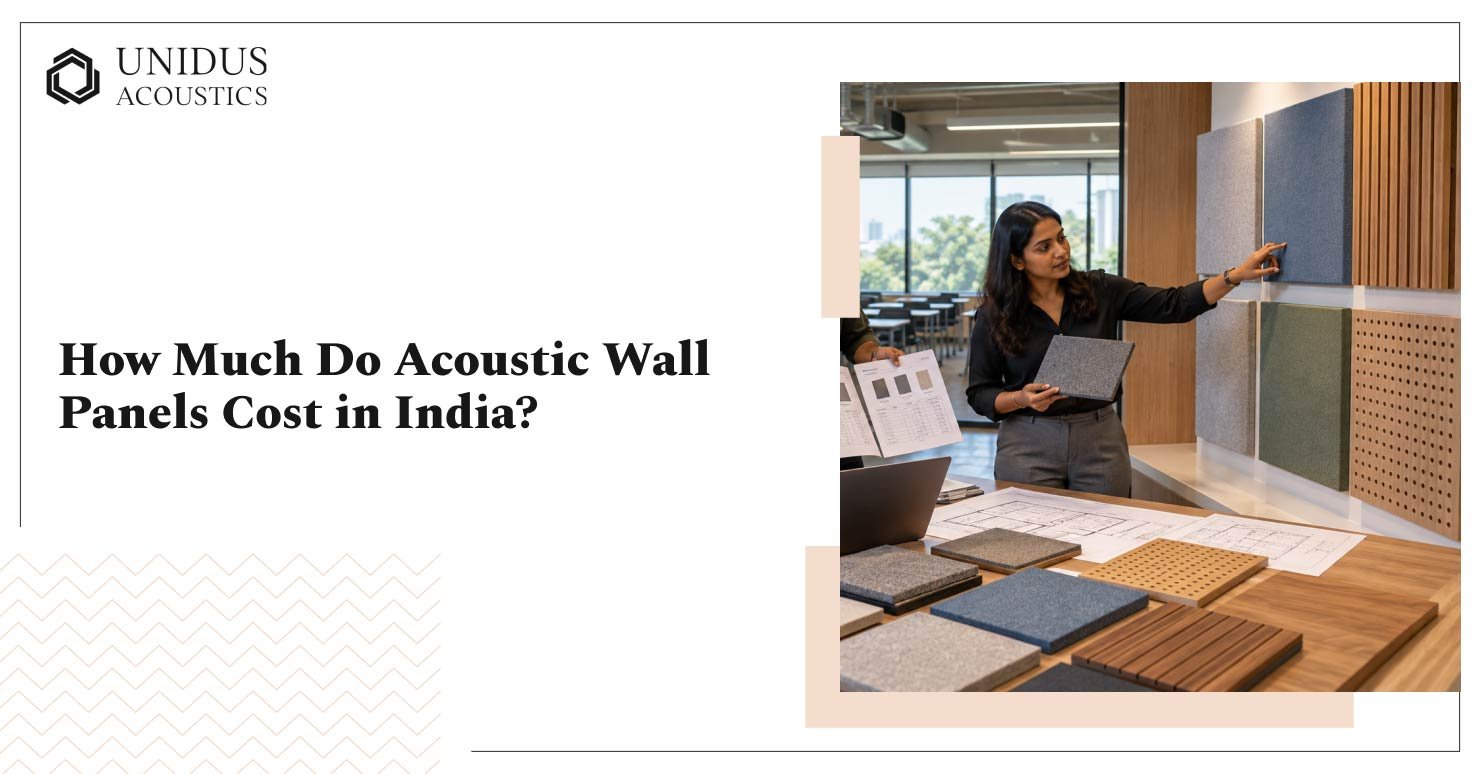
If you’re budgeting for acoustic wall panels in India, you’ve probably noticed that no two quotes look alike. Ask three vendors to price the same wall area, and you’ll likely get three different numbers. That’s not vendors padding margins. Acoustic wall panel cost depends on variables most buyers never see broken down: the material core, the finish, the certification, and how the panels get installed. Unidus Acoustics works across offices, auditoriums, and boardrooms, specifying different panel types, and the pricing conversation always starts the same way: what’s driving the number on your quote.
Key Takeaways
- Acoustic wall panel cost in India moves with the material core, not a flat rate per square foot.
- Fabric-wrapped, PET felt, wood wool, wood slat, and metal panels sit at different price points because their materials and manufacturing steps differ.
- NRC rating and panel thickness affect performance and price together, not price alone.
- Custom shades, prints, and non-standard shapes add cost beyond the base panel.
- A specification-based quote, not a market average, is the only reliable way to get an accurate number.
Why Pricing Rarely Fits One Number
Most building materials have something close to a market rate. Acoustic wall panels don’t; a panel is closer to a small manufactured assembly than a plain sheet good, so a single per-square-foot rate hides more than it shows.
A quote prices the raw material, the fabrication (cutting, wrapping, framing, or moulding), the finish, testing overhead, and delivery. Two vendors reading the same drawing can land on different numbers because they source fabric from different mills.
Read how to specify acoustic panels for commercial projects before comparing quotes line by line.
What Drives Acoustic Wall Panel Cost
5 variables move the number on every quote: the material core, the NRC target, the finish, the certifications, and the installation scope. The material core sets the range everything else moves within.
1. The Material Core Is the Biggest Price Lever
Once you know panels aren’t standardised, the next question is which material moves the price the most. The core, more than any other factor, sets the floor and ceiling of what you’ll pay.
PET Felt and Fabric-Wrapped Panels

PET felt, made from compressed recycled polyester fibre, is generally the most straightforward to manufacture and sits toward the lower end. Fabric-wrapped panels add a core, a frame, and a fabric finish cut and stretched by hand, and that labour pushes the price up.
Wood Wool, Wood Slat, and Fluted Panels
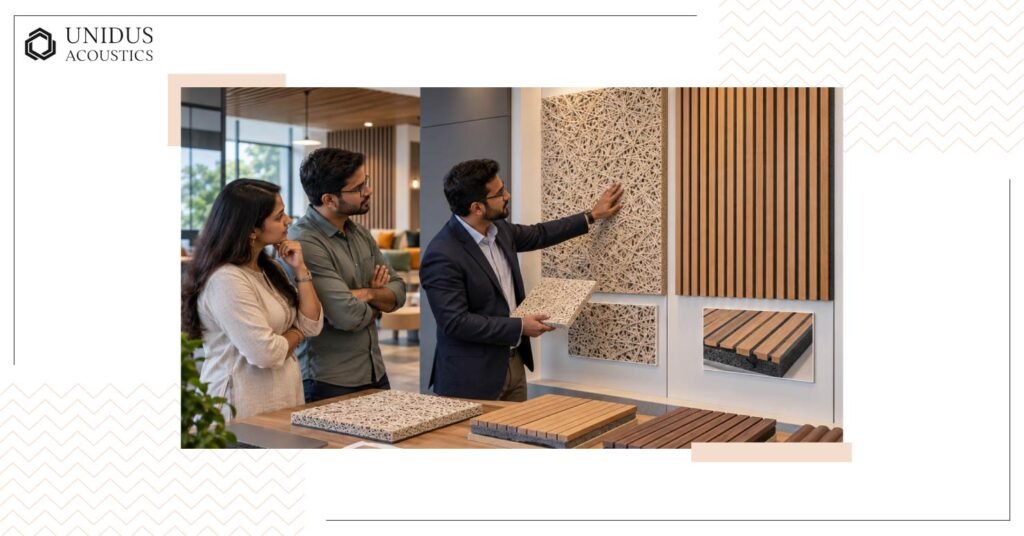
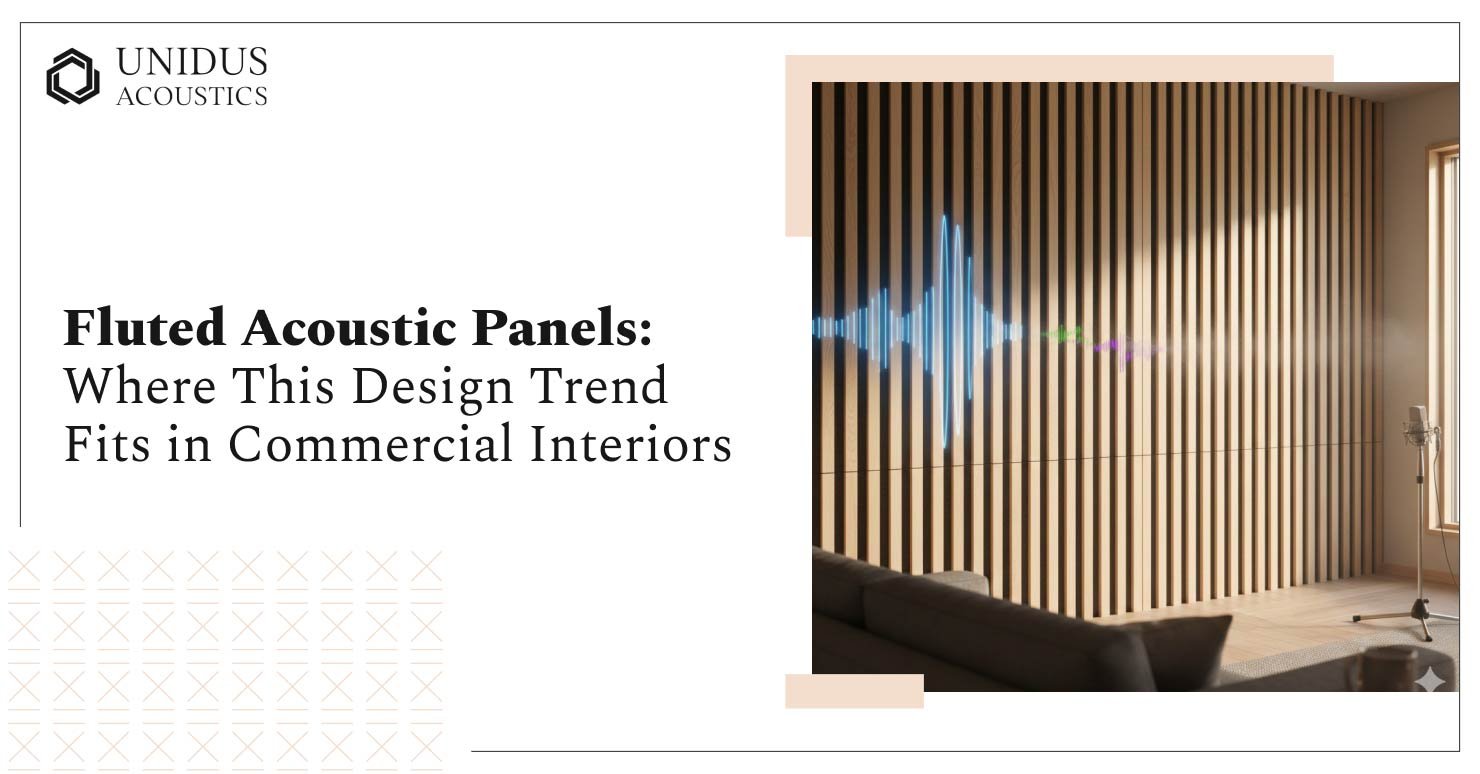
Wood wool (cement-bonded wood fibre, moulded into a rigid board) sits mid-range; the raw material is inexpensive, but curing and moulding add time. Wood slat and fluted panels cost more, since you’re paying for a timber face and an acoustic backing at once.
Metal and Perforated Panel Systems
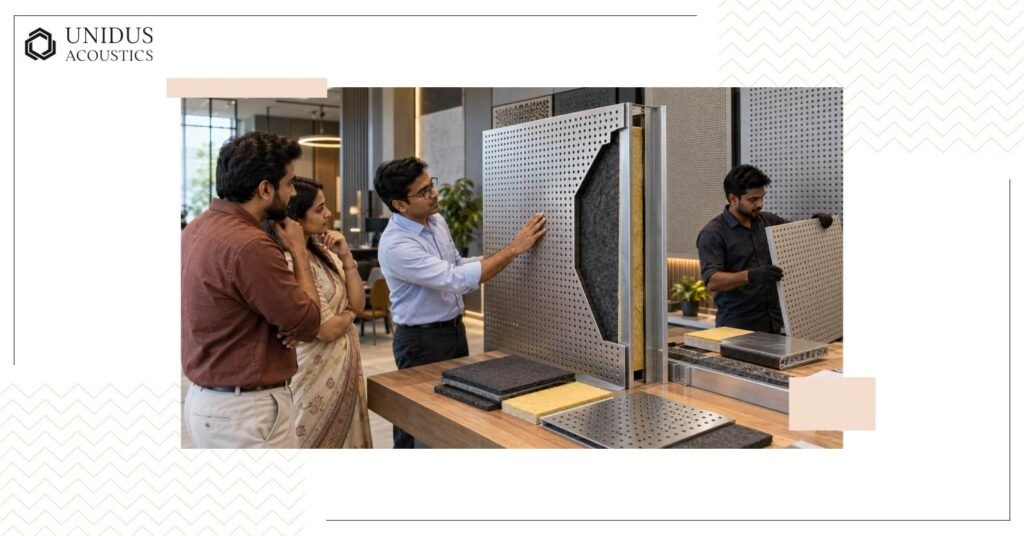
Metal perforated panels, typically steel or aluminium with an acoustic backing, usually land highest. Fabrication and perforation cost more than moulding or wrapping, and the backing has to be engineered separately to hit the target NRC.
| Panel Type | Core Material | Relative Cost | Typically Specified For |
|---|---|---|---|
| PET Felt | Recycled polyester fibre | Lower | Open offices, high-volume fit-outs |
| Fabric-Wrapped | Fibreglass/fibre board, fabric finish | Mid to higher | Boardrooms, hospitality |
| Wood Wool | Cement-bonded wood fibre | Mid | Cafeterias, auditoriums |
| Wood Slat / Fluted | Timber veneer with acoustic backing | Mid to higher | Feature walls, CXO offices |
| Metal Perforated | Steel/aluminium with acoustic backing | Higher | Auditoriums, broadcast studios |
2. NRC Rating and Thickness Move the Number Too
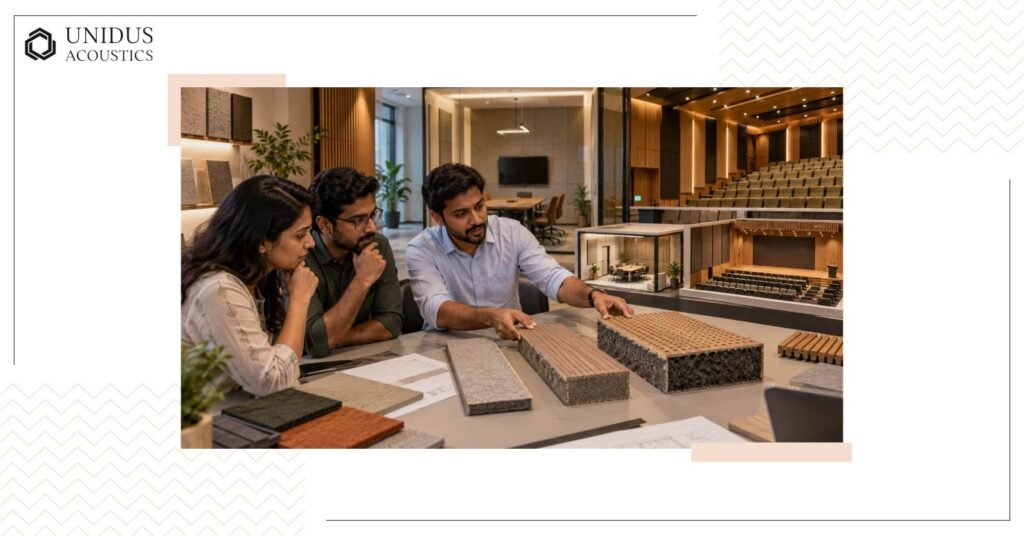
Two panels from the same core can still price differently based on the acoustic target. NRC measures how much sound a surface absorbs, on a scale from 0 to 1 tested under the relevant Indian acoustic testing standard. A higher NRC usually needs a denser or thicker core, sometimes a perforated surface, and that adds material. Unidus Acoustics’ U-TONE range spans an NRC of 0.70 to 0.90 depending on construction, because different rooms need different absorption. A boardroom doesn’t need auditorium-level absorption, and matching NRC to the room keeps cost proportional to what the space needs.
3. Finish, Shade, and Customisation Add Up

Standard shades cost less because they’re produced in batches and held in stock. A custom colour match or a printed, brand-specific finish means a shorter production run, and that cost passes on. Non-standard shapes, like a hexagonal layout, cost more too, since tooling and wastage both rise. None of this means customisation isn’t worth it. It means the cost needs planning for early, not discovering at the quote stage.
4. Certifications and Fire Ratings Aren’t Optional
Auditoriums, hospitality venues, corporate interiors, and government buildings usually require panels tested for fire performance and acoustic output. Certifications such as SGS, Intertek, and TÜV Rheinland, and fire classifications like Class B1, involve lab testing that manufacturers build into pricing. A panel without it can look identical and cost less, but it won’t clear approval where documentation gets asked for. A lower quote can sometimes mean a missing line item, not a better deal.
5. Installation and Project Scale Change the Total
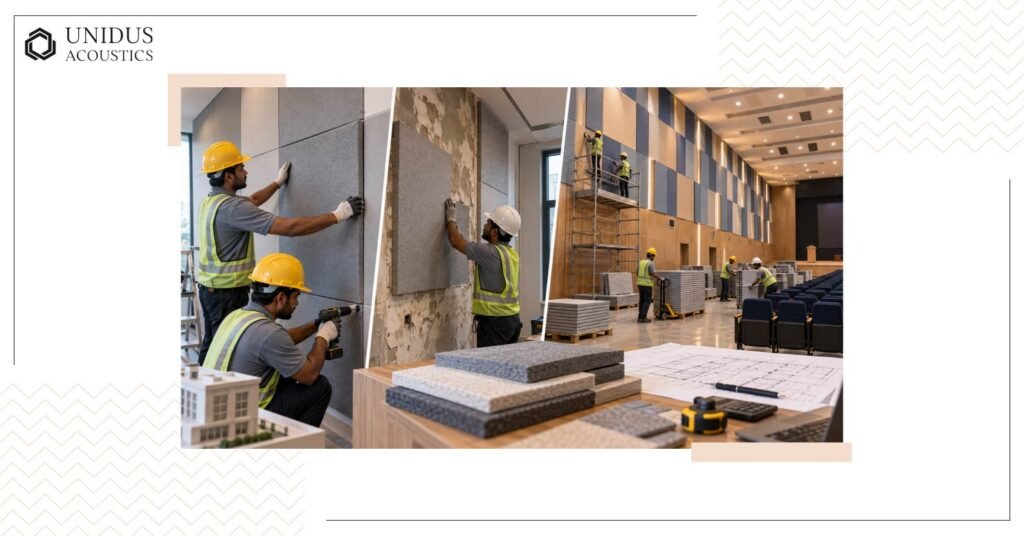
The panel price is only part of what lands on your invoice. Panels going onto a flat, prepared wall install faster than panels going over an uneven substrate. When treatment gets specified late, installation has to work around finished work already in place, which adds time. Larger orders generally bring the per-unit cost down, since fabrication runs more efficiently at volume.
How to Compare Quotes Without Getting Burned
- Confirm the NRC rating and test method for every panel type quoted, not just the product name.
- Ask whether fire rating and certifications are included or offered as an add-on.
- Check if installation, freight, and site preparation are itemised separately or bundled in.
- Compare like-for-like cores; a PET felt quote and a fabric-wrapped quote aren’t the same conversation.
- Find out if the vendor is quoting as manufacturer or dealer; buying direct versus through a dealer changes more than the price.
Frequently Asked Questions
1. Is there a fixed price per square foot for acoustic wall panels in India?
No. Cost depends on the material core, NRC rating, finish, and project scale, so a flat per-square-foot number doesn’t hold across projects. A quote built against your specification is the reliable way to get an accurate figure.
2. Do lower-priced acoustic panels perform worse than higher-priced ones?
Not always, but price and performance are usually connected. A lower price can mean a thinner core or a lower NRC rating. It can also mean missing certifications, depending on the room.
3. Does a custom colour or printed finish always add to the cost?
In most cases, yes. Standard shades are produced in batches and held in stock, while custom colours or brand-specific finishes need a shorter, dedicated production run.
4. How much of the total cost is installation rather than material?
It varies, but installation and logistics can be a meaningful share, especially when the substrate needs work first, or the site sits far from the manufacturing base.
5. Does buying direct from a manufacturer change the price compared to a dealer?
It can, though not always in the direction people expect. Direct sourcing sometimes removes a layer of markup, but a good dealer can offer faster turnaround and local stock, which affects total value, not just unit price.
Getting an Accurate Number for Your Project
Acoustic wall panel cost in India isn’t a mystery, but it isn’t a figure you can look up and apply to any project either. The material core, the NRC target, the finish, the certifications, and the installation scope all move the number in different directions, and the only way to see how they add up for your space is an actual specification, not a market average. Unidus Acoustics has worked across acoustic panels in multiple materials and finishes for 40+ years, on projects for organisations including Air India, AIIMS, TCS, Infosys, and Reliance. If you need real numbers rather than ranges, contact us now.