The terms “acoustic boards” and “acoustic panels” get used interchangeably in project specifications, vendor quotes, and technical discussions. But when you’re specifying acoustic treatment for a commercial space, the distinction matters.
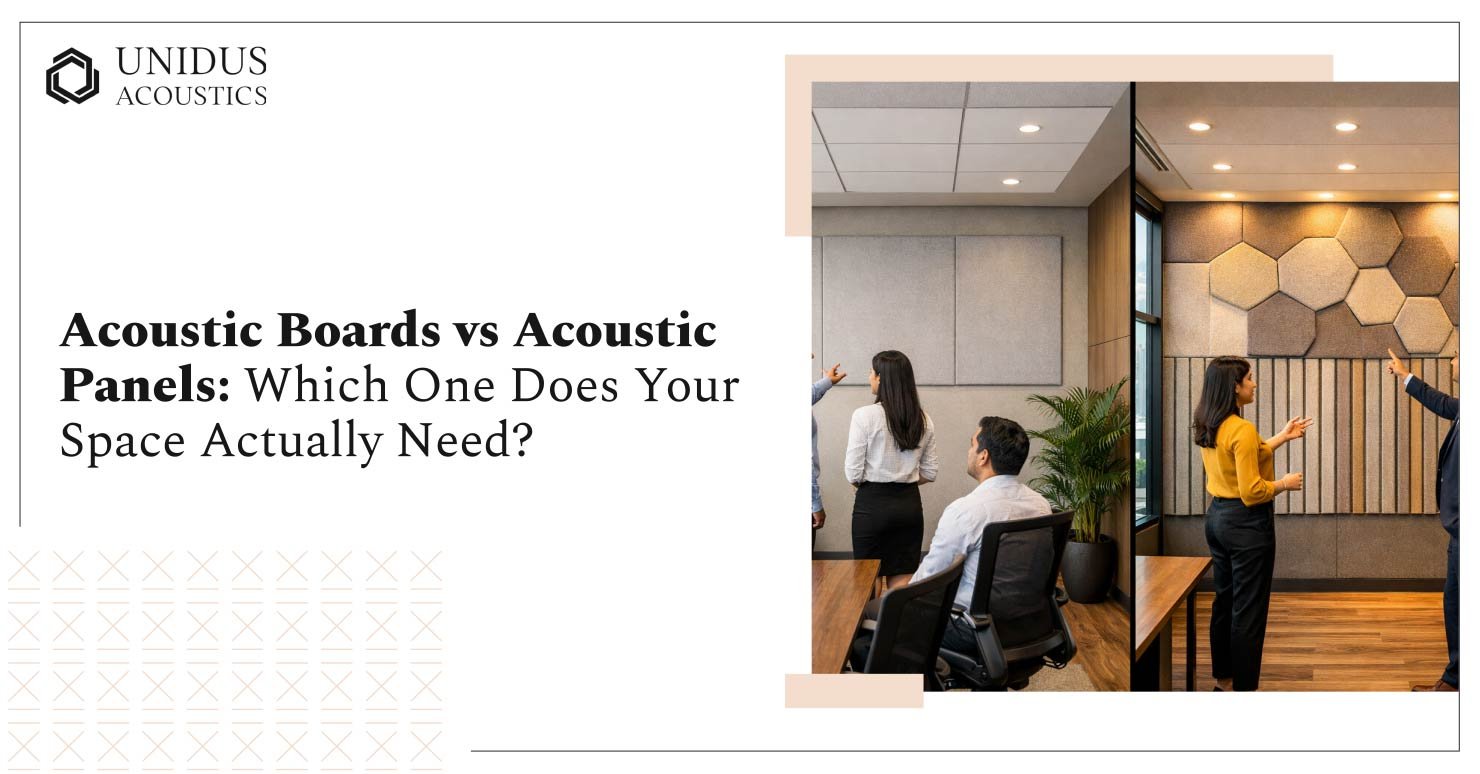
Acoustic boards and acoustic panels serve the same fundamental purpose — controlling sound within a space — but they differ in composition, installation methods, performance characteristics, and how well each fits specific project requirements. Understanding these differences helps you specify the right solution for each project’s acoustic requirements, aesthetic direction, and overall scope.
This isn’t about one being superior to the other. Acoustic boards excel in certain applications, while acoustic panels deliver better outcomes in others. The question isn’t which is better; it’s which one matches your project’s specific requirements
What Are Acoustic Boards? Understanding Rigid Acoustic Solutions
Acoustic boards are rigid, semi-rigid, or firm acoustic treatment products typically manufactured from compressed materials. They maintain structural integrity without fabric wrapping or extensive framing, which makes them particularly practical for ceiling-heavy applications and institutional settings.
Common Acoustic Board Materials and Construction
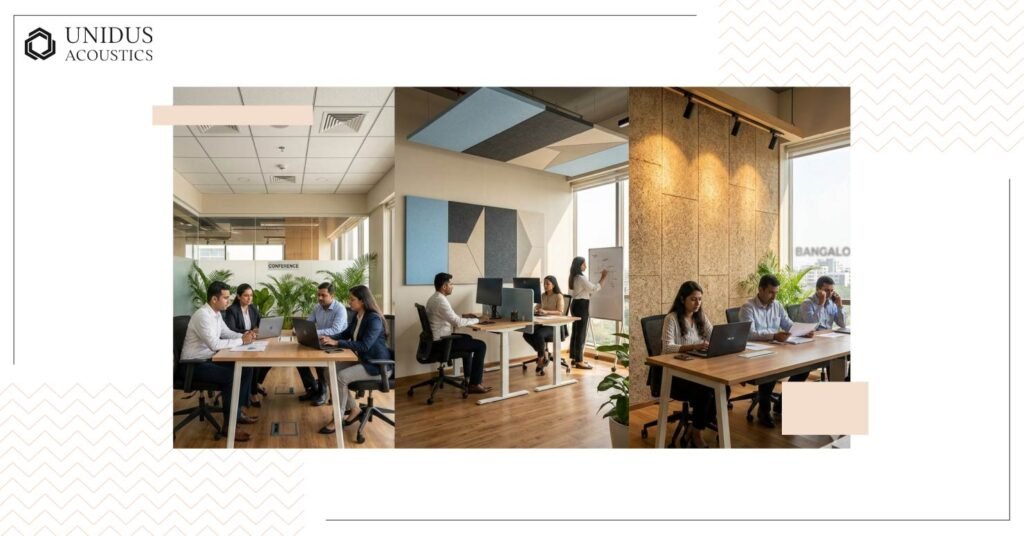
Mineral fibre acoustic boards represent the most common category in commercial applications. These use compressed mineral wool or fiberglass core materials with painted or textured surface finishes. They often come as ceiling tiles or wall-mounted solutions, and their consistent profile makes them straightforward to integrate into standard T-grid systems.
Polyester fibre acoustic boards (PET) have gained popularity in recent years. Made from recycled polyester fibres compressed into rigid form, they’re available in multiple colours without fabric facing. These lightweight boards suit suspended installations well.
Wood wool acoustic boards offer a distinct aesthetic, with wood fibres bonded with cement or magnesium. The visible wood texture works naturally in industrial and contemporary interiors, and these boards provide inherent fire resistance. They’re denser than PET options and provide both sound absorption and some diffusion characteristics.
Where Acoustic Boards Perform Best
Acoustic boards work particularly well in ceiling applications where T-grid or direct mounting supports rigid installation. They fit naturally into industrial or contemporary spaces where exposed texture aligns with design intent. Projects requiring integrated ceiling systems for a continuous, uniform appearance benefit from their consistent dimensions and predictable profile.
Institutional settings favour acoustic boards for their durability and maintenance simplicity. Projects where acoustic performance is the primary driver and surface finish is secondary often find these a practical choice that doesn’t require the additional finishing costs of fabric-wrapped solutions.
What Are Acoustic Panels? Understanding Fabric-Wrapped Solutions
Acoustic panels are acoustic treatment products with core materials wrapped in fabric, perforated materials, or decorative finishes. The outer finish layer is distinct from the core acoustic material, which is what separates them structurally and aesthetically from acoustic boards.
Common Acoustic Panel Materials and Construction
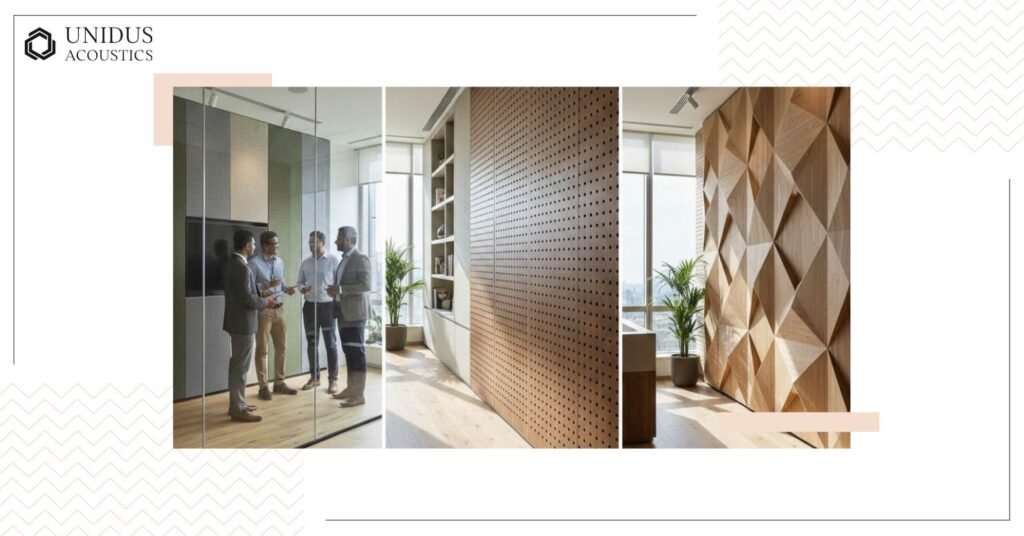
Fabric-wrapped acoustic panels dominate the decorative acoustic treatment market. Core materials include polyester, mineral wool, or foam-based acoustic cores wrapped in acoustic-transparent fabric stretched over rigid frames. These panels come in a wide range of colour options through fabric selection, and performance scales with core material thickness and density.
Perforated acoustic panels combine wood or metal face materials with acoustic backing. They blend architectural finish quality with sound absorption, and installation methods resemble architectural millwork rather than typical acoustic treatment. For design-forward projects, these panels sit naturally alongside joinery and cladding rather than looking like an add-on.
3D profile acoustic panels provide sculpted or textured surfaces for visual interest. Custom designs become possible through CNC fabrication, and they function simultaneously as acoustic treatment and design features. At Unidus Acoustics, these are available in custom profiles and finishes to match specific project palettes and material selections.
Where Acoustic Panels Excel Over Acoustic Boards
Acoustic panels deliver better outcomes in corporate offices where they need to match specific brand colours and interior palettes. Hospitality spaces requiring premium aesthetic finishes benefit from the customisation acoustic panels offer. Restaurants where acoustic treatment needs to integrate with the interior design scheme rather than stand apart from it find fabric-wrapped and perforated options particularly useful.
Auditoriums needing precise performance specifications can benefit from panels where core material and installation method are tuned to specific frequency targets. Residential and mixed-use projects also tend to favour acoustic panels because they read as intentional design elements rather than industrial fixtures.
Acoustic Boards vs Acoustic Panels: Performance Comparison
Here’s the key point of comparison between acoustic boards and acoustic panels:
Sound Absorption Performance
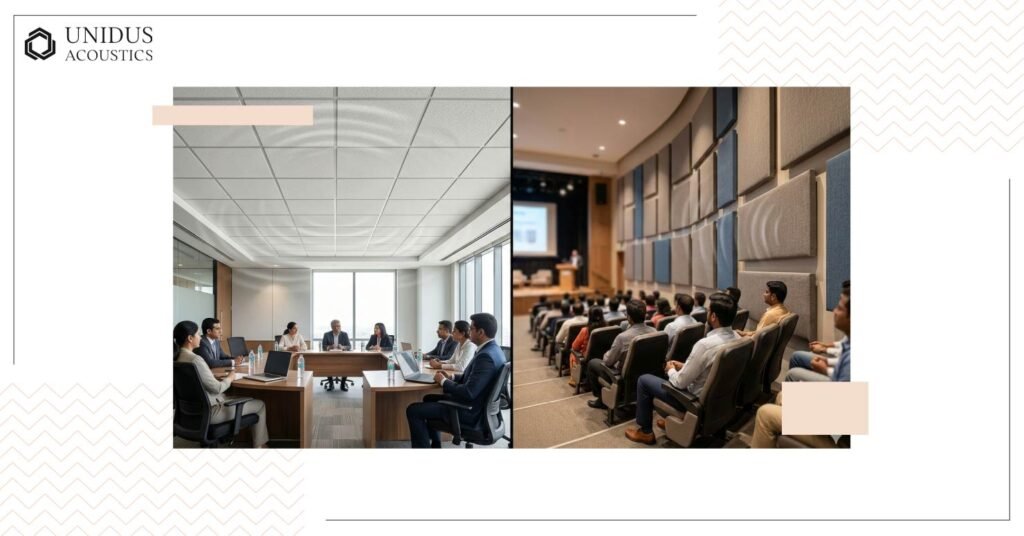
Both acoustic boards and acoustic panels provide effective sound absorption, though performance characteristics differ in important ways. Acoustic boards typically deliver consistent absorption across mid to high frequencies when properly specified. For low-frequency absorption, thicker boards become more relevant, so ceiling area coverage and installation method both play a role in the overall result.
Acoustic panels show variable performance based on core material selection. Fabric-wrapped panels can achieve strong NRC ratings through thicker cores and carefully selected materials. Installing acoustic panels with air gaps behind them significantly improves low-frequency absorption. Custom panel specifications allow performance to be directed toward specific frequency targets, which is useful in auditoriums and performance spaces where speech clarity or music reproduction requirements are well-defined.
Installation Methods and Considerations
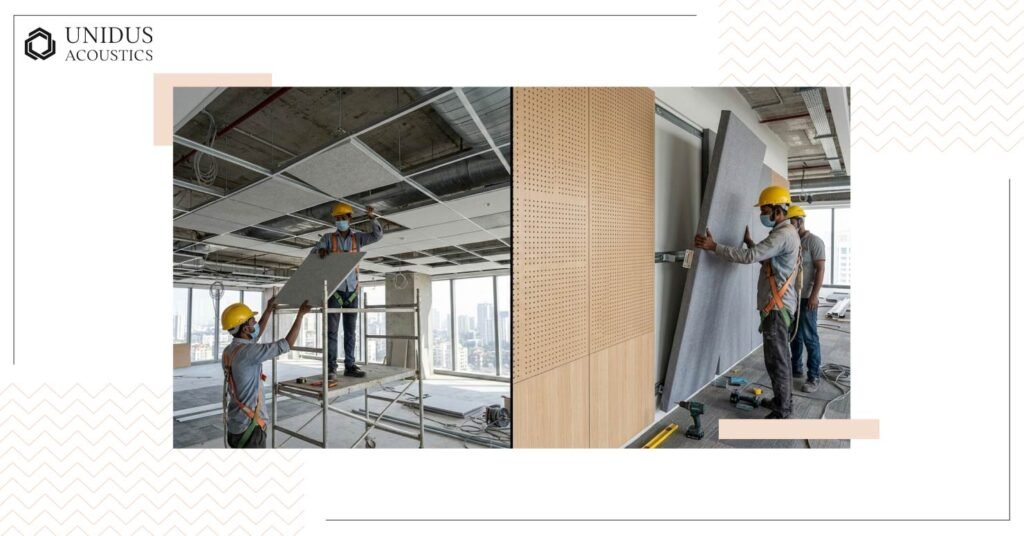
Acoustic boards typically install via T-grid systems for ceilings or mechanical fasteners and adhesive systems for walls. Lighter weight boards, particularly polyester types, allow suspended installations that create visual interest. Because handling is generally less delicate than fabric-wrapped products, acoustic board installations tend to move quickly on-site.
Acoustic panels mount with Z-clips, impaling clips, or adhesive systems depending on substrate and weight. Fabric-wrapped panels require careful handling to avoid surface damage that would compromise appearance. Perforated panels often need structural backing and precise alignment to maintain clean sight lines. Custom panel installations may require architectural millwork coordination, particularly for large-format or heavy perforated applications.
Cost Comparison: Acoustic Boards vs Acoustic Panels
The cost difference between acoustic boards and acoustic panels reflects the finishing and customisation involved. Acoustic boards are generally the more straightforward option on material cost, particularly for ceiling coverage where performance is the primary goal and decorative finish is secondary.
Acoustic panels carry a higher material cost that accounts for fabric selection, framing, and any custom profiling or printing. In design-forward projects, however, this premium can offset costs elsewhere: a well-specified acoustic panel installation can serve as both acoustic treatment and a decorative surface, reducing the need for separate finishes on the same wall or ceiling plane.
For project-specific pricing on acoustic boards and acoustic panels for your commercial space, contact Unidus Acoustics for product recommendations and detailed specifications.
Combining Acoustic Boards and Acoustic Panels

Many successful projects use both strategically. Boards on ceilings provide coverage and performance where visibility is reduced. Panels on feature walls deliver aesthetic impact at eye level. Back-of-house areas can use standard boards, reserving custom panels for client-facing spaces where the finish investment is visible and meaningful.
This hybrid approach optimises both budget allocation and design impact without compromising on either.
Specifying Acoustic Boards or Acoustic Panels for Your Next Project
For acoustic boards, specify: core material composition, surface finish requirements, fire rating certifications, and mounting method compatibility.
For acoustic panels, specify: core material and NRC target performance, fabric type with colour and durability requirements, edge detail and frame construction, and any custom sizing or profiling needs.
At Unidus Acoustics, we’ve spent 40 years manufacturing both acoustic boards and acoustic panels for commercial projects across India. We understand when acoustic boards deliver the right balance of performance and value, and when acoustic panels justify their premium through design integration and customisation. Whether your project needs acoustic boards for ceiling coverage or custom acoustic panels for feature walls, we provide solutions with complete technical documentation, fire certifications, and installation support.
Need Help Choosing Between Acoustic Boards and Acoustic Panels?
Share your project requirements with us. We’ll recommend whether acoustic boards, acoustic panels, or a combination delivers the best outcome for your specific acoustic challenges, aesthetic goals, and budget parameters.