Fabric panels are one of the most frequently specified acoustic solutions in commercial interiors. They absorb sound across a broad frequency range, take customised colours and finishes without much fuss, and work across a wide range of project types. But in high-use environments, the specification requirements go well beyond what a standard product datasheet addresses. A panel that performs on day one but degrades after eighteen months of cleaning cycles and daily contact is a poor specification, regardless of its NRC rating.
This guide covers what to check before finalising acoustic fabric panels for high-use commercial and institutional settings.
Key Takeaways
- NRC is a starting point for specification, not the complete picture.
- Panel thickness and core density determine long-term durability as much as acoustic performance.
- Recycled polyester (PET) cores offer the best balance of performance, cleanability, and impact resistance for most high-use commercial settings.
- Mounting method affects NRC. Confirm it alongside panel specs, not as a separate installation decision.
- Fire compliance documentation must come from independent third-party testing. A declared rating without a test certificate is not sufficient for commercial or institutional tenders.
- Confirm custom colour availability and lead times before locking in the specification, not after.
Start With NRC, Then Go Further

The Noise Reduction Coefficient (NRC) measures how much sound a material absorbs, on a scale of 0 to 1. Acoustic fabric panels in commercial environments typically deliver NRC values between 0.70 and 0.90, depending on the core material, panel thickness, and mounting method. A space finished entirely in hard surfaces can produce reverberation times of 1.5 to 2.5 seconds, well above the recommended target for offices (0.4 to 0.6 seconds). Panels in the 0.70–0.90 NRC range are the most practical way to bring those numbers down.
What NRC doesn’t tell you is how long that performance holds. A panel achieving NRC 0.85 at installation that degrades after repeated cleaning cycles, because the core has compressed or the fabric has loosened at the edges, is not a sound specification for any space that sees daily use. The question to ask alongside the NRC figure is: what does this panel deliver at year three?
Panel Thickness and Core Density
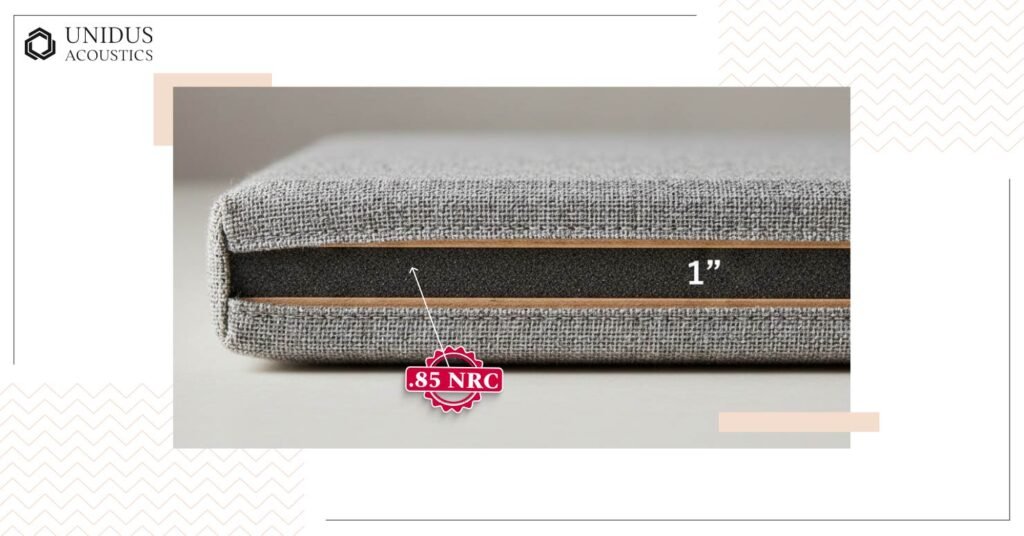
Thinner panels (9–12mm) absorb mid-to-high frequencies well but are less effective at lower frequencies, which is where much of the noise in corporate and institutional settings originates. Panels in the 18–24mm range provide broader frequency absorption and maintain structural rigidity better under the daily stresses of a high-use environment.
Core density is equally important. Denser cores (180–200 kg/m³) resist compression from repeated impact, hold their shape over time, and don’t develop dead spots where absorptive capacity drops. Always confirm both panel thickness and core density, not just the headline NRC figure.
Core Fabric Panel Material and What They Mean for Your Specification
The core material determines acoustic performance, physical durability, and how a panel responds to environmental conditions over time. The two core types most relevant to high-use commercial settings in India are recycled polyester fibre and mineral wool.
Recycled Polyester (PET) Fabric Panels
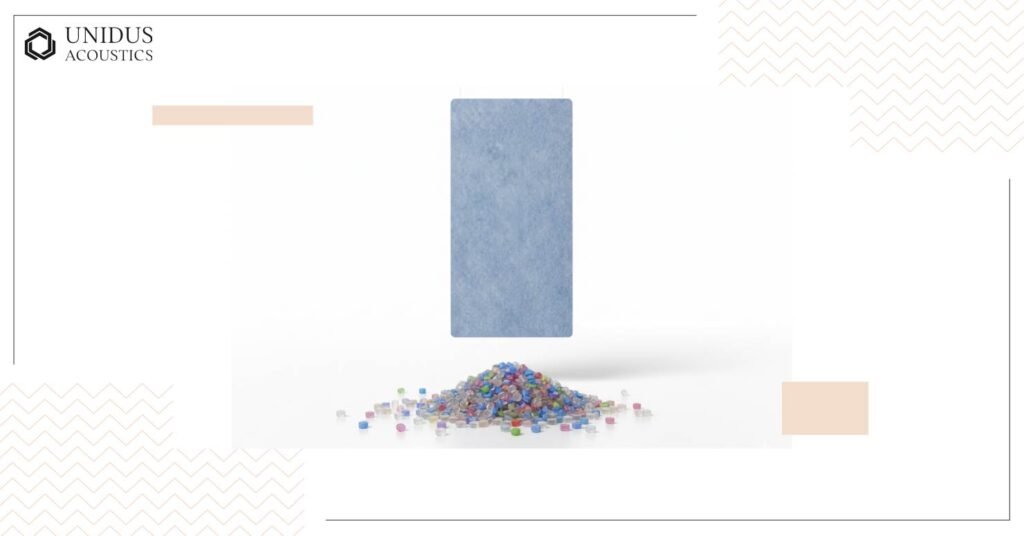
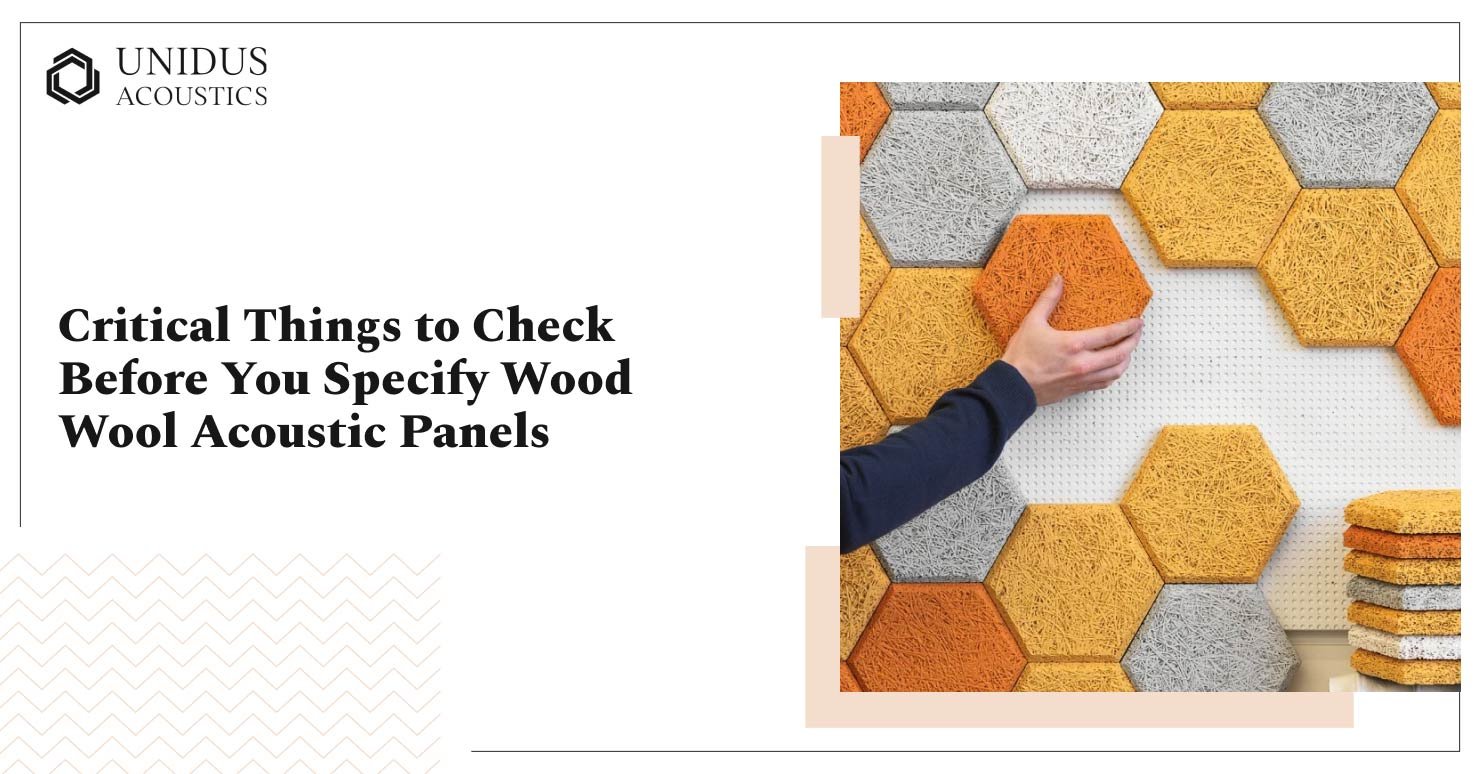
Recycled polyester, also referred to as PET fibre. It is lightweight, impact-resistant, and moisture-resistant. PET panels hold their acoustic performance and surface appearance over time, even in high-traffic settings, which makes them a reliable choice for most commercial and institutional environments.
They are also cleanable using fog, spray, and wipe methods without degrading the core’s acoustic performance, provided the fabric wrap is acoustically transparent, and the edges are properly finished. In healthcare-adjacent offices, institutional dining areas, and educational facilities, this cleanability isn’t an optional feature; it’s a specification requirement.
Fibreglass and Mineral Wool Cores for High-Absorption Applications
High-density fibreglass boards (minimum 48 kg/m³) and mineral wool boards (60–100 kg/m³) offer higher absorption coefficients across a broader frequency range, with particular strength at mid-to-high frequencies where speech intelligibility matters most. If the acoustic model requires a consistent NRC above 0.85 across the installed area, in a formal conference centre, auditorium, or institutional hall, these core types are worth specifying. The trade-offs: heavier, less impact-resistant, and requiring more careful handling during installation, particularly on tight fitout programmes.
Fire Compliance for Fabric Acoustic Panels in Commercial Projects
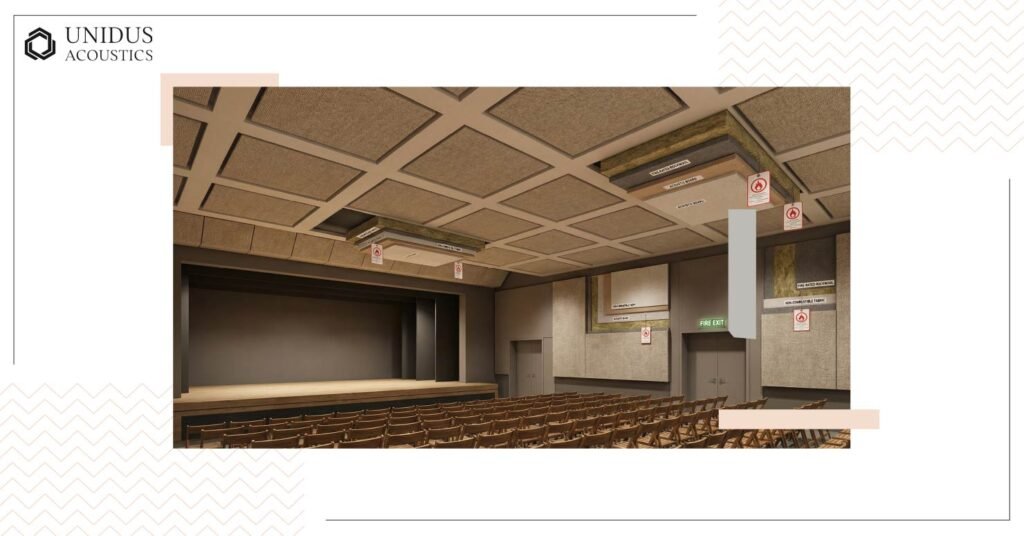
Fire compliance is non-negotiable for any commercial or institutional installation in India. The National Building Code 2016 (NBC 2016) sets fire safety requirements for interior finishes in commercial buildings, and fabric panels installed in occupied office floors, institutional corridors, or public areas must carry a verified fire rating. Class B1 is the standard reference for interior acoustic panels, indicating the material is flame-retardant and won’t contribute significantly to fire spread under standard test conditions.
What Certifications to Ask For When Specifying Fabric Panels
Third-party fire testing certificates from SGS, Intertek, or TÜV Rheinland are the acceptable documentation standard for commercial and institutional tenders. Vendor-declared fire ratings without independent test reports should be verified before inclusion in a formal specification. In government and institutional projects, missing or unverifiable fire documentation is a routine source of delays at the handover stage.
Ask for the test certificate. Not just the rating.
How Mounting Method Affects Acoustic Performance

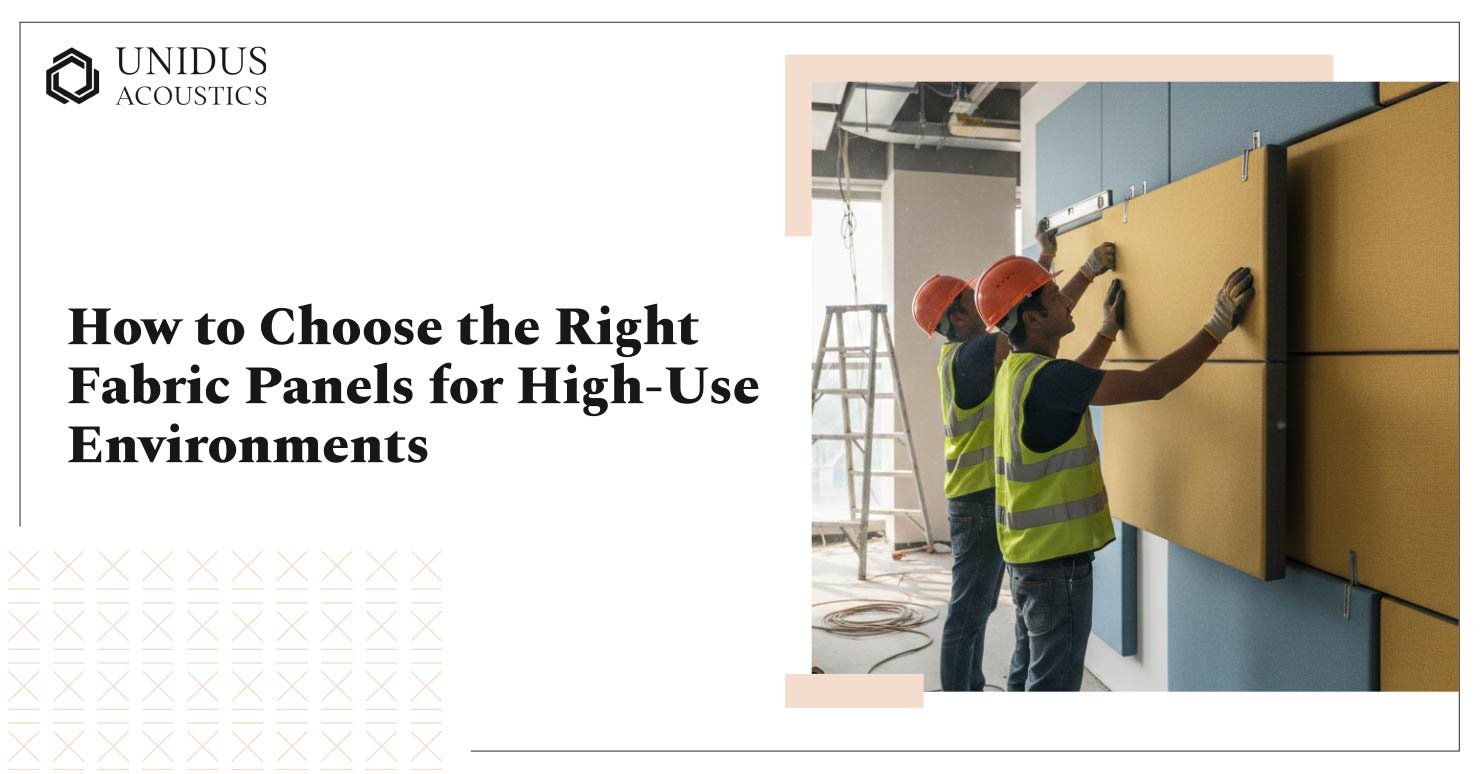
Mounting method is often treated as an installation detail rather than a performance variable. It isn’t. The same panel mounted directly against a wall (direct application) delivers a different NRC than when mounted with an air gap behind it. A 25–50mm air gap increases low-frequency absorption noticeably, which matters in spaces where HVAC noise, footfall, or open-plan conversation at lower frequencies is the primary concern.
Confirm the mounting method with your acoustic consultant as part of the panel specification, not separately once the product is already ordered.
Customisation, Lead Times, and Procurement Risk
One of the most consistent problems in acoustic specification is the gap between what vendors commit to during the design phase and what actually arrives on site once the programme is under pressure. Custom colours get confirmed at specification, then substituted with standard catalogue options when timelines tighten.
Before finalising any acoustic fabric panel order, confirm: whether the specified colour is made-to-order or from a standard palette; what the realistic lead time is for custom dimensions; whether pre-production samples can be produced for client sign-off before full manufacturing begins; and whether fire certificates and NRC test data will be available in time for tender submission. A product partner who cannot answer these questions clearly, early in the process, is a procurement risk you’ll end up managing under pressure.
Frequently Asked Questions
1. What NRC rating should I specify for fabric panels in a busy open-plan office?
For open-plan offices, an NRC of 0.75 or above is a practical target. Panels in the 0.80–0.90 range are preferable in spaces with high desk density or significant background noise from HVAC systems and equipment.
2. Which core material works best for fabric panels in high-use commercial spaces?
Recycled polyester (PET) cores suit most high-use commercial settings well. They combine NRC performance in the 0.70–0.90 range with impact resistance and cleanability. Fiberglass and mineral wool cores are worth specifying when a consistent NRC above 0.85 is a firm acoustic requirement across the installed area.
3. Do acoustic fabric panels need a fire rating for commercial installation in India?
Yes. Under NBC 2016, commercial and institutional installations require a verified fire rating for interior finishes. Class B1 is the standard reference for acoustic panels. Request the independent test certificate from SGS, Intertek, or TÜV Rheinland — not just the vendor’s declared rating.
4. What should I confirm before finalising a fabric panel specification?
NRC rating, panel thickness, core density, independent fire certification, mounting method, custom colour lead time, and whether pre-production samples are available for client sign-off before full manufacturing begins.
Acoustic Fabric Panels for Commercial and Institutional Projects Across India
Unidus Acoustics has been delivering acoustic fabric panel solutions across corporate offices, educational institutions, healthcare facilities, and government buildings for 40+ years. Projects include work for AIIMS, Ashoka University, Air India, TCS, Infosys, SBI, and Reliance, among others.
The fabric panel range uses recycled polyester cores (NRC 0.70–0.90, Class B1 fire rating, density 180–200 kg/m³), available from 9mm to 24mm thickness with customised sizes, colours, and finishes. Fire compliance documentation from SGS, Intertek, and TÜV Rheinland is available as standard for tender submissions. Share your project brief to discuss specification requirements, custom sample options, and lead times. Connect with our team now.