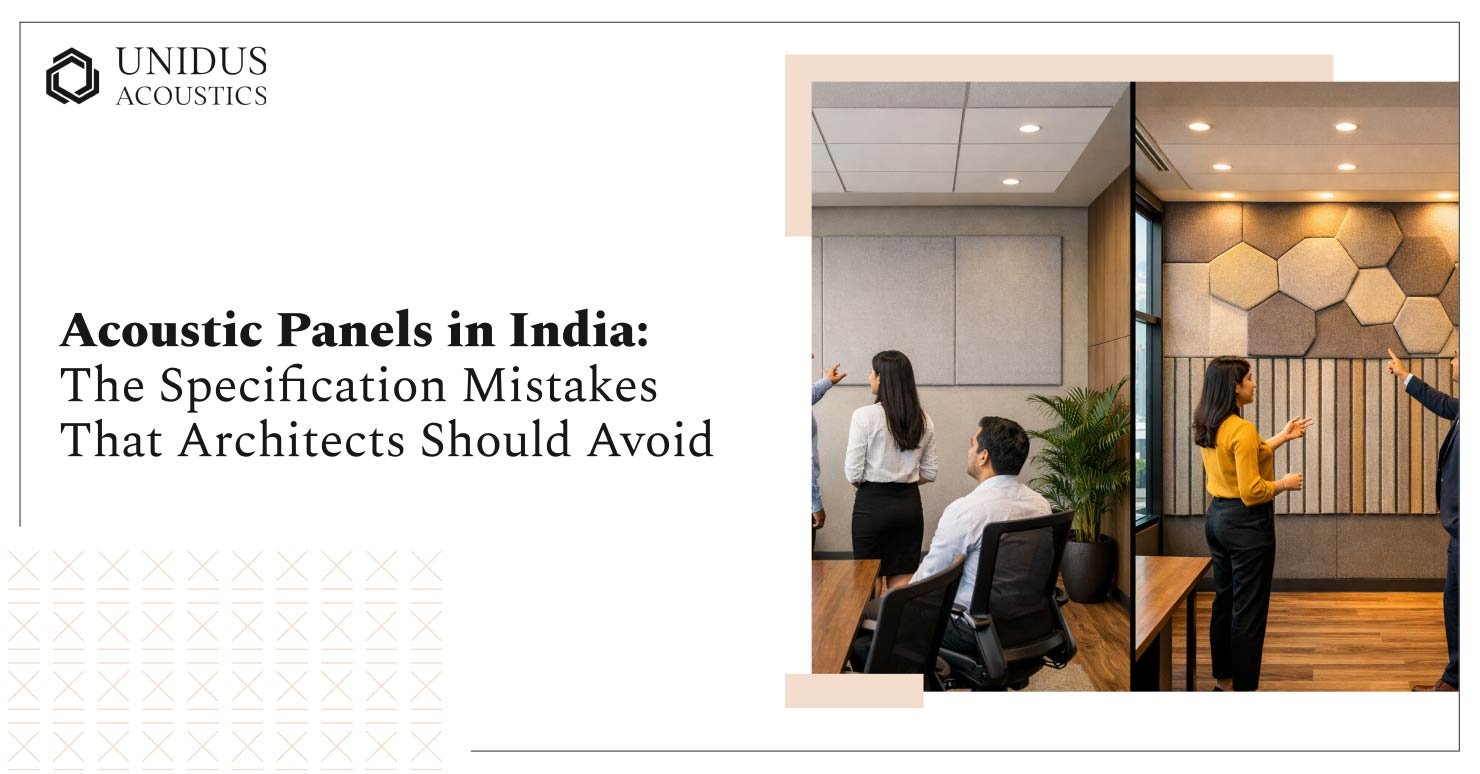
There’s a kind of frustration specific to post-handover acoustic complaints. Specifying acoustic panels in India has become more nuanced than before, and the errors that lead to post-handover complaints are rarely obvious at the time they occur.
The space looks exactly as designed. Finishes are right, lighting works, the client loved the renders. Then, six weeks after the occupation, someone calls about an echo in the conference room or a boardroom, where you can barely follow a conversation from the back row.
The panels are there. They were specified. The issue is rarely a single decision — it’s usually a combination of factors that individually seem reasonable, and only show up together after occupation.
Coverage and Placement: Where Specifications Often Break Down
Two things go wrong here more than anything else: how much treatment is specified, and where it actually ends up.
1. Under-Specifying Coverage in High-Volume Rooms

The relationship between a room’s volume and the absorption it needs isn’t linear. A double-height atrium or a large open-plan floor plate needs proportionally more treatment than a standard 3-metre-ceiling office. Rules of thumb like “20% of wall area” work reasonably well in typical rooms but break down with unusual geometries or very large volumes.
Reverberation time (RT60) calculations are worth doing properly for any space where speech clarity or acoustic comfort is part of the brief. This is where many specifications of acoustic panels in India fall short: coverage gets estimated rather than calculated, and the result is a space that still reverberates despite having panels on the walls.
2. How Placement Affects Acoustic Panel Performance
Where panels go matters as much as how many you specify. Clustering acoustic wall panels on a single surface, or placing them only in corners, addresses a fraction of the reflective surfaces driving reverberation. Sound bounces off every hard surface: ceiling, floor, glass, concrete columns.
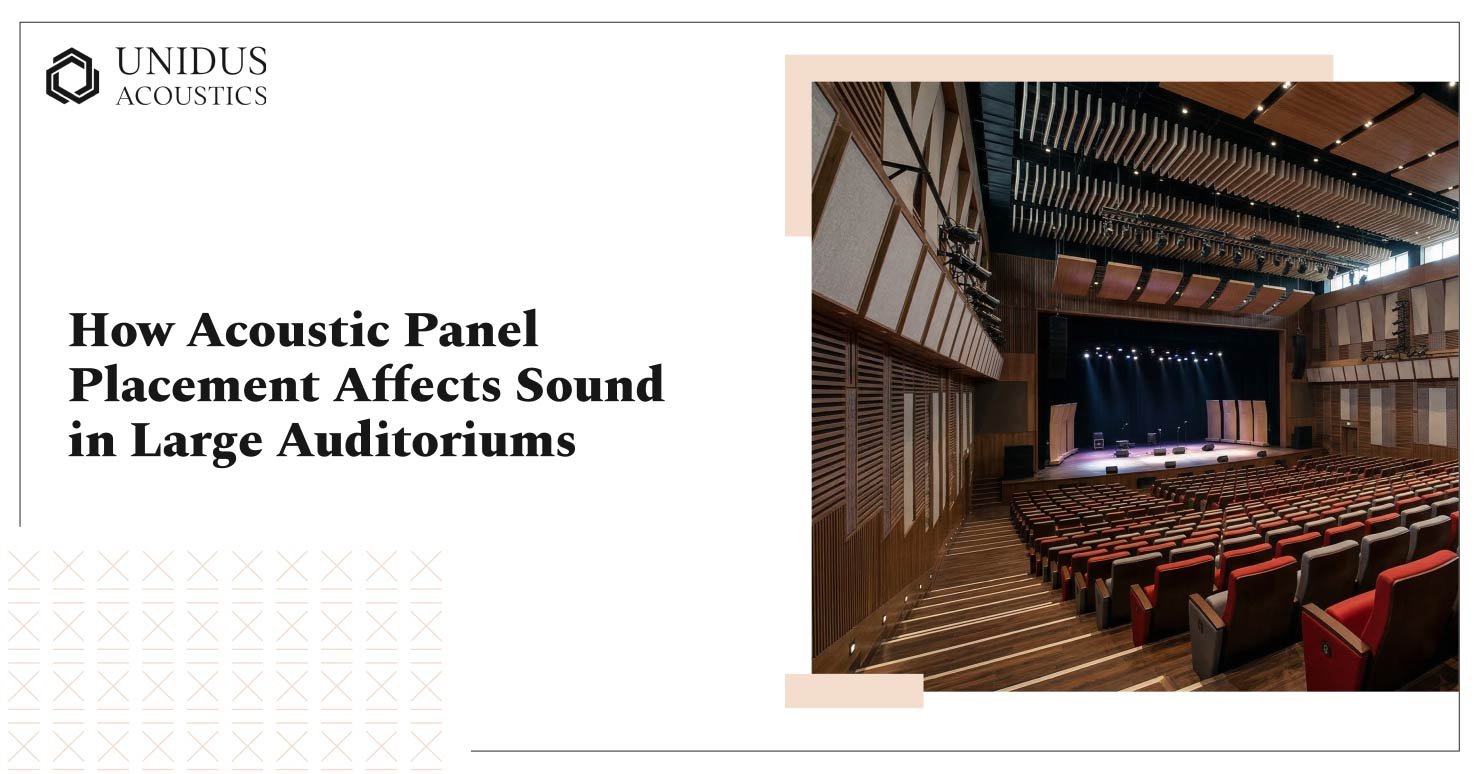
Panels on parallel walls reduce flutter echo more effectively than panels concentrated on one wall. Acoustic ceiling baffles and acoustic clouds intercept both direct and reflected sound paths, often delivering better results per square metre than wall treatment alone in rooms with hard floors. Significant glazing is worth accounting for separately. Glass will undermine the absorption added elsewhere if it isn’t included in the specification.
Verification and Timing: Two Factors That Rarely Get Enough Attention
Even a well-placed, well-sized specification can underperform if the product data behind it hasn’t been properly verified, or if the decisions came too late in the project to be implemented properly.
1. Checking That Test Data Matches What You’re Actually Specifying

Not all products carry independent test certification, and NRC figures quoted in brochures don’t always reflect real-world tested performance. This is especially worth scrutinising when sourcing decorative acoustic panels or acoustic insulation panels from newer suppliers without a documented track record.
When specifying, ask: Is this figure from a certified lab? Which standard was used, ASTM or ISO? What thickness and mounting condition was tested? A panel tested at 50mm with an air gap performs differently from the same panel at 25mm flush-mounted to a wall. That difference won’t appear in a single quoted number. Fire rating documentation is equally important to confirm at the specification stage for any commercial space.
2. Why Acoustic Decisions Need to Come Into the Design Process Earlier
When acoustic decisions arrive after finishes are locked and budgets are set, the options narrow considerably. Panels get positioned where they fit aesthetically rather than where they perform best. Materials get value-engineered. The result is a space that technically has acoustic treatment but doesn’t behave acoustically.
Integrating these decisions alongside the finish schedule, before render sign-off, gives far more flexibility. Whether it’s decorative acoustic panels on a feature wall, acoustic ceiling baffles above an open plan, or acoustic clouds over a collaboration zone, these choices land better when they’re part of the design conversation from the beginning.
Most problems at handover can be traced back to decisions made, or deferred, much earlier in the project. At Unidus Acoustics, we make it a point to come in at the design stage — our acoustic ceiling baffles, clouds, and wall panels are available in custom sizes, finishes, and configurations that are far easier to integrate when they’re part of the original material schedule.
Further Specification Errors Worth Knowing
Beyond coverage and timing, how architects interpret performance data is where some of the most persistent errors occur — and they’re worth addressing directly.
1. Reading NRC Wrong: The Most Frequent Specification Error

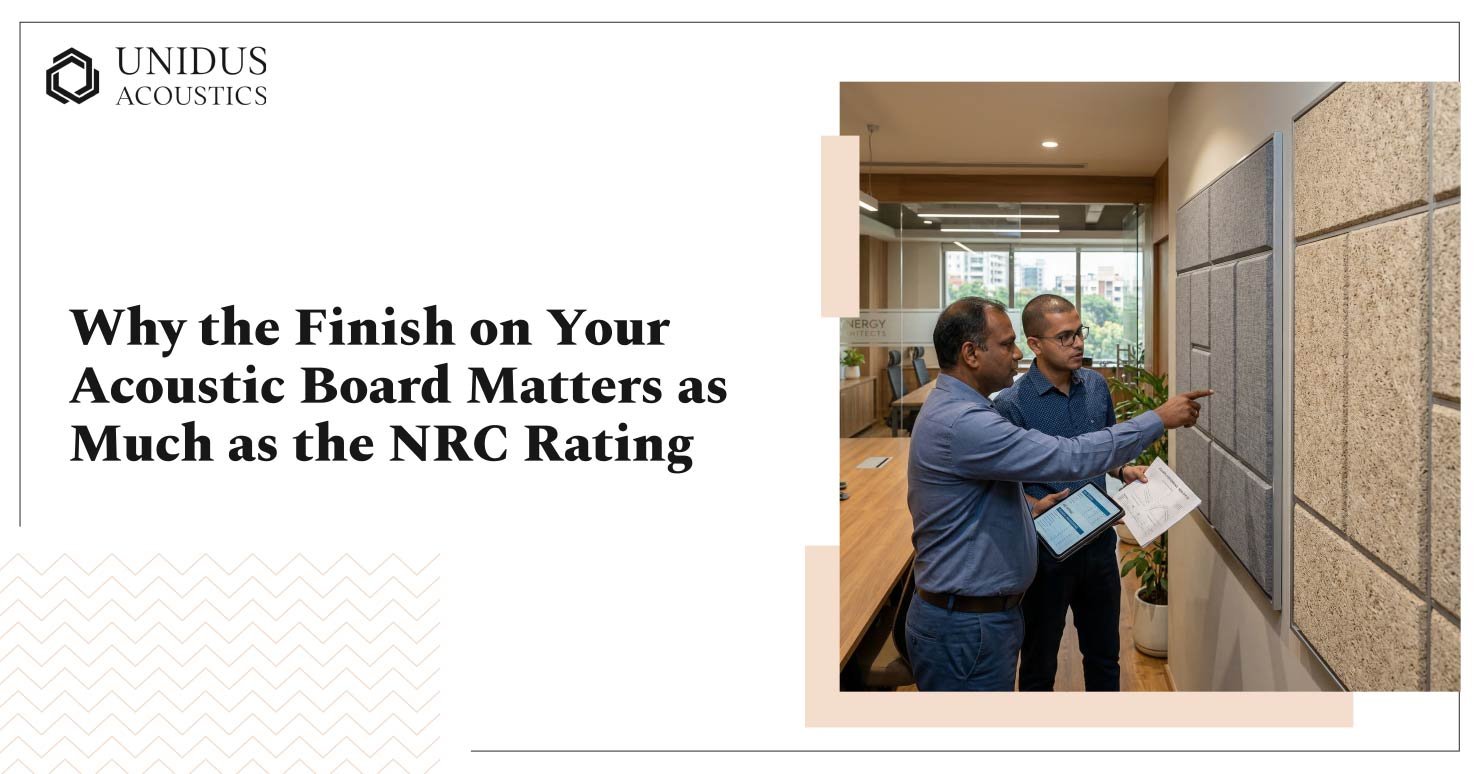
NRC (Noise Reduction Coefficient) is the figure architects most commonly use to evaluate sound absorbing panels, and for good reason. It’s a practical starting point. But NRC collapses a lot of information into a single number, and a panel rated NRC 0.80 can still perform poorly at the frequencies that matter most for your space.
Speech clarity in meeting rooms depends heavily on absorption in the 500 Hz to 2000 Hz range. A panel that absorbs well at low frequencies but drops off mid-range won’t fix the echo problem, even if the headline NRC looks solid. When reviewing acoustic panels in India, always ask suppliers for the full octave-band absorption coefficients, not just the single-number rating.
2. Treating Sound-Absorbing Panels as Soundproofing Products
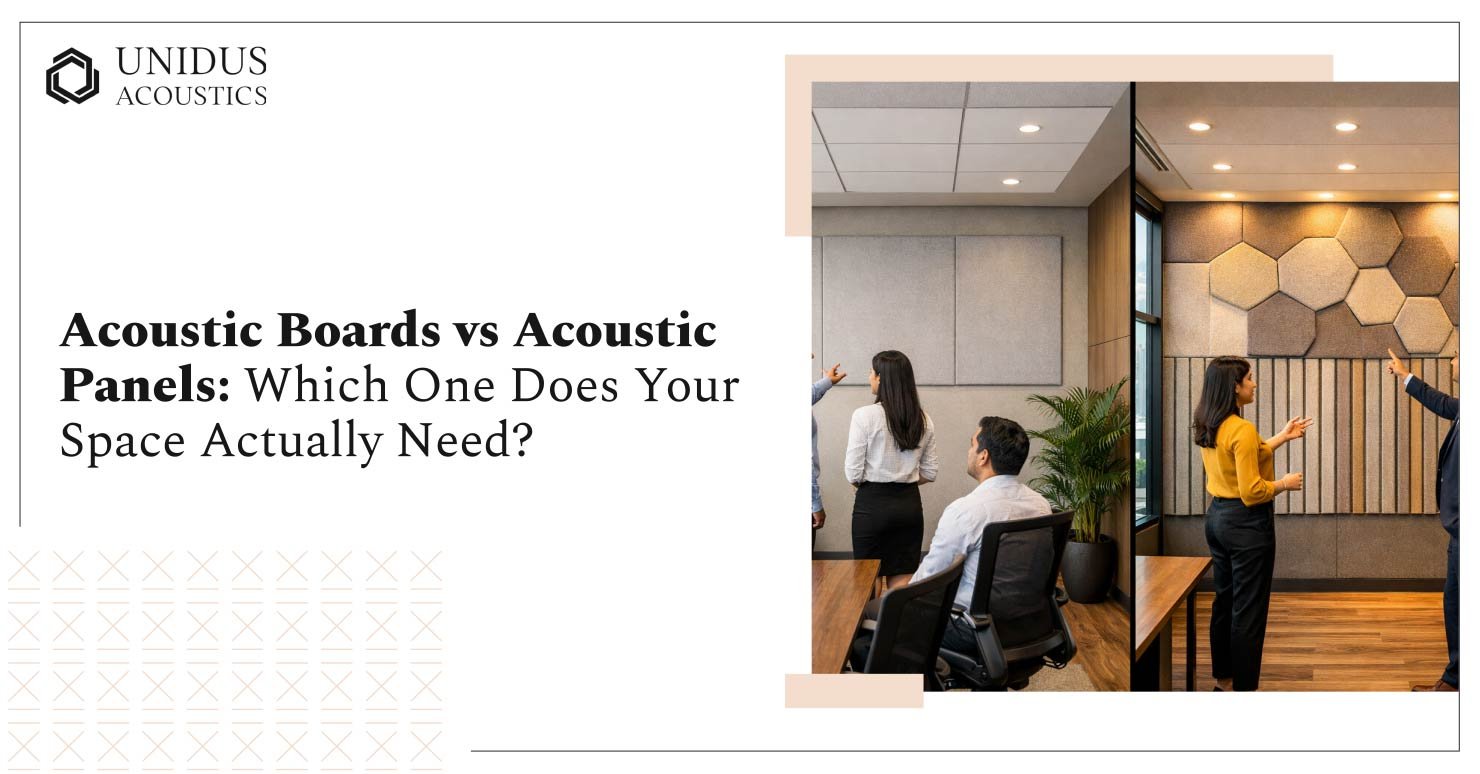
This gets mixed up more than it should, and it creates genuine problems on site. Sound-absorbing panels, whether fabric-wrapped, wood wool, polyester acoustic panels, or perforated, reduce reflections within a space. They are not isolation products.
If the concern is noise bleeding between rooms, external traffic, or HVAC heard two floors up, acoustic wall panels won’t address that. That’s a transmission problem requiring mass, density, and decoupling at the building fabric level. The relevant metric is STC (Sound Transmission Class), not NRC. Specifying acoustic panels in India as a fix for transmission issues leaves clients disappointed and leaves the architect answering uncomfortable questions.
A Closing Note on Getting It Right
None of this reflects poor practice on an architect’s part. These patterns emerge from complex projects with compressed timelines and competing priorities. But a space that sounds wrong after handover is hard to fix.
Getting the specification right from the start makes a real difference, and it opens up far more options — custom shapes, finishes, and material choices that wouldn’t be viable as a retrofit. Unidus Acoustics works alongside design teams across India, matching acoustic wall panels, ceiling systems, and insulation products to actual project requirements — with 40 years of expertise and full customisation across materials, finishes, and configurations.
Working on a project where acoustics matter? Share your layout and we’ll suggest product options that fit your design intent. Contact us now!