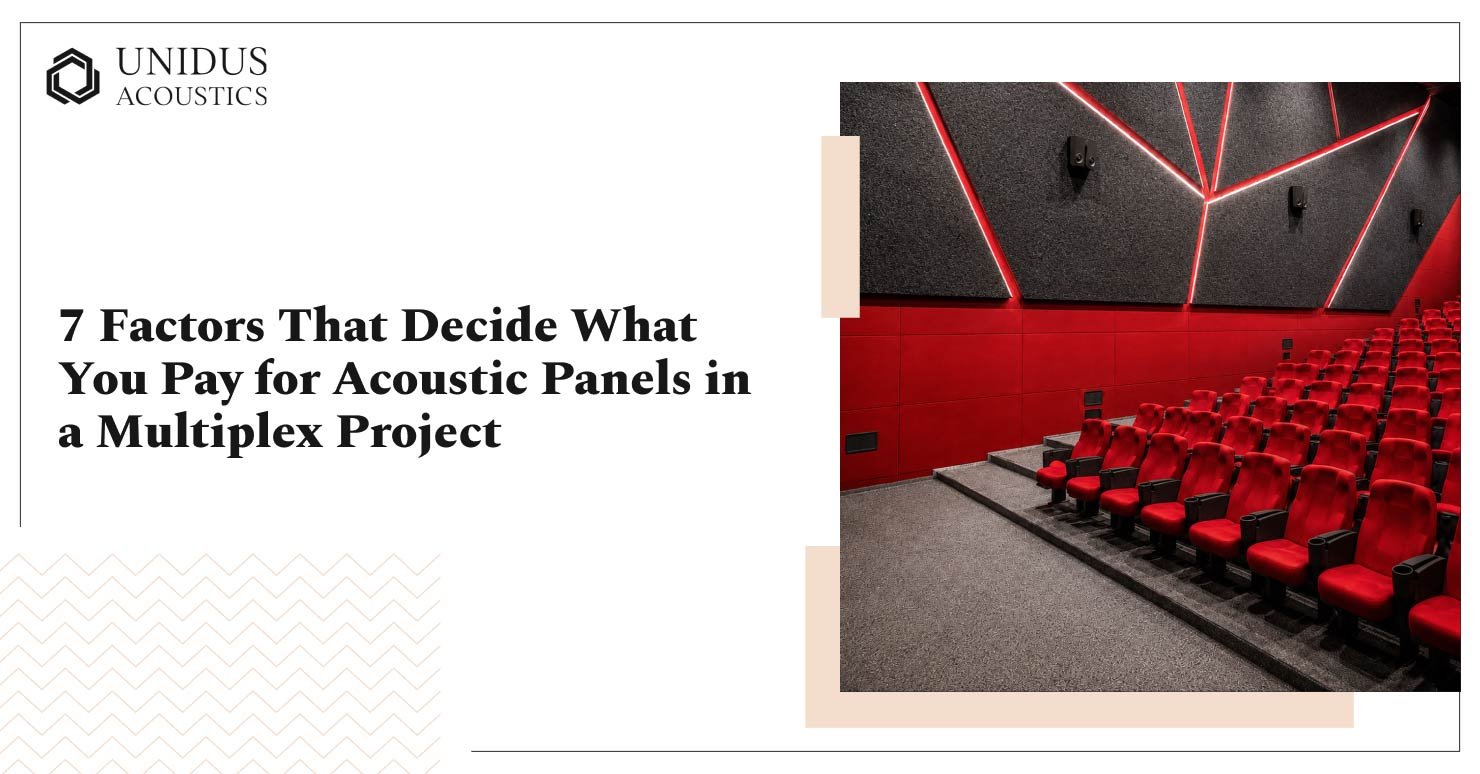
The price of acoustic panels for multiplex projects depends on more than square footage. Material choice, fire rating, and finish customisation move the cost as much as area does. A gypsum tile and a fabric-wrapped polyester panel can carry the same NRC rating and still land at different price points. Getting the brief right starts with knowing which of these seven factors apply to your auditorium before a vendor quotes a number.
Key Takeaways
- Material type, whether fabric-wrapped polyester, glasswool, wood wool, or gypsum, is the single biggest driver of per-square-metre cost.
- Fire rating matters more in a multiplex than in an office fit-out, since public assembly spaces usually specify higher-rated finishes.
- NRC target and thickness move together, since a higher absorption target usually needs a thicker or denser panel core.
- Customisation, such as colour, print, or shape, adds cost that standard modular panels avoid.
- Sound isolation between adjoining screens is a separate line item from wall absorption, and multiplexes often need both.
- Installation timing matters, since retrofits inside a working multiplex usually cost more than fit-outs in an empty shell.
What Decides the Price of Acoustic Panels for Multiplex Fit-Out
Some of these show up on a quotation as a single line item. Others only show up once the invoice arrives higher than expected. Here’s what typically moves the number, roughly in the order most vendors price it.
1. Material and Core Type
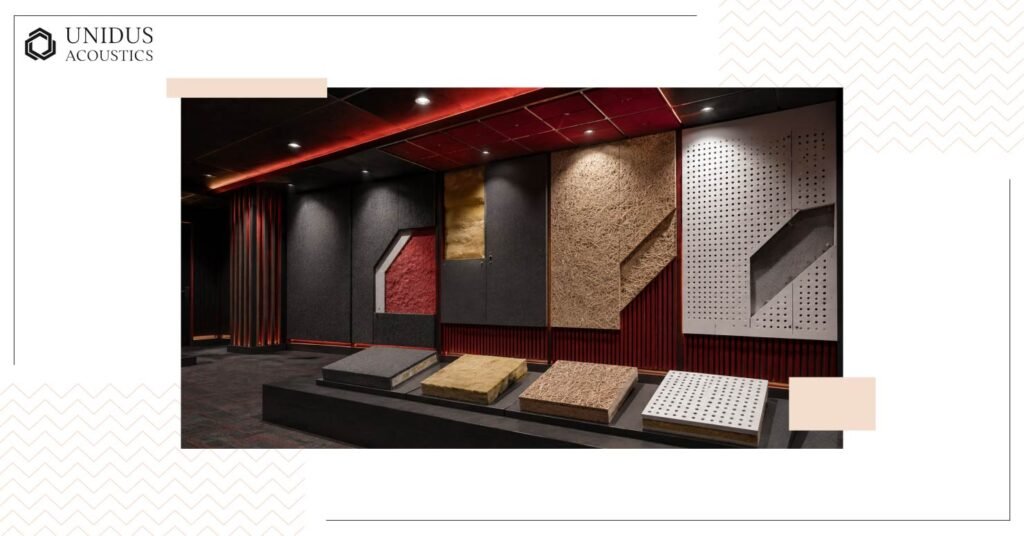
Fabric-wrapped polyester panels, glasswool tiles, wood wool boards, and gypsum-perforated tiles all absorb sound, but they don’t cost the same to make or install. [VERIFY: the specific density range for polyester panel cores needs confirming against current spec sheets before this goes out.] What’s safe to say without a number attached is that material choice alone can shift the budget before anything else on this list gets factored in.
2. Thickness and NRC Target
Panels rated at a lower NRC and panels rated higher rarely use the same thickness or density. Pushing absorption higher on a screen wall or side wall usually means a thicker core, and thickness adds to material cost per panel. A multiplex chasing a specific reverberation target for dialogue clarity needs this number early. Not after the panels are already ordered.
3. Fire Rating and Compliance
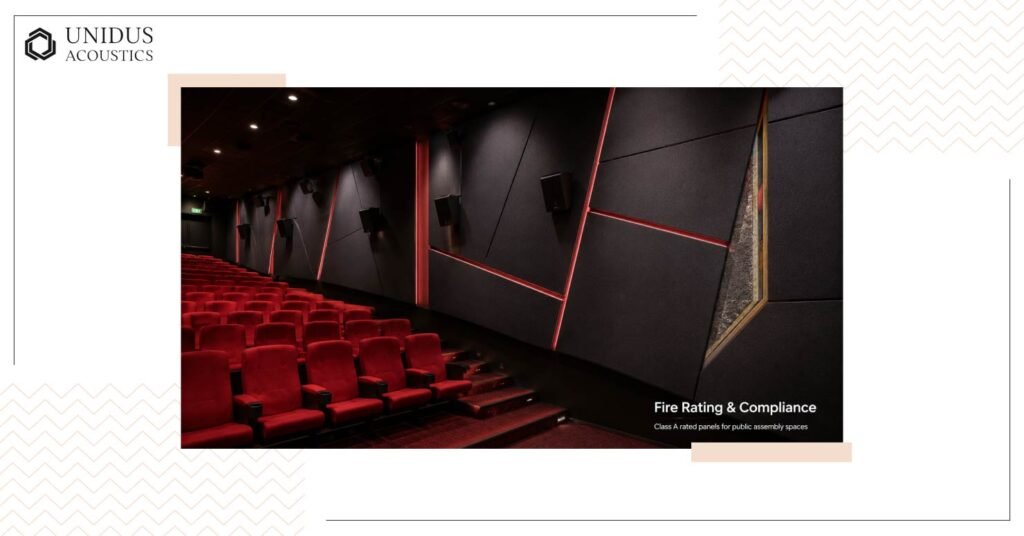
Multiplexes are public assembly spaces, and interior finishes in assembly buildings usually carry stricter fire-rating requirements than an office wall does. Confirming the fire rating your auditorium requires, and checking it against certified product data, avoids rework later.
4. Customisation
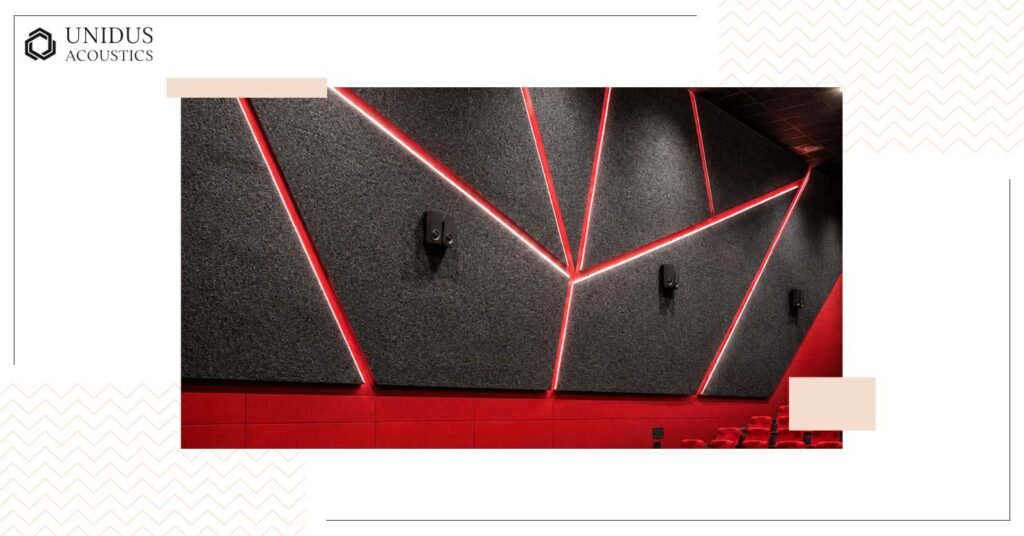
Standard sizes and standard colours keep panel costs predictable. Printed designs, inlay patterns, curved installations behind a screen, or a colour outside the standard shade range all add engineering and production time. We offer more than 84 shades along with bespoke design capability, browseable in the product catalogue, and bespoke work is priced differently to a stock panel run.
5. Coverage Area and Auditorium Size
Larger auditoriums need more panels, but the relationship isn’t perfectly linear. Bigger volumes often need proportionally more coverage to hit the same reverberation target, since a larger room simply has more surface area for sound to bounce off before it settles. A 300-seat auditorium and a 150-seat auditorium rarely scale cost in a clean two-times ratio; the extra ceiling height and rear-wall volume in a bigger hall usually pull more of the budget than the seat count difference alone would suggest. This is one of the reasons a per-seat cost estimate can mislead more than it helps when auditoriums differ in shape as well as size.
6. Sound Isolation Between Adjoining Screens
Wall absorption controls echo inside one auditorium. It does nothing to stop bass from an action sequence in one screen leaking into the next. That’s a separate problem, solved with sound deadening membrane inside the partition wall rather than panels on its face. Multiplexes with adjoining screens usually need to budget for both treatments, not just one, and skipping the membrane to save cost tends to surface as a complaint from the neighbouring screen’s audience rather than a line item anyone catches beforehand.
7. Installation Complexity and Downtime Window
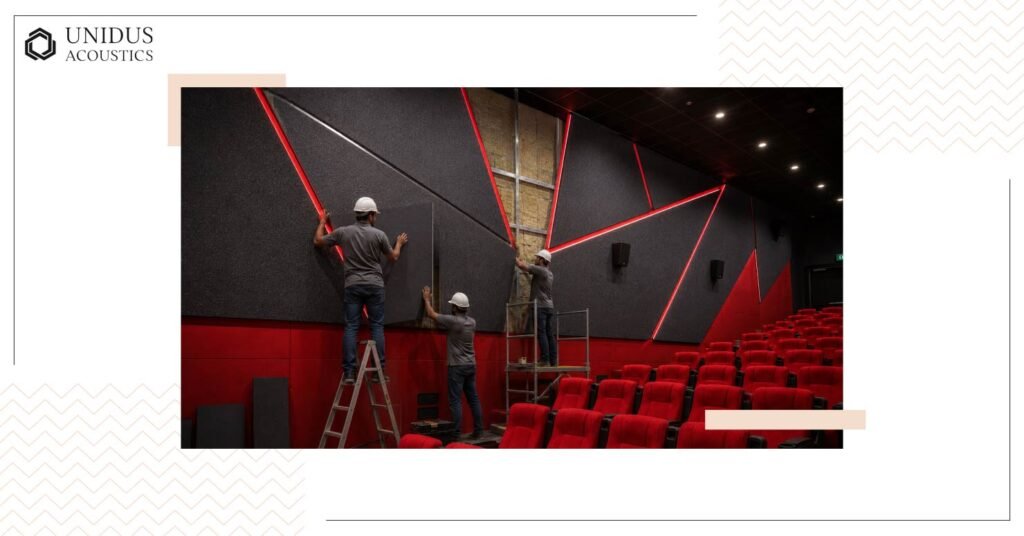
Fitting panels into a new shell before seating goes in is straightforward. Retrofitting the same panels into a working multiplex, around a screening schedule and limited access hours, costs more in labour even if the material bill is identical. Weekday morning slots and overnight work both add time, and time on site is part of the price. A multiplex mid-renovation also has to sequence work around ongoing shows in adjacent screens, which narrows the install window further and can push labour costs up even when the scope of work stays exactly the same.
What This Looks Like Across a Typical Multiplex
Put together, these factors land differently depending on which part of the auditorium is being treated. The table below breaks down where the acoustic priority sits, and which product category usually applies.
| Zone | Primary Acoustic Concern | Typical Product Category |
|---|---|---|
| Screen wall and speaker zones | Absorption near the screen, moderate fire rating | U-TONE acoustic panels or fluted wall panels behind the screen. |
| Side and rear walls | Broadband absorption for reverberation control | Full-tone tile or soft fibre glasswool ceiling tile. |
| Ceiling above seating | High NRC target across a large area | Soft fibre glasswool ceiling tile, fire-rated where required. |
| Partition wall between screens | Sound isolation, not absorption | Sound deadening membrane within the wall build-up. |
| Lobby and corridors | Durability and a presentable finish | Wood wool or fluted panel decorative finish. |
| Projection and equipment rooms | Equipment noise containment | Sound deadening membrane with panel lining. |
Getting an Accurate Quote Before Committing to a Budget
A quotation listing only square metres and a single per-square-metre rate is incomplete for a multiplex. Ask for the material, thickness, NRC, and fire rating behind that number. Ask whether sound isolation between screens is priced separately too. That’s usually where budgets go wrong. If you’d rather skip the back-and-forth, reach out directly with your auditorium dimensions and we’ll walk you through what a realistic specification looks like.
Frequently Asked Questions
1. What’s the cost difference between fabric-wrapped and gypsum acoustic panels?
Material and finish decide most of the difference, not acoustic performance. Fabric-wrapped and gypsum panels can hit similar NRC ranges, but fabric-wrapped panels usually cost more due to the wrapping process, while gypsum tiles run more efficiently at scale.
2. Does a multiplex need a higher fire rating than a regular office fit-out?
Generally, yes. Multiplexes are public assembly spaces, and interior finishes usually need to meet stricter fire-rating requirements than a typical office wall. Confirm the exact rating required with your fire authority and project consultant before finalising the specification.
3. Do adjoining screens in a multiplex need separate sound isolation treatment?
Yes. Wall panels absorb sound inside one auditorium, but they don’t stop bass from one screen bleeding into the next. That needs sound deadening membrane inside the partition wall, a separate line item from the panels on the wall surface.
4. Can acoustic panels in a multiplex be customised to match interior branding?
Yes, most panel ranges support custom colours, prints, and shapes. Customisation adds engineering and production time compared to standard sizes, so confirm lead time alongside cost when a bespoke finish is part of the brief.
5. How much does retrofitting an existing multiplex cost compared to a new fit-out?
Retrofits usually cost more per square metre in labour, even with identical materials, since installation happens around a working screening schedule with limited access hours. New shells allow straightforward installation before seating and finishes go in.
6. Do you only supply the panels, or handle installation too?
We supply and install acoustic panels, ceiling systems, and sound isolation products across multiplex projects, working through a dealer and project network in more than 70 cities in India.
Conclusion
Getting a multiplex acoustic panel budget right starts with naming these seven factors before requesting a quote, not after receiving one. Material, fire rating, and sound isolation between screens usually decide more of the final number than raw square footage does.
Unidus Acoustics has supplied and installed acoustic panels, ceiling systems, and sound isolation products across corporate, institutional, and entertainment spaces for over 40 years, backed by SGS, Intertek, and TÜV Rheinland certification. If you’re planning a multiplex fit-out and want a specification that fits both the budget and the brief, contact us.