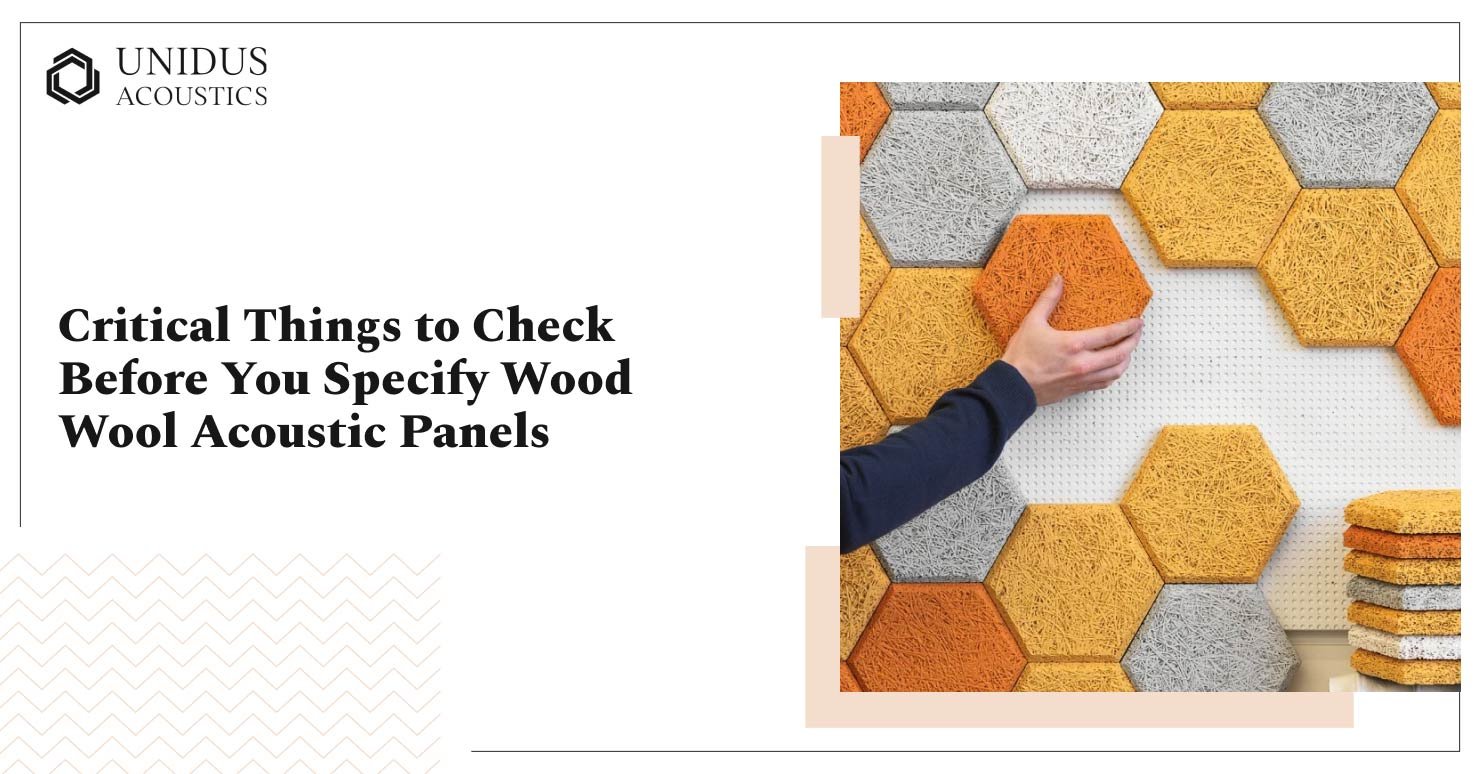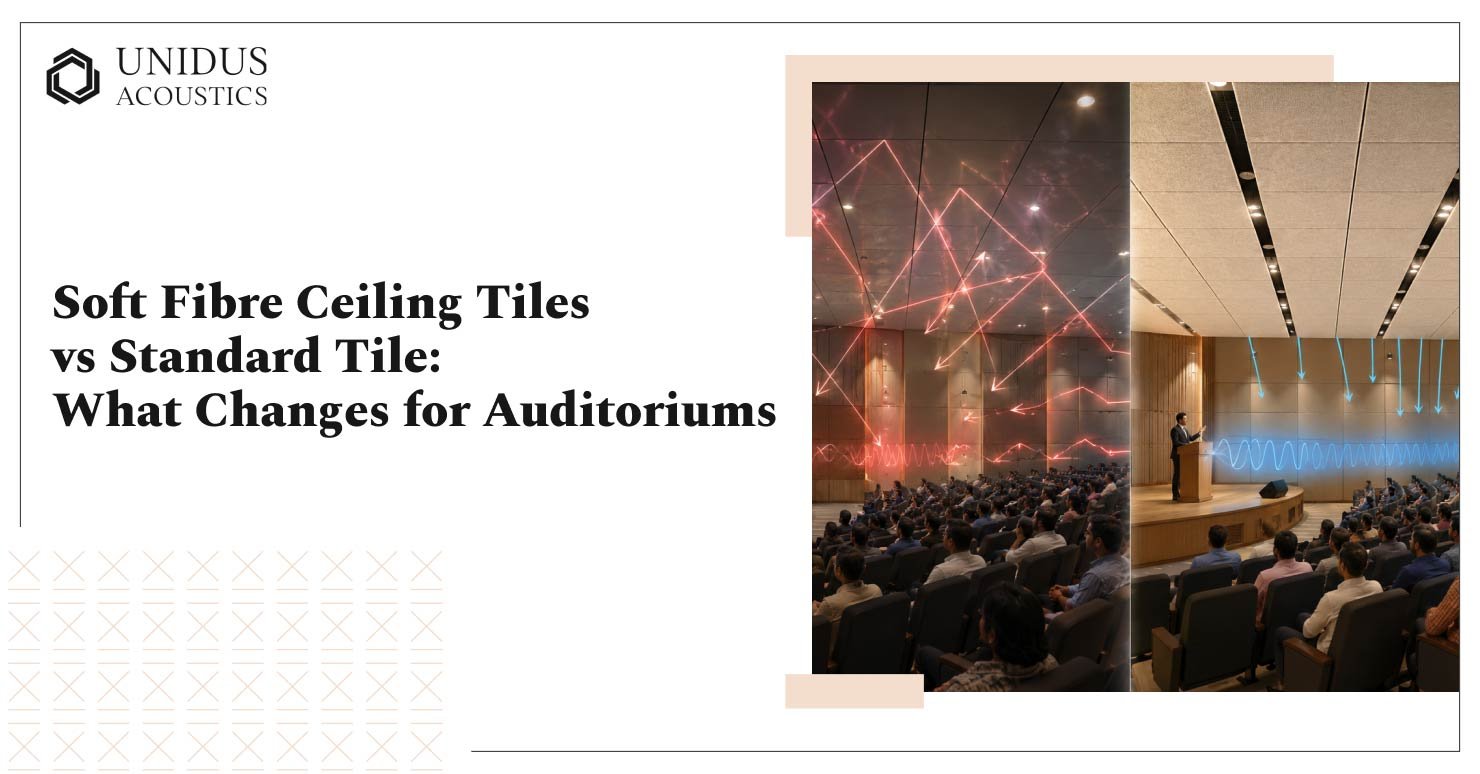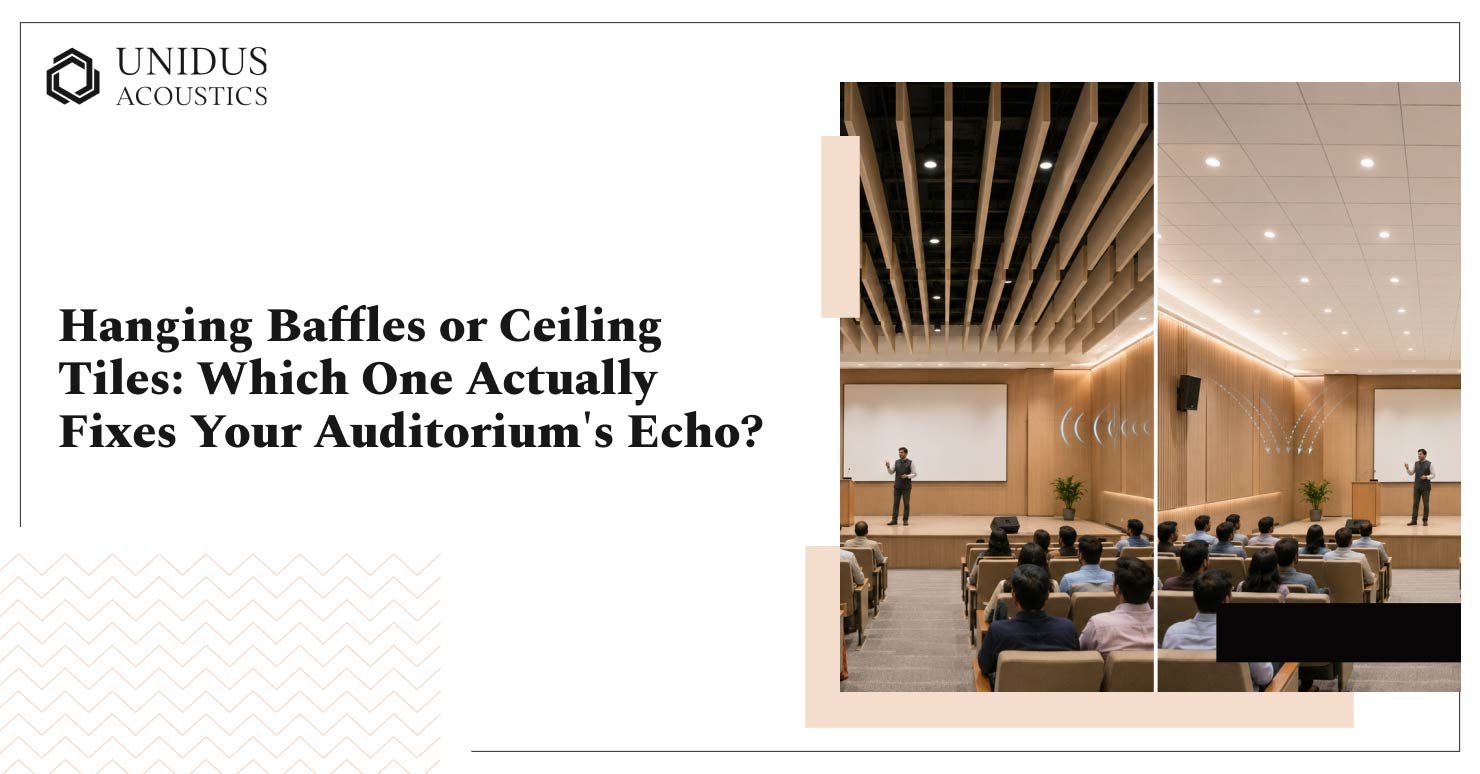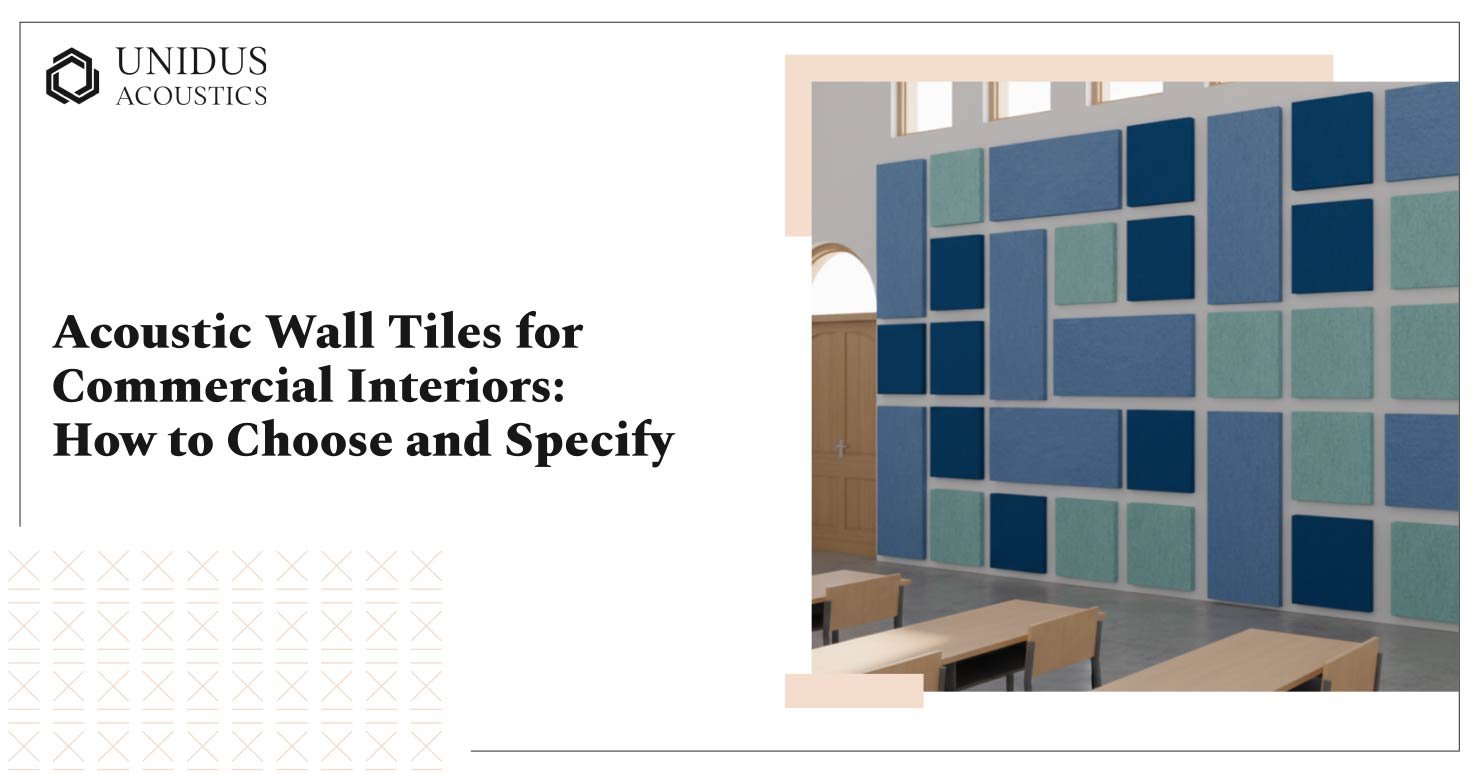
“Acoustic wall tiles” gets searched more often than it gets sold as a literal product. At Unidus Acoustics, we see the term used for modular, tile-format acoustic wall panels, not for a ceramic or stone tile category. That mix-up is worth clearing up before you compare products.
This guide is a specification checklist. Use it alongside our broader guide to specifying acoustic panels for commercial projects. Here, we focus on what to check before an acoustic wall tile gets locked into a tender document: performance data, fire and hygiene requirements, mounting choices, and finish options.
Key Takeaways
- “Acoustic wall tiles” is a market term for modular, tile-format acoustic wall panels, not a ceramic tile category, and it solves absorption, not blocking.
- NRC 0.70 or higher is the working range for most commercial acoustic wall tile specifications.
- Full-sheet and tile-format panels can share the same NRC performance. The difference is installation pattern and how easily a damaged section gets replaced.
- A fire rating claim without a named certifying body behind it is hard to defend at a facility audit or insurance review.
- An air gap of 20mm to 50mm behind the tile improves absorption compared with direct adhesive mounting.
- Shade and finish customisation needs locking in at design development, since bespoke colours and veneer runs carry longer lead times.
What “Acoustic Wall Tiles” Means in a Commercial Brief
Full-sheet acoustic wall panels typically run 2440mm x 1220mm. Tile-format products are usually smaller, modular segments, often in the 600mm x 600mm range. They install in a grid pattern across a wall instead of as one continuous sheet.
Both formats can carry the same core material and the same NRC performance as acoustic ceiling tiles. The real difference is installation pattern, and how easily you can replace one section later without redoing the whole wall. Our full acoustic panel range covers both formats.
Start With the Room’s Problem, Not the Product Catalogue
Before you shortlist any product, work out what the room actually needs fixed. Two different issues both get called “acoustic problems” in a brief, and each one needs a different solution.
Is the Room Struggling With Absorption or Blocking?

A room that sounds echoey, where speech bounces around and calls feel harsh, needs absorption. This is measured by NRC, or Noise Reduction Coefficient. A room where conversations carry into the corridor or the meeting room next door needs blocking instead, measured by STC, or Sound Transmission Class.
Acoustic wall tiles solve the absorption problem. If the brief also needs blocking, that calls for a mass-loaded vinyl layer inside the wall assembly, not a tile finish. Flag this separately in the specification so it doesn’t get missed.
Where Do the Tiles Actually Need to Go?
Reverberation problems usually concentrate on specific surfaces rather than spreading evenly across every wall. The rear wall of a conference room, the wall behind a presentation screen, and any pair of hard parallel walls facing each other are typically where echo builds up.
Specify acoustic wall tiles across those surfaces first. Spreading a thin layer of coverage across the whole room tends to produce a weaker result for the same material budget.
What Performance Data Should You Ask For?
Once you know the room’s actual problem, ask suppliers for documented numbers, not just marketing claims. Two figures matter most: the NRC rating and the fire certification.
What NRC Rating Do You Actually Need?

| NRC Range | Absorption Level | What It Means for a Commercial Wall |
|---|---|---|
| 0.0 – 0.3 | Low | Close to a bare, untreated wall. Not a meaningful acoustic upgrade. |
| 0.4 – 0.6 | Moderate | Noticeable improvement, suited to smaller or lower-priority rooms. |
| 0.7 – 0.9 | High | The working range for most commercial acoustic wall tiles, whether polyester, fluted, or fibre-based. |
Does the Fire Rating Have a Certificate Behind It?
Ask for the test certificate, not just a datasheet claim. Interior wall finishes in commercial buildings need a documented fire rating from a named certifying body. Unidus Acoustics’ panels, for example, carry a Class B1 fire rating tested by SGS, Intertek, and TÜV Rheinland. A fire class stated without a certifying body behind it is hard to defend later, at an audit or an insurance review.
Which Material Suits Your Room?
NRC and fire data narrow the shortlist. The material type narrows it further, since each one suits a different room type and comes with its own trade-off.
| Product Type | NRC Range | Best Suited For | Worth Knowing Before You Specify |
|---|---|---|---|
| Recycled polyester acoustic tiles | 0.70 – 0.90 | Offices, CXO rooms, meeting rooms needing a colour-matched, smooth finish. | Reads more corporate and clean-lined than textured finishes. Available in a wide shade range. |
| Wood-finish fluted wall tiles | 0.70 – 0.90 | Reception areas, auditoriums, and hospitality-adjacent corporate spaces wanting a warmer material palette. | Real wood veneer runs need longer production lead time than the standard polyester range. |
| Soft fibre acoustic tiles | 0.80 – 0.90 | Cafeterias, breakout zones, and lower-traffic wall areas wanting a softer, fabric-like face. | Better suited to low-abrasion walls than high-traffic corridors, given the softer surface. |
| Perforated metal tiles | Up to 0.80 | Hygiene-sensitive or high-durability walls in cafeterias and healthcare-adjacent spaces. | Reads more industrial. Usually paired with lighting or colour to soften the look. |
Does the Wall Need to Handle Repeated Cleaning?
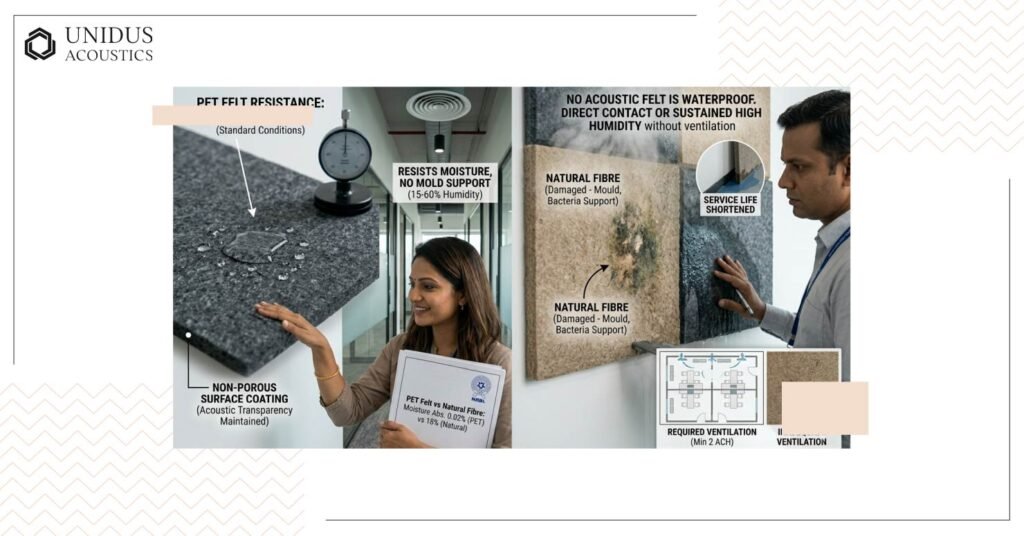
Material choice isn’t only about sound and looks. Cafeterias, clinics, and high-touch corridors need a wall finish that survives repeated cleaning without breaking down. Look for panels rated for fogging, spraying, and wiping. A tile that looks fine on a data sheet but isn’t rated for repeated disinfection turns into a maintenance problem a year into occupancy, not a design problem.
How Should the Tiles Be Mounted?
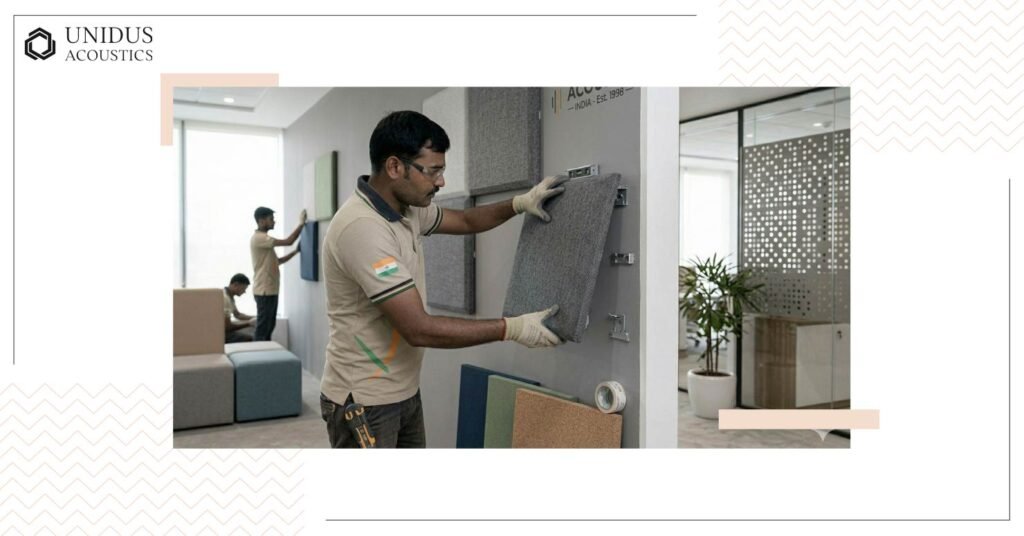
Once the material is settled, the mounting method decides how well it actually performs on site. Direct adhesive mounting is the simplest route. But leaving an air gap of 20mm to 50mm behind the tile, using a batten or channel system, meaningfully improves low- and mid-frequency absorption compared with mounting flat against the wall. Our NRC testing method reference covers this in more depth.
Tile-format products carry a practical advantage over full sheets here too. You can swap out a damaged or discoloured section on its own, without redoing the whole wall.
When Should You Lock In Shade and Finish?

Shade and finish customisation shouldn’t be an afterthought at fit-out stage. Fully custom colours, prints, and large veneer runs need production lead time that a standard stock shade doesn’t. Lock in shade and finish decisions at design development, not once installation has already started, so you avoid a scramble at the end of the project.
A Specification Checklist Before You Finalise
- Confirm the NRC rating against the room’s actual reverberation problem, not a generic target pulled from another project.
- Confirm the fire rating and ask for the test certificate, not just a datasheet claim.
- Confirm disinfectability if the wall sits in a cafeteria, clinic, or high-touch corridor.
- Confirm the mounting method and whether an air gap behind the tile is feasible.
- Confirm shade and finish lead time separately, and loop in an acoustic consultancy if the brief spans several room types.
Frequently Asked Questions About Acoustic Wall Tiles
1. What NRC rating is enough for a commercial meeting room?
Most commercial meeting rooms and offices see a real improvement from acoustic wall tiles rated NRC 0.70 or higher, applied across the walls where echo concentrates rather than spread thinly across the whole room.
2. Are acoustic wall tiles the same as acoustic ceiling tiles?
They share the same core material and absorption principle, but ceiling and wall products are usually tested and mounted differently. A ceiling tile isn’t automatically rated or sized for wall installation. Confirm the product is specifically listed for wall use before you specify it that way.
3. Can acoustic wall tiles be specified in custom colours for a corporate brand palette?
Yes, within the product’s documented range. Look for a supplier offering a wide shade library alongside bespoke design options. Plan for fully custom colours and prints at the design development stage, since they need extra production lead time.
4. Do acoustic wall tiles need a fire certificate for commercial buildings in India?
Ask for one regardless of what the datasheet claims. A stated fire class without a named certifying body behind it is hard to verify or defend later. Unidus Acoustics’ panels carry a Class B1 fire rating tested by SGS, Intertek, and TÜV Rheinland.
Where This Leaves the Specification
Choosing an acoustic wall tile comes down to matching the room’s actual problem, absorption, blocking, or both, to a product with documented NRC data, verified fire certification, and a finish that doesn’t force a trade-off with the rest of the interior.
Unidus Acoustics‘ U-TONE, fluted, soft fibre, and UNISTEEL metal tile ranges cover this specification range, with SGS, Intertek, and TÜV Rheinland certification and a wide range of shades to choose from. Contact us now.