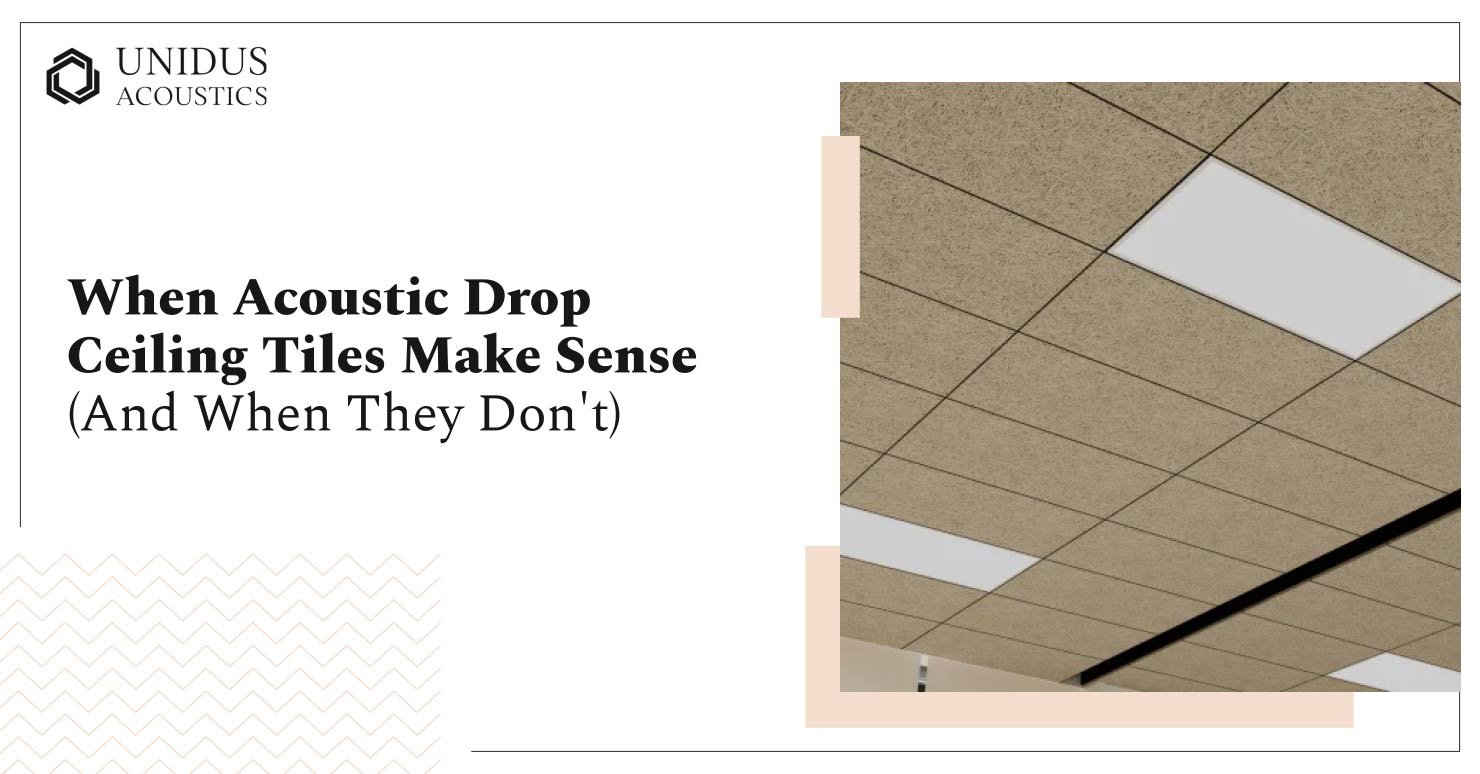
Acoustic drop ceiling tiles are removable, sound-absorbing panels installed in a suspended metal grid below the structural ceiling. Typically made from mineral fibre, fibreglass, or recycled materials, they reduce reverberation in commercial spaces while giving facility teams easy access to the ductwork, wiring, and plumbing running above.
Key Takeaways
- Acoustic drop ceiling tiles perform well in spaces that need echo control, inter-floor noise reduction, and concealed services, primarily offices, classrooms, and healthcare facilities.
- They’re not suited to low ceilings, industrial or exposed-ceiling aesthetics, or projects requiring premium acoustic performance such as recording studios.
- Specify tiles with NRC 0.80 or above for meaningful reverberation control in open commercial spaces.
- When drop tiles don’t fit the design intent, acoustic baffles and open cell systems are the closest functional alternatives.
- Hybrid approaches, such as drop tiles in open-plan zones and baffles in collaboration areas, often deliver the best balance of performance and aesthetics.
When Do Acoustic Drop Ceiling Tiles Make Sense?
Designed to absorb sound, reduce echo and support speech clarity, acoustic drop ceiling tiles remain one of the most cost-effective acoustic upgrades for commercial interiors. But they are not suitable for every design language or spatial condition.
Here are the scenarios where they deliver the strongest results:
Acoustic Drop Ceiling Tiles for Echo and Speech Clarity

Large lobbies, gyms, meeting rooms, and classrooms often struggle with reverberation. Hard surfaces cause speech to disperse, making conversations difficult.
High-NRC acoustic drop ceiling tiles help break up those reflections. Tiles with NRC values above 0.80 offer strong absorption and noticeably improve intelligibility in spaces where communication is a priority.
Control Noise Between Floors
A drop ceiling creates a plenum above the tiles that can be filled with mineral wool or high-density fibreglass. This added mass helps reduce vertical sound transmission.
For mixed-use buildings, offices above retail units or multi-level commercial spaces, pairing the ceiling system with proper flooring assemblies provides significantly better inter-floor isolation.
Conceal Utilities And Keep Access Simple

When your project requires clean visual lines and accessible mechanical systems, acoustic drop ceiling tiles are a practical solution.
Instead of cutting into drywall for maintenance, you or the facility team can lift a tile, inspect the service and reinstall it. This feature reduces labour and long-term maintenance costs.
Improve Energy Efficiency
By lowering the effective ceiling height, you reduce the conditioned volume of the room. This can help clients minimise HVAC loads and improve energy efficiency.
Tiles with added thermal insulation further enhance comfort and produce cost savings over time.
Where Acoustic Drop Ceilings Just Don’t Fit?
While versatile, acoustic drop ceiling tiles are not universally appropriate for every design consideration or performance requirement.
Here are the situations where they may not be the right choice:
Low Ceiling Heights And A Cramped Feeling
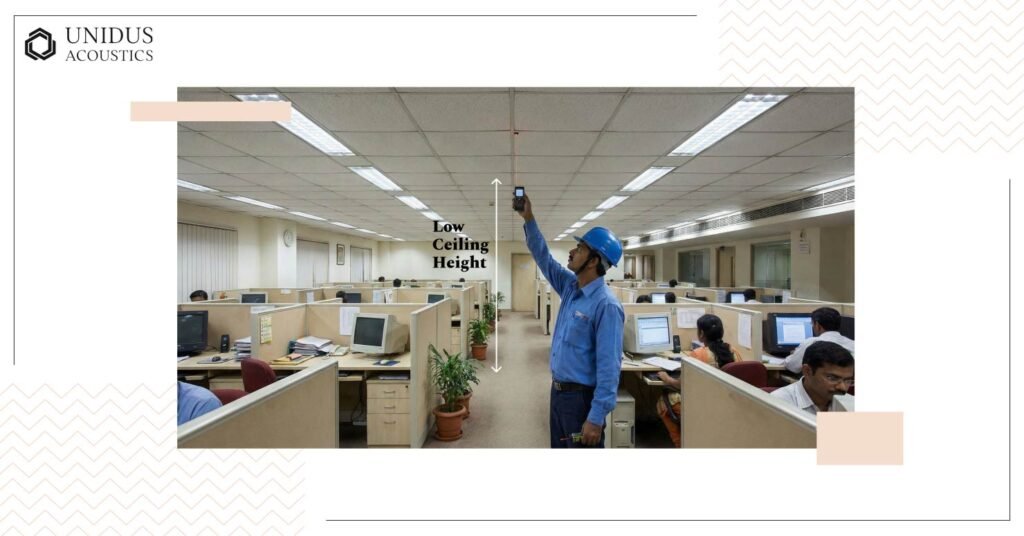
Since suspended ceilings drop several centimetres below the structural ceiling, they can make low-height rooms feel compressed.
Boutique retail spaces, restaurants with exposed beams, or any setting where vertical openness contributes to the design intent may lose their spatial character if a drop ceiling is added.
Modern Industrial Or Open-Concept Designs
Exposed ceilings have become a defining element of contemporary workspace and retail aesthetics. The raw look of ductwork, beams, and services supports the industrial language many clients request.
Recreating this feel with a drop ceiling often raises costs because mechanical lines must be neatly organised or treated. If the design intent revolves around height, openness and daylight, alternative acoustic solutions may align better with your vision.
Dust Accumulation And Maintenance
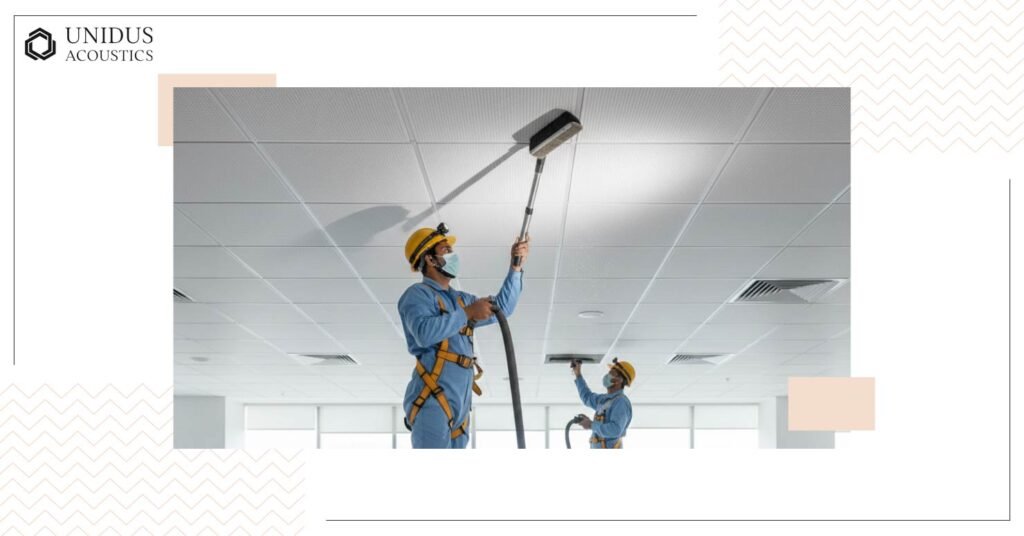
The plenum area above a suspended ceiling can accumulate dust and allergens over time. Without consistent cleaning, this may affect indoor air quality and require specialist maintenance.
In addition, tiles may sag, stain or discolour, requiring replacement and increasing long-term maintenance cost.
Not Ideal For Custom Shapes Or Premium Acoustics
Acoustic drop ceiling tiles offer flexibility, but they cannot match the performance needed for recording studios, audiophile environments or concert-grade spaces.
Projects that require diffusers, bass traps or specialised absorbers need dedicated acoustic treatments. Likewise, irregular geometries, curved ceilings or sculptural forms are often better supported by alternative ceiling systems or acoustic wall solutions.
Smarter Alternatives to Acoustic Drop Ceiling Tiles
When drop ceilings are not the right choice, you still have many design-driven acoustic options. At Unidus Acoustics, we specialise in solutions that balance performance and aesthetics. Here are some alternatives you can use in your projects:
Acoustic Baffles And Clouds
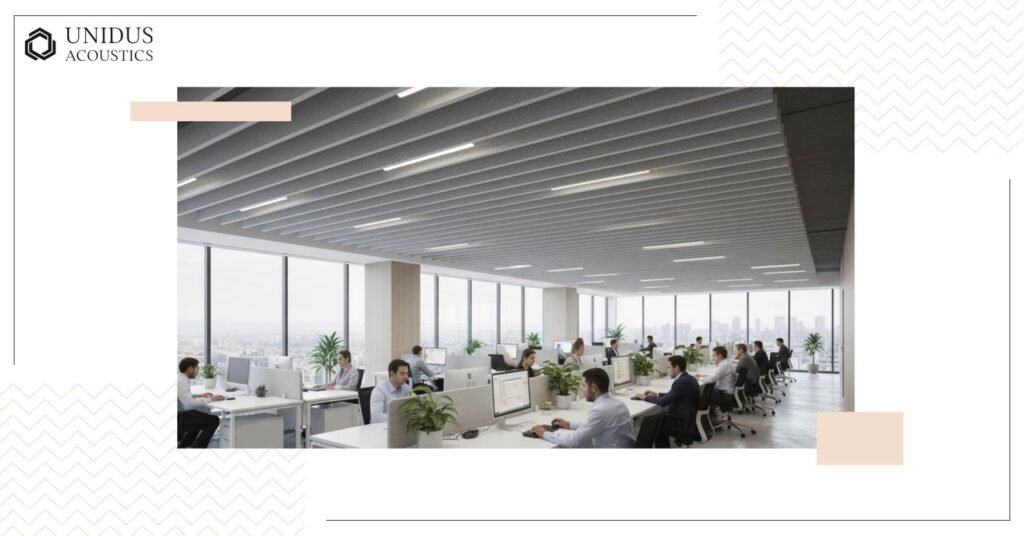
Unidus Acoustics ceiling baffles deliver NRC ratings up to 0.85 while adding visual depth and rhythm to your ceiling design. They work well in offices and hospitality spaces where a full drop ceiling may feel heavy.
Acoustic clouds are floating shapes that control reverberation while keeping the ceiling open. You can use them to create visual interest and still integrate lighting.
Open Cell Systems
Open cell grids keep sightlines open while providing acoustic control. They reveal the structure above and suit industrial offices or retail spaces. If you want openness without sacrificing performance, this is a strong option.
Acoustic Lighting Integration
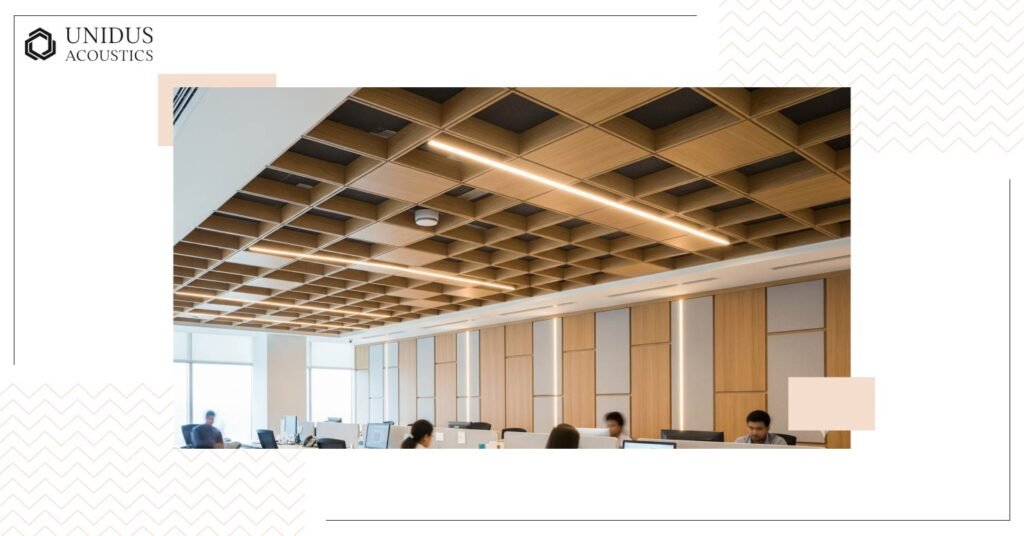
Unidus creates products that combine acoustic lighting and absorption. These fixtures use LED lighting paired with sound-absorbing materials. They are ideal for reception areas, conference rooms and collaborative zones where you want comfort and visual cohesion.
Custom Panels And Fabric-Wrapped Solutions
For feature walls or ceilings, you can choose cut-work, grooved, 3D etched or fabric-wrapped panels. They deliver high acoustic performance and elevate the design.
Fabric-wrapped panels add softness and reduce glare, making them useful in offices and educational spaces. You can also customise them with prints or brand elements.
High-Performance Ceiling Tiles
If your project needs top-tier sound control, Unidus offers high quality acoustic tiles. These tiles support recording studios, home theatres and auditoriums. We also offer felt-based products made from recycled plastic bottles, giving you strong absorption while meeting sustainability goals.
If your project needs top-tier sound control, Unidus Acoustics offers acoustic ceiling tiles with NRC ratings from 0.70 to 0.90, available in 50+ customisable colours and finishes to match your design vision.
Comparing Your Acoustic Ceiling Options
| Solution | NRC Range | Ceiling Height Impact | Maintenance | Best Fit |
|---|---|---|---|---|
| Drop ceiling tiles | 0.65–0.90 | Reduces headroom (150–300mm typically) | Moderate | Offices, classrooms, healthcare |
| Acoustic baffles | 0.70–0.85 | None | Low | Open offices, hospitality, exposed ceilings |
| Acoustic clouds | 0.70–0.90 | None | Low | Collaboration zones, reception areas |
| Open cell systems | 0.60–0.80 | None | Low | Industrial offices, retail, exposed-look spaces |
| Fabric-wrapped panels | 0.75–0.95 | None (wall-mounted) | Very low | Boardrooms, premium offices, education |
Choosing The Right Solution
For architects and interior designers, picking between acoustic drop ceiling tiles and other treatments depends on your space, budget and design intent. Ask yourself a few key questions.
- What problem are you trying to solve? Is it echo, noise transfer, or hiding services? Drop ceilings with absorbing tiles handle echo, while mineral wool improves noise isolation.
- How critical is maintaining ceiling height? Low ceilings or airy spaces may not suit full drop ceilings. Ceiling baffles or open-cell systems keep the space feeling open.
- Do you need design flexibility? Concealed grids and custom panels suit premium rooms. For creative impact, use baffles, clouds, or cut-work panels.
- What level of maintenance works for the client? Suspended tiles are easy to replace but need cleaning. Open ceilings eliminate concerns about sagging tiles but require neatly organised ductwork and periodic dusting.
While initial investment matters, the right acoustic solution delivers long-term value for money through reduced energy costs, lower maintenance requirements and improved occupant productivity.
Frequently Asked Questions About Acoustic Drop Ceiling Tiles
1. Do acoustic drop ceiling tiles block sound between floors?
They reduce reverberation within a room but provide limited inter-floor isolation on their own. For meaningful noise reduction between floors, fill the plenum above the tiles with high-density mineral wool or fibreglass, and address the floor assembly above separately. Tiles alone should not be the primary strategy for STC-rated isolation.
2. What NRC rating do acoustic drop ceiling tiles typically have?
Most commercial acoustic drop ceiling tiles carry NRC ratings between 0.65 and 0.90. For open-plan offices and classrooms, specify tiles with NRC 0.80 or higher. The 0.65–0.75 range is adequate for smaller rooms with fewer hard surfaces. Always check the frequency-specific absorption data rather than relying solely on the overall NRC figure.
3. Are acoustic drop ceiling tiles worth it for a commercial office fit-out?
For standard open-plan offices, yes. They’re among the most cost-effective ways to control reverberation at scale. The tile-and-grid system also simplifies future changes, since individual tiles can be lifted for service access or replaced without disturbing the ceiling around them. Where the design calls for an exposed ceiling, acoustic baffles or clouds are a more appropriate investment.
4. How do acoustic baffles compare to drop ceiling tiles?
Baffles hang vertically from the structural ceiling and absorb sound on both faces, which makes them efficient per square metre of material. They work without reducing headroom and suit spaces where a drop ceiling would compromise the design intent. The trade-off is that baffles need careful positioning to treat the right acoustic zones. Drop tiles give more uniform coverage across the ceiling plane but require the full grid installation.
5. When should I choose a hybrid acoustic ceiling approach?
When a space has both open-plan work areas and dedicated collaboration zones, a hybrid approach often gives the best result. Drop ceiling tiles with NRC 0.85 handle ambient noise control across the open floor, while acoustic baffles or clouds above meeting areas provide targeted reverberation control without a visual break in the ceiling design. This is the approach Unidus Acoustics typically recommends for large corporate fit-outs.
Final Thoughts
Acoustic drop ceiling tiles are an effective way to control noise, hide services, and enhance commercial interiors. But they are not ideal for low ceilings, open concepts, or spaces that need premium acoustic performance. In those cases, baffles, clouds, open cell systems, or custom panels may suit you better.
At Unidus Acoustics, we turn noise into harmony. With 40+ years of experience creating solutions that balance acoustics, aesthetics and sustainability. Whether you need a suspended system or a custom installation, we can help you design spaces that sound and feel better.
Recently, we worked with a corporate office in Delhi NCR where acoustic drop ceiling tiles with NRC 0.85 proved ideal for open-plan areas, while acoustic baffles were better suited to their collaborative zones. This hybrid approach reduced ambient noise by 40% while preserving the modern aesthetic the client envisioned.
Ready to transform your space with the right acoustic solution? Connect with us today for a customised consultation. With 40+ years of expertise and on-time delivery, we’ll help you design spaces that sound as good as they look.