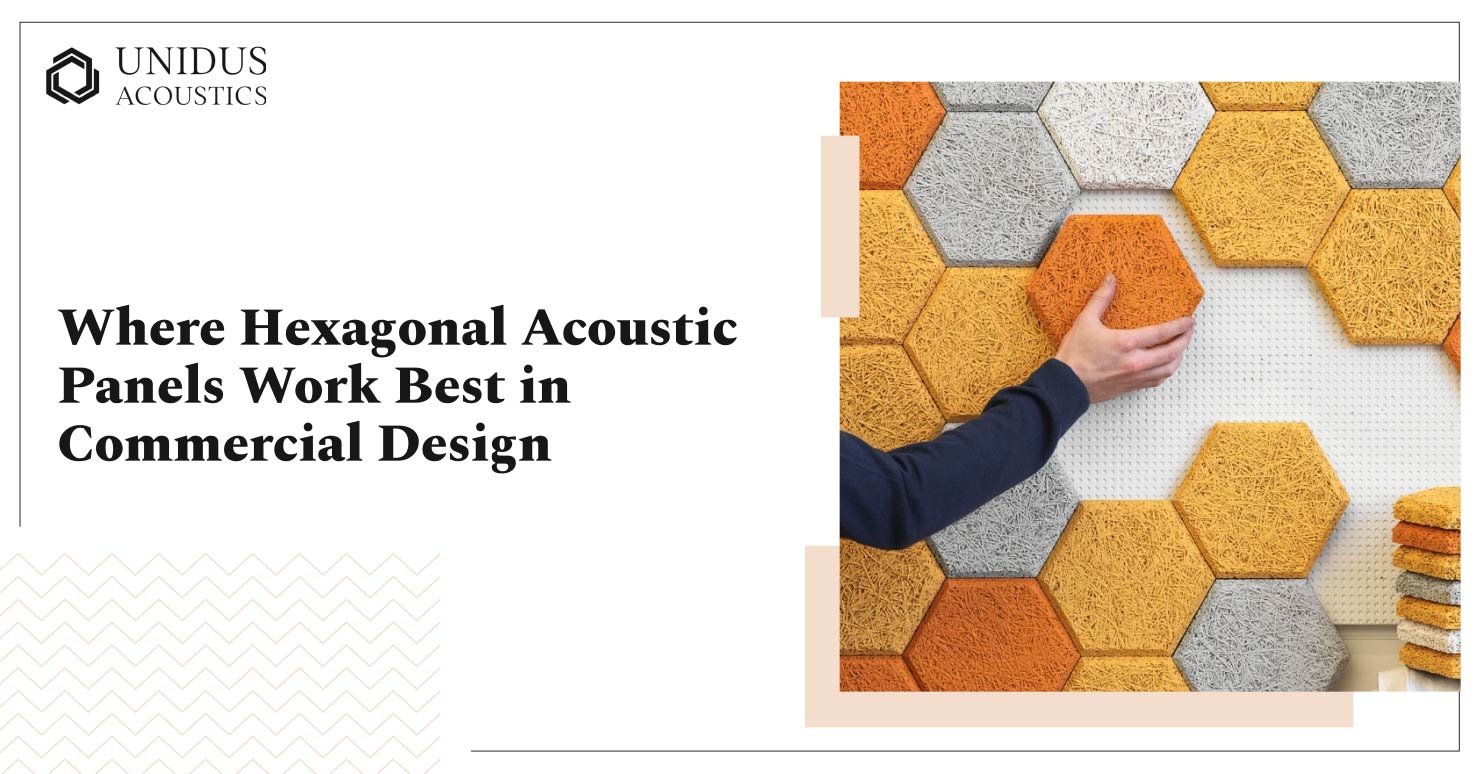
Hexagonal acoustic panels tend to stand out in a project presentation. Designers respond to the geometry immediately, usually for good reason. But the real question is where these panels actually work best.
The answer isn’t as simple as “anywhere you want a feature wall.” Coverage, spacing, thickness, and room conditions decide whether hexagonal panels do real acoustic work or mostly visual work. This article covers where the format earns its place, where it doesn’t, and what to confirm before you specify.
Key Takeaways
- Hexagonal acoustic panels are as much a design decision as an acoustic one, and their value shows when the wall’s design intent matters as much as the performance target.
- Coverage percentage matters more than panel count. A clustered installation covering at least 30-40% of the wall surface delivers measurable acoustic improvement, while a sparse decorative spread typically doesn’t.
- Reception lobbies, breakout zones, hospitality interiors, and creative studio environments are the strongest commercial applications for this format.
- Spaces requiring maximum broadband absorption across large, uninterrupted wall areas are usually better served by full-coverage rectangular panels or ceiling-hung baffles.
- For most commercial projects in India, verify the required fire rating for interior finishes before finalising the hexagonal panel specification.
How Hexagonal Acoustic Panels Differ From Standard Formats
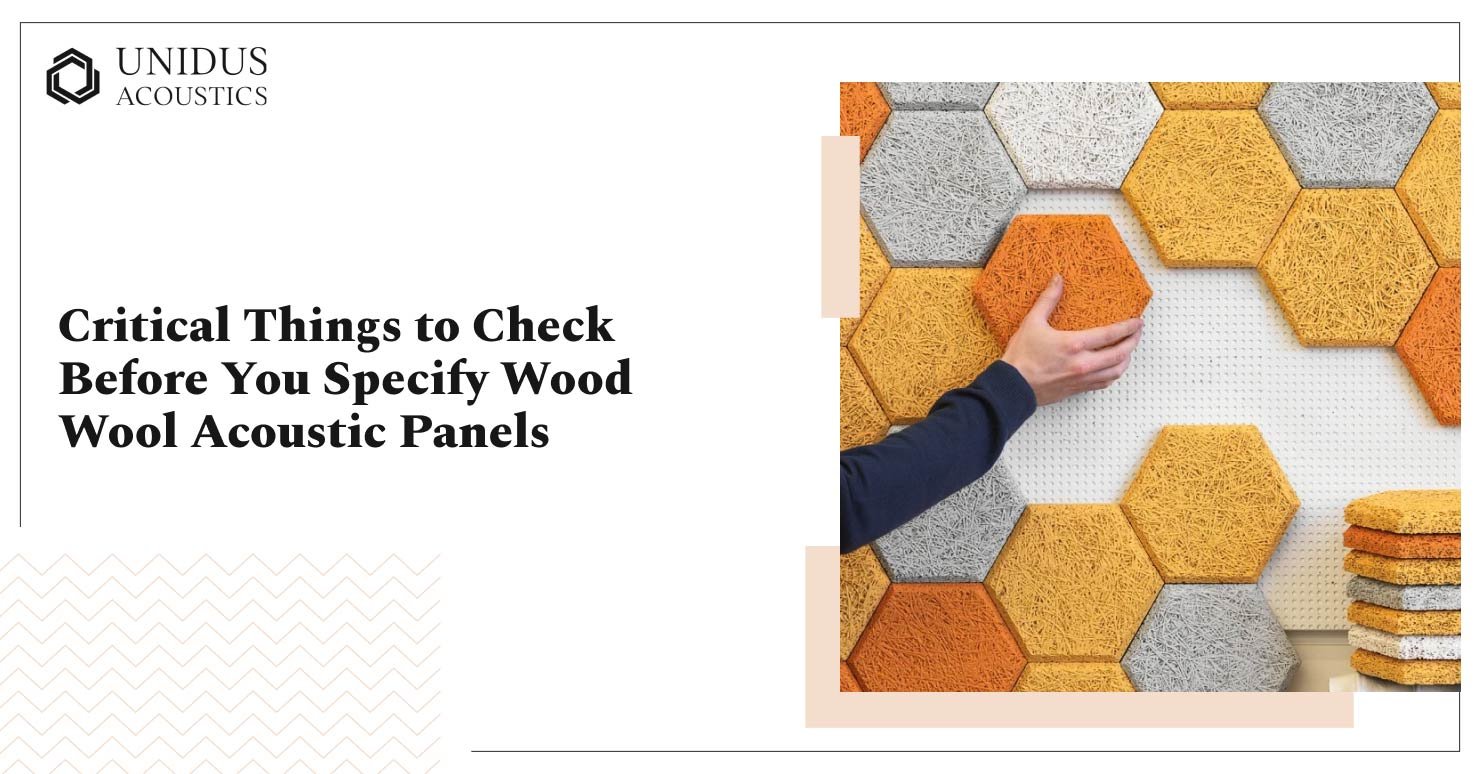
A hexagonal acoustic panel is a six-sided, modular sound-absorbing unit designed to be installed in clustered or pattern-based configurations on interior walls and ceilings, combining measured acoustic function with deliberate visual design intent.
The distinguishing factor isn’t just the shape. Rectangular panels suit uniform coverage; hexagonal panels get chosen to read as an architectural element in their own right, changing how you specify them and what to expect acoustically.
Understanding how the geometry affects absorption helps avoid the most common specification error with this format.
How Hexagonal Geometry Affects Sound Absorption
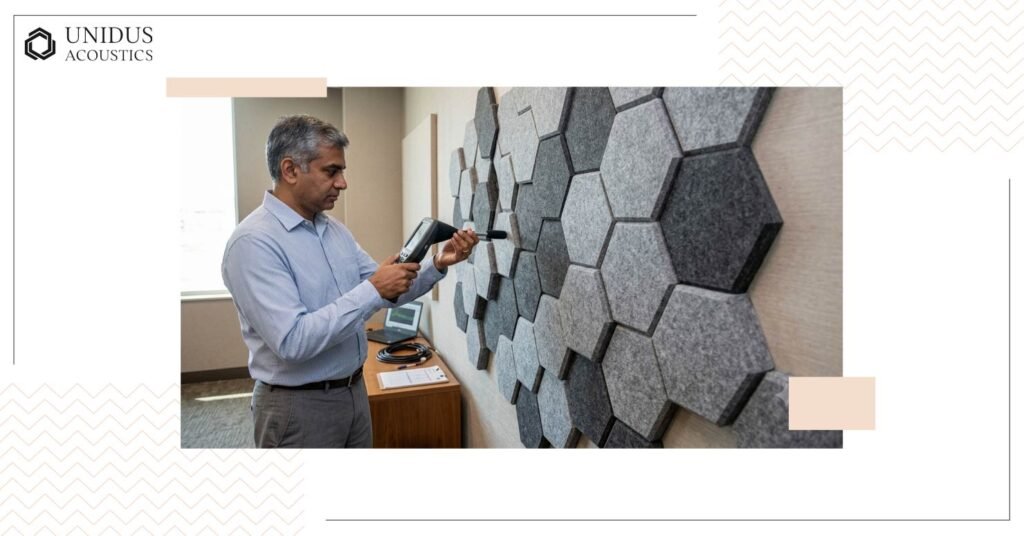
Each hexagonal unit has six edges, and per square metre of coverage, a hexagonal arrangement has more edge surface relative to face area than an equivalent rectangular layout. Sound striking an edge absorbs differently than sound hitting the flat face, so the geometry adds diffuse absorption in tightly clustered installations.
That said, the core absorption still comes from the panel material, not the shape. Most high-performance hexagonal panels use recycled polyester fibre cores, delivering NRC 0.70-0.90 at adequate thickness, but six-sided geometry doesn’t make up for insufficient material depth.
Why Coverage Percentage Matters More Than Panel Count
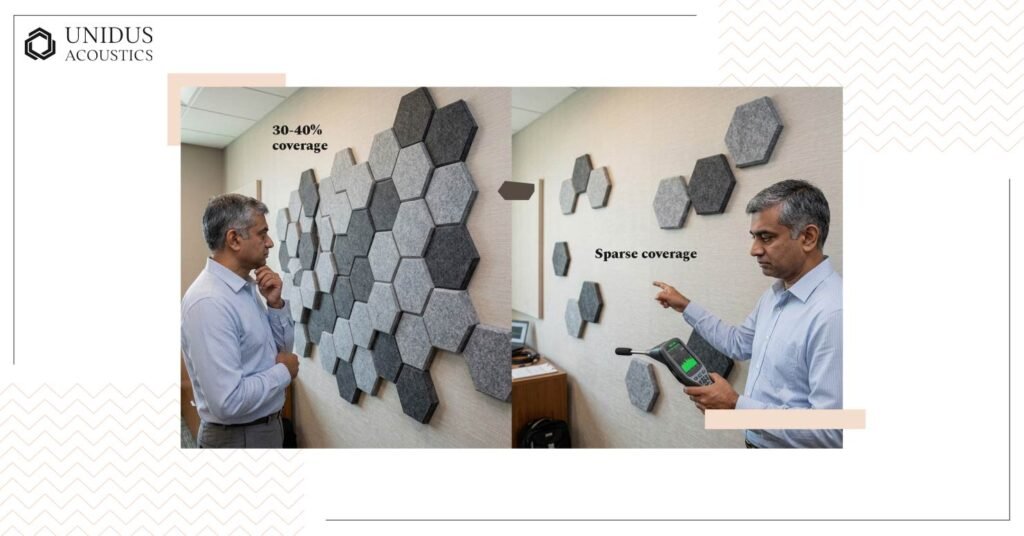
A tightly packed hexagonal installation covering 30-40% of wall area delivers meaningful acoustic improvement. A loose decorative scatter of 6-10 panels, however striking, delivers minimal acoustic benefit, because the untreated wall area between panels keeps reflecting sound back into the room.
This is the most common error in hexagonal panel specifications: visual impact wins the pitch, then budget pressure cuts the quantity, and the installation ends up looking good without performing. Below roughly 30% coverage, it’s worth asking whether the budget would work harder on a smaller, properly treated wall, or a different panel format altogether.
Where Hexagonal Acoustic Panels Perform Well in Commercial Design
The format has specific strengths in commercial interiors. These four settings consistently produce the best outcomes, both acoustically and aesthetically.
Reception Areas and Entrance Lobbies
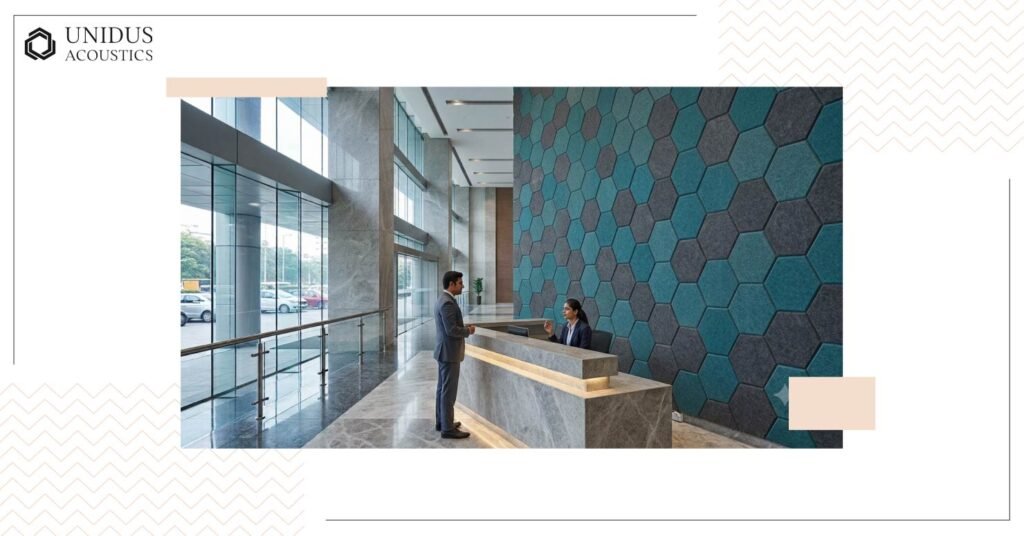
Reception walls are often the first surface occupants see, and among the most acoustically problematic in commercial buildings. Hard finishes, high ceilings, and stone or tile floors create long reverberation tails.
A well-planned hexagonal installation behind a reception desk controls early reflections right where they’re most audible, while reinforcing the brand’s visual identity. The modular format allows custom patterns, colours, and sizes that standard rectangular panels can’t match.
Collaborative Zones and Breakout Areas
Open-plan offices often zone breakout areas with furniture, flooring changes, and ceiling treatments. Hexagonal panels on these sub-zone walls extend that differentiation vertically, cutting speech carry from nearby areas.
This pairs well with ceiling baffles or clouds overhead: treating wall and ceiling surfaces together, as part of a broader approach to office acoustics and echo control in open-plan spaces, beats treating either alone, without needing a fully enclosed room.
Hospitality Interiors: Restaurants, Cafes, Hotel Spaces
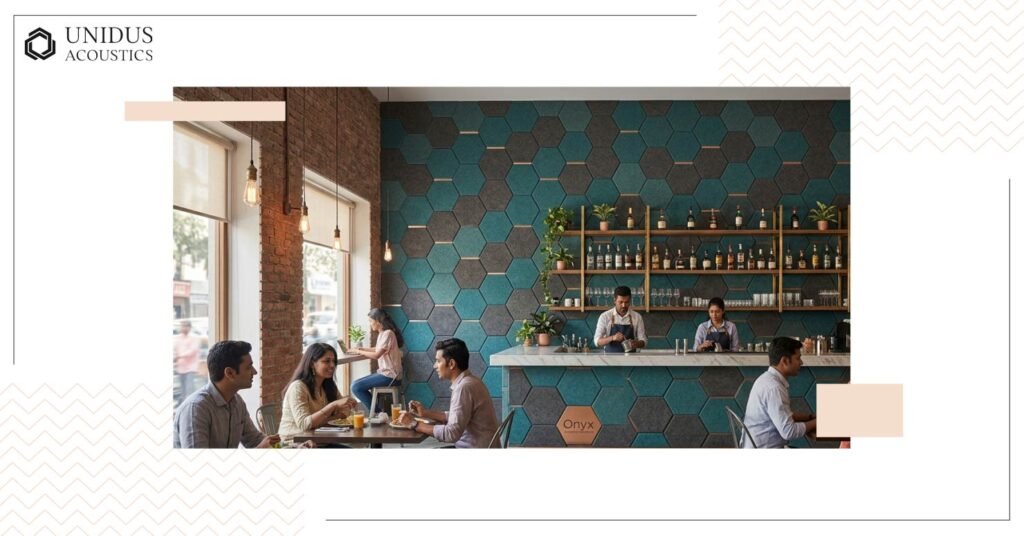
Restaurants are acoustically demanding: high ceilings, hard finishes, glass, and noise from multiple close conversations all compound. Noise level is consistently the top hospitality complaint, ahead of temperature and service speed.
Hexagonal panels on feature walls, bar backs, or partial treatments let designers introduce absorption without it reading as acoustic treatment, becoming part of the interior design language rather than a fix for a problem.
Creative Studios and Co-Working Environments
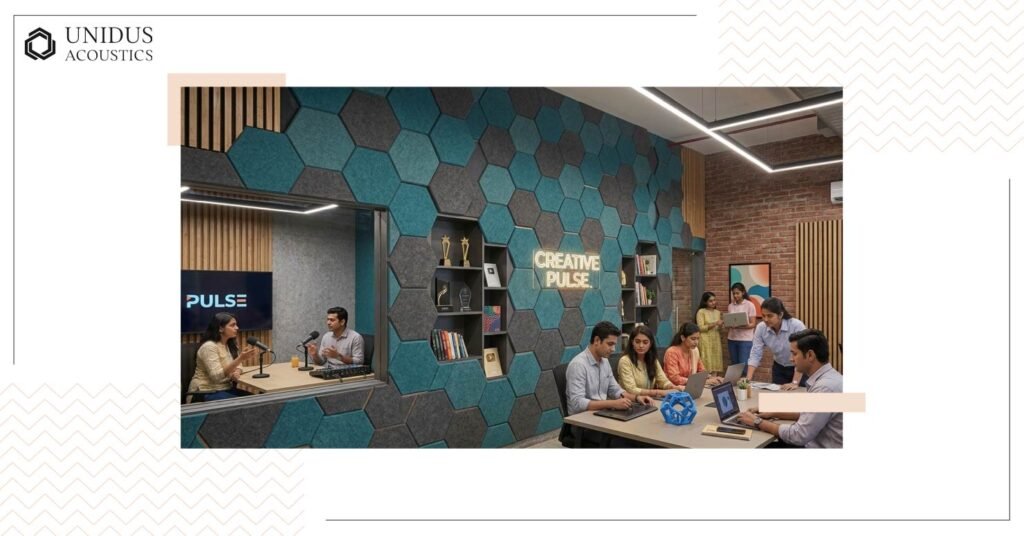
Creative studios, podcasting suites, and co-working spaces often want the room to say something about the people who work there. Hexagonal panels have a design legibility that standard rectangular formats lack, so they turn up often in media-forward environments where the wall is part of the brand expression.
These spaces also suit the format performance-wise: they rarely need the precision reverberation control of a recording studio or auditorium, so the modular approach works without heavy fine-tuning.
Where Hexagonal Panels Are Not the Strongest Choice
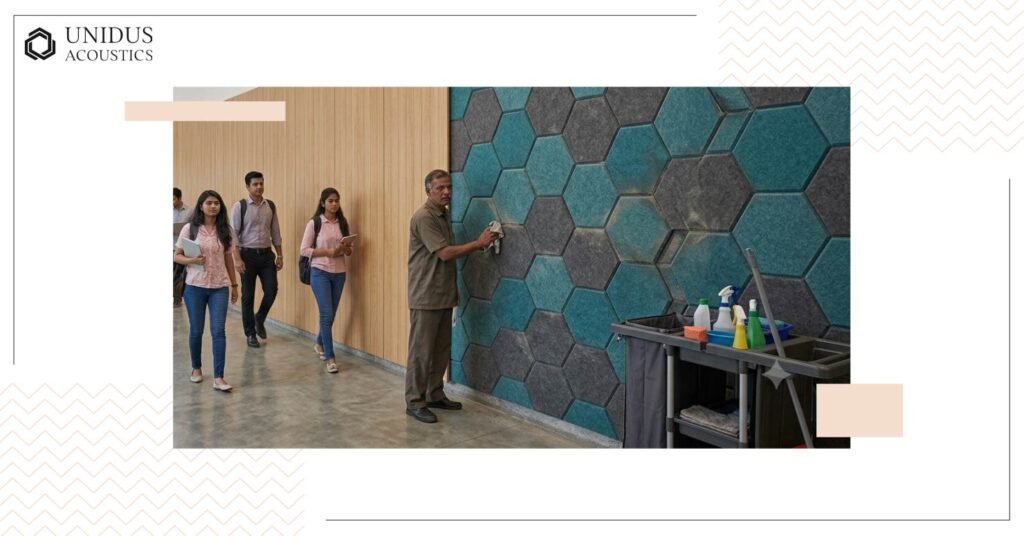
The format has real limitations, worth understanding before the specification is finalised.
Spaces needing maximum broadband absorption across large, uninterrupted walls aren’t well suited to hexagonal configurations. Gaps between tiles mean effective coverage always falls short of the full wall area, so basic installations typically land in the NRC 0.55-0.75 range, below full-coverage systems. Conference rooms, auditoriums, and recording facilities usually get more predictable performance from full-coverage fabric-wrapped or PET acoustic board systems instead.
Maintenance-intensive environments deserve a second thought: individually mounted tiles are harder to clean and replace than a continuous run, so heavy-footfall spaces often need a more durable surface instead.
Fire rating needs early scrutiny too. Recycled polyester hexagonal panels typically achieve Class B1, which covers most commercial offices and hospitality spaces, but schools, healthcare facilities, and public assembly spaces usually trigger Class A requirements that call for mineral fibre or other non-combustible formats instead.
Hexagonal Panels vs. Rectangular Panels vs. Ceiling Baffles
| Feature | Hexagonal Acoustic Panels | Rectangular Panels | Ceiling Baffles |
|---|---|---|---|
| Best use case | Feature walls, design-led spaces | Full-coverage wall treatment | |
| Typical NRC range | 0.55–0.90 (varies with coverage) | 0.70–0.90+ | |
| Coverage approach | Modular cluster; 30–40% wall area | Wall-to-wall continuous | |
| Design flexibility | High: patterns, colour, mixed sizes | Medium: shape and colour options | |
| Installation method | Individual wall mount per tile | Frame or direct-fix | |
| Best fire rating | Class B1 (PET); Class A (mineral fibre) | Varies by material | |
| Maintenance | More complex, per-tile | Moderate |
Frequently Asked Questions
1. Are hexagonal acoustic panels suitable for office environments?
Yes, though their value varies significantly by zone. In reception areas, breakout zones, and collaborative areas, hexagonal panels perform well both acoustically and aesthetically. For enclosed conference rooms or spaces where high broadband absorption across the full wall area is required, full-coverage rectangular panels or acoustic ceiling tiles are typically more effective.
2. How do I calculate the number of hexagonal panels needed for a space?
Start by calculating 30-40% of the total wall surface area you intend to treat. That coverage target is more important than the panel count. Divide the total coverage area by the face area of the individual panel size you’re specifying to get the unit count. A tight cluster will always outperform the same quantity of panels spread thinly across a larger area.
3. Can hexagonal acoustic panels be installed on ceilings?
Yes. Ceiling installation works well in spaces with lower false ceilings where overhead baffle systems would feel intrusive. Adhesive mounting and discreet mechanical suspension systems are both viable depending on the substrate. The same coverage principles apply overhead: a tight cluster performs better than a decorative spread.
4. What materials are used in hexagonal acoustic panels?
The most common core material in premium hexagonal panels is recycled polyester fibre (PET). It achieves Class B1 fire rating, carries no VOC emissions, and comes in a wide colour range. Some formats use foam cores or fibre glass; PET is generally the most appropriate option for Indian commercial projects given its fire performance and environmental profile.
Conclusion
Hexagonal acoustic panels are one of the few acoustic products where the design case and the performance case are hard to separate. Used well, they do both jobs well. Used carelessly, they contribute very little beyond visual interest.
The spaces where they consistently deliver are those where the wall is already a design element: reception lobbies, hospitality interiors, creative studios, and collaborative zones where aesthetic intent and acoustic function are equally weighted in the brief. The discipline that makes or breaks the specification is coverage. Below 30% of wall area, the acoustic contribution is marginal at best.
For projects where the relationship between soundproofing and acoustic treatment needs to be clarified with the client first, it’s also worth confirming that hexagonal panels absorb reflections within the room. They don’t block sound between spaces, and client expectations benefit from that being stated early.
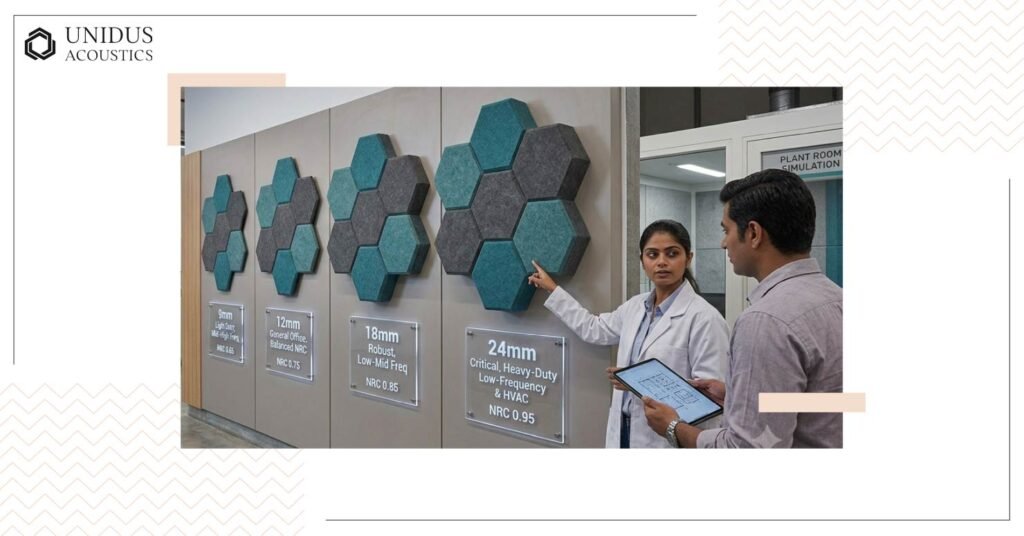
Unidus Acoustics manufactures customisable hexagonal and interlocking acoustic panel formats, including the Acoustic Jigsaw range in 9mm, 12mm, 18mm, and 24mm thicknesses, available in customisable colour options with NRC performance up to 0.90. With over 40 years of manufacturing expertise, we can work with your design brief to develop the right specification, sample, and prototype for your project. Contact us now.