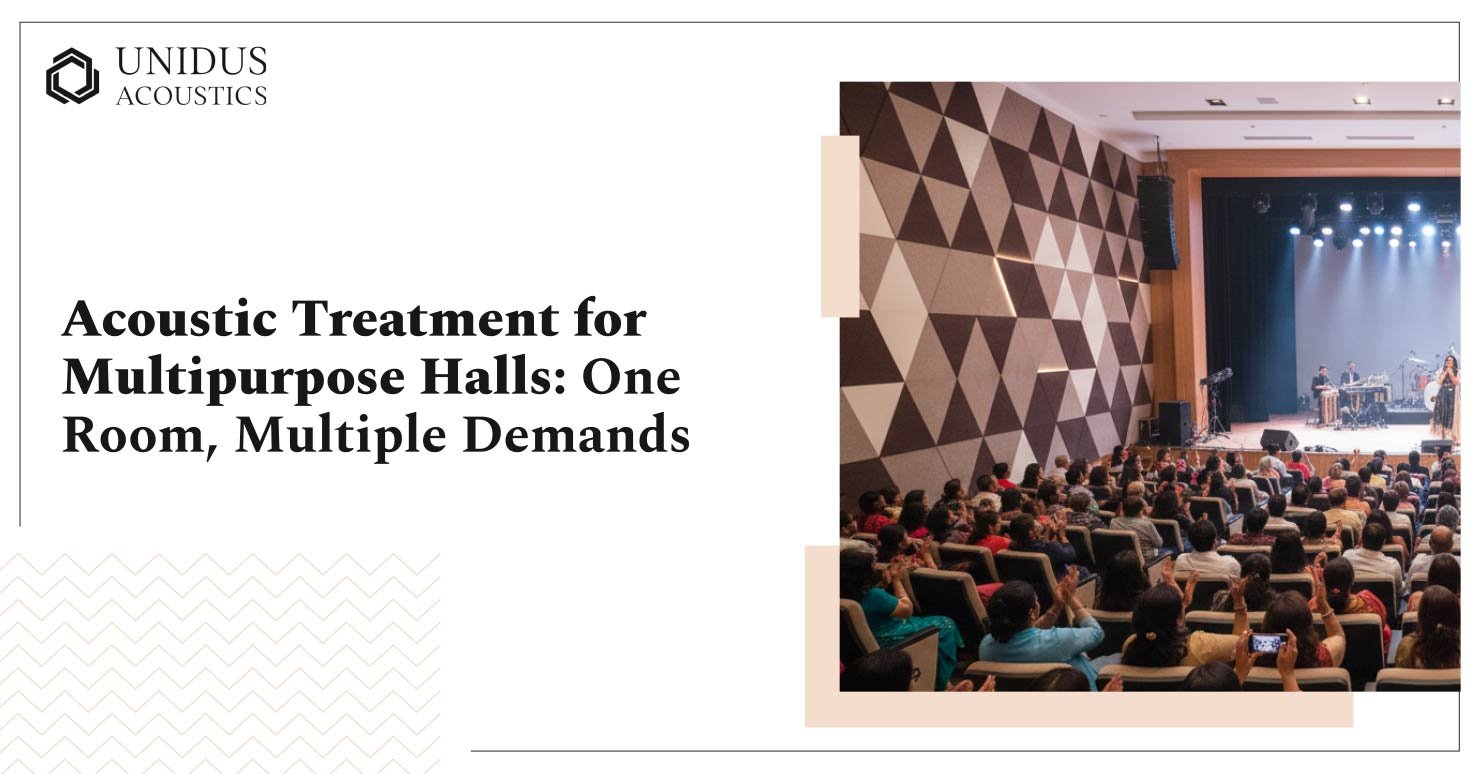
Most institutional buildings have at least one of these spaces: the seminar hall, the multipurpose auditorium, the event space, or the town hall room. The idea is the same: a single room that needs to work for a board presentation on Tuesday, a cultural performance on Friday, a graduation ceremony the week after, and something completely different the month after that.
The acoustic challenge this creates is more difficult than it first appears. Speech and music don’t want the same acoustic environment. What makes a room comfortable for a speaker makes it feel flat for a string quartet. And what gives music warmth and richness tends to make spoken words muddy, especially for large audiences. When a room has to serve both, every material choice involves a trade-off.
Acoustic treatment for multipurpose halls doesn’t eliminate that tension entirely. But it does manage it, through a combination of absorption and diffusion, and in some cases variable acoustic systems as well, so that the space works well enough for each function rather than failing completely at all of them.
Why Acoustic Treatment for Multipurpose Halls Is More Complex Than It Looks
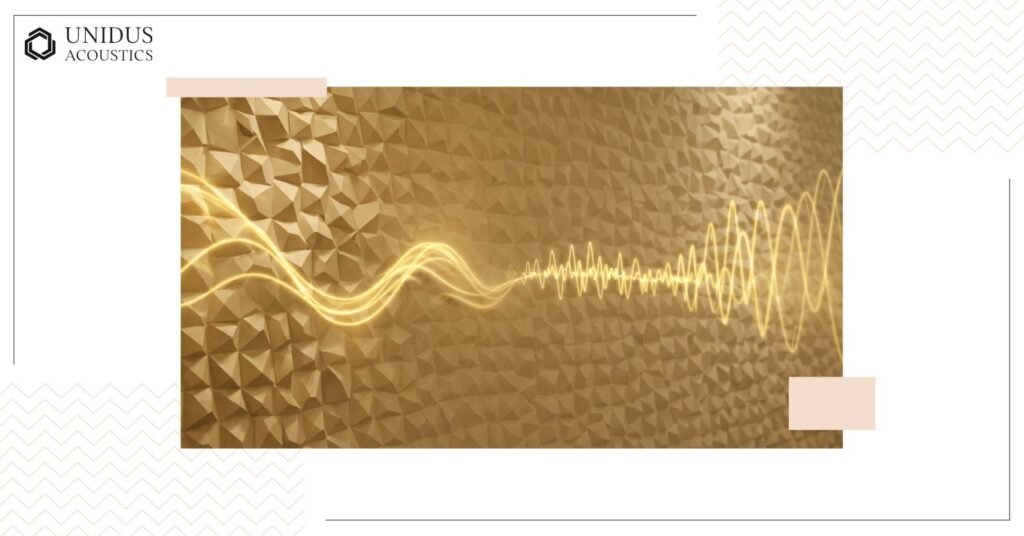
A single-function room can be designed around one acoustic target but a multipurpose hall can’t.
The core challenge is reverberation time, expressed as RT60: how long it takes for sound to decay by 60 decibels after the source stops. Measured according to the ISO 3382 standard, it’s the primary metric for evaluating whether a room’s acoustics suit its intended use.
Speech intelligibility works best with RT60 between 0.8 and 1.2 seconds. Beyond that, consonants start blurring and comprehension drops. Music needs more room for sound to develop: orchestral and choral performances typically target 1.8 to 2.2 seconds, and below 1.0 second, music sounds thin.
Most untreated institutional halls in India, typically featuring hard concrete and tile surfaces with very little soft furnishing, have RT60 values between 2.5 and 5 seconds when empty. A room at 4 seconds makes every conference speech sound like it’s being delivered inside a tank.
A well-treated multipurpose hall typically targets 1.2 to 1.5 seconds: a workable middle ground that, combined with a good amplification system, serves both speech and music without failing either.
What People Ask About Multipurpose Hall Acoustics
1. What RT60 should a multipurpose hall have?
For halls that genuinely split use between speech events and musical performances, 1.2 to 1.5 seconds is the standard design target. Speech-primary halls can go lower, around 0.8 to 1.2 seconds. Performance-heavy spaces typically aim for 1.5 to 2.0 seconds.
2. Can acoustic treatment be added to an existing hall?
Yes. Most multipurpose hall projects are retrofits. Fabric-wrapped wall panels, ceiling baffles, and acoustic clouds can all be installed in an existing structure without civil work.
3. Do acoustic panels work for both speech and music in the same room?
They reduce RT60, which helps speech clarity. The material selection and panel placement determine how much warmth is retained for musical content. Getting both right in one room is a specification exercise, not a product swap.
4. What causes a multipurpose hall to sound echoey?
Hard, parallel surfaces: concrete walls, tile floors, flat ceilings, a bare rear wall. Each one reflects sound rather than absorbing or scattering it. Untreated rooms in this condition can reverberate for three to five seconds, which is well above what any use case actually needs.
5. Does seating affect hall acoustics?
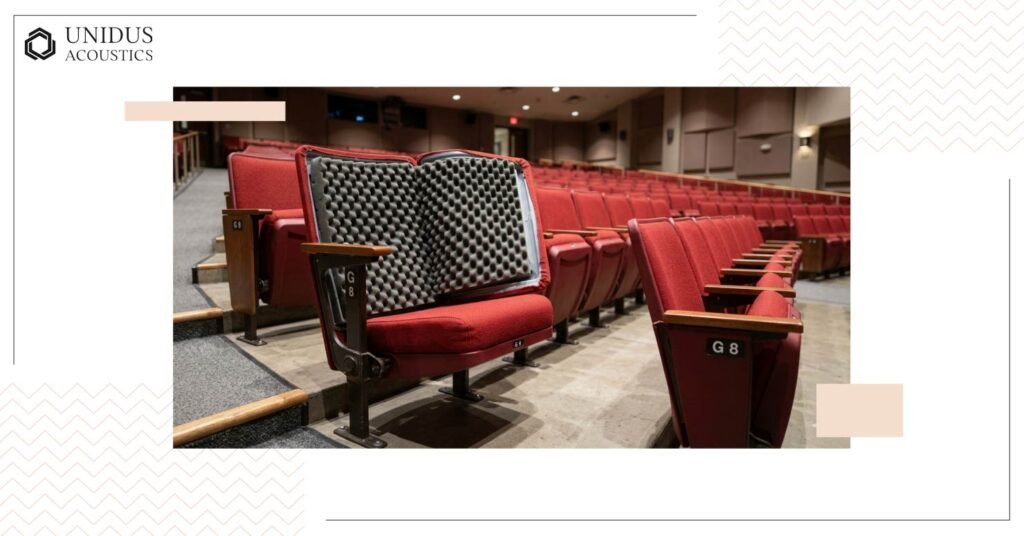
Significantly. Upholstered fixed seating absorbs sound, and its contribution changes based on occupancy. A room that sounds acceptable when full can reverberate noticeably more at half capacity. Acoustic design should account for both conditions.
What Effective Acoustic Treatment for Multipurpose Halls Involves
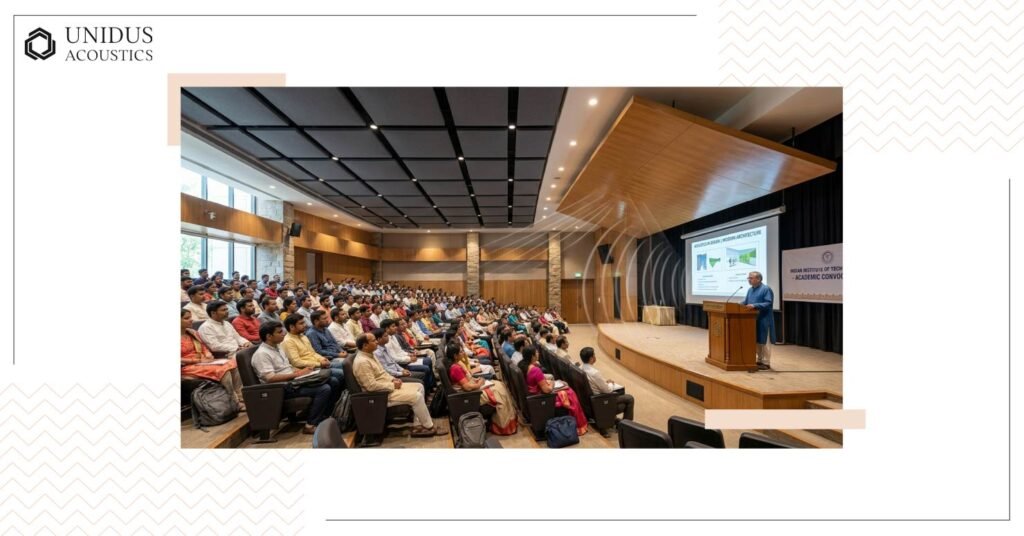
Treatment works through two mechanisms: absorption and diffusion. Some halls also use variable acoustic systems to shift between RT60 ranges.
1. Absorption
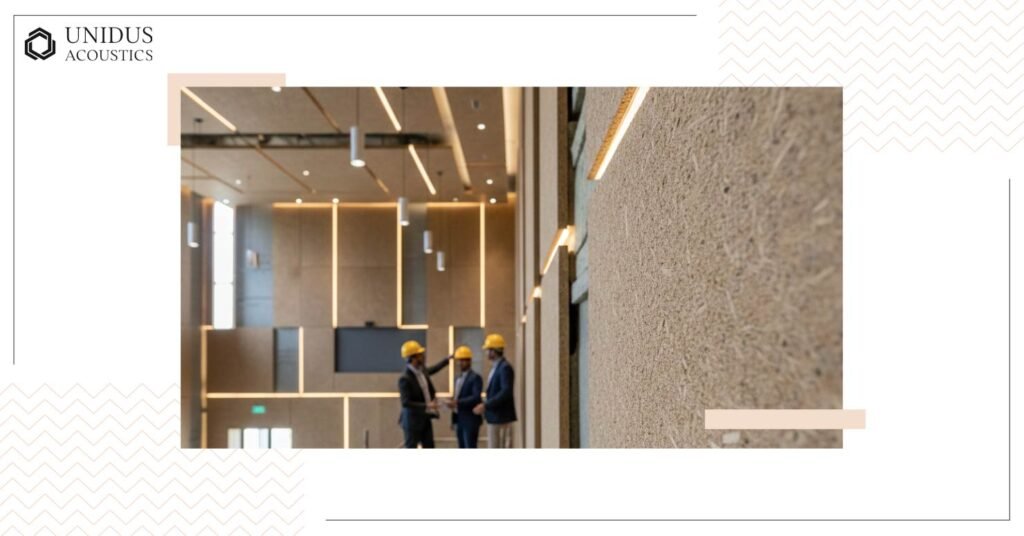
Absorptive surfaces convert sound energy into heat rather than reflecting it back. The key factor isn’t just coverage area but placement. First-reflection points, specifically side walls at the front and mid-section, ceiling areas above the first third of the audience, and the rear wall, have a disproportionate effect on RT60 compared to the same area applied elsewhere.
Too much absorption creates a different problem: a room that sounds dead. The goal is a controlled, even decay, not a zero echo.
Common materials include fabric-wrapped fibre panels, wood wool boards, glasswool panels, and PET acoustic panels. Each works across a slightly different frequency range. Experienced acoustic consultants layer materials to achieve broadband absorption rather than relying on a single acoustic treatment for multipurpose halls.
2. Diffusion
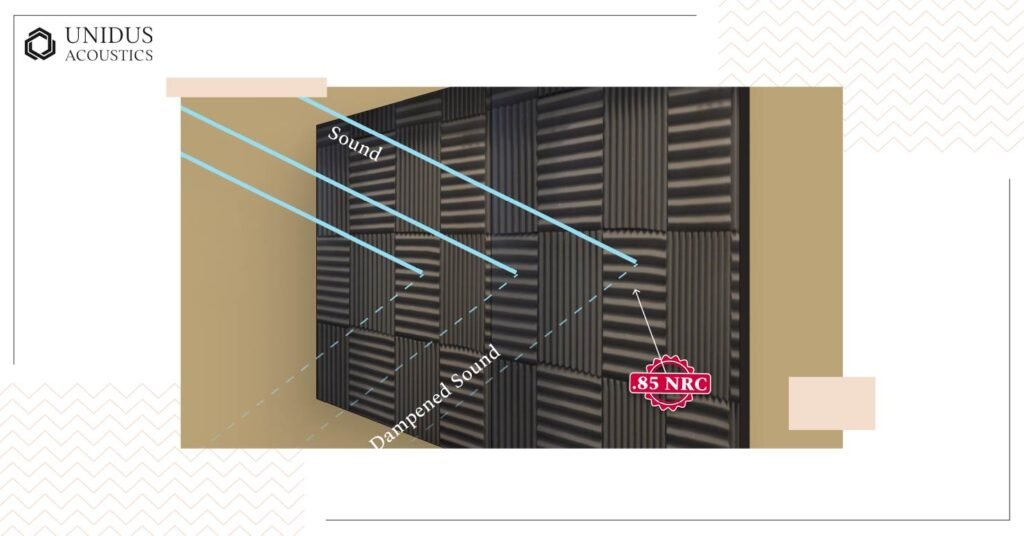
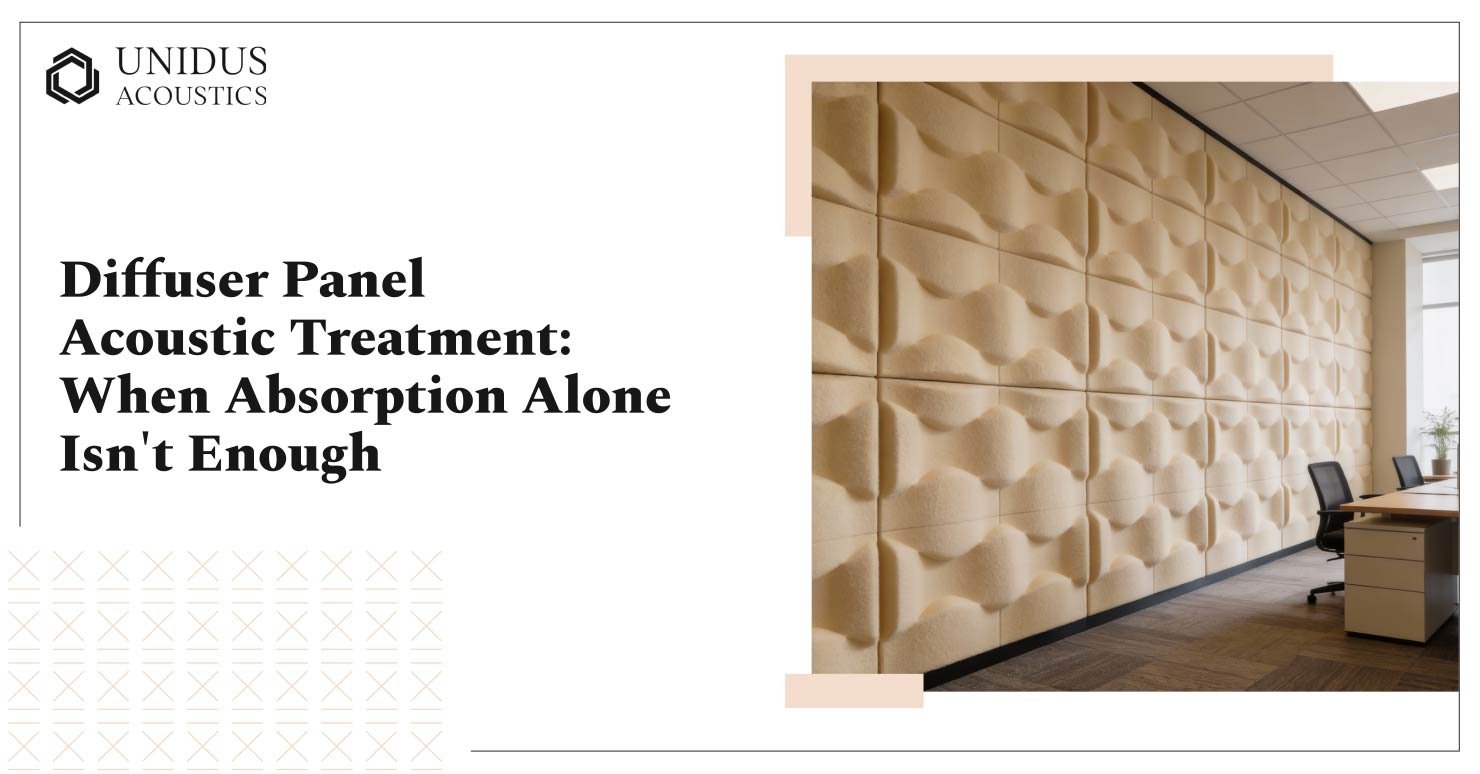
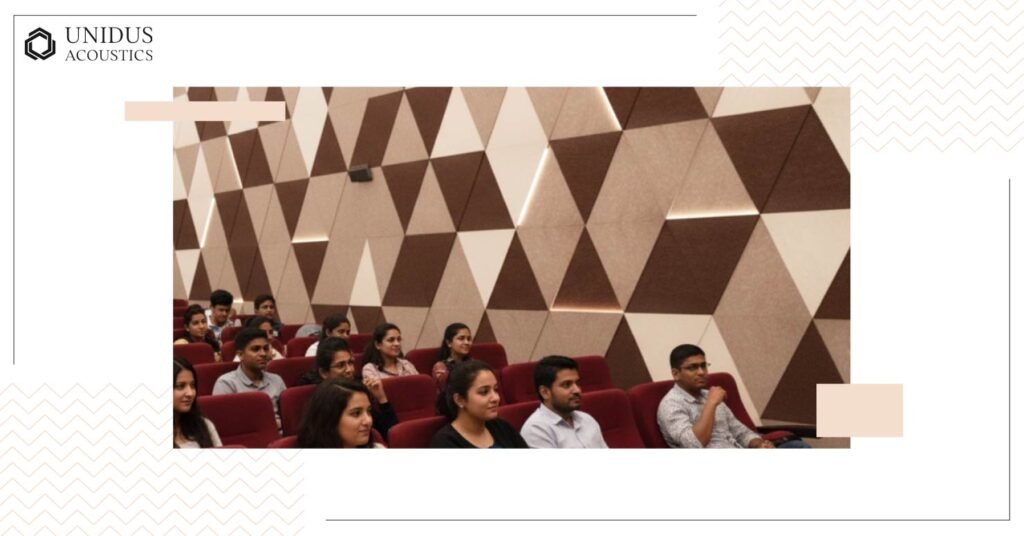
Diffusion scatters sound in multiple directions without absorbing it. A well-placed diffusive surface redistributes early reflections across a wider area, which eliminates acoustic hot spots and fills in dead zones. The rear wall is usually the highest-priority location: a flat, hard rear wall reflects a concentrated echo back to the full audience simultaneously, one of the most damaging conditions in a large room.
Geometric ceiling features, shaped rear wall panels, and angled side wall elements all serve a diffusive function. When specified at the design stage rather than retrofitted, they integrate with the interior without looking like acoustic afterthoughts.
3. Variable Acoustic Systems
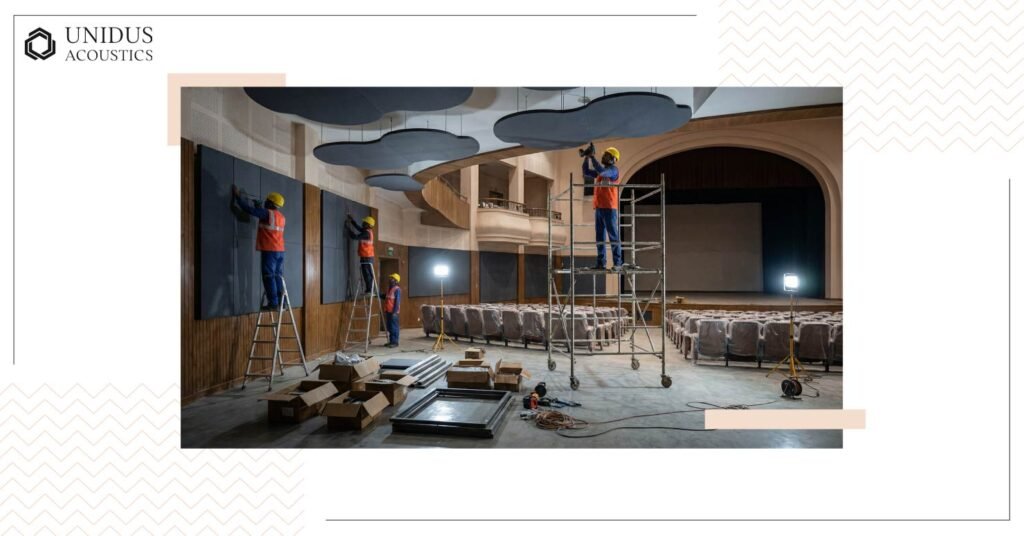
Some halls use motorised absorptive curtains or banners that deploy or retract to shift the room’s RT60 within a defined range: extended for a conference, retracted for a choral performance. These systems add cost and require ongoing maintenance. For spaces that primarily host amplified events, a fixed treatment at the 1.2 to 1.5 second target combined with a well-designed sound reinforcement system covers most scenarios adequately.
How Unidus Acoustics Approaches Multipurpose Hall Projects
Effective acoustic treatment for multipurpose halls is a coordinated exercise. Material selection, panel placement, room geometry, and the systems that support them all have to work together.
Unidus Acoustics brings 40 years of expertise to exactly this kind of project, across auditoriums, institutional halls, and large corporate event spaces for clients including AIIMS, Ashoka University, and Air India, among others. The product range covers fabric-wrapped acoustic panels, ceiling baffles and clouds, wood wool panels, PET panels, glasswool, and custom acoustic treatments designed to balance form and function within the specific constraints of each project.
With 635+ projects completed across 16+ cities and certifications from SGS, Intertek, and TÜV Rheinland, the approach is built around on-time delivery, value for money, and acoustic systems that genuinely turn noise into harmony. To discuss a project or get specifications for acoustic treatment for multipurpose halls you’re currently working on, connect with our team now.