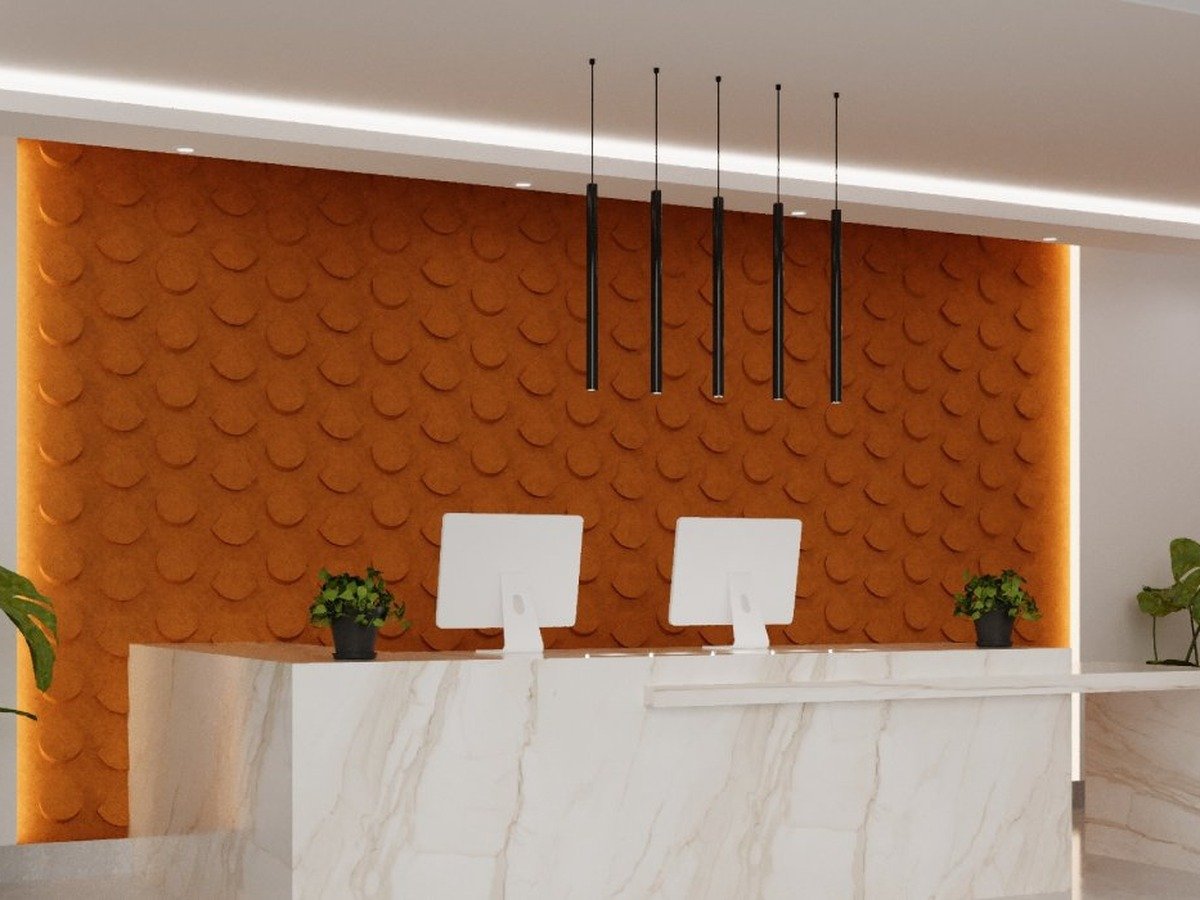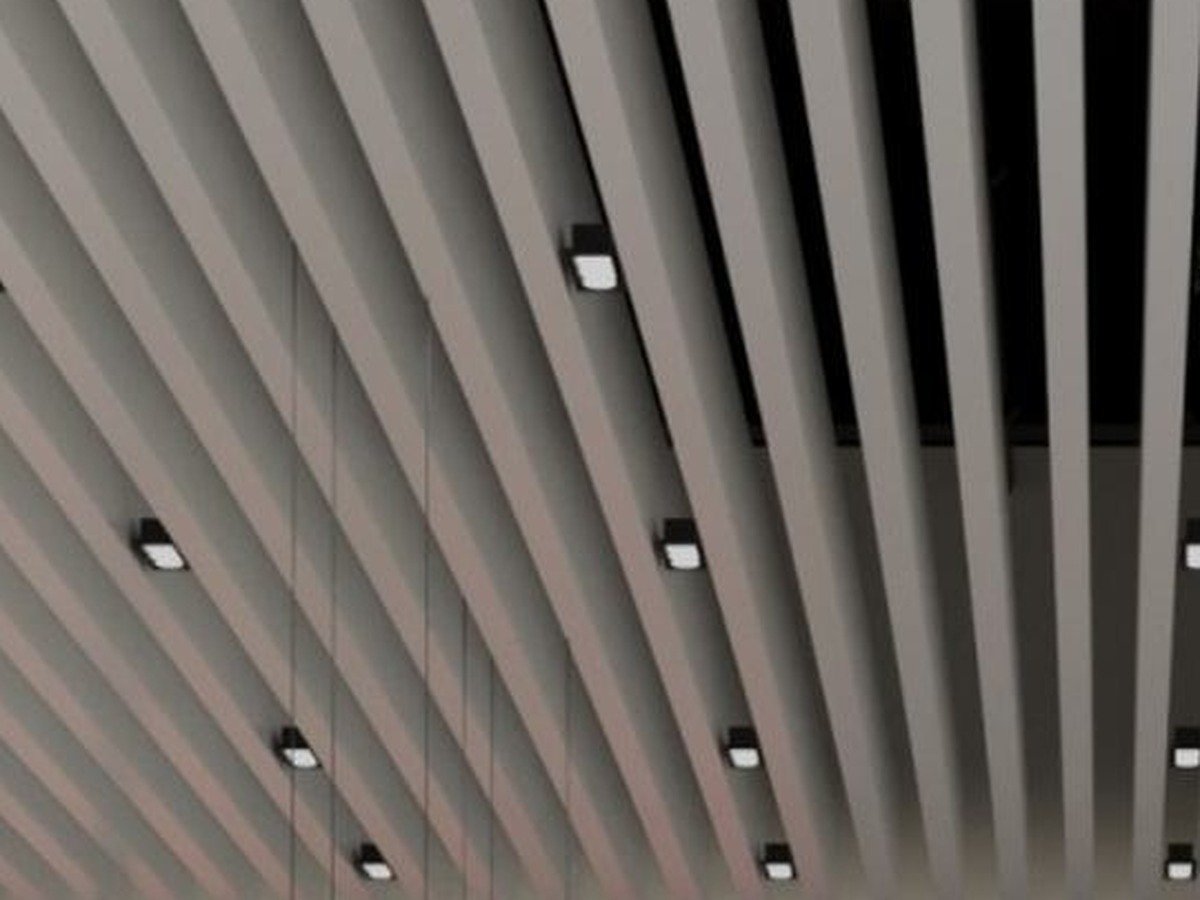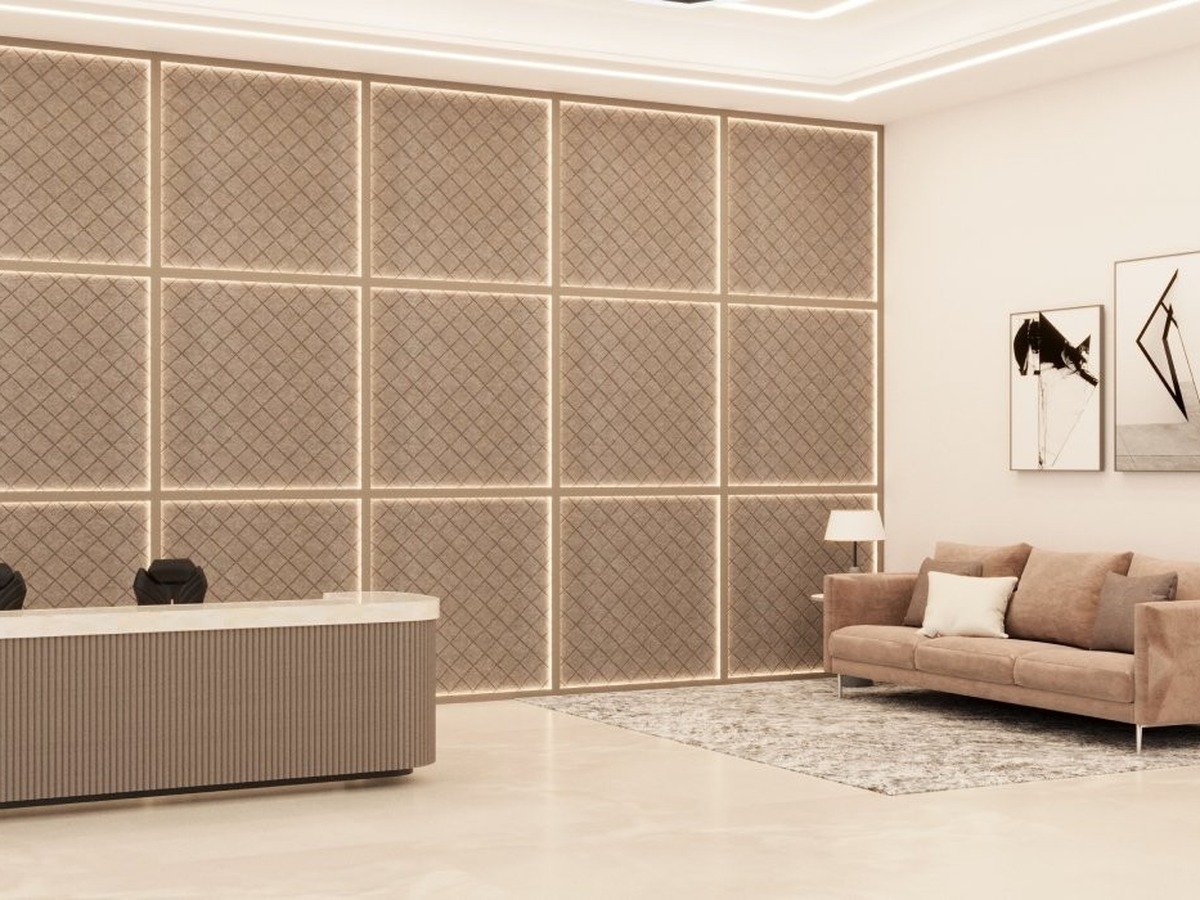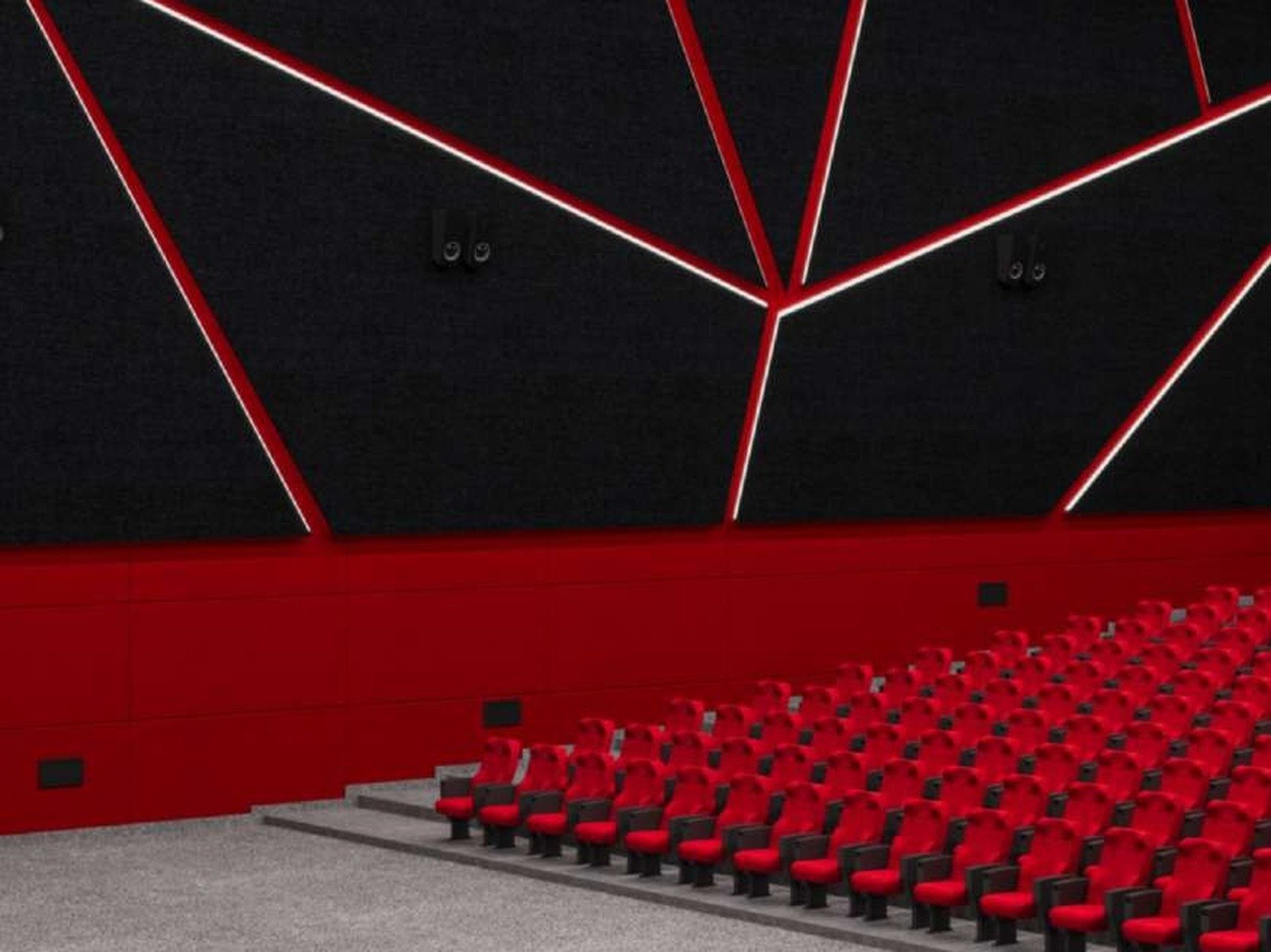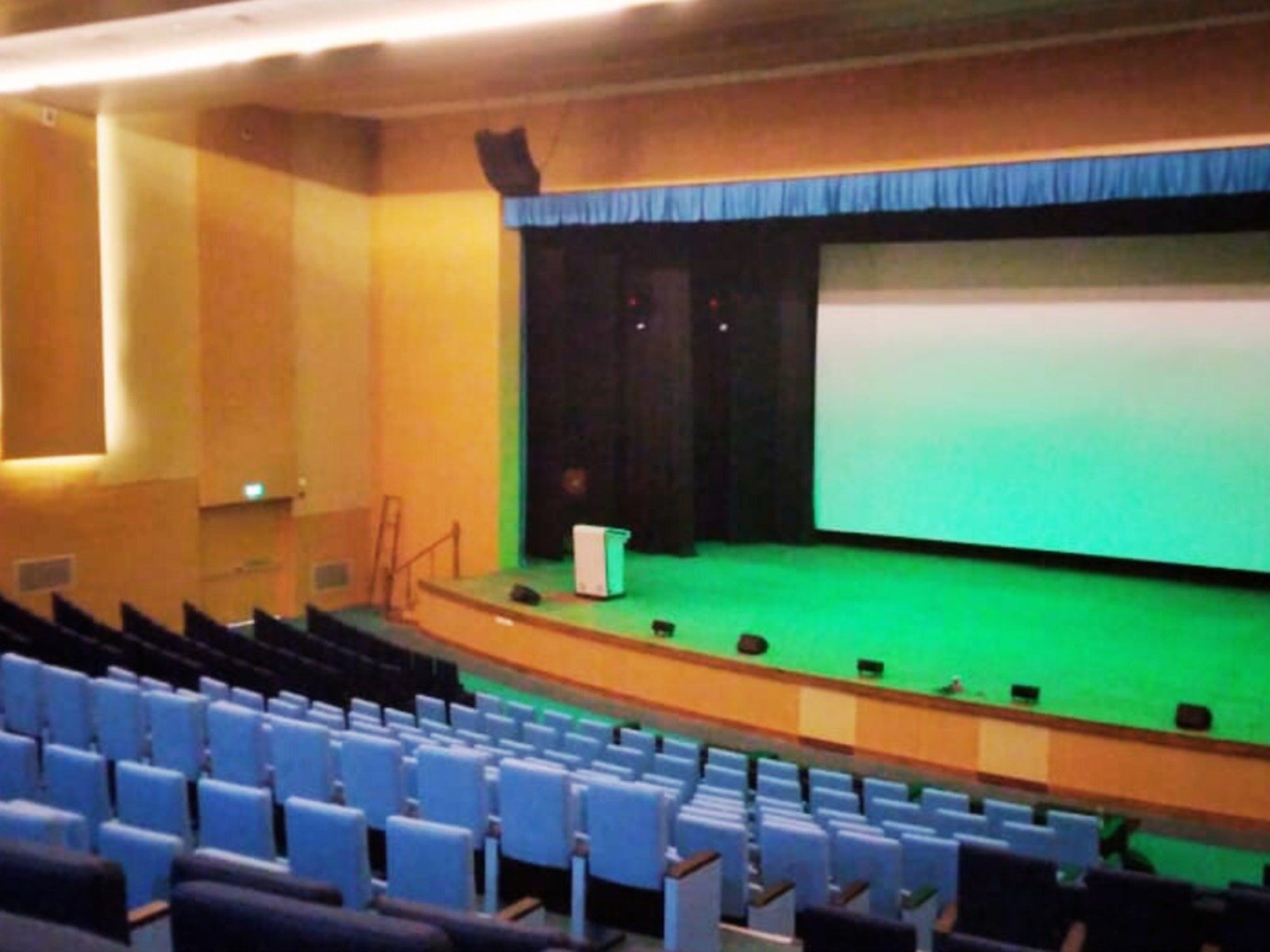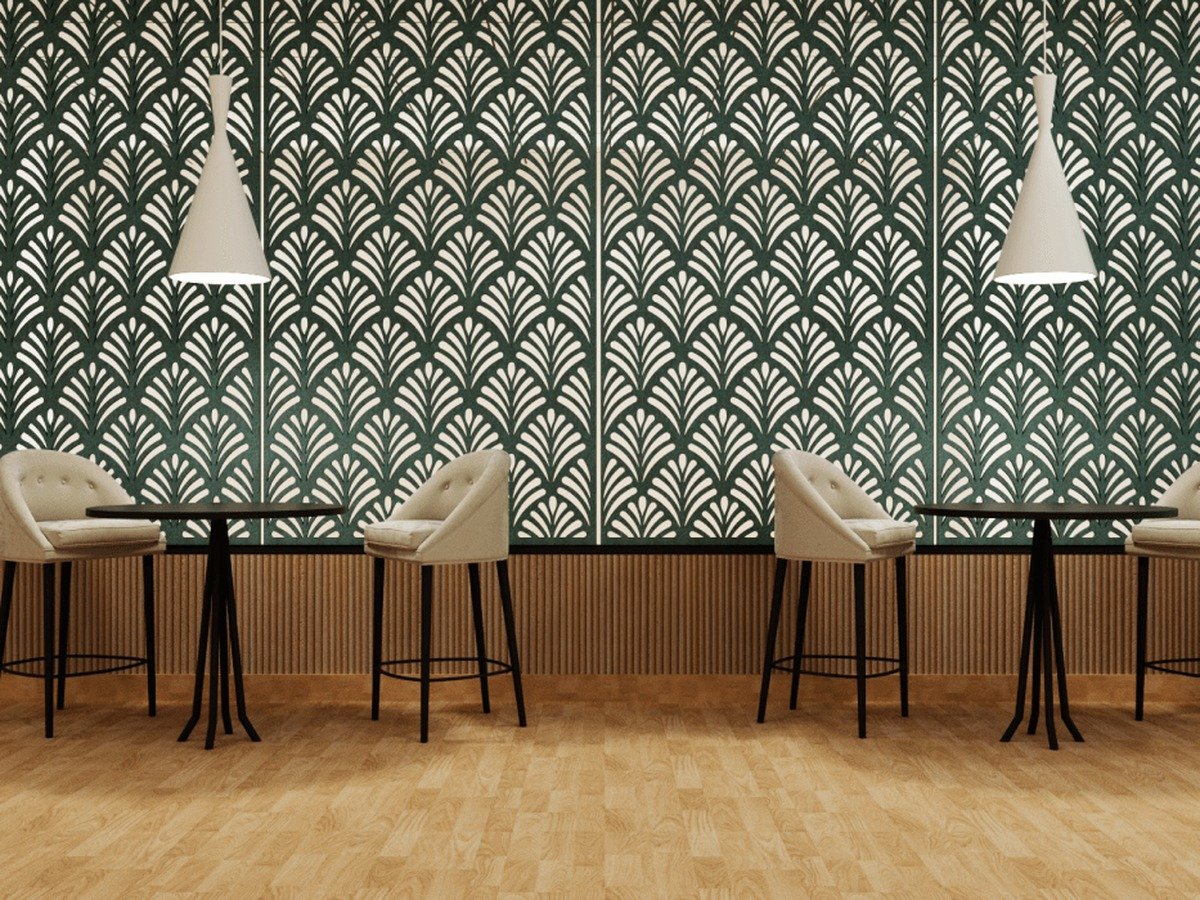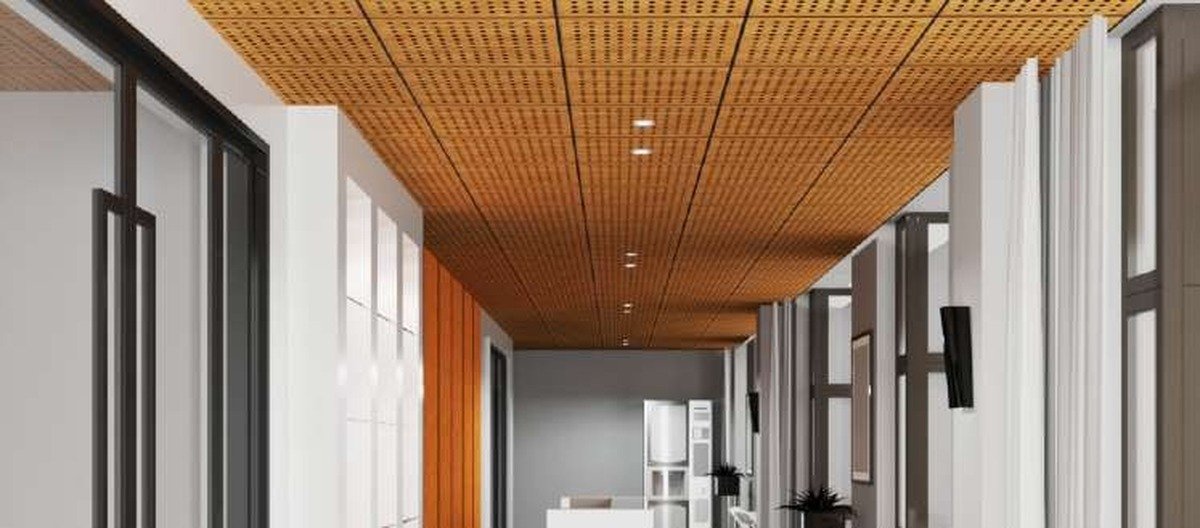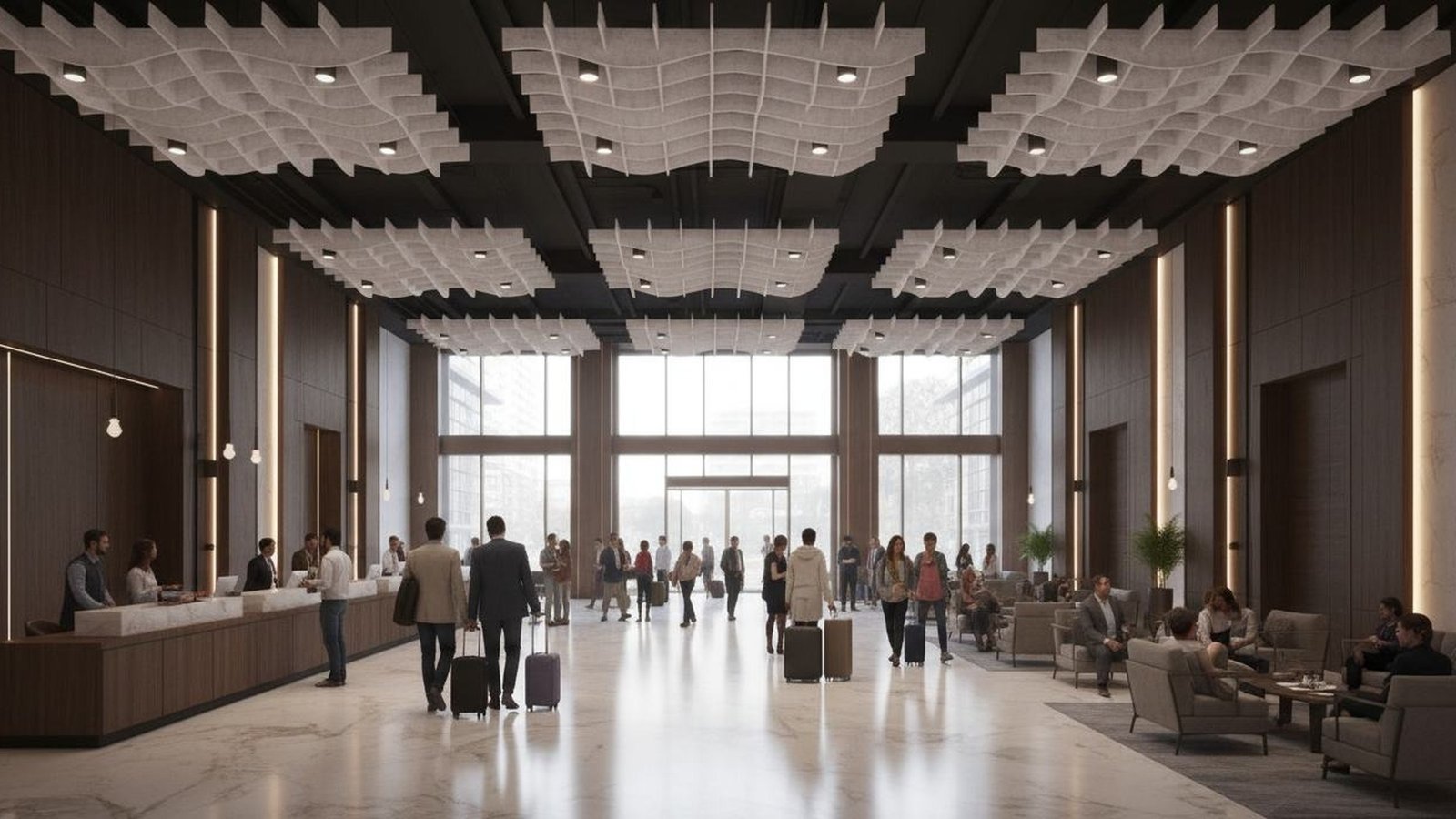
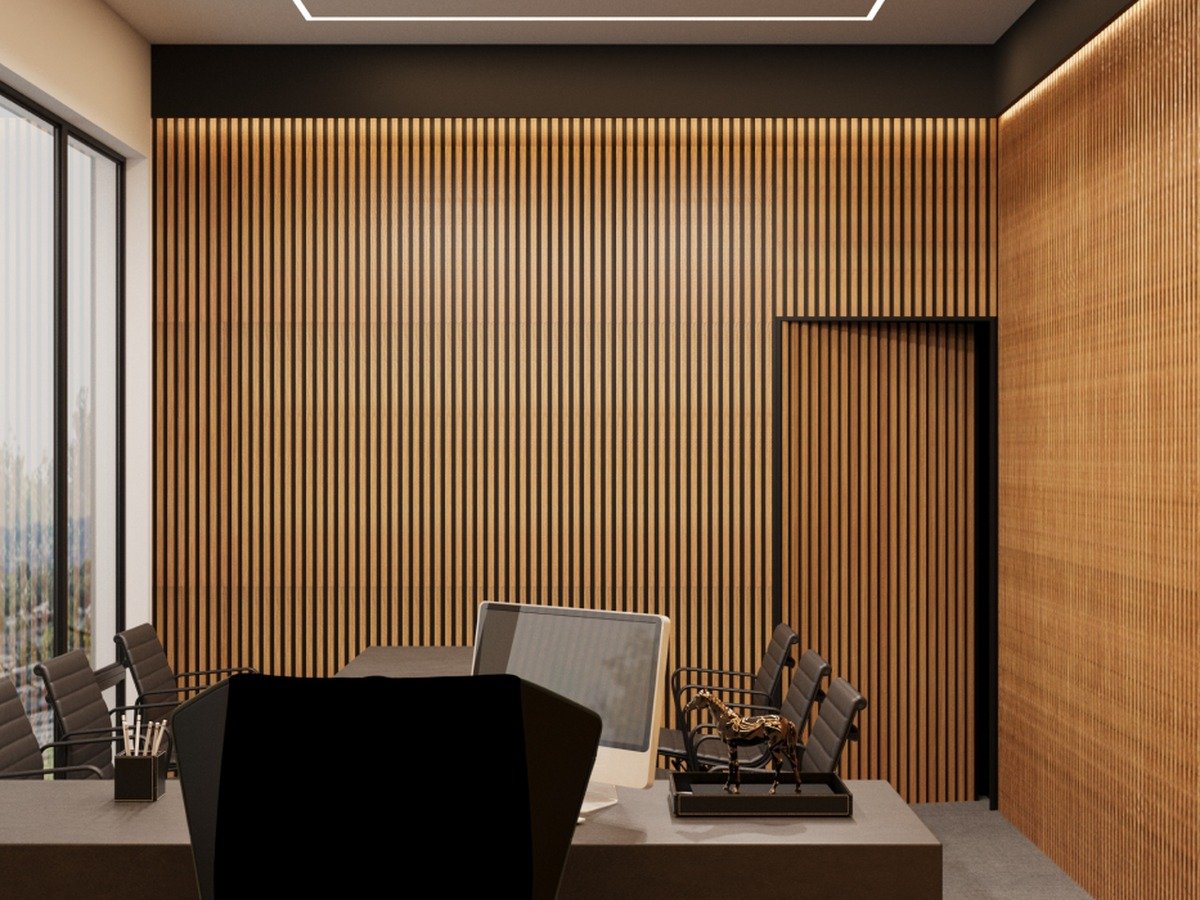
Polyester fibre acoustic boards installed in a corporate interior, India

U-TONE Range

Polyester Fibre
Acoustic Boards

Thermally bonded. No adhesives. Eleven machined surface profiles.

0.90 Max NRC
200 kg/m³ Board density
B1 Fire Class
Zero Chemical binders

The material

Recycled polyester fibres, pressed to a rigid substrate without adhesive or binder.

Polyester fibre acoustic boards are manufactured by thermally pressing recycled PET fibres at 180 to 200 kg/m³ until the fibres fuse at contact points. No chemical adhesive, no formaldehyde, and no mineral binder is used. Sound absorption works through the same physical mechanism as mineral wool: friction as pressure waves move through the porous fibre matrix. The resulting board has a self-finished architectural surface and can be CNC-machined to complex profiles.

Because no adhesive core is present, the board is structurally consistent across its full thickness. A CNC router can remove material to any depth without encountering a glue line or delamination point. This is why polyester fibre boards are the only acoustic substrate that can be surface-machined to eleven distinct profiles, from a 9 mm perforated face to a 36 mm deep-relief 3D geometry, on the same factory line.

Thermally bonded

No adhesives, no binders across the full depth

180–200 kg/m³

Pressed density, consistent across all 11 profiles

Class B1

Fire rating to BS 476 Part 7

Zero VOC

No off-gassing before, during, or after installation

How it's made

From plastic bottles to architectural board.

No chemical binders are introduced at any point in the process. The PET fibres fuse to each other under heat and pressure. That is the only bonding mechanism in the finished board.

01

Collect and shred: post-consumer PET bottles are sorted, cleaned, and mechanically shredded into fine PET flake. No virgin polymer is added.

02

Extrude and interlock: PET flake is melted and extruded into fine fibres, cross-lapped into a thick batt, and needle-punched to interlock the fibre matrix.

03

Thermal press: the batt is pressed at elevated temperature to 180–200 kg/m³. PET fibres self-bond at contact points. No adhesive or binder is needed or added.

04

CNC machine: the pressed sheet is cut to standard sizes and machined to the selected surface profile, from 9 mm perforations to 36 mm deep-relief geometry.

The range

Eleven profiles. One substrate.

Every profile is CNC-machined from the same thermally bonded PET felt. Wall and ceiling boards on the same project share one fire certificate, one colour catalogue, and one material data sheet.

All 11 profiles

Full range at a glance.

All eleven profiles on the same recycled PET felt substrate: NRC and thickness at a glance. Download the catalogue for full frequency-band absorption data on each profile.

Profile Code Type NRC Thickness
Cut Work UTC-CW Wall · Perforated 0.70–0.90 9 / 12 / 18 / 24 mm
Fluted UTC-FL Wall · Fluted 0.75 9 / 12 / 18 / 24 mm
Grooved UTC-GR Wall · Grooved 0.78 9 / 12 / 18 mm
Printed UTC-PR Wall · Custom print 0.72 12 / 18 mm
Inlay UTC-IN Wall · Inlay 0.74 12 / 18 mm
3D Wall UTC-3D Wall · Three-dimensional 0.82 36 mm
Jigsaw UTC-JG Wall · Modular 0.76 12 / 18 mm
Baffle UTC-BF Ceiling · Suspended 0.85 24 mm
Cloud UTC-CL Ceiling · Horizontal 0.85 24 mm
Open Cell UTC-OC Ceiling · Open cell 0.80 24 mm
Petal UTC-PT Ceiling · Curved 0.85 24 mm

Why polyester fibre

Polyester fibre boards against the alternatives.

Polyester fibre, mineral wool, and foam are the three materials most commonly shortlisted for acoustic specification in Indian commercial interiors. The differences extend well beyond NRC.

Property U-TONE Boards Polyester fibre (PET) Mineral wool Rockwool / Glasswool Foam boards PU / Melamine
NRC range 0.70–0.90 0.55–0.80 0.45–0.65
Fire rating Class B1, BS 476 Part 7 Class A1 non-combustible Typically unrated or Class C
Finished surface 11 precision-machined profiles, 52 colours. No facing required Perforated or fabric facing required for a finished surface Exposed foam texture; limited surface options
Handling on site No protective equipment required; fibres do not shed during cutting or installation Gloves, dust mask, and eye protection required; fibres cause skin and respiratory irritation Generally safe; some dust from cutting in denser variants
VOC off-gassing Zero: thermally bonded, no adhesive or binder Binder off-gassing during and after installation Present in many PU variants; lower in melamine
Moisture behaviour Passes through the fibre matrix; board returns to form on drying; wipe-cleanable surface Absorbs and retains moisture; performance degrades if facing is breached Open-cell foam retains moisture; closed-cell resists but does not absorb sound as efficiently
Recyclability 100% PET recyclable at end of life Recyclable in select variants Not recyclable

Specification

Material and performance data.

Reference data for Cut Work (UTC-CW) as the primary substrate example. NRC varies by surface profile and thickness. Download the catalogue for data on all eleven profiles.

Substrate material Recycled polyester (PET) fibre, thermally bonded
Recycled content 88 post-consumer PET bottles per m²
Density 180–200 kg/m³
Binders / adhesives None: fibres are thermally bonded only
VOC emissions Zero: no adhesive or chemical binder present
Sheet dimensions 2400 × 1200 mm  ·  2400 × 600 mm  ·  1200 × 600 mm
Thickness range 9 / 12 / 18 / 24 / 36 mm (varies by surface profile)
NRC range 0.70–0.90 (varies by profile and thickness; tested to ASTM C423)
Fire rating Class B1 to BS 476 Part 7
Disinfectability Fog  ·  spray  ·  wipe
Mounting Concealed Z-clips  ·  impaling clips  ·  direct adhesive  ·  magnetic
MOQ 12 m² per pattern
Lead time 4–8 weeks from approved sign-off

ASTM C423 acoustic test reports and BS 476 fire certificates available on request. ASTM E84 reports available for export and US green building projects. Download the 2026 catalogue for complete data across all eleven profiles.

Certifications

One set of documentation covers all eleven profiles.

All eleven U-TONE polyester fibre profiles share one fire certificate and one acoustic test report. Wall boards and ceiling baffles on the same project do not require separate certification packages.

Class B1

BS 476 Part 7 · Covers all 11 profiles

ASTM C423

Acoustic absorption measurement

ASTM E84

Export and US green building compliance

GeM

Government e-Marketplace · Government supply

52 colours

Curated with Colour Hive.

Neutrals, terracottas, slates, deep blues: all in the same polyester fibre substrate, with identical fire and acoustic performance across the palette. Custom dyeing is available at 200 m² minimum per colour.

Arctic White
Warm White
Alabaster
Oyster
Linen
Sandstone
Driftwood
Sienna Clay
Birch
Pewter
Slate
Graphite
Charcoal
Ebony
Blush
Terracotta
Rust
Bordeaux
Sage Mist
Forest
Teal
Steel Blue
Navy
Midnight

Installation

No major civil intervention.

Four fixing systems are available: concealed Z-clips on wall battens for a flush, removable finish; impaling clips for faster mechanical fixing on large unbroken elevations; acoustic-grade construction adhesive for permanent bonding on flat substrates; and a magnetic system where boards need regular removal access. A 25 to 50 mm air gap behind the PET felt substrate improves low-frequency absorption without additional build-up thickness.

Unidus teams install polyester fibre boards in 16 cities across India. Manufacturing, logistics, and installation are managed in-house. No subcontractors. Single point of accountability from the factory to site handover.

Specified by

What architects and designers say.

Our client had strict indoor air quality requirements and would not accept mineral wool. Unidus provided ASTM off-gassing data and we had formal approval from the client's sustainability team within a week. The polyester fibre boards have been installed for two years without a single complaint on air quality.

Associate Director, Bangalore

We specified U-TONE polyester fibre boards for a healthcare waiting area. The disinfection protocol requirement ruled out most acoustic materials. Unidus was the only vendor who could confirm fog-disinfection compatibility in writing on the first call.

Principal Architect, Mumbai

We compared three vendors on a government project. Unidus was the only one who could supply polyester fibre boards across all eleven surface profiles on a single fire certificate. That simplified the tender documentation considerably.

Project Manager, New Delhi

Start the specification

We'll put samples of every profile in your hands.

Sample box ships 11 board chips, one per surface profile, plus a full 52-colour felt swatch deck and the 2026 catalogue. Free for registered design studios. Despatches within 2 working days.

Frequently asked

Polyester fibre acoustic board questions, answered.

What is a polyester fibre acoustic board?

A polyester fibre acoustic board is a rigid panel manufactured by thermally bonding recycled polyester (PET) fibres into a dense substrate without chemical adhesives or binders. The fibres self-bond under heat and pressure at 180 to 200 kg/m³. The compressed board is then precision-machined to the finished surface profile. Because no adhesive core is added, the material is structurally stable across the full thickness and can be CNC-machined to complex profiles (fluted, grooved, perforated, three-dimensional) without delamination at the cut edge.

How is polyester fibre acoustic board manufactured?

Post-consumer PET bottles are mechanically shredded and extruded into fine polyester fibres. The fibres are cross-lapped in layers and needle-punched to interlock the matrix before thermal pressing. Pressing at elevated temperature causes the PET fibres to soften and fuse at contact points, bonding without any adhesive or chemical binder. The pressed sheet is cooled, cut to standard sizes, and then CNC-machined to the selected surface profile. No formaldehyde, no VOC-emitting compounds, and no mineral content is introduced at any stage.

What NRC rating does polyester fibre acoustic board achieve?

U-TONE polyester fibre boards achieve NRC ratings of 0.70 to 0.90 depending on the surface profile and thickness. NRC (Noise Reduction Coefficient) measures absorbed sound energy on a scale of 0 to 1. Thicker profiles (24 mm and above) and boards installed with a 25 to 50 mm air gap behind the substrate consistently achieve the upper end of the range. Testing is to ASTM C423. Third-party test reports are available on request from the specification desk.

Is polyester fibre acoustic board safe for occupied spaces?

Yes. Polyester fibre boards are thermally bonded without any adhesives or binders, so there is no VOC off-gassing during or after installation. The surface is not friable and does not shed fibres during normal use or cleaning. U-TONE boards can be disinfected by fog, spray, or wipe without degradation of the surface texture or acoustic performance. They are specified for healthcare settings including AIIMS, where infection control and indoor air quality requirements are stringent.

How does polyester fibre board compare to mineral wool boards?

Polyester fibre and mineral wool both achieve high NRC ratings through porous absorption, but differ on three points important to specification. First, polyester fibre has a self-finished architectural surface machined directly into the substrate: no fabric facing required, 52 colours available. Mineral wool boards need a perforated or fabric facing to present a finished surface. Second, polyester fibre is safe to handle without protective equipment; mineral wool fibres cause skin and respiratory irritation on site. Third, polyester fibre is 100 per cent recyclable as PET at end of life; mineral wool recyclability varies by manufacturer and binder type.

Can polyester fibre acoustic boards be cut to custom dimensions?

Yes. All U-TONE boards are available in standard sheet sizes (2400 × 1200 mm, 2400 × 600 mm, 1200 × 600 mm) and can be fabricated to project dimensions. Custom shapes, non-rectangular profiles, and CNC-cut surface patterns are available from 12 m² per pattern. Dimensional tolerances are ±1 mm. Polyester fibre cuts cleanly with a table saw, circular saw, or CNC router: no delamination, no fraying at the cut face.

Is polyester fibre acoustic board suitable for humid or healthcare environments?

Yes. Polyester fibre does not retain moisture in the way mineral wool does: water passes through the fibre matrix and the board returns to its original dimensions on drying. The wipe-cleanable surface is compatible with standard disinfectant protocols. U-TONE boards are installed in AIIMS and in commercial kitchens, washroom lobbies, and healthcare waiting spaces where humidity and infection control are ongoing concerns.

What is the lead time for polyester fibre acoustic boards?

Standard lead time is 4 to 8 weeks from approved sign-off drawings. Custom CNC surface profiles and non-standard panel sizes are included within this window. Sample boxes ship within 2 working days and contain chips of all eleven board profiles plus a full 52-colour felt swatch deck.

Also from Unidus Acoustics

Request samples

Start the specification

See the material before you specify it.