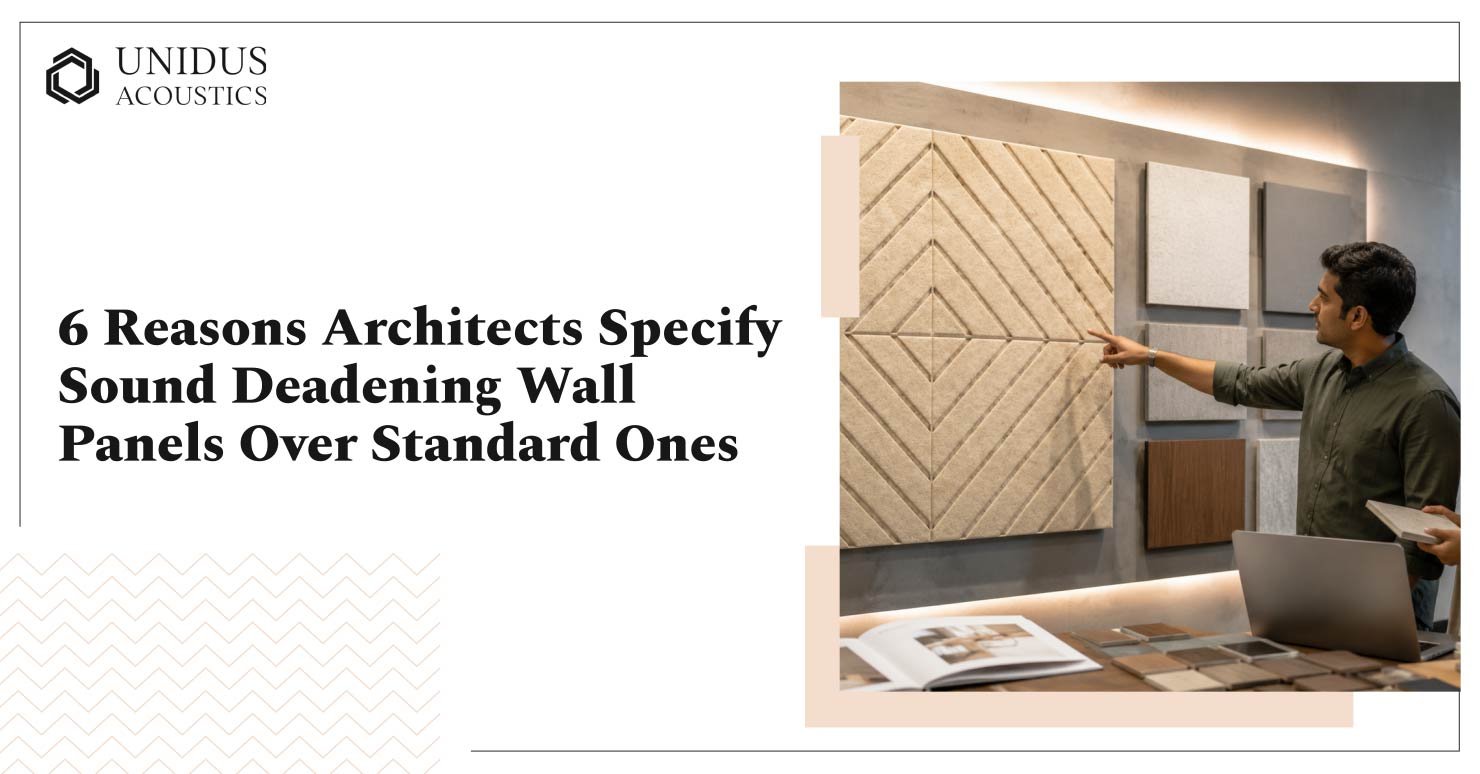
A boardroom can look completely finished and still sound half-done. The walls are painted, the joinery is in, and every voice in the room still carries a faint echo. On a video call, it sounds like the meeting is happening in a stairwell. That gap usually comes down to the wall finish. Standard wall panels, laminate or painted gypsum board, were chosen for how they look, not for what happens to sound once it hits them. Sound dampening and sound deadening wall panels do the opposite: they absorb sound energy instead of bouncing it back into the room.
At Unidus Acoustics, this is the specification conversation we have most often with architects, built on 40+ years of designing and testing acoustic panels for commercial spaces. Here’s what these panels buy you, and how to specify them for a commercial project.
Key Takeaways
- Standard wall panels, laminate or painted gypsum, sit under an NRC of roughly 0.05 and don’t absorb sound in any meaningful way; they were built for appearance, not acoustics.
- Sound deadening and sound dampening mean the same thing in the market: wall panels built to absorb sound, usually tested to NRC 0.70 to 0.90.
- NRC measures absorption inside a room. STC measures how much sound a wall blocks from the room next door. A strong NRC number doesn’t mean sound stays out of the corridor.
- A fire rating only holds up when a named, third-party certifying body stands behind it, since an audit or insurance review will ask for that paperwork.
- Most boardroom echo comes from sound bouncing between two parallel hard walls. Treating just those two surfaces fixes most of the problem.
- Bespoke colours, finishes, and veneer runs need locking in at design development stage, since they take longer to produce than stock options.
Why Architects Specify Sound Deadening Wall Panels Over Standard Finishes
Standard wall panels and sound deadening panels look similar on a finish schedule, but they solve different problems. Here’s what sets the two apart, reason by reason.
1. Standard Wall Finishes Reflect Sound Instead of Absorbing It
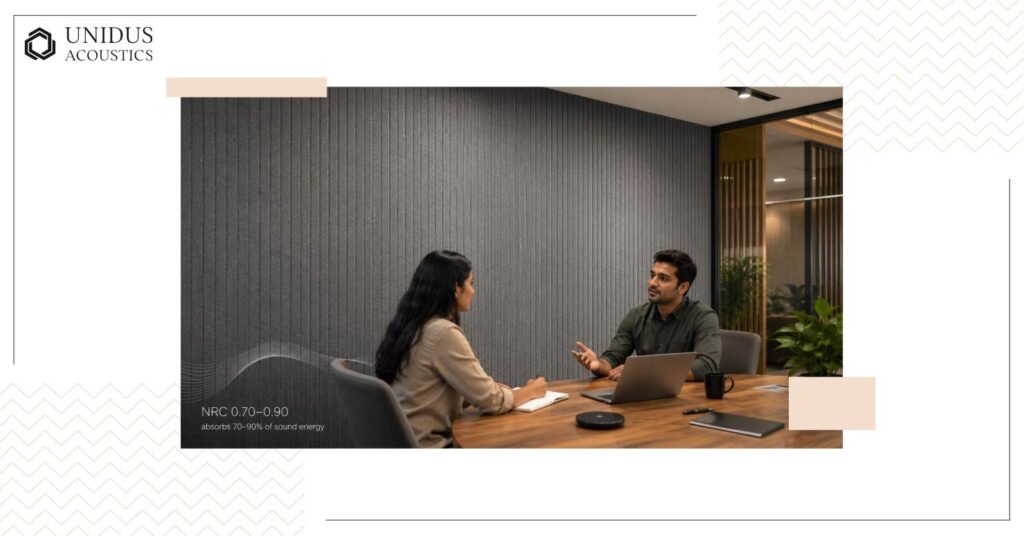
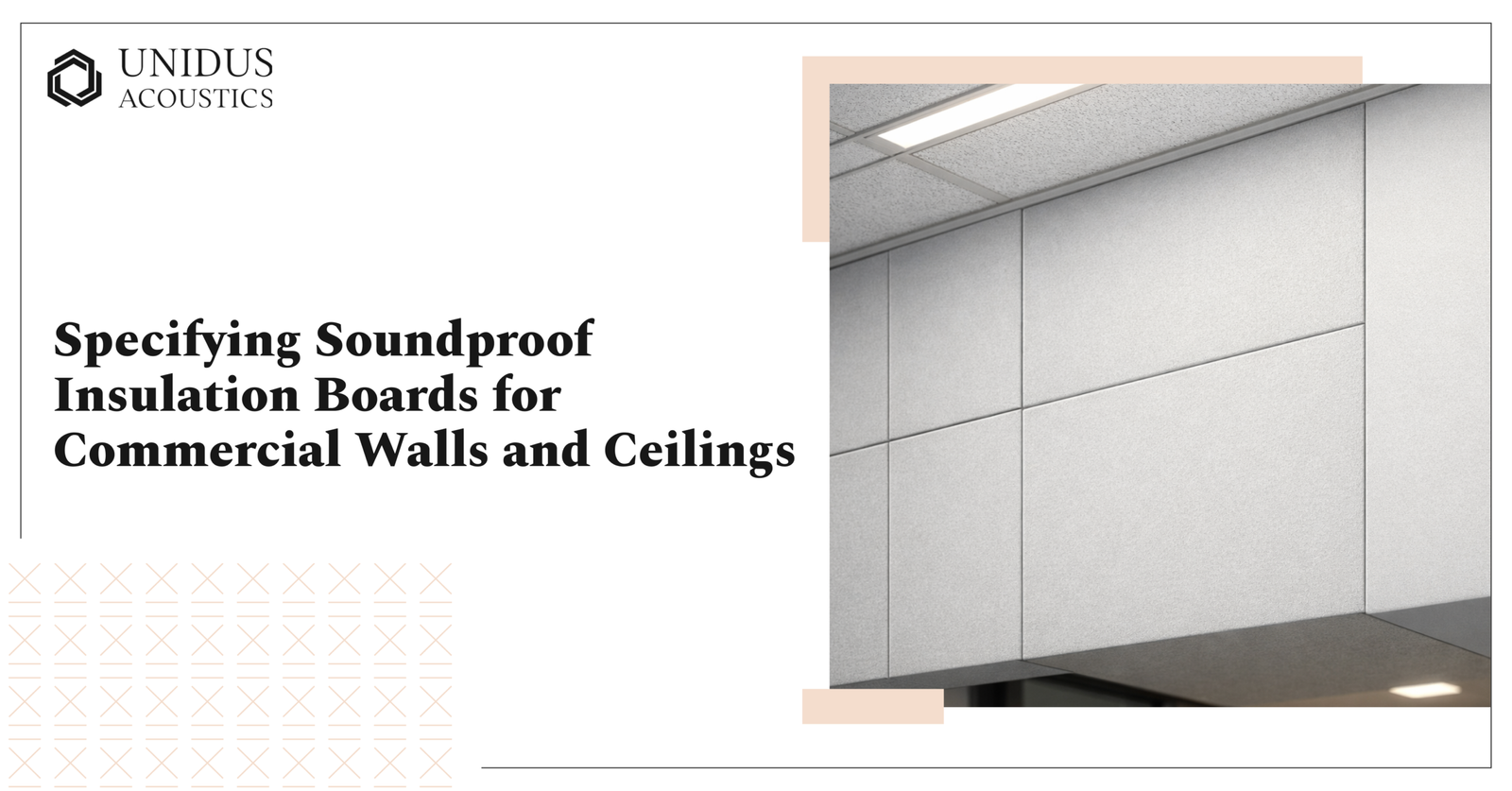
Every hard, flat surface reflects sound almost completely. Bare plasterboard typically tests under an NRC of 0.05, which means close to none of the sound hitting it gets absorbed. Paint and laminate don’t change that math. They were built for finish and durability, not for what they do to a room’s acoustics.
Sound deadening wall panels sit in a different category. They’re usually tested to an NRC of 0.70 to 0.90, meaning the panel absorbs 70 to 90 percent of the sound energy hitting it, at the frequencies that matter most for speech. That’s a real jump in performance, not a small upgrade.
2. NRC and STC Solve Two Different Problems
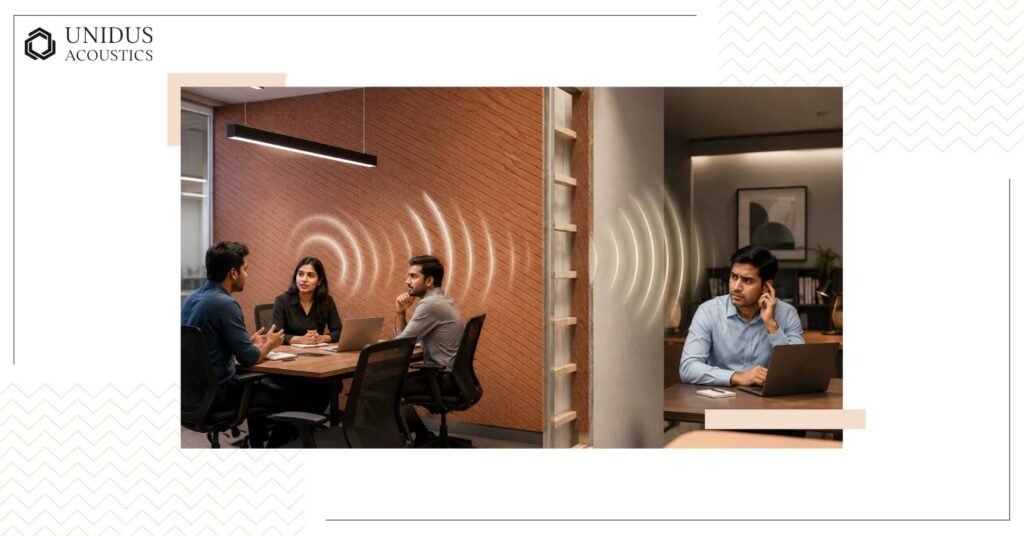
NRC, the Noise Reduction Coefficient, measures how much sound a surface absorbs inside a room. It’s the number that decides whether a meeting room sounds live and echoey, or calm enough to hold a conversation without raising your voice.
STC, the Sound Transmission Class, measures something else: how well a wall assembly blocks sound from passing into the next room. A panel with a great NRC score can still let sound travel straight through the wall if there’s no mass or insulation behind it.
| Metric | What It Measures | Why It Matters Here |
|---|---|---|
| NRC | Sound absorbed inside the room. | Decides if a meeting room feels controlled or echoey. |
| STC | Sound blocked between rooms. | Decides if a conversation carries into the room next door. |
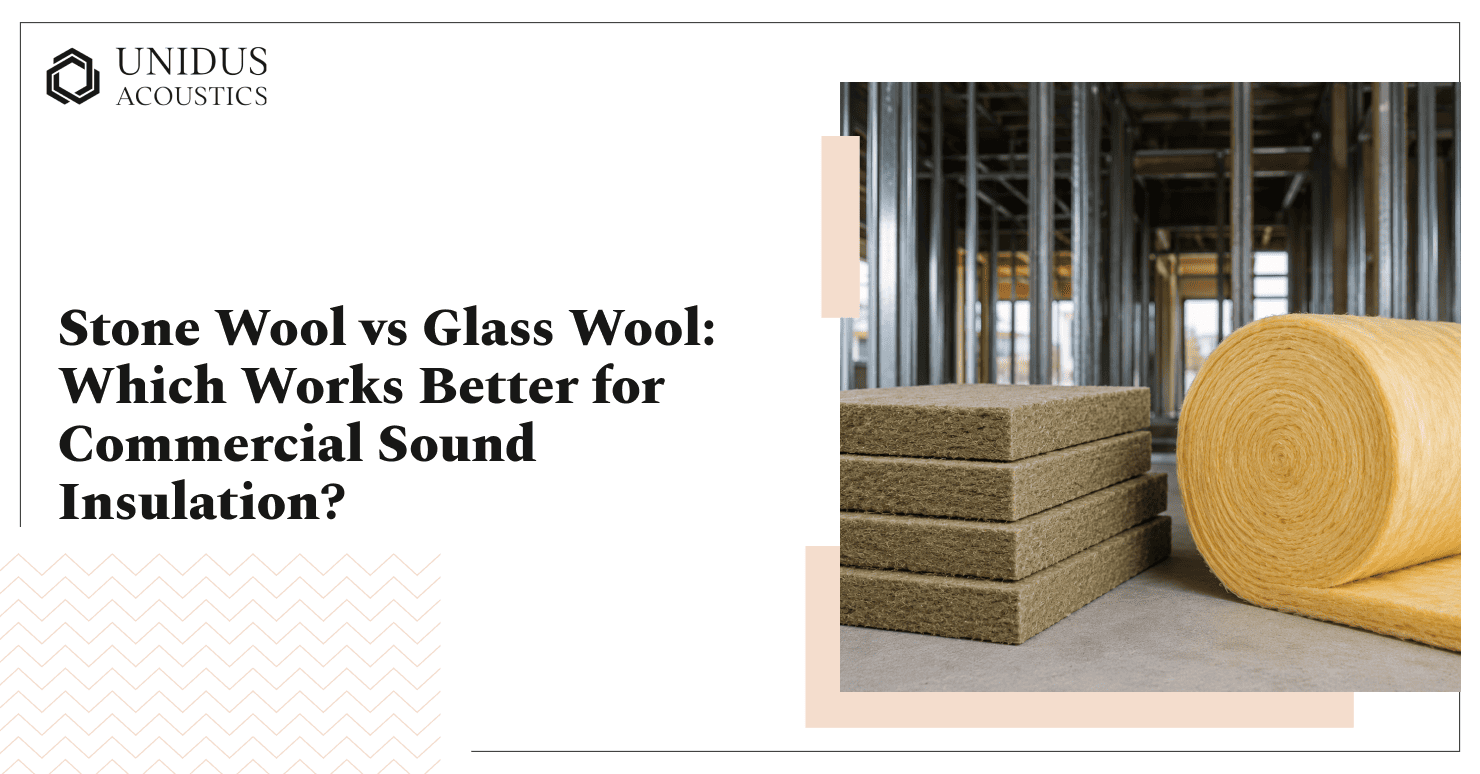
Most standard decorative wall panels were never tested against either metric. Sound deadening panels usually come with published NRC data. When a project also needs to stop sound from crossing into the next room, a mass loaded vinyl layer (also sold as a sound deadening membrane) can be built into the wall assembly behind the panel to add the blocking performance NRC alone doesn’t cover.
3. Standard Panels Rarely Come With Fire Test Data Behind Them
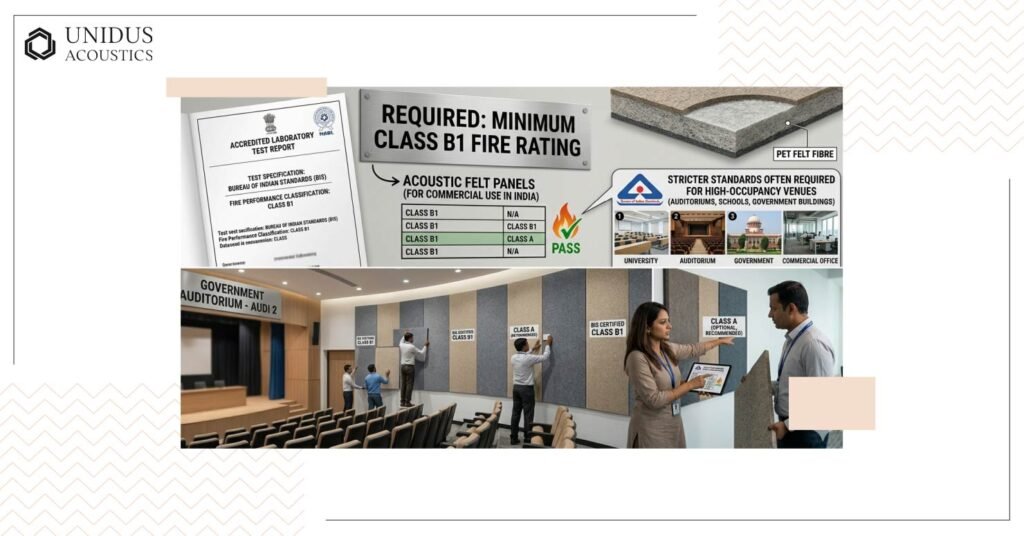
Commercial interiors don’t get a pass on fire safety just because a wall finish looks decorative. Interior wall and ceiling materials in offices, auditoriums, and corporate spaces need a documented fire rating, not just a claim on a spec sheet.
Unidus Acoustics’ U-TONE panels, for example, carry a Class B1 fire rating, tested by SGS, Intertek, and TÜV Rheinland. Many standard decorative panels in the market are sold on look and price, without third-party fire test certificates behind them. That leaves the specifier holding the risk when an audit or insurance review asks for the paperwork.
4. Reverberation Control Changes What a Meeting Actually Sounds Like
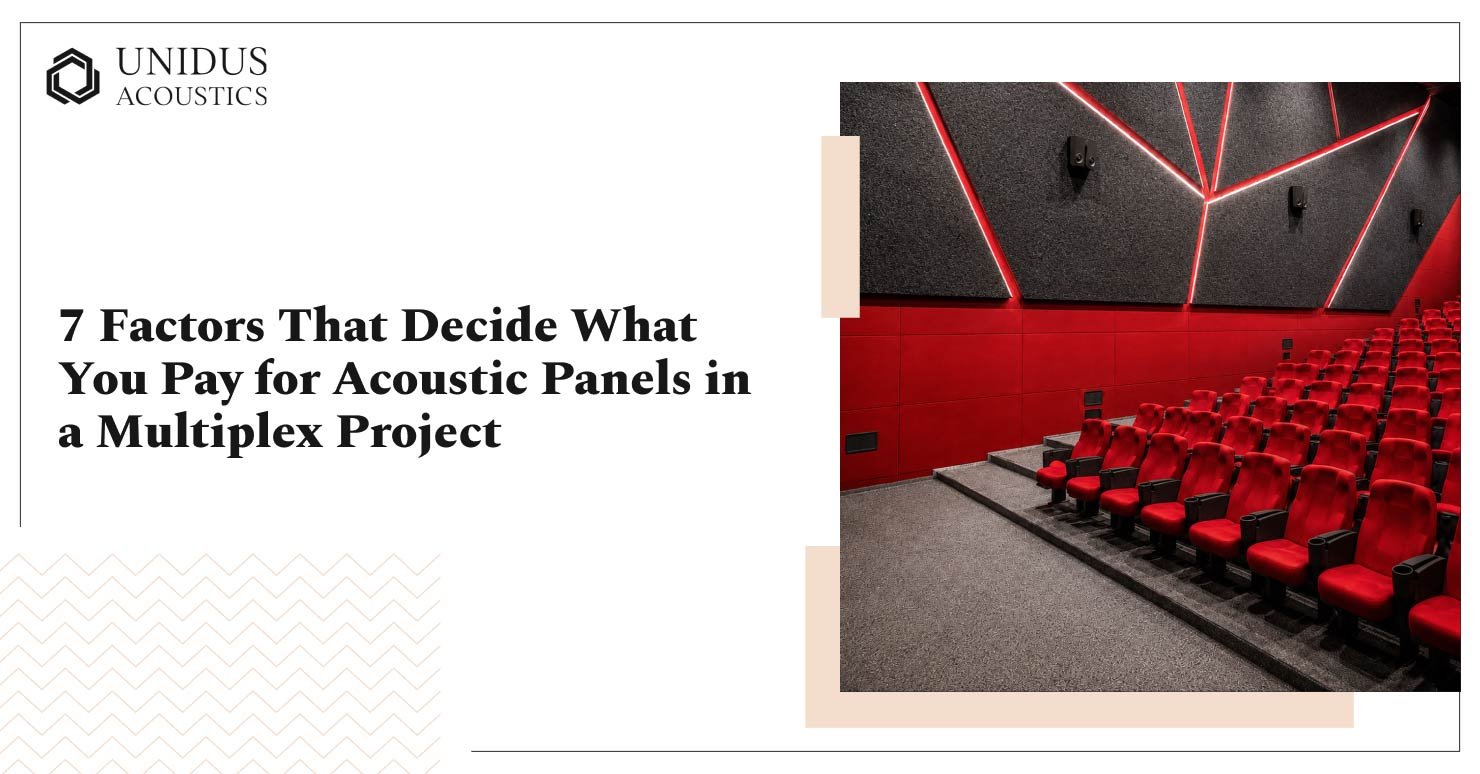
Most of the echo in a conference room comes from sound bouncing between two parallel hard surfaces, the front wall and the back wall. That’s the flutter that makes a room sound hollow. Treat just those two surfaces, and most of the problem goes away. A panel on one wall barely helps. Panels on both facing walls cut the echo sharply.
This isn’t just a comfort issue. India’s Central Pollution Control Board sets an ambient daytime noise limit of 65 dB(A) for commercial zones, well below where an untreated open-plan office usually sits once conversations and HVAC noise stack up. A workplace noise study found that the share of employees able to concentrate at their desk without extra effort had dropped to around 1 percent, down from roughly 20 percent three years earlier..
5. Sound Deadening Panels Come With Specs You Can Reorder Against

A specifier working across multiple sites needs the same panel to perform the same way every time. Sound deadening wall panels are usually sold against a published data sheet: thickness (9mm or 12mm), standard sheet size (2440 x 1220mm), density (180 to 200 kg/m³), and a stated NRC range.
That documentation means the product can be reordered for a second office years later, without retesting the wall from scratch.
6. Design Intent Doesn’t Have to Compete With Acoustic Performance
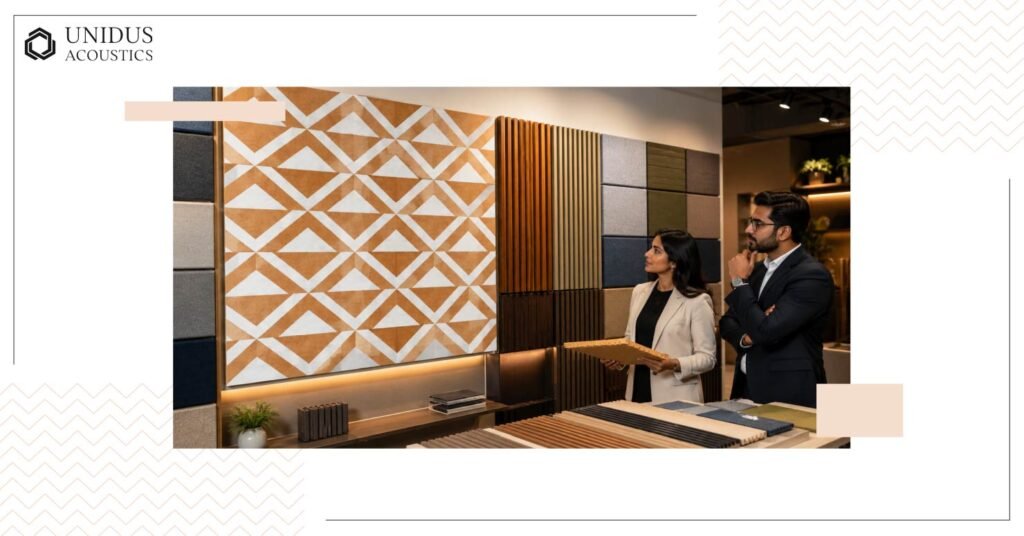
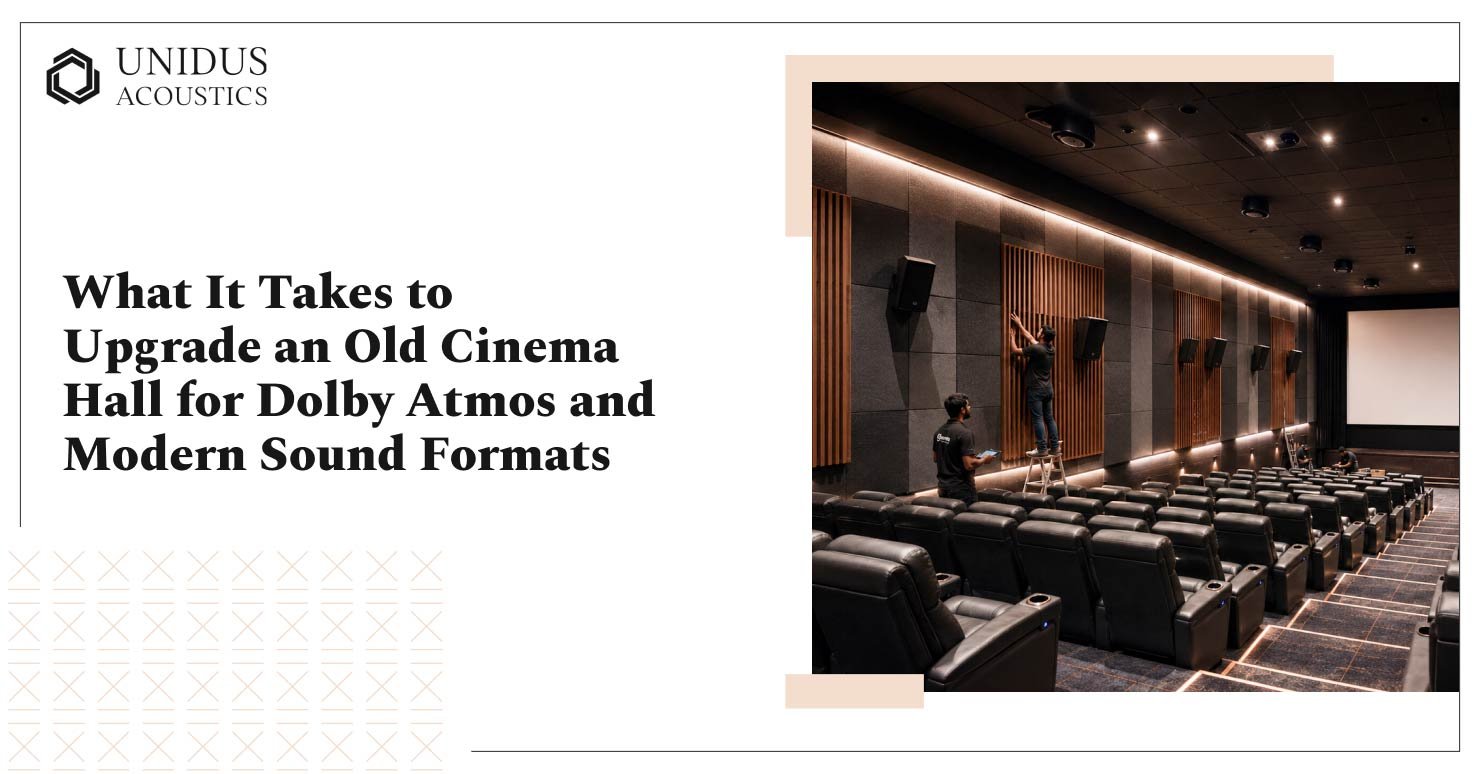
Acoustic treatment used to mean foam wedges or grey fabric panels that read as “the acoustic wall.” That trade-off doesn’t hold up anymore. Sound deadening panels come in dozens of shades across a fabric-wrapped range. For a warmer material palette, fluted wood-finish panels carry the same NRC range in a veneer or laminated MDF finish instead of a fabric face.
One thing to plan for: bespoke colours and finishes need production time. They’re not a same-week swap once the fit-out schedule has tightened, so lock in shade and finish decisions at design development, not at installation.
Frequently Asked Questions About Sound Deadening Wall Panels
1. What is the difference between sound deadening and sound dampening wall panels?
In practice, the two terms mean the same thing: wall panels built to absorb sound, not just provide a decorative finish. Both point to the same metric, NRC, not two different products.
2. Do sound deadening wall panels also block sound between rooms?
Not on their own. Absorption (NRC) and blocking (STC) are different properties. A sound deadening panel improves how a room sounds on the inside. Stopping sound from crossing into the next room means addressing the wall assembly itself, often with a mass loaded vinyl layer built in behind the panel.
3. Are sound deadening wall panels fire safe for commercial buildings?
That depends on the specific product and its test certification. Ask for the fire rating and the certifying body before specifying anything. Unidus Acoustics’ panels, for example, carry a Class B1 fire rating tested by SGS, Intertek, and TÜV Rheinland.
4. Can sound deadening wall panels be customised to match a design theme?
Yes, within the product’s documented range. Look for a supplier with a wide shade library, bespoke design options, and a wood-finish fluted panel for a different material palette. Plan bespoke finishes at design development stage, so lead times don’t catch up with the schedule later.
The Takeaway for Specifiers
Standard wall panels aren’t a poor choice because someone specified them casually. They solve a different problem: how a wall looks, not how a room sounds. Sound deadening panels close that gap with documented NRC performance and fire test certification, without giving up on finish.
Unidus Acoustics’ U-TONE Acoustic Panels bring this together: NRC 0.70 to 0.90, Class B1 fire rating, SGS, Intertek, and TÜV Rheinland certification, and more than 84 shades to choose from. Contact us now.