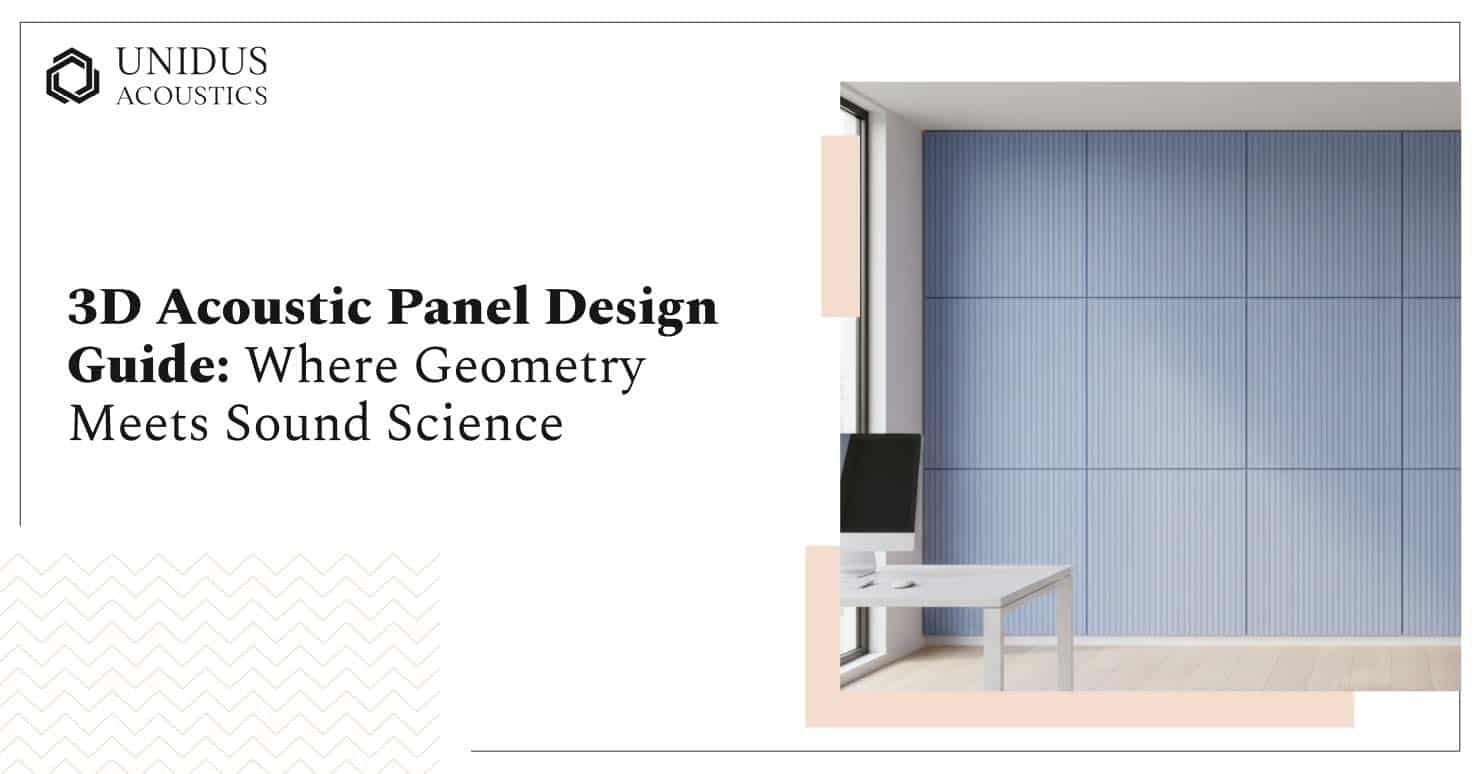
A 3D acoustic panel is a wall or ceiling treatment made from porous materials (recycled PET, timber, or foam) shaped into geometric or textured forms. The geometry does something flat panels can’t: it scatters sound as well as absorbing it, distributing reflections more evenly and cutting flutter echo.
That dual function is what makes them worth specifying in commercial interiors. They control noise without deadening a room, and the surface doubles as an architectural feature. Wall-mounted, ceiling-fixed, or suspended as canopies above collaboration zones, they give designers a way to treat acoustics without concealing it.
Key Takeaways
- 3D acoustic panels absorb sound through porous materials and scatter reflections through geometric surface variation, unlike flat panels, which only absorb.
- For open-plan offices and collaborative spaces, specify panels with NRC 0.90 or higher and target a reverberation time (RT60) of around 0.6 seconds in focus zones.
- Panels can be wall-mounted, ceiling-fixed, or suspended as floating canopies above collaboration areas.
- PET-based 3D acoustic panels carry fire Class B1 certification, making them suitable for commercial interiors.
- Acoustic mapping before installation determines where panels need to go. Positioning without a plan is the most common specification mistake.
3D Acoustic Panels vs Flat Acoustic Panels
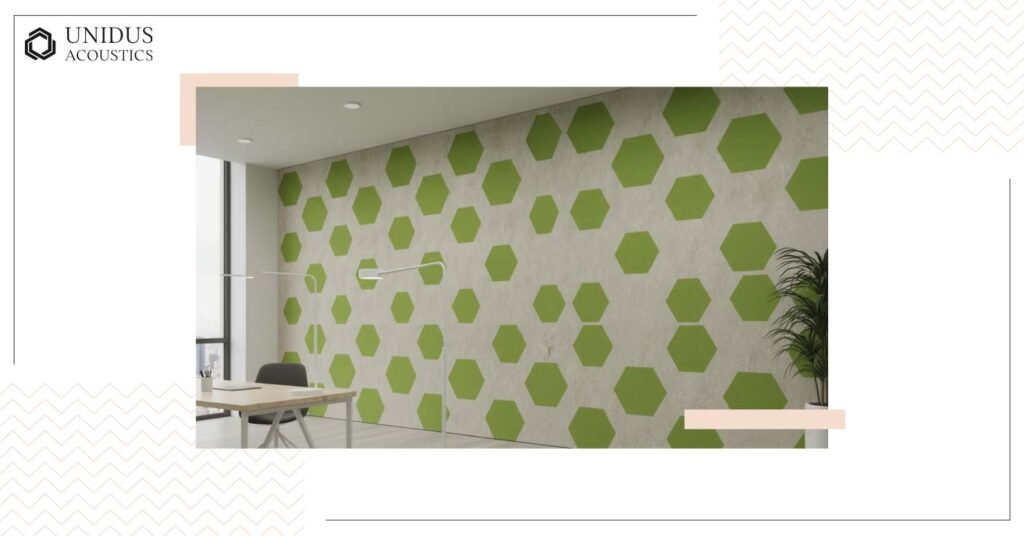
The choice between a 3D panel and a flat panel isn’t just aesthetic. The two function differently, suit different spaces, and carry different specification implications.
| Feature | 3D Acoustic Panels | Flat Acoustic Panels |
|---|---|---|
| Sound mechanism | Absorption + diffusion | Absorption primarily |
| Surface texture | Geometric, textured | Smooth or fabric-wrapped |
| NRC range | 0.70–0.90 | 0.65–0.95 |
| Best use | Feature walls, ceiling canopies, open offices | Background absorption, studios, quiet zones |
| Aesthetic impact | High – works as an architectural feature | Low to medium |
| Customisation | High | Medium |
| Materials | Recycled PET, timber, foam | PET, mineral fibre, fabric-wrapped cores |
Understanding how the two panel types compare is useful for specification decisions, but the real question is what 3D panels actually deliver in a live project.
Benefits Of 3D Acoustic Panels
3D acoustic panels offer more than decorative appeal. They deliver:
- 3D panels absorb incident sound through their porous material while simultaneously scattering reflections, reducing flutter echo in large open spaces.
- Diffusion evens out sound distribution, making conversations intelligible without being overheard.
- Bold, sculptural patterns transform blank walls into focal points.
- Panels can be used in recording studios, offices, home theatres and restaurants. They can be wall-mounted, hung as clouds or used as room dividers.
- Lightweight PET panels mount easily, while heavier timber versions offer durability.
How Does Geometry Shape Sound?
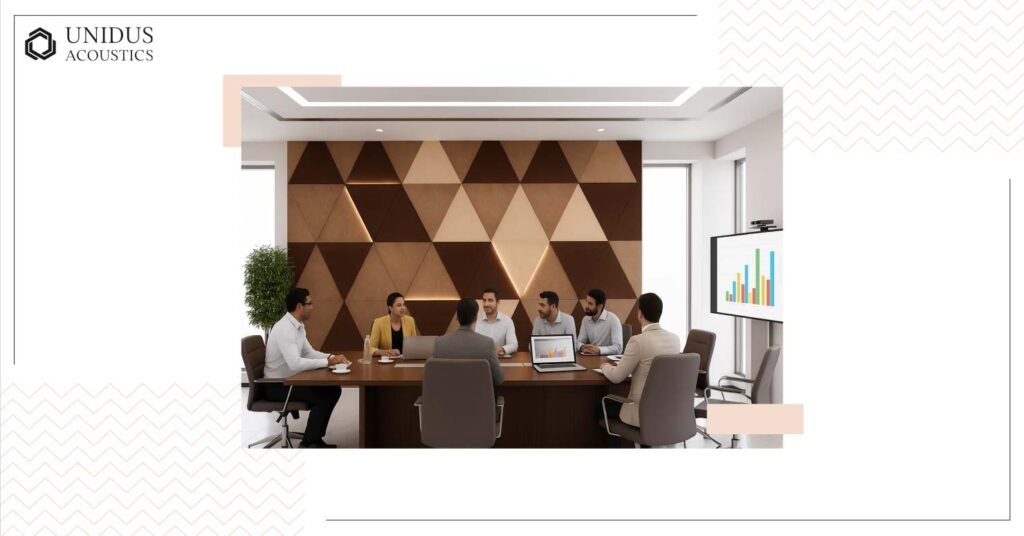
Geometry influences how a panel interacts with sound. The angles, curves, and textures of a surface decide whether sound is absorbed, scattered, or reflected. In open spaces, even small geometric variations can change how people experience noise, making the design just as important as the material.
Harnessing Shapes and Patterns
3D panels introduce depth and dimension to walls and ceilings. Patterns ranging from organic waves and bubbles to sharp geometric shapes create multiple angles and edges that break up sound waves, reducing flutter echoes.
Linear acoustic panels offer a subtler look with clean lines, while ‘ceiling clouds‘ suspended from ceilings create acoustic zones above collaborative areas.
3D Acoustic Panels in Real-World Spaces
3D acoustic panels are used in many everyday spaces. Modern offices often use ceiling-hung baffles or clouds with built-in LED lighting. This setup reduces echoes and creates softer lighting.
Design Tips For Architects And Interior Designers
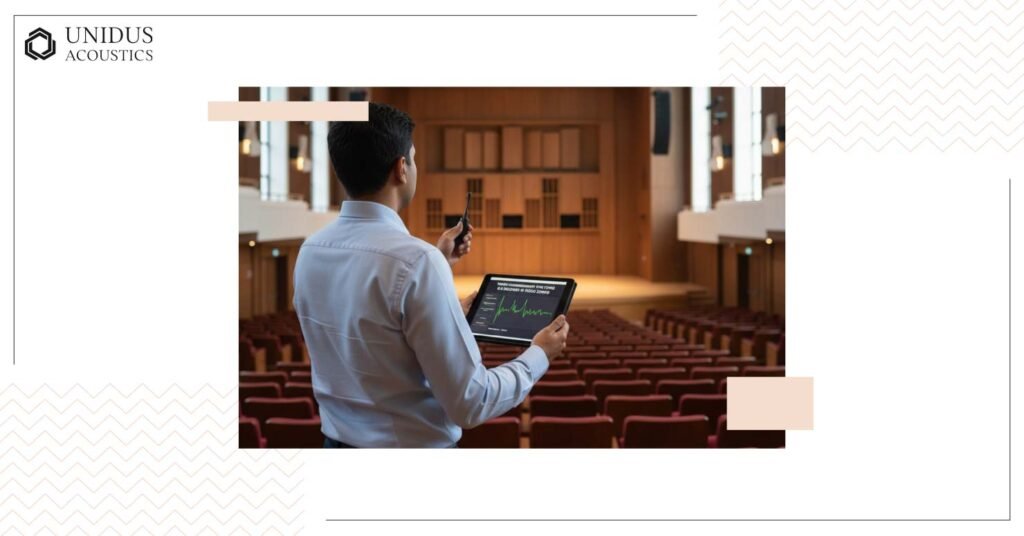
Sound design and aesthetics don’t compete when the specification is done well. Working with an acoustic solutions partner early in the design process helps ensure materials, finishes, and spatial layouts support both the visual and auditory experience.
How to Acoustic Map a Space Before Specifying Acoustic Panels
Acoustic design should start with a plan. Acoustic mapping should establish a target RT60 of 0.6 seconds in focus zones.
Mapping identifies where sound lingers so you can position panels strategically. For example, panels should be placed at first reflection points (opposite talking heads) to tame echoes. Suspended panels can be staggered at different heights to enhance performance.
Which NRC and Class Ratings to Specify for Acoustic Panels
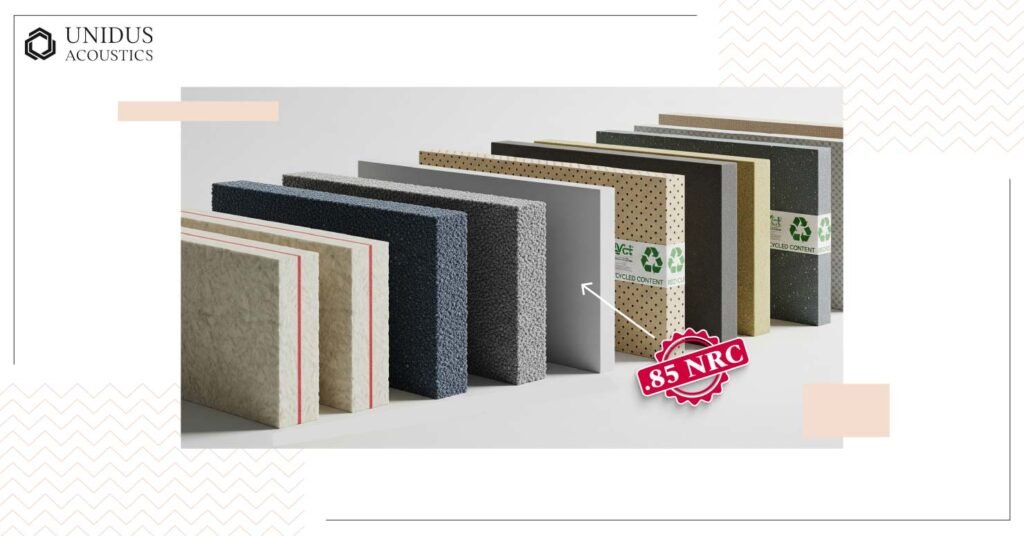
Aim for Class A panels with an NRC (Noise Reduction Coefficient) of 0.90, meaning they absorb 90% of incident sound. Check product data sheets for absorption coefficients at different frequencies. Mid-frequency performance is vital for speech clarity. Thicker panels generally absorb lower frequencies, while diffusion patterns control higher frequencies.
Integrating Lighting With Your Acoustic Panel System
Avoid treating lighting and acoustics separately. Unidus Acoustics’ acoustic lighting systems integrate LED strips into ceiling baffles and clouds, providing even light diffusion and sound control.
Unidus Acoustics’ PET and textile-wrapped panels carry fire Class B1 certification, meeting the fire safety requirements for commercial interiors including healthcare and hospitality environments. These materials are also disinfectable, meeting hygiene requirements for healthcare and hospitality environments. Consider mixing 3D panels with flat panels, clouds and baffles to create layers of absorption and diffusion while achieving a cohesive design.
How to Zone Different Areas Using Acoustic Panels
Different areas need different acoustic treatments. In open offices, collaborative zones may benefit from moderate absorption combined with brighter lighting, whereas quiet zones require heavier absorption and softer lighting. Bespoke partitions, acoustic pods, and 3D patterned panels can be specified per zone to balance acoustic performance with the existing design language, without major renovations.
Sustainable Material Options for Acoustic Panels
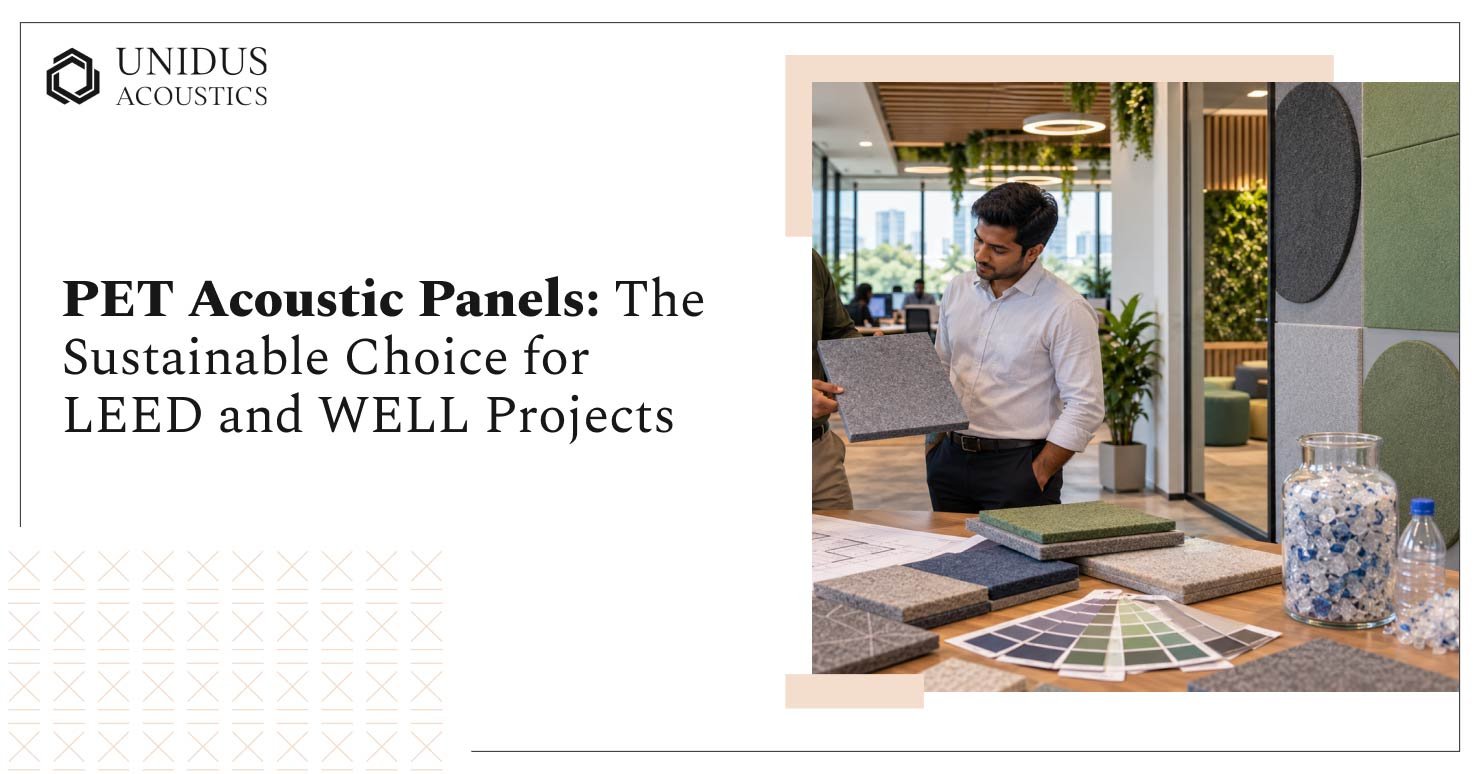
Clients increasingly demand environmentally responsible solutions. Opt for recycled PET or textile-wrapped panels to deliver high performance with low environmental impact. These materials also provide warm and tactile finishes.
Frequently Asked Questions About 3D Acoustic Panels
1. What is the difference between a 3D acoustic panel and a regular acoustic panel?
A regular acoustic panel absorbs sound through its porous material. A 3D acoustic panel does this, but the geometric surface also scatters sound waves in multiple directions. This diffusion distributes sound more evenly across a space and reduces flutter echo — the rapid bouncing of sound between two parallel surfaces. In open offices and hospitality spaces where you want control without a deadened feel, 3D panels tend to give a better result.
2. What NRC rating should I specify for acoustic panels in a commercial office?
For open-plan commercial offices, specify panels with an NRC of 0.85 or above. Focus zones and enclosed meeting rooms benefit from NRC 0.90, which means the panel absorbs 90% of incident sound. When reviewing product data sheets, check absorption coefficients at individual frequencies rather than just the single NRC figure. Mid-frequency performance at 500 Hz to 2 kHz has the most direct impact on speech clarity.
3. Can 3D acoustic panels be used on ceilings?
Yes. They can be wall-mounted, fixed directly to the ceiling, or suspended as floating canopies above collaborative zones. When suspended, panels are positioned to treat first-reflection points — the areas directly above conversation spaces where sound bounces most actively. Unidus Acoustics manufactures ceiling-rated versions in PET and timber with the appropriate suspension hardware.
4. Are 3D acoustic panels fire-rated?
PET-based and textile-wrapped panels from Unidus Acoustics carry fire Class B1 certification, which meets the fire safety requirements for most commercial interior applications. Confirm the specific fire rating required for your project with your acoustic consultant before specifying, particularly for healthcare and hospitality environments.
5. What materials are 3D acoustic panels typically made from?
The most common materials are recycled PET, timber, foam, and fabric-wrapped cores. PET panels are lightweight, moisture-resistant, and available across a wide colour range. Timber panels offer a warmer aesthetic and higher density for spaces with more low-frequency noise. Foam is the most cost-accessible option but has a narrower design range. Unidus Acoustics offers PET, timber, and inlay configurations for commercial projects across India.
Final Thoughts
In a world of open offices, glass-clad hotels and bustling restaurants, ignoring acoustics can cost productivity and health.
3D acoustic panels fuse geometric beauty with sound science, offering a visually striking way to tame reverberation. Thoughtful acoustic mapping, careful selection of NRC-rated materials and integration of lighting ensure these panels perform as well as they look.
With Unidus Acoustics as your partner, you can turn noise into harmony and create spaces where people can focus and do their best work. We bring 40 years of expertise in designing custom acoustic solutions that balance form and function, and we back every project with on-time delivery and value for money.
Bring acoustic balance into your next project and let your design sound as good as it looks. Schedule a free consultation with us today.