You’ve specified acoustic treatment for a performance auditorium [or recording studio, or high-end listening room]. The acoustic panels absorb sound and reduce reverberation perfectly—on paper. But something feels off. The space sounds dead. Voices lack presence. Music sounds lifeless. The room feels acoustically flat in a way that’s uncomfortable.
At Unidus Acoustics, in the last 40 years, we have encountered numerous projects – from standard office noise control to specialised performance spaces and professional audio environments. While most projects need absorption-focused solutions, we’ve encountered scenarios where achieving perfect reverberation targets on paper still leaves occupants dissatisfied with acoustic quality. These are the projects where diffusion matters and where diffuser panel acoustic treatment becomes essential, and where an experienced acoustics solution provider’s comprehensive approach to custom acoustic solutions makes the difference.
Understanding Acoustic Diffusion
Acoustic absorption and diffusion serve fundamentally different purposes, though both improve acoustic environments. Absorption removes sound energy from a space, reducing overall sound levels and reverberation time. Diffusion redirects sound energy, scattering reflections in multiple directions rather than allowing focused reflections or absorbing the energy entirely.
Think of absorption as a sponge that soaks up water. Diffusion is more like a textured surface that breaks up a water stream into multiple smaller streams going in different directions. The water (or sound) energy remains, but its behaviour changes.
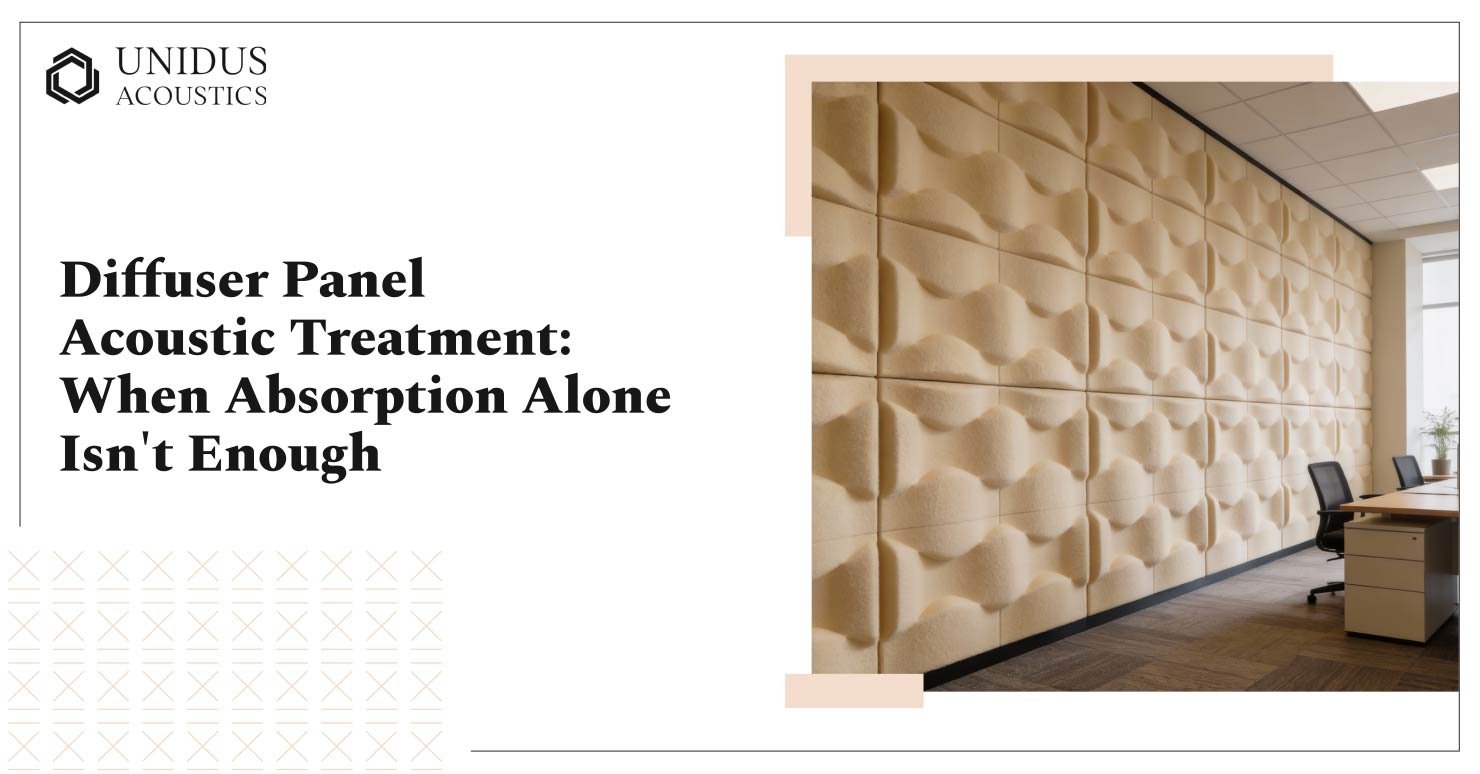
Acoustic panels achieve diffusion through 3D surface geometry. Rather than flat or porous surfaces (which either reflect or absorb sound), diffusive acoustic panels use carefully designed shapes that scatter sound waves—pyramidal patterns, hemispherical arrangements, or mathematically calculated geometric configurations. At Unidus Acoustics, our computational design approach allows us to engineer panel geometry that provides the right balance of absorption and diffusion for your space.
When Spaces Need Diffusion Rather Than More Absorption
Several acoustic situations benefit specifically from diffuser panel acoustic treatment rather than additional absorption.
Overly Damped Spaces
This is the scenario described earlier. When too much absorption is added, spaces become acoustically dead. The conversation lacks natural resonance. Music sounds lifeless. The solution isn’t removing absorption panels but adding diffusion that preserves some sound energy while preventing problematic reflections.
Recording and Broadcast Environments
These spaces need controlled acoustics that sound natural rather than clinical. Pure absorption creates dead rooms that sound artificial on recordings. Diffusion maintains acoustic liveliness while preventing the strong reflections that cause technical problems. The balance between absorption and diffusion determines the room’s acoustic character.
Performance Spaces
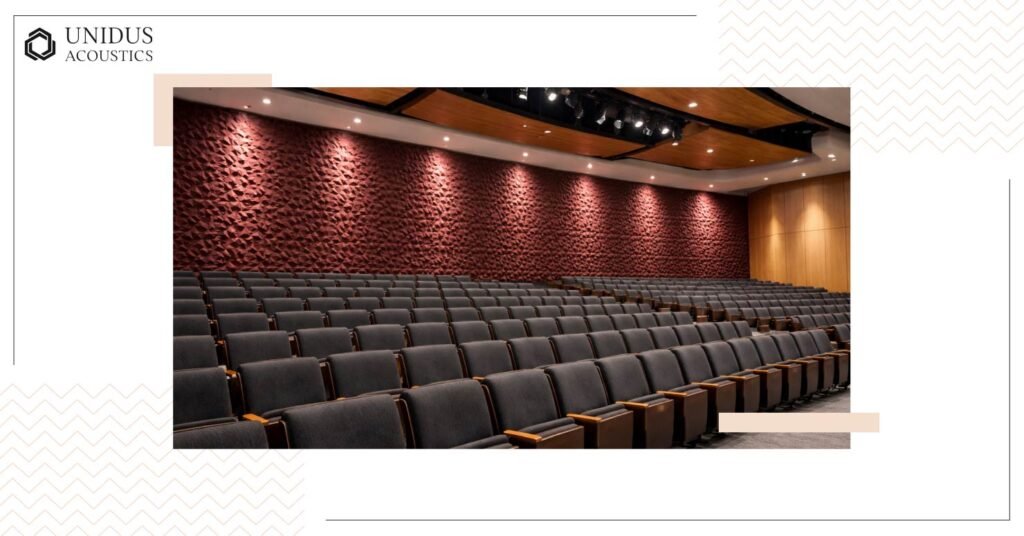
Concert halls, auditoriums, and presentation spaces need sound energy distributed throughout the audience area without creating echo or focused reflections. Diffuser panel acoustic treatment on rear walls or ceiling areas scatters sound, improving coverage and preventing acoustic dead spots while maintaining the room’s overall liveliness.
High-End Listening Rooms
Audiophile spaces and critical listening environments use diffusion to eliminate flutter echo and standing waves without overdamping the room. This preserves the sense of acoustic space that makes music sound natural while removing specific acoustic problems.
Large Open Spaces
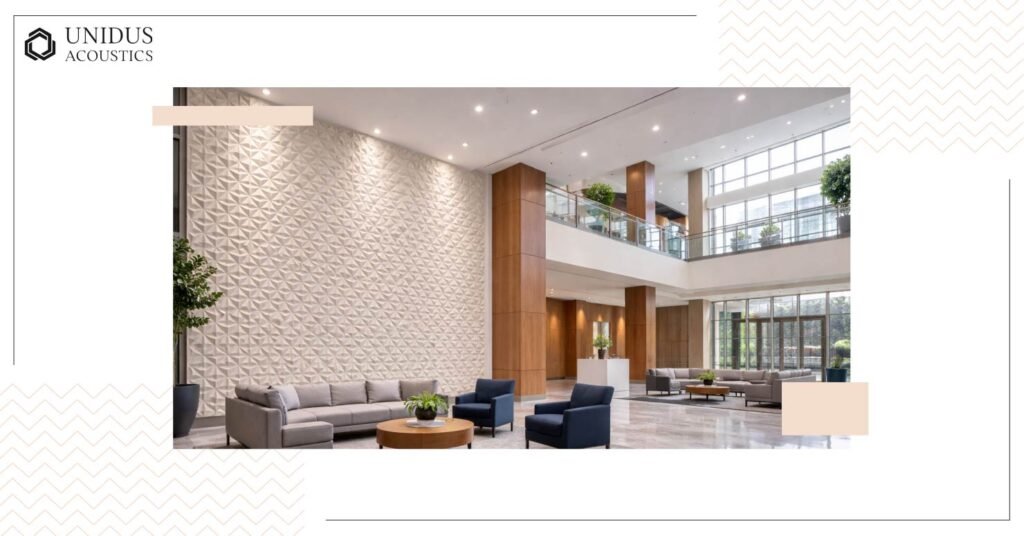
Lobbies, atriums, and grand public spaces sometimes need acoustic control that doesn’t make them feel oppressively quiet. Strategic diffusion reduces problematic reflections while maintaining the acoustic sense of space that contributes to the feeling of grandeur.
How Diffusion Complements Absorption
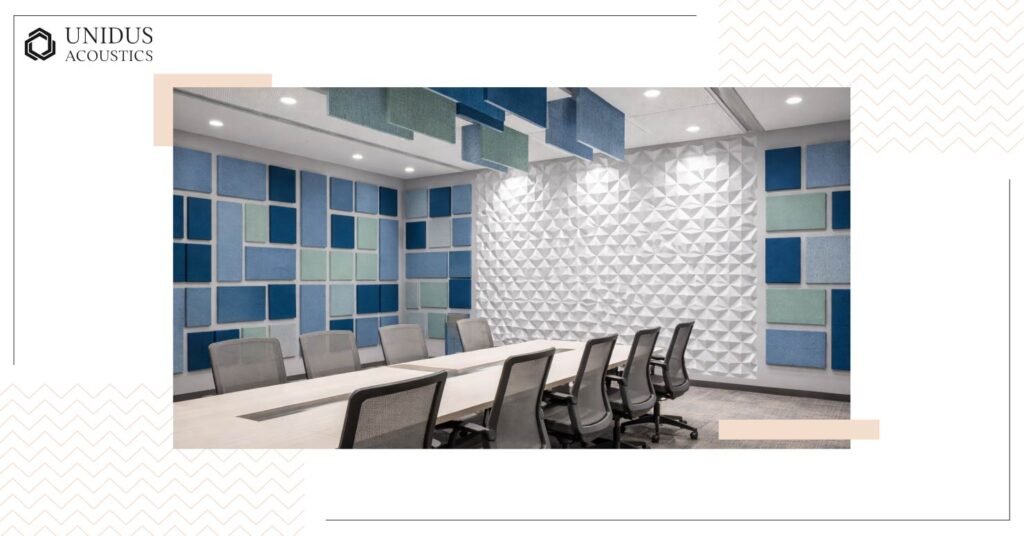
The most effective acoustic treatments combine absorption and diffusion strategically. This approach addresses different acoustic problems with appropriate solutions rather than applying one treatment everywhere.
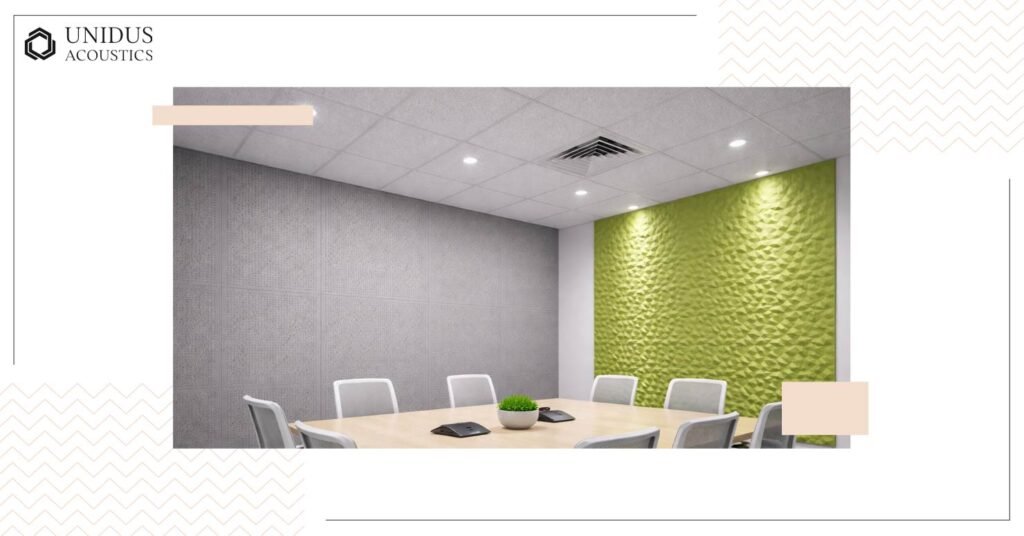
In a conference room, absorption on the ceiling controls overall reverberation time. Diffusion on the rear wall prevents echo from the wall behind the presenter while maintaining vocal clarity and presence. The combination creates a space that sounds clear without sounding dead. Our 3D acoustic panels can be designed to provide this diffusive treatment while maintaining aesthetic integration with the space.
In an open office, absorption panels on walls and ceilings reduce ambient noise levels. Diffusive elements on columns or partition tops break up sound paths without removing all acoustic energy, preventing the oppressive silence that makes open offices feel uncomfortable even when technically quiet.
In performance spaces, absorption near the stage controls excessive reverb while diffusion on side walls and rear areas distributes sound evenly throughout the audience. This balance maintains acoustic liveliness while ensuring good coverage.
Diffuser Panel Design and Effectiveness
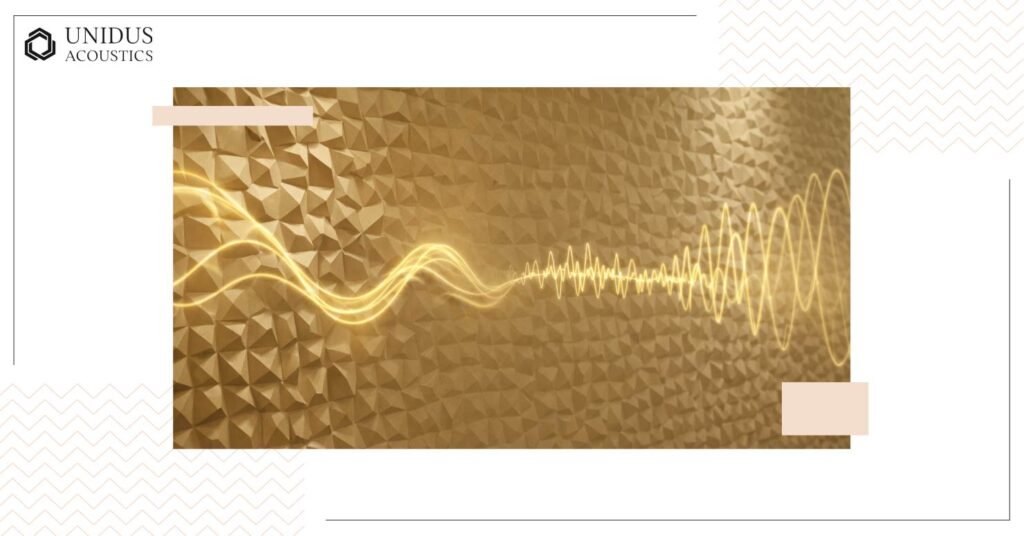
Not all diffuser panels work equally well. Diffusion effectiveness depends on geometric precision, the relationship between panel dimensions and wavelengths being diffused, and proper placement within the space.
Low-frequency diffusion requires large geometric features because low-frequency wavelengths are physically long. This means effective bass diffusers are often substantial architectural elements rather than thin panels. High-frequency diffusion can be achieved with smaller geometric variations, allowing thinner panels that integrate more easily into spaces.
The depth and spacing of diffusive elements determine which frequencies are scattered effectively. This is why generic diffusive treatments (random textured surfaces, bookshelf-style arrangements) provide some diffusion but lack the controlled, predictable performance of acoustic panels engineered for diffusion using computational design and acoustic principles.
Placement Considerations
Where diffuser panels are placed dramatically affects their performance. Diffusion works best at reflection points where sound energy would otherwise create problems.
Rear walls in performance spaces or meeting rooms benefit from diffusion because they’re the source of echo and focused reflections that interfere with speech intelligibility. Side walls at reflection points can use diffusion to break up flutter echo while maintaining room liveliness. Ceiling areas in spaces with parallel surfaces may need diffusion to prevent standing waves and flutter.
The key is identifying where sound energy creates problems through focused reflections rather than simply having too much overall energy. Problem areas need diffusion. Spaces with too much overall sound energy need absorption.
Common Misconceptions About Diffusion
Several misunderstandings about acoustic diffusion lead to ineffective treatments.
“Textured surfaces provide adequate diffusion”: Random texture creates some scattering but lacks the controlled performance of purpose-engineered acoustic panels. Bookshelves and irregular surfaces provide mild diffusion, but can’t solve specific acoustic problems that properly designed diffusive acoustic treatment addresses.
“Diffusion and absorption are interchangeable”: They serve different purposes. Absorption reduces sound energy. Diffusion redistributes it. Using one when you need the other doesn’t work.
“More diffusion is always better”: Like absorption, diffusion must be applied appropriately. Excessive diffusion can create overly scattered sound fields that lack coherence. The goal is balanced acoustics, not maximum treatment.
Evaluating When Your Project Needs Diffusion
Most commercial projects rely primarily on absorption because the typical problem is excessive reverberation and ambient noise. Diffuser panel acoustic treatment becomes necessary when absorption alone creates problems or when the space’s function requires particular acoustic characteristics.
Ask whether the space needs acoustic liveliness preserved, whether specific reflection points create problems that absorption can’t address without overdamping, and whether the acoustic character of the space matters beyond simple noise reduction. If any answer is yes, diffusion likely belongs in your acoustic strategy.
At Unidus Acoustics, our 40 years of expertise includes comprehensive understanding of both absorption and diffusion principles. Our acoustic consultancy services assess whether your project needs diffusive acoustic treatment, and our computational design capabilities allow us to engineer custom acoustic panels—including 3D designs—optimised for absorption, diffusion, or both.
Making Informed Decisions
Diffusion is a specialised acoustic tool that solves specific problems. Understanding when diffuser panel acoustic treatment is appropriate requires acoustic expertise that goes beyond product selection.
The most important insight is recognising that acoustics isn’t one-dimensional. Different problems need different solutions, and the best acoustic environments often result from combining multiple approaches strategically.
At Unidus Acoustics, our acoustic consultancy services assess whether your project needs diffusive treatment alongside absorption solutions. We specialise in custom acoustic panels that balance form and function, delivering value for money through precisely engineered solutions installed on time.
Planning a project where acoustic character matters as much as noise control?
Contact us to discuss how we can enhance the functionality and aesthetics of your space through comprehensive acoustic solutions.