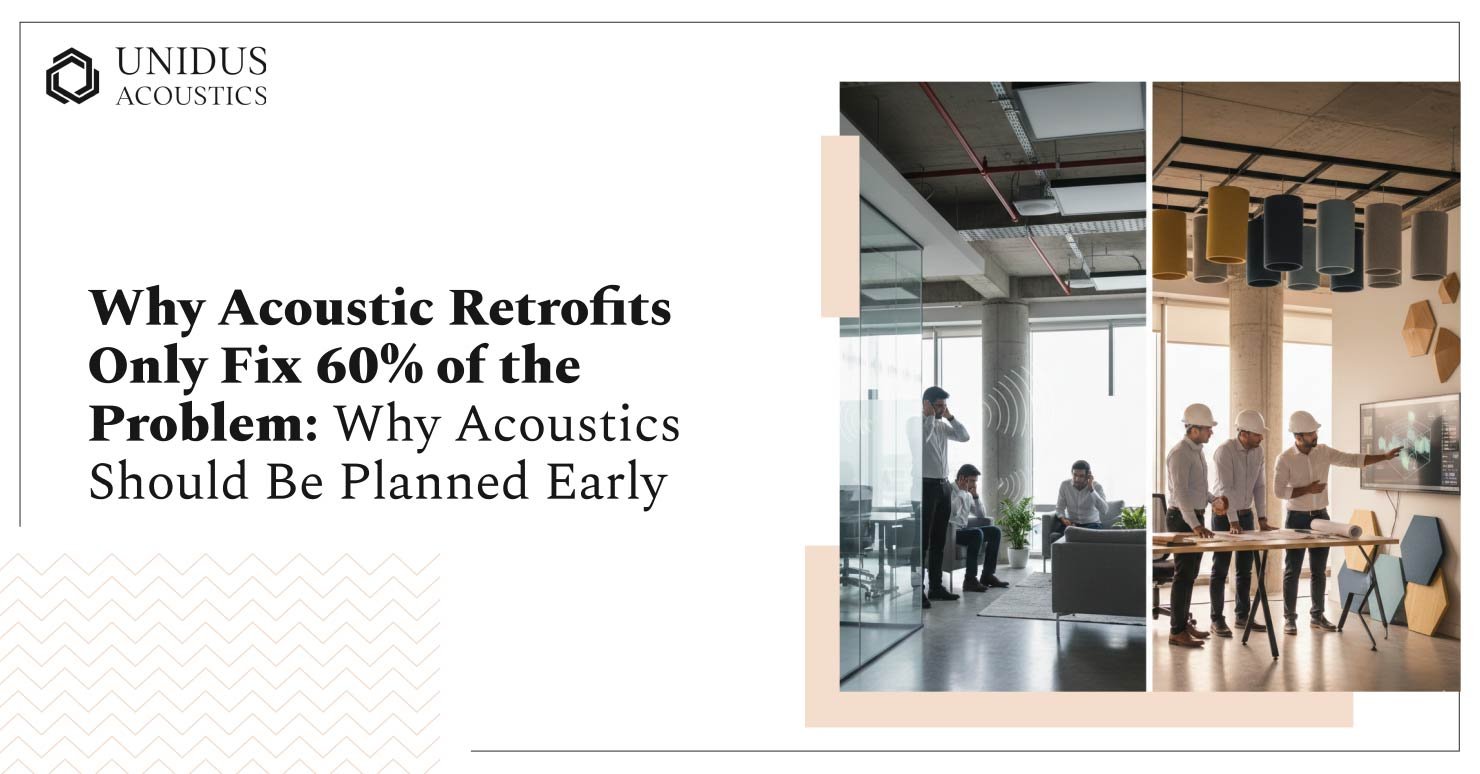
Acoustic retrofits work. They reduce noise, improve speech clarity, and fix the problems that make a space uncomfortable or unproductive. Nobody disputes that.
What they can’t do is optimise the space. Retrofits get designed around conditions that construction has already locked in. Ceiling heights are fixed. Wall finishes are done. MEP systems have claimed the overhead space. The acoustic solution has to fit around all of it rather than being part of it from the start.
This isn’t about planning failures. Retrofits happen for legitimate reasons: clients cut acoustics during value engineering, budgets shift, or problems only surface after occupancy. Sometimes buildings get repurposed for uses nobody anticipated. The retrofit path is often the only path available. But there’s a real cost to entering late, and it shows up in three distinct ways.
Structural Constraints Retrofits Have to Work Around
Every acoustic retrofit has to work within the limits that construction has already set. Three constraints come up consistently.
1. Ceiling Height
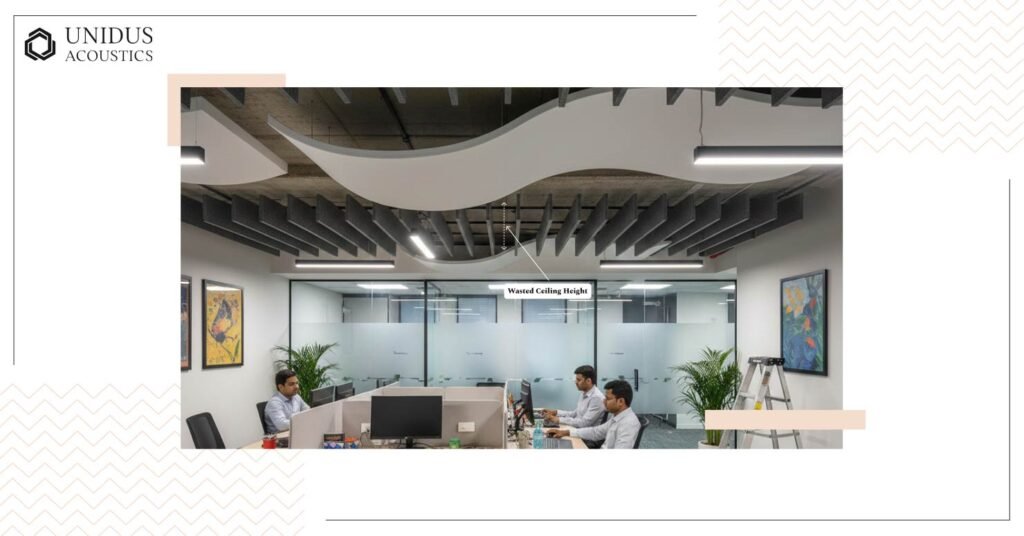
Any acoustic ceiling system, whether baffles, clouds, or tiles, consumes vertical space. In a space where the ceiling height wasn’t sized to account for acoustic treatment, that space comes directly out of the room’s finished height. When acoustics are planned at the design stage, finished heights can be set to accommodate treatment from the beginning.
2. Surface Materials
Acoustic retrofits work with finishes chosen for visual quality, not acoustic behaviour. Glass walls that reflect sound can’t be replaced. Polished concrete ceilings offer limited treatment options. Finished surfaces require solutions that mount on top, often competing visually with materials that were carefully selected for the design intent.
3. MEP Coordination
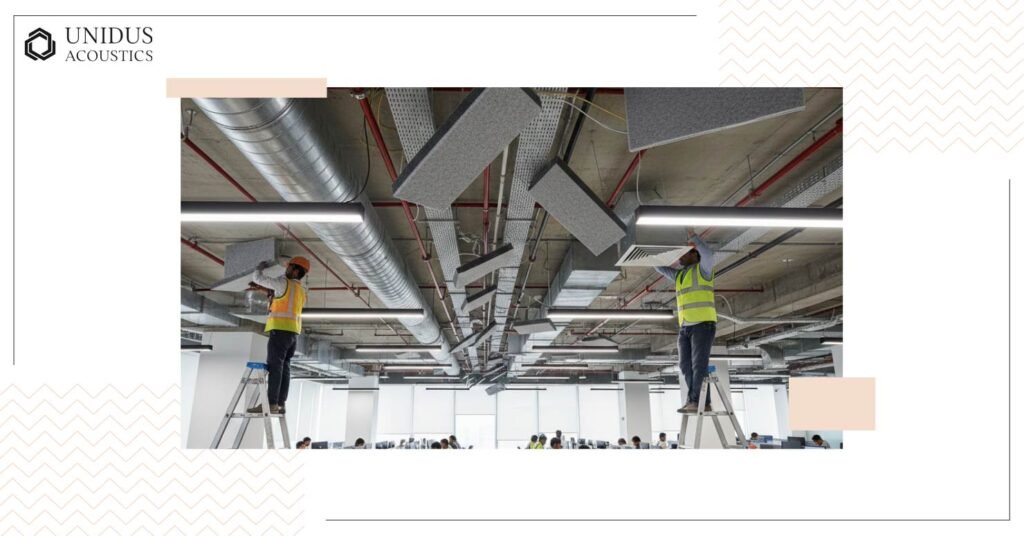
By the time a retrofit begins, HVAC ducts, electrical conduits, lighting, and sprinklers already occupy overhead space. Acoustic baffles have to navigate around ductwork. Ceiling clouds get positioned between HVAC runs rather than where they’d deliver the best acoustic outcome. Early planning coordinates systems so they work together rather than compete for space.
The Financial Reality of Post-Occupancy Acoustic Treatment
Retrofits cost more than integrated solutions, and the reasons aren’t complicated.
Higher Material and Installation Costs
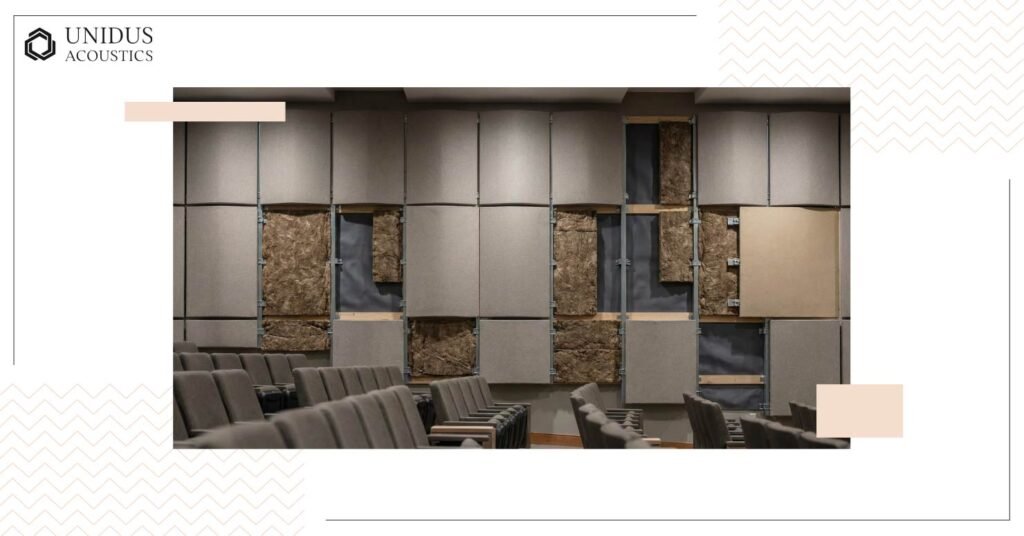
Surface-mounted systems require different fixings than construction-phase installations. Product options suited to retrofit applications tend to sit at higher price points. The degree of cost difference varies by project and specification, but the direction is consistent: post-occupancy acoustic treatment costs more than the same treatment during construction.
Disruption Costs
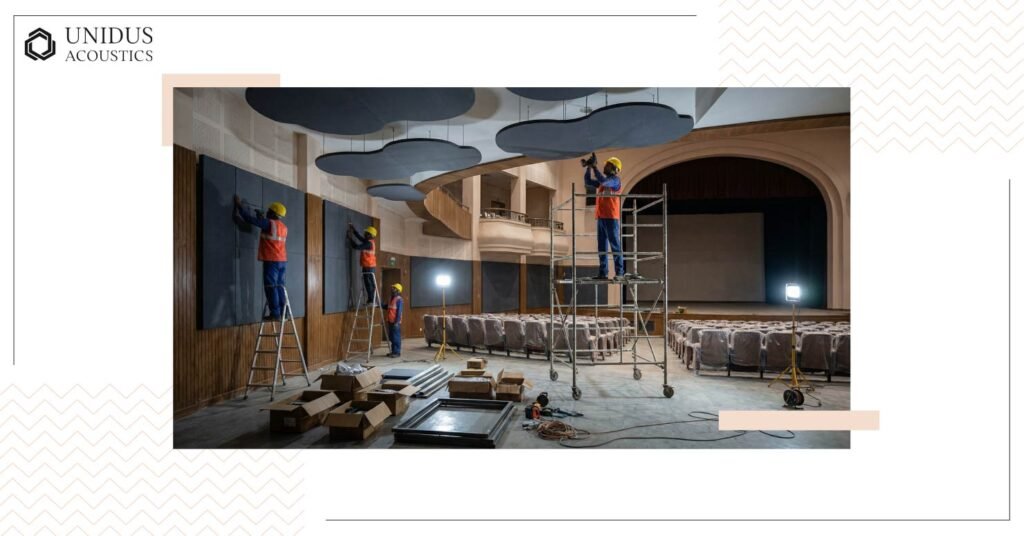
Furniture has to be protected or moved. Work schedules have to accommodate installation teams. After-hours installation carries a premium. Phased scheduling adds coordination complexity. None of these costs exists during initial construction. And when retrofits don’t fully integrate with the design intent, spaces sometimes get renovated again within a few years, turning one investment into two.
What Early Acoustic Planning Actually Allows
The design argument for early planning is perhaps more compelling than the financial one, particularly for architects and designers working on projects where aesthetics matter as much as performance.
Material Palette Integration
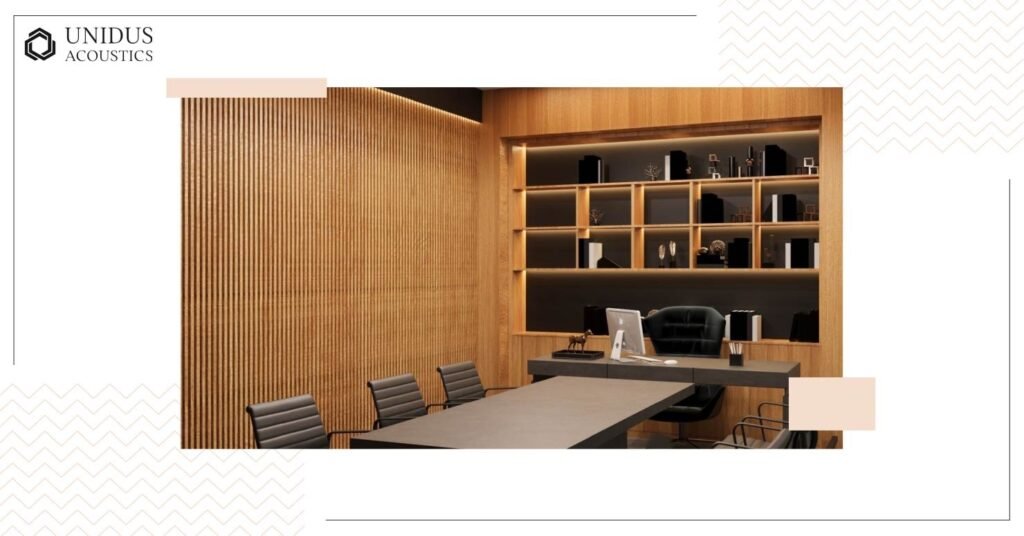
When acoustics are planned at the design stage, panels can be specified in custom colours and finishes that extend the interior scheme rather than interrupting it. Wood acoustic slat panels can continue a ceiling design language to the walls. Perforated metal systems can align with industrial or contemporary aesthetics. Unidus Acoustics’ U-TONE Acoustic Baffles and ceiling clouds, for instance, are available in custom shapes, sizes, and colours that can only be fully leveraged when they’re part of the original design intent.
Targeted Performance Placement
Integrated planning allows treatment to go where it will do the most work. Rear walls in auditoriums get optimal treatment during construction. Upper wall zones in restaurants receive integrated treatment as part of the fit-out. The acoustic solution becomes part of the architecture rather than an addition to it.
What This Means for Design Projects
For architects and interior designers specifying acoustic solutions in new projects, the practical implication is straightforward: the earlier acoustics enter the conversation, the more options are on the table.
This isn’t about adding acoustic consultancy to the project scope. It’s about having a supplier involved early enough to provide product options, NRC ratings, and material specifications that feed into the design process before material selections are locked. Vendor coordination is where acoustic specifications most often get complicated on projects where they’ve been left late: products that don’t deliver on promised customisation, lead times that push past construction schedules, and specifications that don’t match what arrives on site.
We’ve seen this pattern on projects across office, hospitality, and institutional spaces. When we’re involved at the material selection stage, the acoustic solution fits the design intent and the timeline. When we come in later, it has to fit around everything already decided.
Conclusion: When to Use Acoustic Retrofits, and When Not To
Acoustic retrofits will always have a role. Buildings get repurposed, problems emerge in older facilities, and organisations relocate into existing spaces. Retrofits solve real problems in these situations.
For new construction and major renovations, the case for integrated acoustic planning goes beyond cost. It’s about what’s possible: better performance, genuine design integration, and no disruption to occupants during installation.
At Unidus Acoustics, we’ve spent 40 years working on both retrofit projects and integrated acoustic design across offices, auditoriums, hospitality spaces, and institutional buildings. For retrofit situations, we provide effective solutions within existing constraints. For new projects, early collaboration means acoustic wall panels, ceiling systems, and custom solutions that enhance your design intent rather than work around it.
Working on a project where acoustics will matter? Connect with us now. We’ll provide product recommendations, NRC ratings, and fire certificates that fit your technical specifications and design intent.