Open-plan offices promised collaboration. What they often delivered was noise, distraction, and a constant scramble for private space. Now, two products keep coming up in commercial project briefs: phone booths and meeting pods. They look similar from across a floor plate, but they solve different problems, and specifying the wrong one tends to surface fast in post-occupancy feedback.
This piece breaks down the distinction, outlines where each solution performs best, and covers what to verify when evaluating options for a project.
Understanding the Difference
Both product categories are enclosed, freestanding acoustic spaces. Both reduce ambient noise and create physical separation from an open floor. The confusion is understandable. But the design intent, occupancy capacity, and spatial footprint are different enough that treating them as interchangeable leads to problems.
Phone Booths
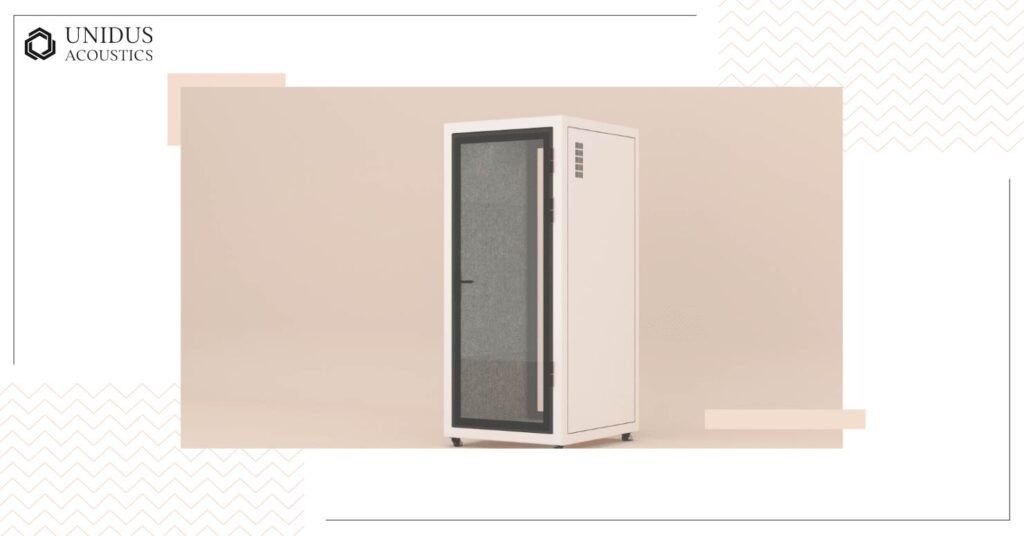
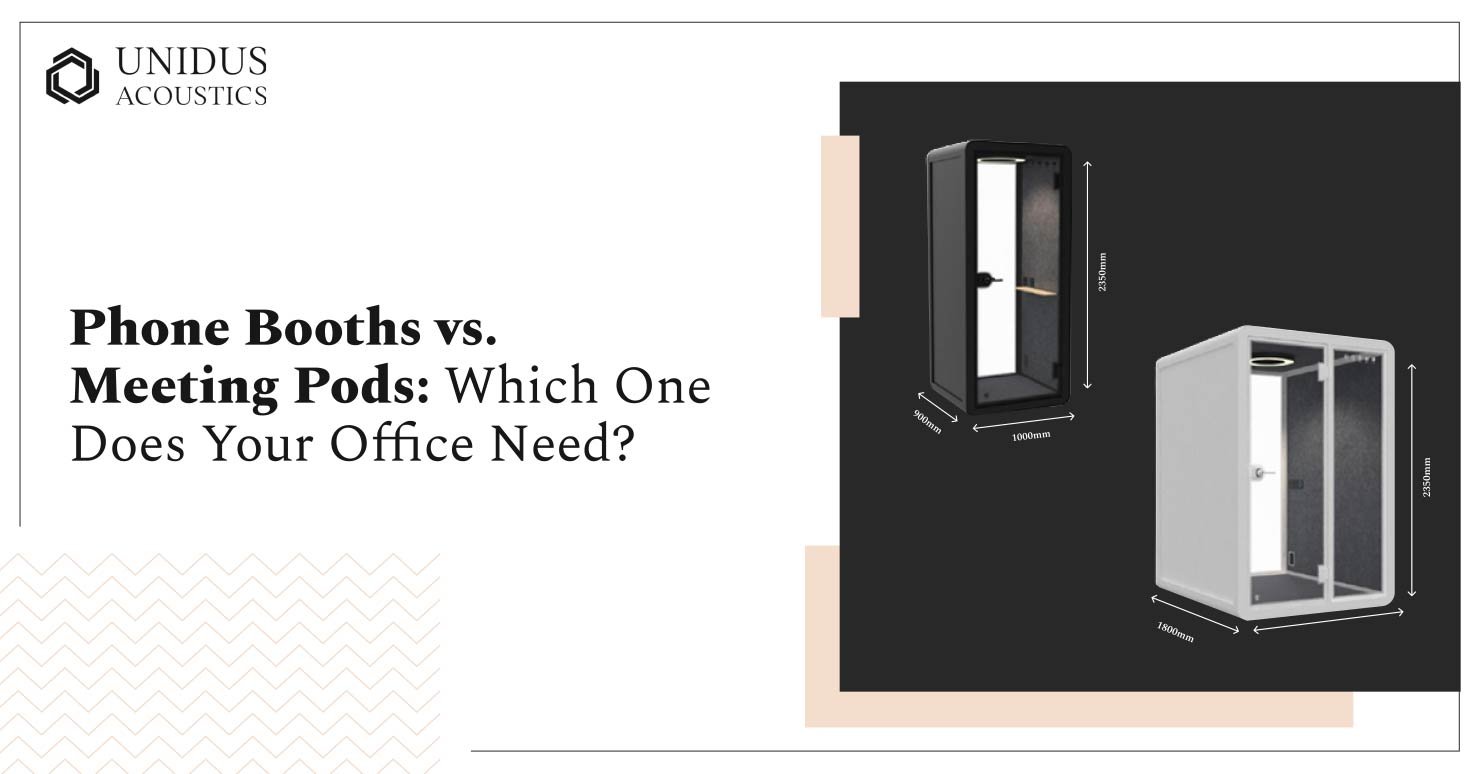
A phone booth, sometimes called an acoustic phone booth, quick call booth, or soundproof booth, is a single-occupancy enclosure designed for short-duration, focused tasks: private calls, one-on-one video meetings, or a block of concentrated work away from the desk. The footprint is compact. Typical outer dimensions sit around 1000 x 1200mm, which means it can slot into corridors, underused corners, and transitional zones without significantly affecting the surrounding floor layout. The user steps in, takes the call, and steps out. In practice, it functions as a pressure valve for the open plan.
Meeting Pods
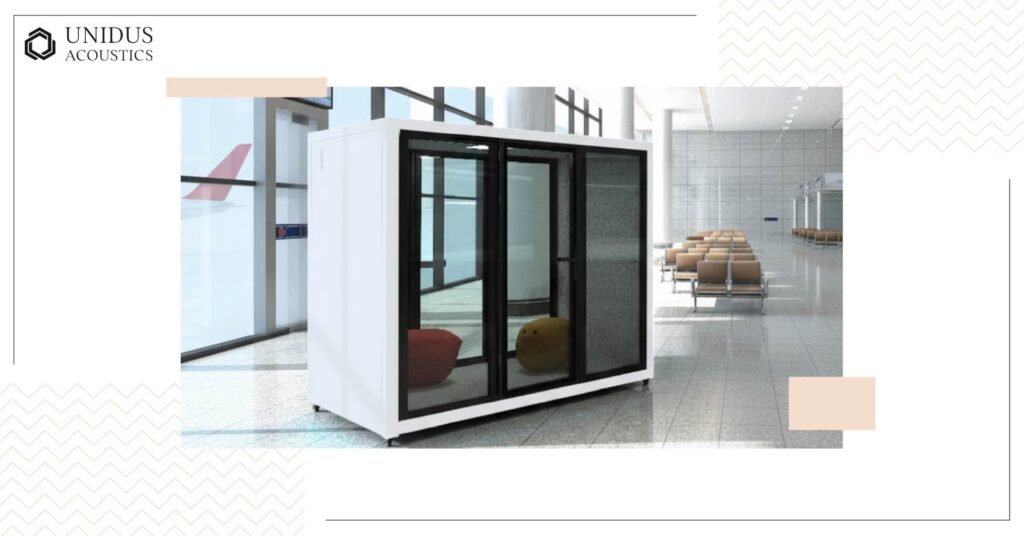
Meeting pods are multi-occupancy enclosures built for small-group collaboration: team syncs, informal client conversations, or cross-functional catch-ups that are too private for an open desk but too small to justify booking a conference room. A pod designed for four to six people carries a much larger footprint (around 2200mm wide) and needs to be positioned with deliberate intent within the floor plan. The acoustic objective also shifts. It’s not about blocking ambient noise for one individual; it’s about containing conversation within a group while preventing that conversation from disrupting the surrounding workspace.
Acoustic pods of this type are increasingly showing up in corporate project briefs, particularly as hybrid work changes how smaller groups use office space.
When a Phone Booth Makes More Sense
The right choice often comes down to how the space is actually being used and what user behaviours are causing friction on the floor.
High Call Volume, Open Layout
If the brief involves a large open-plan floor where a significant portion of staff are regularly on calls, whether that’s a sales team or a consulting practice, phone booths tend to deliver more coverage per square metre. One unit placed strategically can serve multiple nearby workstations without carving into the floor plate.
Space Constraints
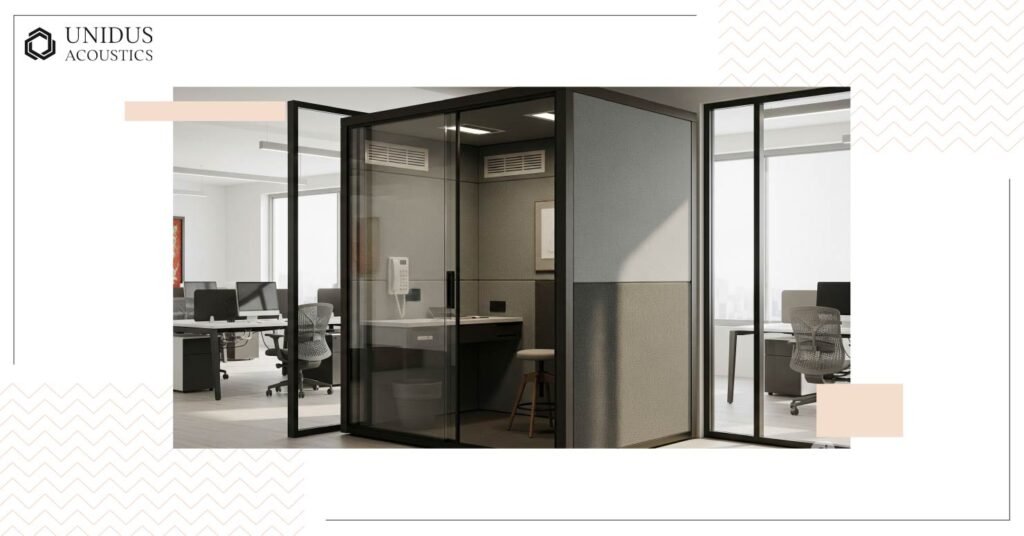
When the project doesn’t have room for a dedicated enclosed meeting roombut still needs to offer acoustic privacy, a phone booth is far easier to accommodate. The smaller footprint and lighter weight of a phone booth (around 340kg for a single-occupancy unit) mean fewer structural considerations at the specification stage. A meeting pod designed for four to six occupants weighs closer to 530kg and needs deliberate placement planning, particularly in existing fit-outs. That difference is worth flagging to the client early.
When a Meeting Pod Works Better
Meeting pods address a different problem entirely. The use cases below cover where they consistently outperform a single-occupancy booth.
Small-Group Collaboration
The shift toward hybrid work has changed how smaller groups use the office. Spontaneous catch-ups, quick cross-functional syncs, and calls that involve two or three people don’t belong in a large conference room, but they can’t realistically happen at an open desk. A soundproof office pod designed for four to six occupants gives those groups a contained, acoustically separated space without the overhead of booking a full room, and without bleeding conversation into the open floor.
Spaces Designed for Flexibility
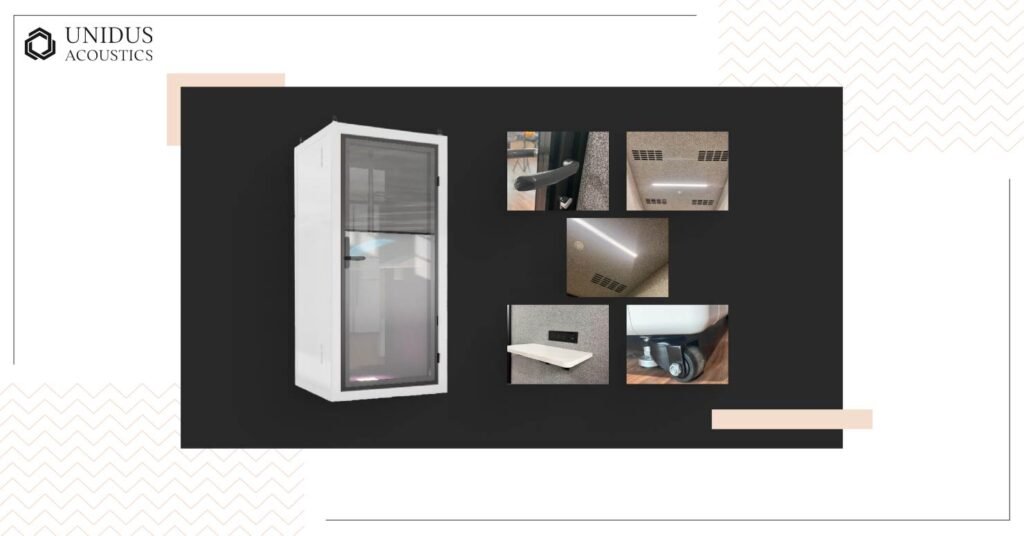
Meeting pods work particularly well in co-working environments, innovation hubs, and large corporate campuses where usage patterns shift throughout the day. The wheeled base on most quality pods means the configuration can be adjusted as needs evolve. That kind of flexibility is something a partitioned room can never offer, and clients increasingly ask for it.
Once the right product type is identified, the next question is what to evaluate at the product level. Not all booths and pods are built to the same standard, and a few specification points tend to separate the well-performing units from the ones that generate complaints within weeks of installation.
What to Check When Specifying Either
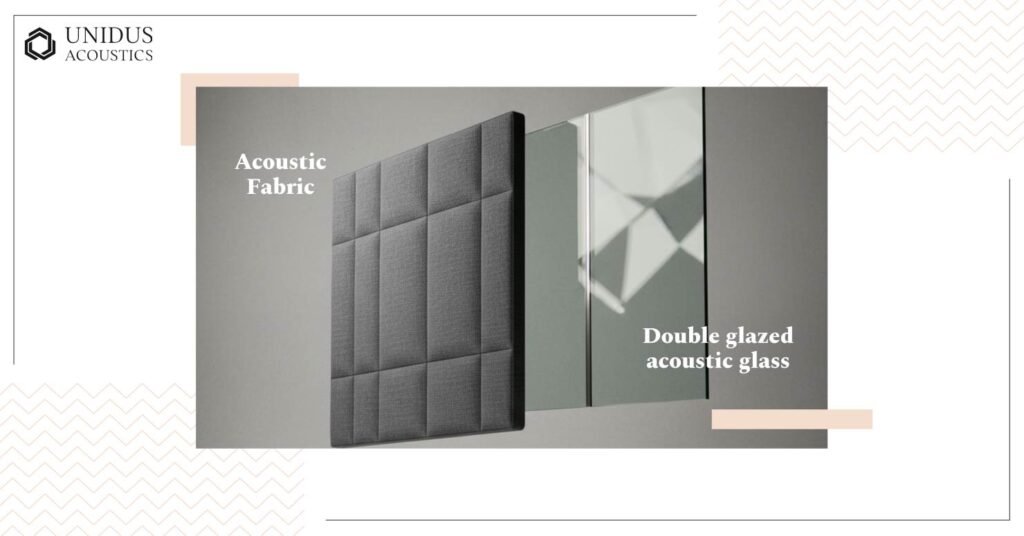
Glass type matters more than most product catalogues suggest. Double-tempered glass on both sides, as opposed to a single panel, makes a noticeable difference in both sound attenuation and visual privacy.
Ventilation is another point worth confirming early. A UL-certified fan with multiple ventilation modes keeps the enclosure comfortable during extended sessions. Poor airflow is consistently one of the most common user complaints about enclosed pods, and it’s an easy thing to overlook at the specification stage.
Power access (standard outlets and USB) should be built in rather than added after the fact. Sensor-based lighting that activates on entry is a small detail, but it genuinely affects day-to-day usability in ways that become obvious quickly.
Colour and finish should be aligned with the broader interior palette before specifications are locked. Confirming available options with the supplier early avoids last-minute procurement surprises.
How Unidus Acoustics Approaches This
With 40 years of expertise in commercial acoustic solutions and a presence across 16 cities in India, Unidus Acoustics supplies both phone booths and meeting pods through the UNIPOD range.
The UNIPOD AS1 is the single-occupancy quick call booth, with an outer frame of 1000 x 1200 x 2300mm. The wall construction uses a cavity structure with composite material and film veneer for sound isolation. It includes sensor-based lighting, a UL-certified fan, universal sockets with USB, and double-tempered glazing. Available in white and black.
The UNIPOD AL1 is the team-facing option, a Meetup Zone Pod for four to six occupants, with an outer frame of 2200 x 1600 x 2300mm. The same build quality carries through: double-glazed tempered glass, a multi-way ventilation system, and sound-absorbing ceiling and wall interiors.
If you’re specifying either product for an upcoming project, the Unidus Acoustics team can share technical documentation, NRC data, and product specifications to support your tender or client submission. Contact us now!