Government projects sit in a different category of work altogether. The scopes are often large, the timelines are rigid, and the procurement process means documentation isn’t a nice-to-have. It’s the entry ticket. When it comes to acoustics, this is the one area where getting the right consultancy support determines whether the post-installation experience is smooth or becomes someone else’s problem to fix.
This article is for architects and design-build teams who either work on government contracts regularly or are beginning to, and want to sharpen how they handle acoustic consultancy on these projects.
Why Government Spaces Present Unique Acoustic Challenges
Most acoustic challenges in commercial spaces follow a fairly predictable brief. Open offices, boardrooms, hospitality spaces: the problems are well-documented and the solutions relatively straightforward to specify.
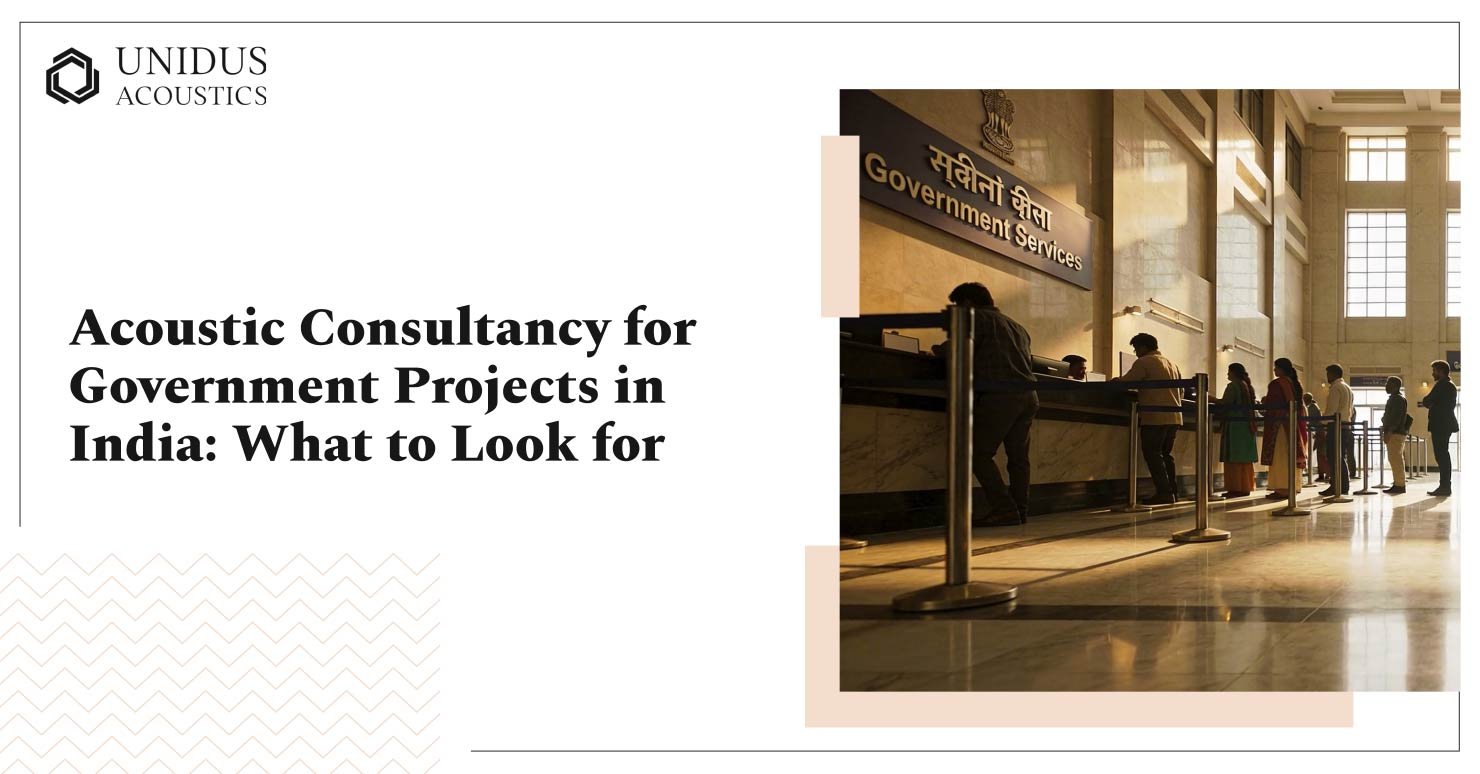
Government spaces are a different matter. An auditorium in a state secretariat, a multi-purpose hall in a government college, a conference facility inside a ministry building, a public-use healthcare block: each of these has its own acoustic demands, and very few of them resemble the environments that standard acoustic product catalogues are designed around.
Volume, Geometry, and Hard Finishes
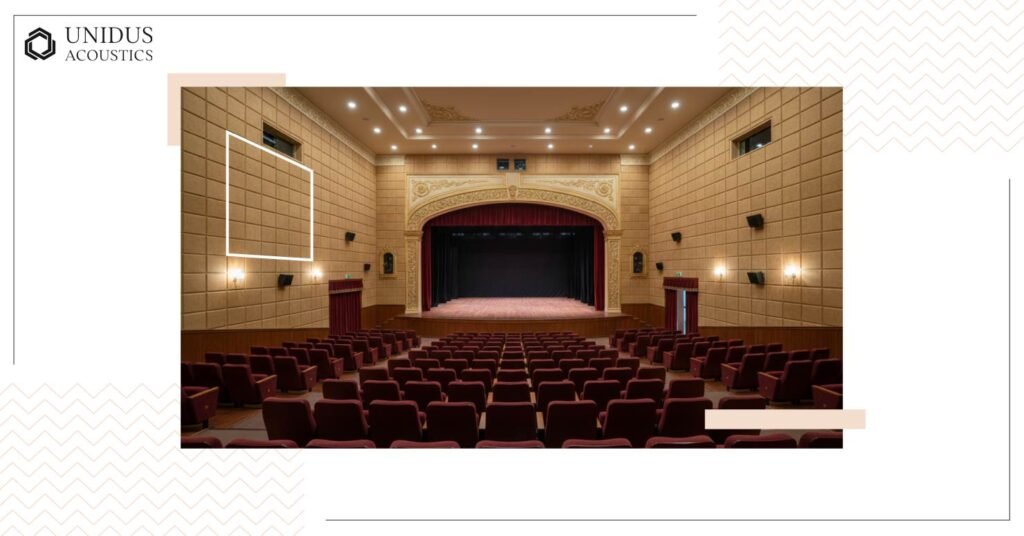
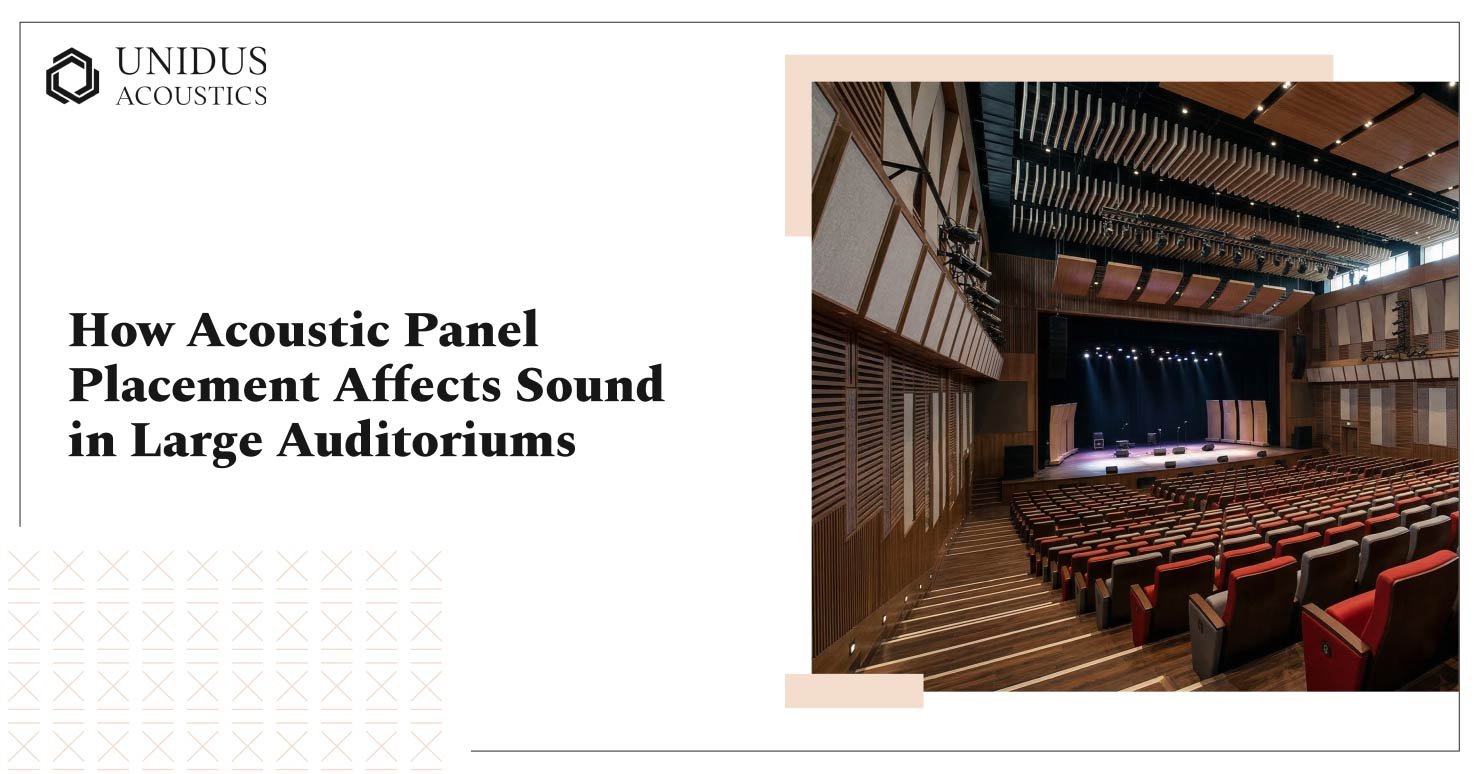
Large government auditoriums and ceremonial halls almost always feature high ceilings, hard surface finishes (stone, marble, exposed concrete), and seating configurations that push audience capacity well beyond what you’d encounter in a typical corporate setting. In these conditions, reverberation builds fast. Speech clarity suffers even when the PA system is good. Solutions like ceiling baffles, acoustic clouds, and fabric-wrapped wall panels are commonly specified for these environments, precisely because they can be installed without structural changes to the hall.
The problem isn’t the equipment. It’s the room. Good acoustic consultancy for government projects should identify this early, well before the interior specification is locked and certainly before procurement begins.
Compliance and Documentation Requirements
Government tenders carry specification requirements that private projects often don’t. Fire safety ratings, approved material lists, performance test reports, and empanelled vendor status: these sit inside the evaluation criteria, not outside it. Smaller or less experienced acoustic suppliers often don’t carry this documentation at all, or produce it only on request, which introduces delays at the worst possible stage of procurement. A consultancy partner who can’t deliver this on time creates a gap that the architect typically absorbs, regardless of whose scope it falls under.
What Good Acoustic Consultancy Looks Like on Government Projects
There’s a meaningful difference between acoustic consultancy that’s technically competent and one that actually works within the constraints of a government project. The better partners understand both.
1. Site Assessment Before Specification
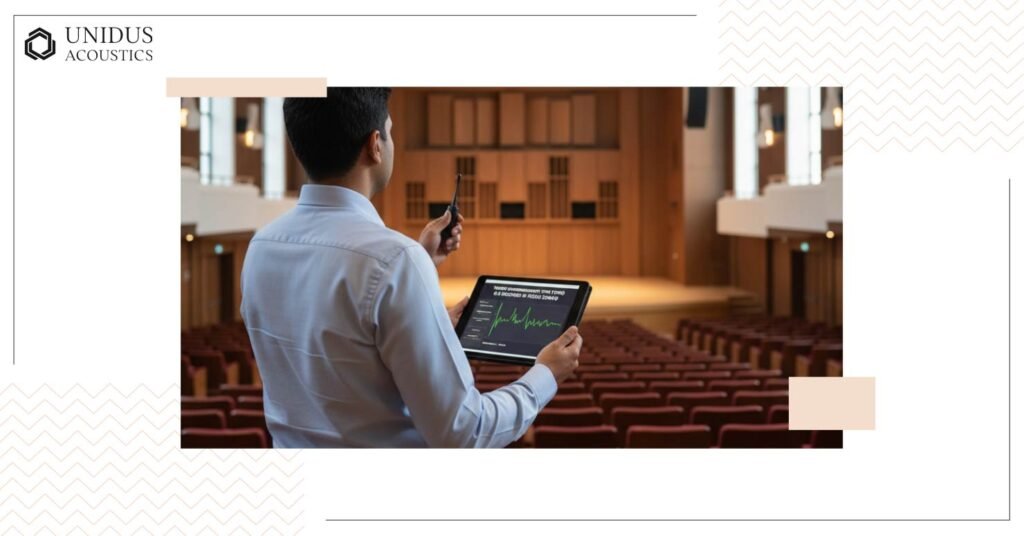
One of the more consistent problems on government projects is that acoustic solutions get added to a tender based on assumptions rather than a proper reading of the space. The actual geometry, the surface materials already in the design, the occupancy patterns during peak use: all of these affect what will work and what won’t. A consultancy partner who offers on-site assessment before finalising any specification will almost always deliver better outcomes than one working purely off drawings.
2. Technical Output That Procurement Can Actually Use
A good acoustic consultancy brief for a government project should do a few things. It should identify the primary challenge for each distinct space type, recommend solutions proportionate to the budget and scope, and specify products clearly enough that procurement can happen without ambiguity. What it shouldn’t do is produce a dense technical document that no one on the client side can evaluate.
The output needs to be usable: space-by-space recommendations, material specifications with viable alternatives, and NRC ratings or equivalent performance data formatted for a tender evaluation.
3. Specification Support That Goes into the Tender

For government work specifically, an acoustic partner who can prepare tender-ready documentation is worth the effort to find. This means product datasheets, fire safety certificates, NRC test reports, and, where required, documentation of vendor empanelment with relevant departments.
Someone in the project team needs to own this task. Leaving it until the final procurement stage is where government projects most commonly run into delays.
What to Ask a Potential Acoustic Consultancy Partner
If you’re evaluating acoustic consultancy support for an upcoming government project, a few direct questions will quickly tell you whether a partner is suited to this kind of work.
- Ask for examples of similar projects: auditoriums, multi-purpose halls, or institutional spaces where they’ve provided both acoustic design and documentation support.
- Ask what testing certifications their recommended products carry.
- Ask whether they’ve worked with government procurement processes before and what that experience looks like in practice.
It’s also worth asking whether they remain involved during installation. Government projects can have long gaps between design approval and on-site execution. A partner who shows up at specification stage and then disappears creates a different kind of problem when the contractor has questions on site.
Matching Product Capabilities to What Government Briefs Actually Require
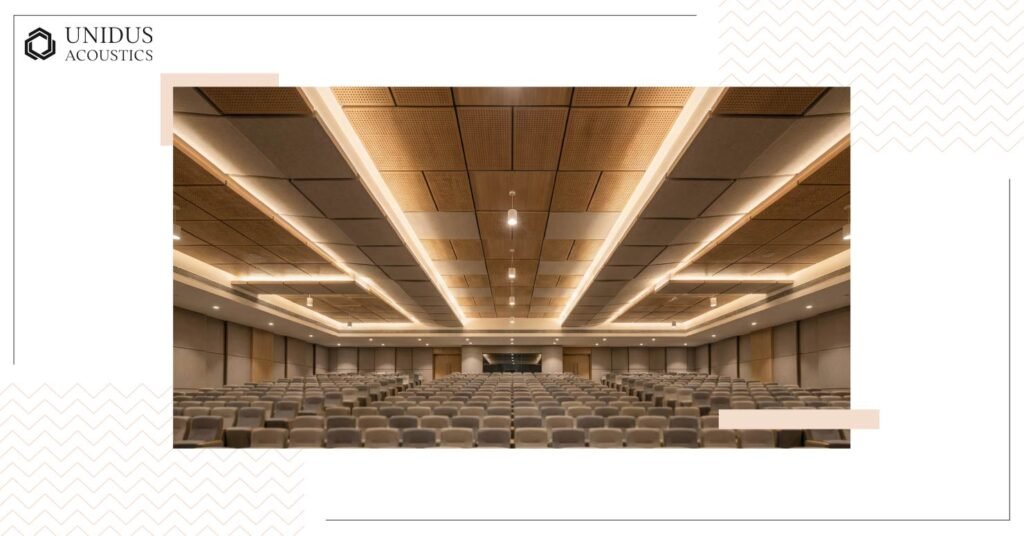
A frustration that comes up often among architects working on institutional projects is finding acoustic products that meet the technical requirements of a government brief but also sit well within the design language of the space. Standard catalogue options tend to fall short here: limited material finishes, a narrow range of colours, or missing certifications that the tender demands.
Working with manufacturers who carry both consultancy capability and custom fabrication gives architects a way around this. You’re specifying what the space needs rather than adjusting the design to fit whatever the product catalogue allows. Unidus Acoustics’ U-TONE range, which includes acoustic baffles, wall panels, ceiling clouds, and metal baffles, is available in customised finishes and configurations, so the specification doesn’t have to compromise on either compliance or design.
Early Planning, Right Partner: How Government Acoustic Projects Come Together
Getting acoustic consultancy right on government projects comes down to two things: starting early and choosing the right partner. Projects that come together smoothly on the acoustic side are usually the ones where acoustic thinking entered the brief before finishes were locked. When the documentation requirements of the tender are understood early, and the right partner is in place before procurement begins, the post-installation experience is considerably less complicated.
Unidus Acoustics provides acoustic solutions and documentation support tailored to government and institutional project requirements. This covers fire safety compliance certificates, NRC test reports, and product specifications formatted for tender submissions.
We’ve worked alongside design teams on projects for institutions, with a presence across 16 cities and 40 years of expertise in acoustic solutions. We maintain empanelled vendor status with government departments across India.
If you’re working on a government project where acoustics are part of the scope, we can provide product recommendations, technical specifications, and documentation support tailored to your brief.
Get in touch with us. Share your project layout, and we’ll suggest product options that fit your design intent and tender requirements.