A space can look exceptional on paper and still fall apart the moment people begin using it. Architects know this problem well. Conversations bleed across rooms, meetings feel strained, and speech gets lost in echo. In most cases, the culprit isn’t poor design but acoustic panels that were never properly specified from the start.
With 40 years of expertise, Unidus Acoustics has seen this pattern repeat across offices, educational institutions, hospitality projects, and public buildings. At Unidus Acoustics, we’ve refined a systematic approach to acoustic specification that helps architects and designers turn noise into harmony through custom solutions that integrate seamlessly with their vision.
This guide walks you through that process step by step, from diagnosing the real problem to selecting the right materials and placement strategies that deliver measurable results.
Understanding the Acoustic Problem Before Specifying Panels
Before specifying any acoustic panels, it is essential to understand what is actually going wrong in the space. Different acoustic problems require very different solutions, and misdiagnosis is one of the most common (and costly) mistakes we encounter.
Identify the Primary Noise Issue
Start by defining the core problem you are trying to solve. Ask yourself:
- Is external noise entering the space from traffic, adjacent offices, or mechanical rooms?
- Is internal echo or reverberation making speech unclear?
- Is there a lack of privacy between meeting rooms or work areas?
- Is constant background noise affecting focus and productivity?
Each of these issues points to a different acoustic strategy.
For example, we have seen corporate offices invest heavily in absorption panels when the real issue was external noise transmission. The result was wasted investment, unresolved complaints, and growing frustration among stakeholders. A correct diagnosis from the outset prevents these issues, saving both time and money.
Measure Existing Acoustic Conditions

Once the problem is clear, assess the current acoustic performance of the space:
- Measure the room’s reverberation time (RT60).
- Note where the echo is most noticeable.
- Identify dominant noise sources and frequencies.
Reverberation time measures how long sound takes to decay by 60 decibels after the source stops. It’s a key indicator of acoustic comfort. Typical targets include:
- Offices: 0.6–0.8 seconds
- Retail spaces: 0.8–1.2 seconds
- Restaurants: 1.0–1.3 seconds
Once you’ve identified the specific acoustic challenge, the next step is understanding the performance metrics that will guide your specification.
Two Ratings That Drive Acoustic Panel Specifications
Two performance ratings dominate commercial acoustic specifications:
Noise Reduction Coefficient (NRC)
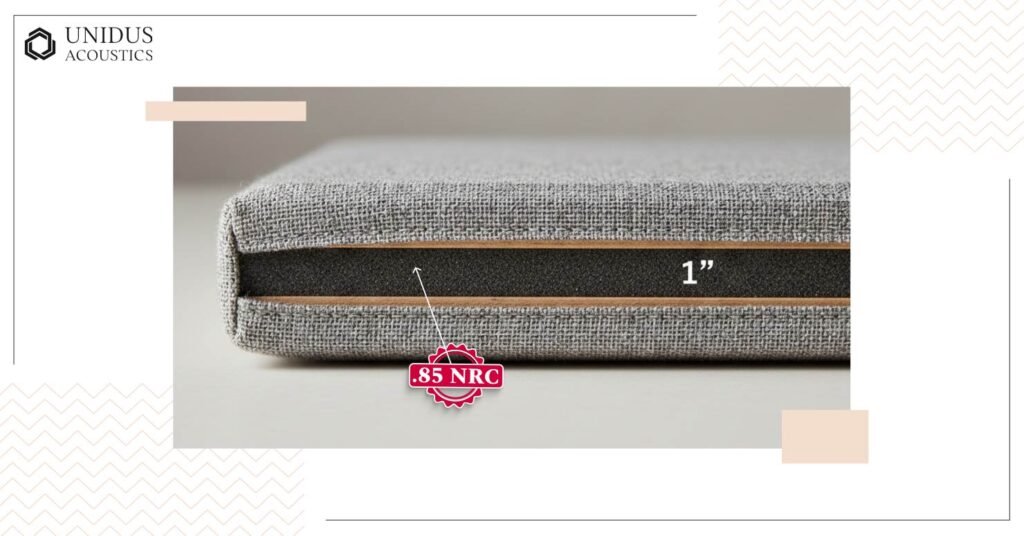
NRC ratio measures how effectively a material absorbs sound within a room. In simple terms, it tells you how much echo and reverberation the surface will reduce.
For most commercial interiors, we recommend panels with an NRC of 0.75 or higher to achieve comfortable speech clarity and reduced reverberation. Our acoustic consultancy team at Unidus helps determine the exact performance targets based on room volume, usage, and occupancy patterns.
In professional environments such as offices, classrooms, and conference rooms, we typically recommend 1-inch panels as a minimum, as this thickness delivers efficient absorption across speech frequencies where clarity matters most.
Sound Transmission Class (STC)
STC measures how effectively a wall or building assembly blocks sound from travelling between spaces. Unlike NRC, STC is about privacy and sound isolation, not in-room comfort.
Typical benchmarks include:
- STC 40–45: Moderate privacy. Raised voices may be heard but are not clearly intelligible. Suitable for standard dividers.
- STC 50–55: High privacy and common building-code requirements for multi-family housing. Loud speech becomes barely audible. Appropriate for hotels, apartments, and sensitive commercial areas.
- STC 60 and above: Excellent sound isolation. Recommended for hospitals, theaters, recording studios, and confidential spaces.
As a rule of thumb, every 10-point increase in STC roughly halves the amount of sound transmitted.
Choosing the Right Material for Acoustic Panels
Material choice affects not only acoustic performance, but also durability, sustainability, maintenance, and visual impact. Below are the most commonly specified materials in commercial projects.
Fabric-Wrapped or Mineral Wool Panels
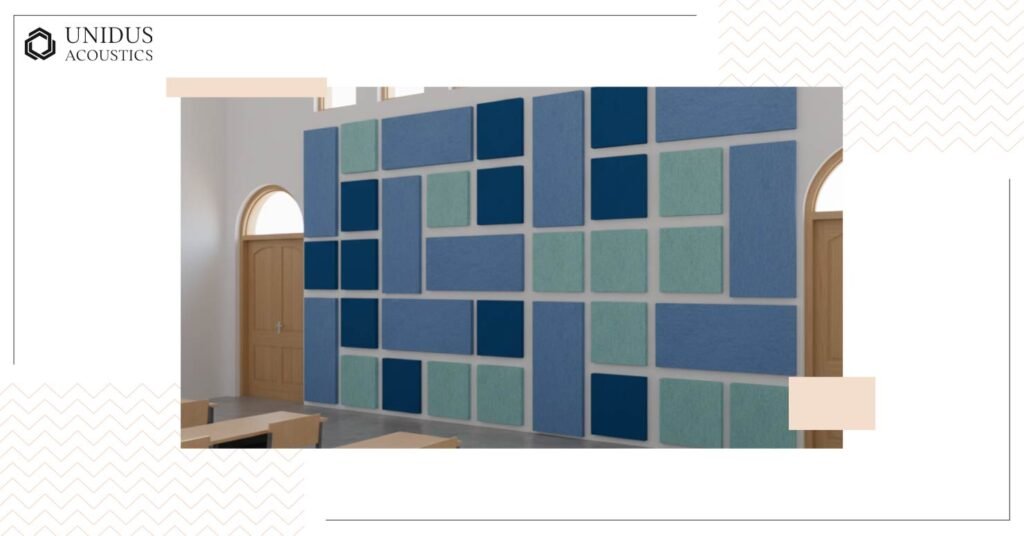
Typical Performance: NRC 0.90–1.00
Fabric-wrapped panels use dense mineral wool or fibreglass cores wrapped in fabric to deliver high, predictable sound absorption.
Best used in: Offices, conference rooms, classrooms, training rooms, and studios.
Unidus offers fabric-wrapped mineral wool panels in custom sizes, colours, and configurations to suit commercial interiors. We have seen these panels transform echo-heavy boardrooms into comfortable meeting spaces within hours of installation.
Recycled PET Polyester Fibre Panels
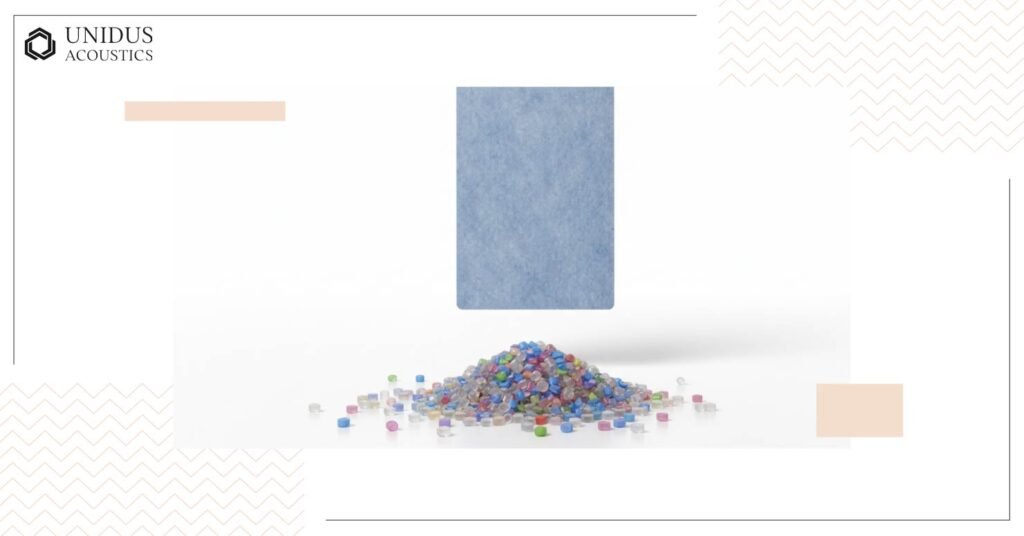
Typical Performance: NRC 0.75–0.90
Recycled PET polyester fibre panels are acoustic panels manufactured from recycled plastic bottles (PET) that absorb sound while offering a lightweight, low-VOC, and environmentally friendly solution for modern commercial interiors.
Best used in: Modern offices, coworking spaces, hospitality environments.
Our recycled PET panels offer architects design flexibility with over 50 colour options and custom shapes, making them ideal where sustainability and aesthetics are equally important.
Wood Wool Acoustic Panels

Typical Performance: NRC 0.55–0.85 (installation dependent)
Wood wool acoustic panels are made from mineral-bonded wood fibres that create a porous structure capable of absorbing sound while maintaining a natural, textured appearance. They offer a balance of acoustic control, durability, and visual warmth, making them suitable for both functional and design-focused spaces.
Best used in: Classrooms, corridors, auditoriums, hospitality spaces, and high-traffic areas.
Perforated Metal or MDF Panels
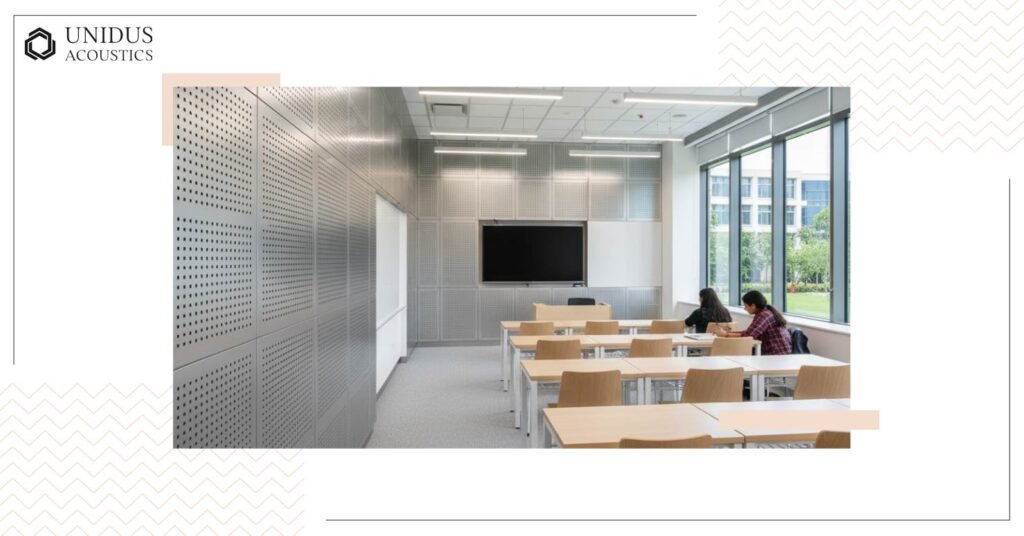
Typical Performance: NRC 0.40–0.75
Perforated panels or MDF panels are rigid acoustic panels with engineered holes that allow sound to pass through to an absorptive layer behind, commonly used in durable or industrial-style commercial environments.
Best used in: Industrial-style offices, transit areas, and corridors requiring robustness.
Acoustic Foam Panels
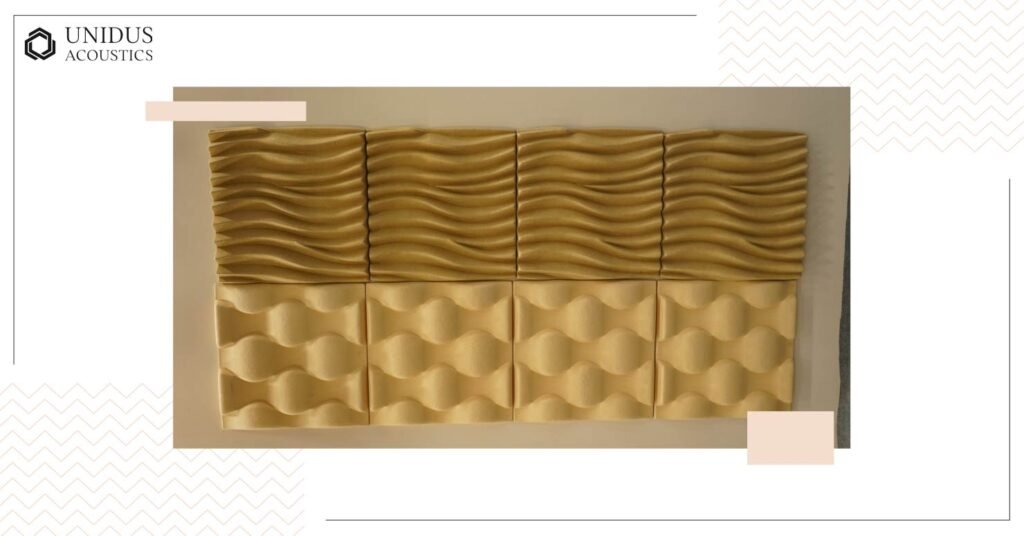
Typical Performance: NRC 0.60–0.80
Acoustic foam panels are lightweight, porous panels designed to absorb mid- to high-frequency sound, typically used for basic acoustic treatment in small rooms, studios, or temporary installations.
Best used in: Small studios, test rooms, or non-public installations.
Based on our experience across thousands of commercial projects, fabric-wrapped mineral wool panels or recycled PET panels usually provide the best balance of performance, durability, and visual flexibility.
Acoustic Panel Placement and Coverage: Getting It Right
Correct panel placement is as important as the panel itself. Even high-performance acoustic panels will underdeliver if they are poorly positioned. For strategic placement:
Identifying Key Reflection Points for Acoustic Panel Placement
Sound reflects off hard surfaces such as walls, ceilings, and glass. Placing panels at primary reflection points reduces echo and improves speech clarity.
In most commercial spaces, there are three critical reflection zones:
- First reflection points: These occur on side walls between the sound source (speakers, voices) and the listener. Treating these areas significantly improves clarity and reduces distracting early reflections.
- Ceiling reflections: Sound often reflects between speakers and listeners via the ceiling. Installing ceiling-mounted panels or ceiling clouds in these zones helps control overall reverberation, especially in open offices and meeting rooms.
- Rear wall reflections: Reflections from walls behind listeners arrive later and can cause echo and speech smear. Treating rear walls is essential in conference rooms, classrooms, and auditoriums.
Professional acoustic designers map these reflection points using software. For simpler projects, the mirror point method works well: place panels where you would see the sound source reflected if the wall or ceiling were a mirror.
Determine the Right Coverage Percentage
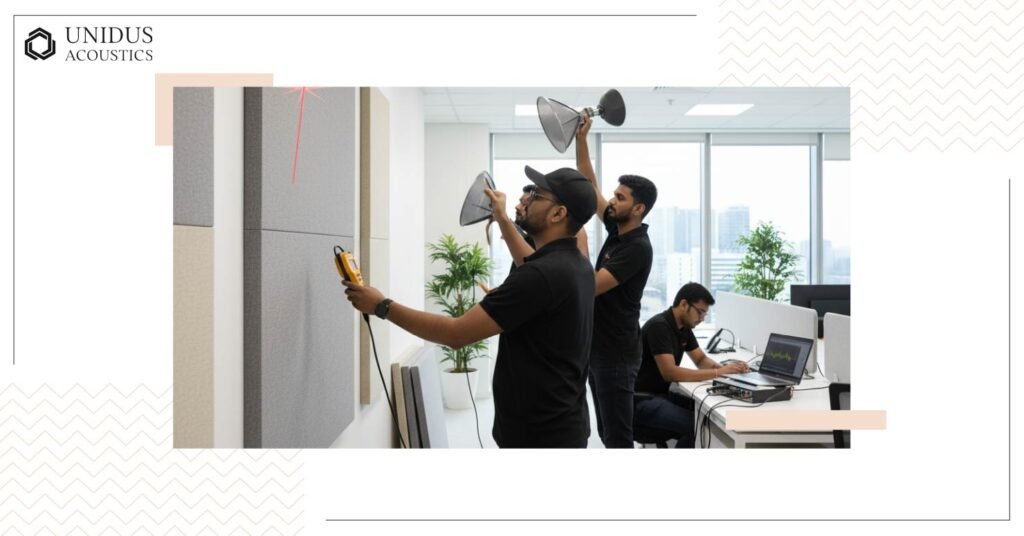
The amount of surface area you treat directly affects acoustic performance. Use coverage targets based on your desired outcome:
- 20–30% coverage: Moderate improvement; suitable for lightly reverberant spaces
- 40–50% coverage: Good acoustic control; appropriate for most offices and meeting rooms
- 60–80% coverage: Excellent control; ideal for call centres, classrooms, and speech-critical spaces
Maintain Acoustic Symmetry
Symmetry plays a key role in consistent acoustic performance. Whenever possible, distribute panels evenly on opposing walls and across the room. In our experience, asymmetrical placement can lead to uneven sound fields, where one side of the room feels quieter or duller than the other.
If symmetry is disrupted by doors, windows, or structural elements, minimise irregular spacing and maintain consistent panel density to preserve balance.
Final Thoughts
Effective acoustic panel specification is not a last-minute addition to a design. It’s a structured, technical process that begins with accurate diagnosis and extends through performance definition and solution selection.
Unidus Acoustics specialises in bespoke acoustic solutions that carefully balance form and function. With over 40 years of expertise and advanced computational design capabilities, we have partnered with architects and designers on thousands of commercial projects across India.
Every project we’ve worked on has its own constraints: budget, timeline, aesthetic direction, building regulations. What doesn’t change is the approach. When acoustic panels are specified correctly from the start, they don’t just perform better. They become part of what makes the space work.
Planning a commercial project? Connect with our acoustic consultancy team today to specify solutions that address your real acoustic challenges and integrate seamlessly with your design vision.