The open-plan office was supposed to solve something. Collaboration, the energy of a shared workspace, and visibility across teams. In many ways, it delivered. But the acoustic side of things? That’s where the problems started piling up.
If you’ve ever handed over an open-plan office and had the client call back a few weeks later about the noise, you know what a gap in office acoustics planning looks like. The noise isn’t just irritating. It interrupts thought, reduces productivity, and degrades the experience of being in that space.
Office acoustics is the discipline of managing sound in a workplace: how it reflects, absorbs, travels, and affects the people inside. Getting office acoustics right in an open-plan environment isn’t about eliminating all noise. It’s about reducing unwanted sound, creating zones of speech privacy, and turning noise into harmony in a space that works as well as it looks.
Office Acoustics: The Two Problems You’re Actually Solving
Most acoustic complaints in open-plan offices fall into two categories: too much echo and too little privacy. Which one you’re facing, or whether it’s both, shapes which solutions make sense.
1. Echo and Reverberation
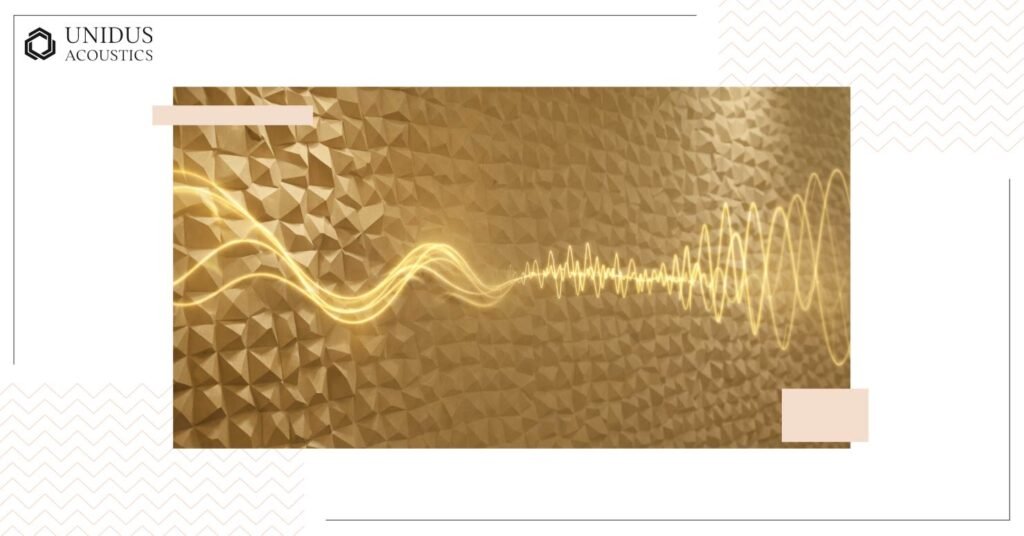
Echo, in common usage, refers to sound lingering longer than expected. Technically, it’s reverberation, the continuation of a sound in a space after the source has stopped. In offices, high reverberation times mean speech intelligibility drops. People have to raise their voices to be understood, which increases the overall noise level, which causes more people to raise their voices. This cycle is sometimes called the Lombard effect, and once it starts in a space, it tends to self-reinforce throughout the working day.
Treatment for this problem focuses on adding sound-absorbing surfaces that reduce how much energy a sound wave retains as it bounces around the room.
2. Speech Privacy
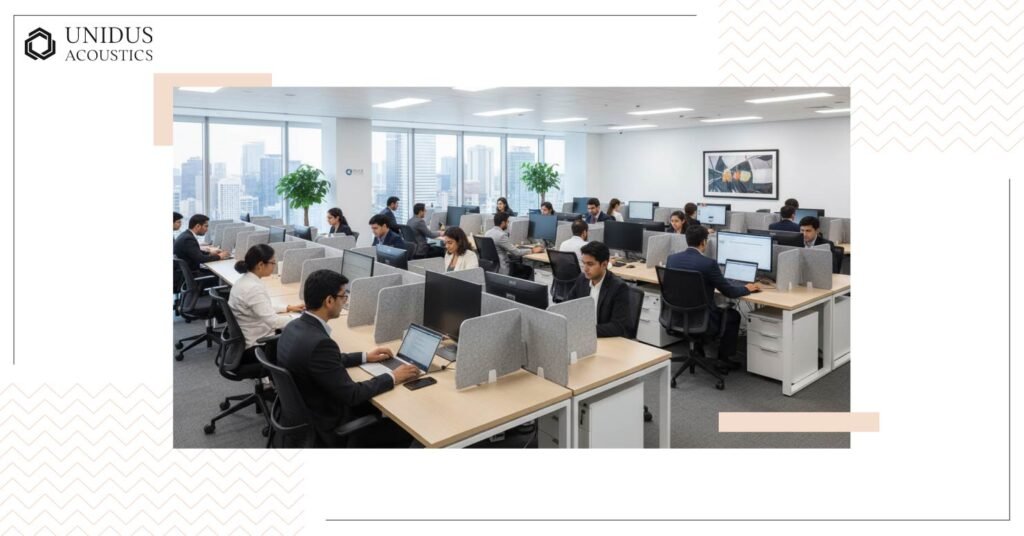
Speech privacy is the flip side. Instead of sound lingering, the problem here is that conversations travel. In an open-plan environment with workstations in close proximity, it’s common for employees to hear each other’s phone calls, client discussions, or sensitive internal conversations clearly.
This is uncomfortable for most users, and in sectors like healthcare, legal services, or financial advisory, it can create genuine compliance concerns. The solution here isn’t just absorption. It involves spatial design, acoustic screens and partitions, and in some cases, sound masking systems that raise the ambient noise floor to a level where speech becomes unintelligible beyond a few metres.
The demand for speech privacy has also intensified with hybrid working. When employees take video calls from open desks, workstations need to contain sound in both directions. Acoustic screens and enclosed pods have shifted from occasional-use features to near-essential infrastructure in most contemporary office builds.
Office Acoustics Solutions That Work in Open-Plan Spaces
The instinct is often to treat walls first. That’s understandable, but it’s rarely the most effective starting point for a large open-plan floor plate.
1. Start with the Ceiling
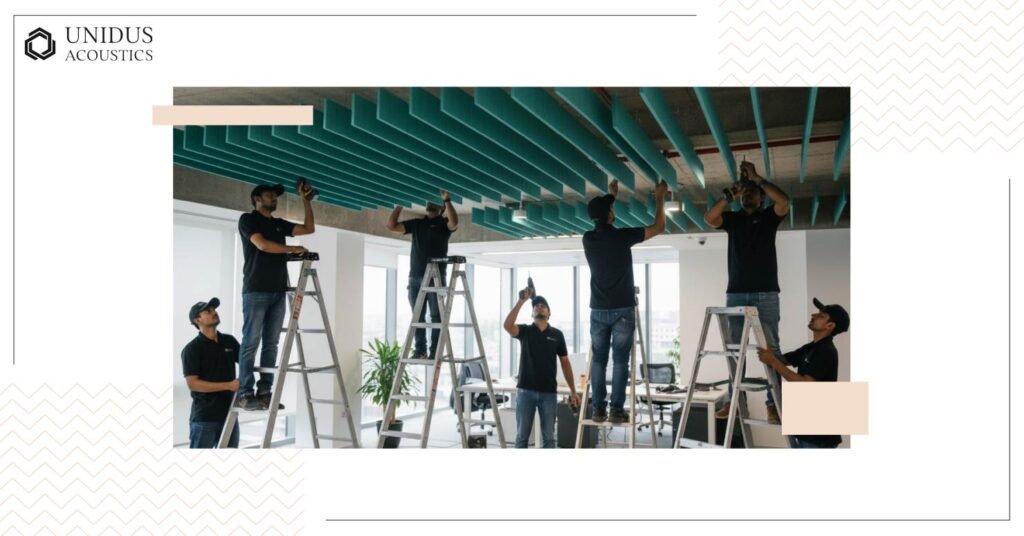
In a large open-plan space, the ceiling is the biggest reflective surface you’re working with. Addressing it delivers the broadest acoustic impact with the least visual interference to the floor plan below.
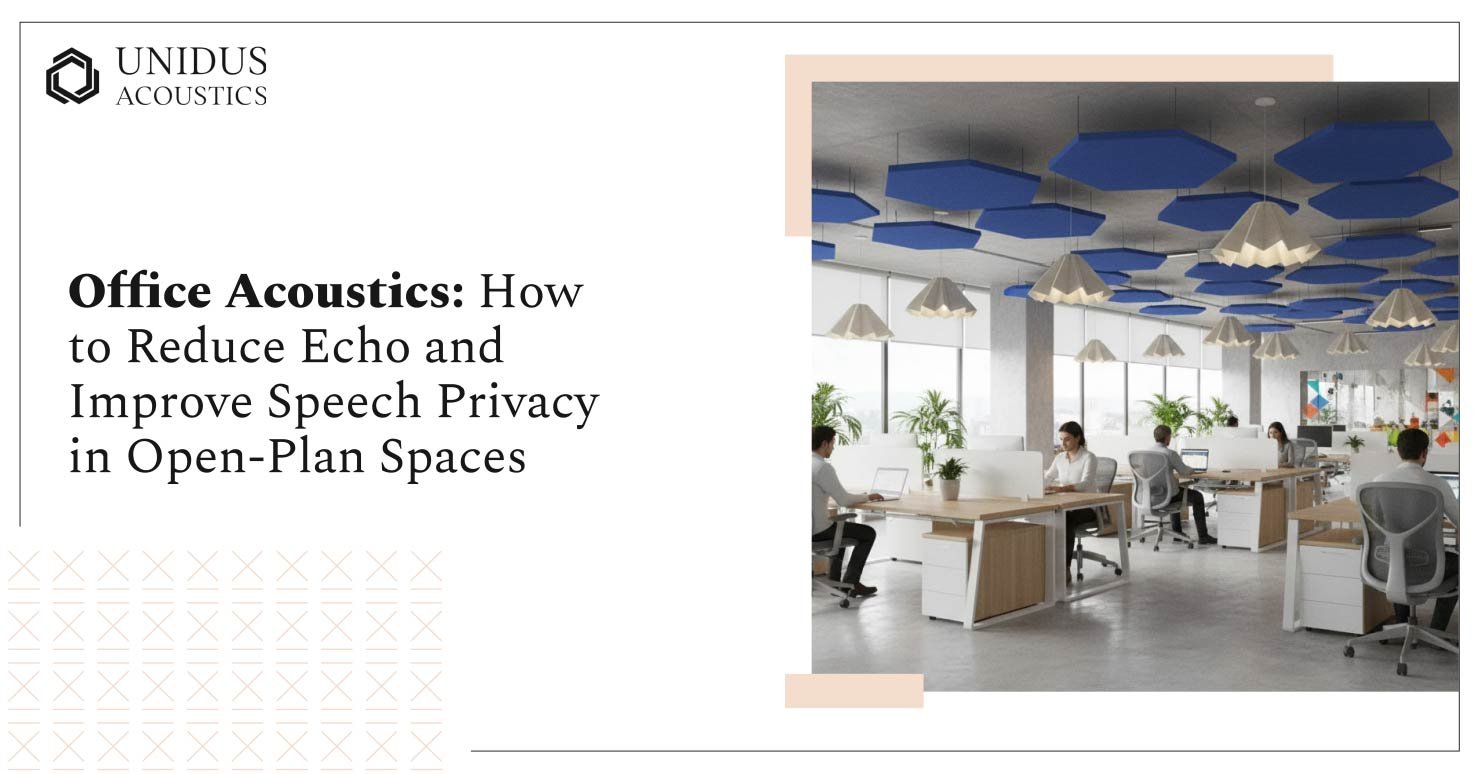
Acoustic ceiling baffles are vertical panels suspended from the ceiling at intervals — particularly effective in high-ceilinged spaces. Because they hang in the air rather than sitting flush against the ceiling surface, they absorb sound from multiple angles simultaneously. Acoustic clouds are a horizontal alternative; these are flat panels suspended at a fixed height, and they work by intercepting sound before it reaches the hard ceiling above them.
For offices with exposed concrete or steel ceilings, baffles and clouds are typically the first recommendation, and they can be specified in a wide range of colours and configurations to complement the interior design direction.
When comparing ceiling products, ask for NRC (Noise Reduction Coefficient) data from your supplier. It gives you a verified measure of absorption, not just a performance claim.
2. Wall Panels for Perimeter and Focal Surfaces
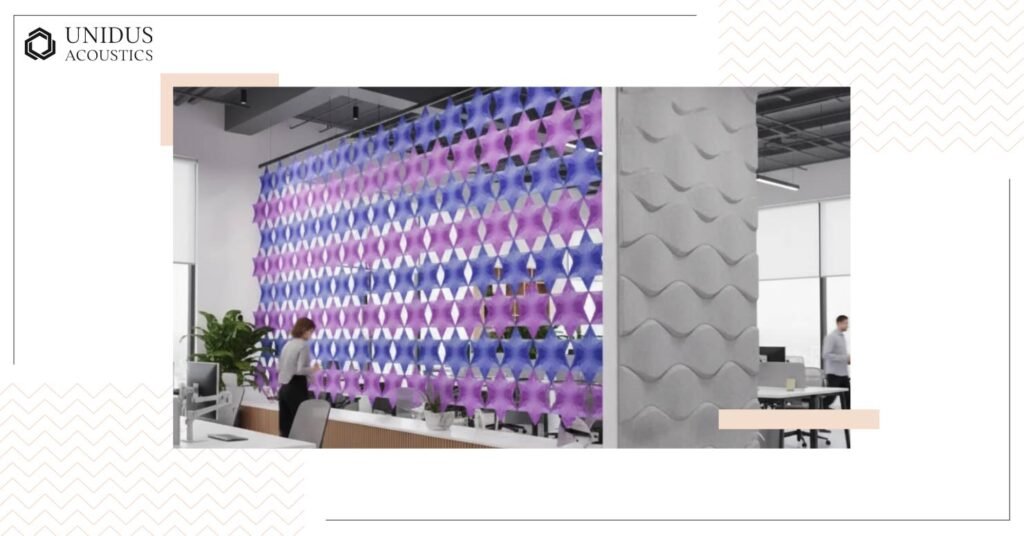
Once the ceiling is addressed, walls become the next priority — particularly the largest and most reflective surfaces. Fabric-wrapped acoustic panels, fluted panels, and grooved panels all provide sound absorption while contributing to the interior aesthetic.
Treating walls that face each other tends to work best, as it addresses the parallel surfaces effect, where sound bounces between two hard walls with almost no energy loss.
Beyond acoustic performance, wall panels are where design intent can come through clearly. This is the part of the acoustic specification where you genuinely have to balance form and function. The panels need to perform, but they also need to belong in the space. Panel shapes, surface textures, and colour selections can all be coordinated with the broader interior scheme, which matters when you’re specifying for corporate clients with strong brand environments.
3. Acoustic Screens and Space Dividers
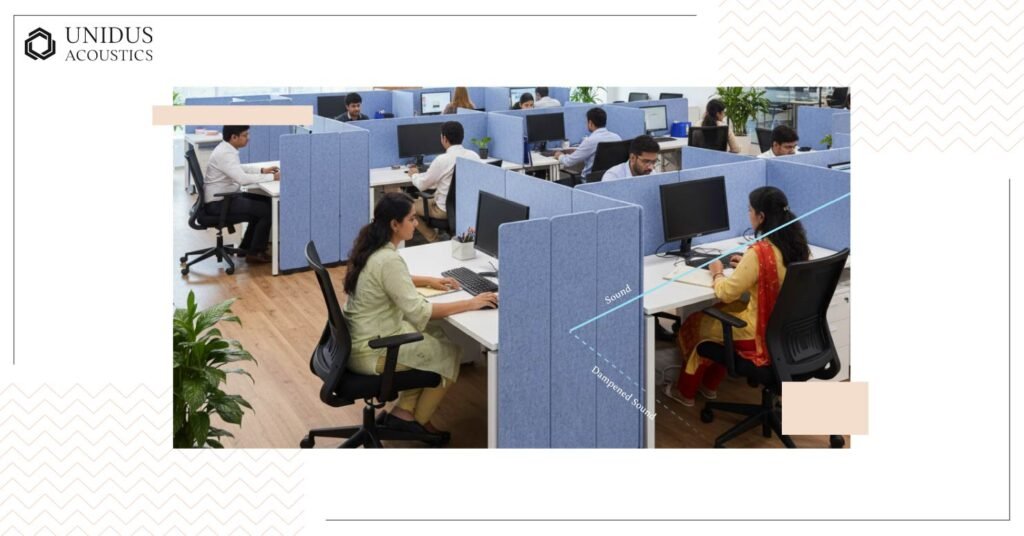
Acoustic screens placed at workstation level serve a different function from ceiling and wall treatment. They don’t significantly reduce overall reverberation in a space, but they create acoustic “shadow zones” that limit how much sound travels between adjacent workstations.
For offices where completely open floor plans are a firm requirement, desk-height screens offer a way to address the speech privacy problem without introducing full partitions. They can be positioned to divide a floor plate into functional zones while preserving sightlines.
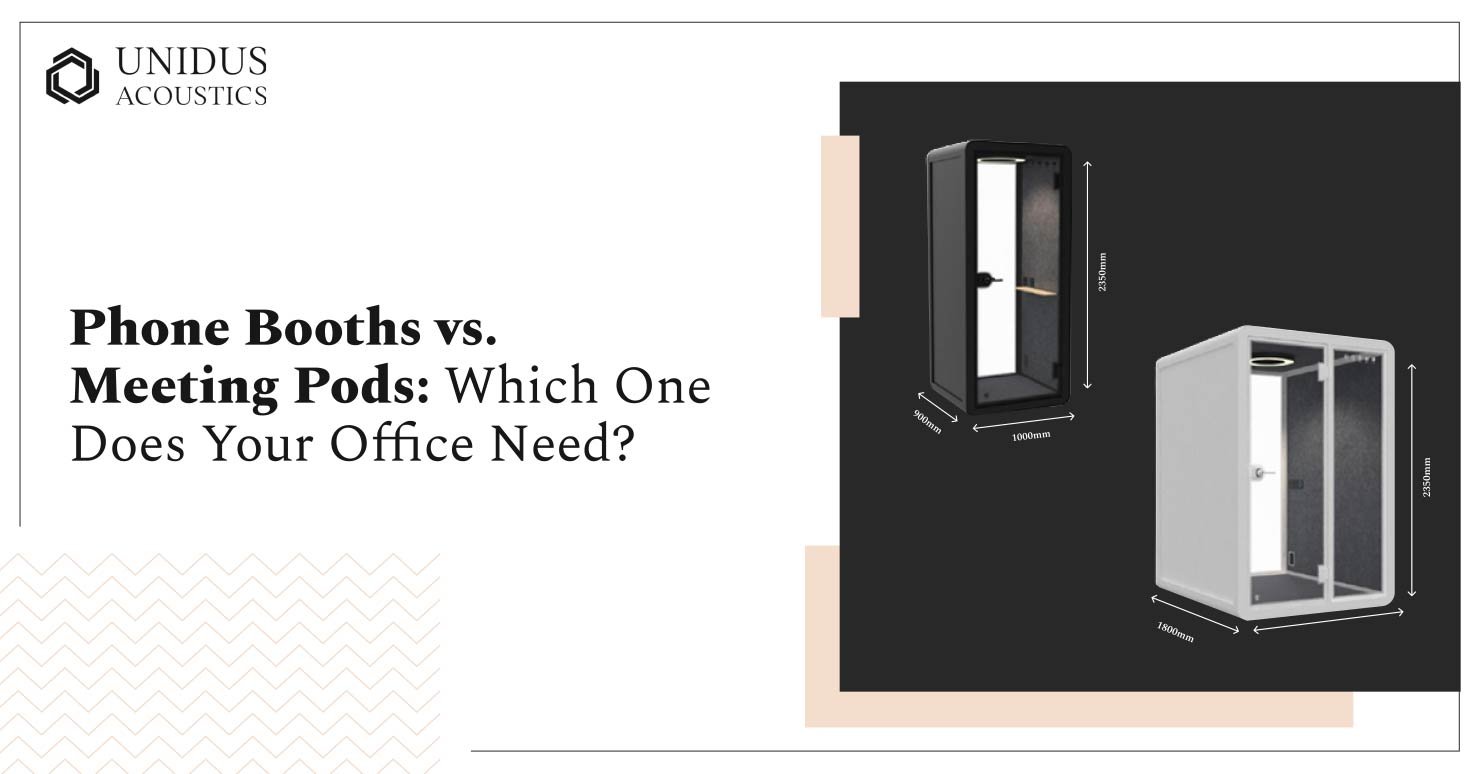
For occasional privacy needs, standalone acoustic pods and phone booths provide enclosed spaces for calls and focused work, without requiring a dedicated room in the floor plan.
Unidus Acoustics’ phone booth and space divider range, for instance, can be configured for either single-occupancy or small-group use, and installed without any civil work or structural modification to the floor plate.
Placement Matters as Much as Product Selection

Good office acoustics depends on placement as much as product choice. Treatment works best when it’s positioned where sound energy is highest: near sound sources and on the surfaces those sources reflect toward. In practice, this means treatment concentrated near meeting areas, collaboration zones, and wherever noise generation is consistently high on the floor plate.
A common outcome in retrofit projects is panels positioned only on the far perimeter walls, well away from where the real acoustic problems are occurring. Panels placed there will have some effect, but significantly less than panels positioned closer to the source.
This is why coordination between acoustic planning and interior design matters from the start. Decisions about workstation layout, meeting area placement, and breakout space locations all influence how much treatment is needed and how complex that coverage has to be.
The Case for Planning Acoustics Early
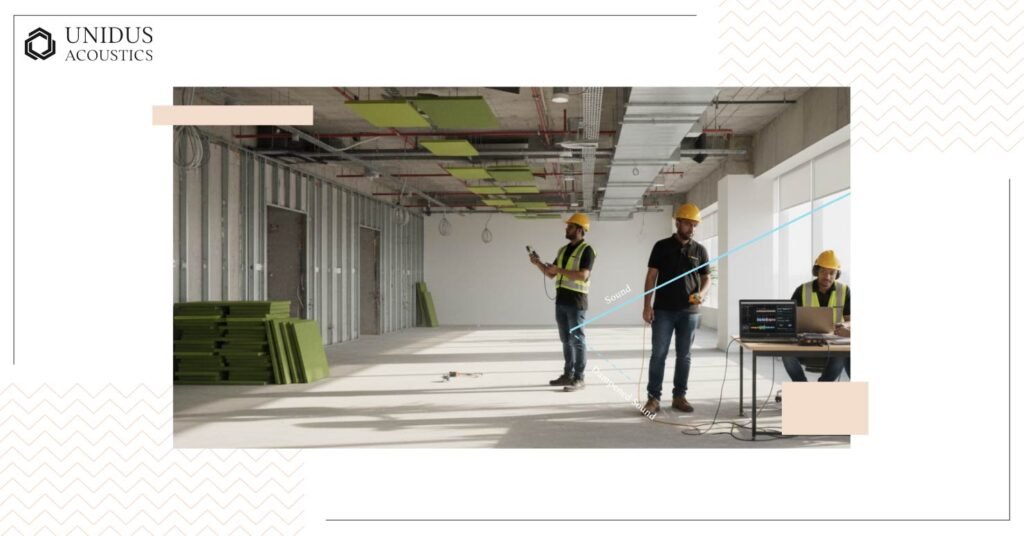
There’s no shortage of office fit-outs where office acoustics were treated as a finishing detail. In many projects, the budget gets absorbed by construction, and acoustic panels get specified late or cut entirely when value engineering conversations happen.
The issue isn’t that acoustic products are expensive. It’s that fixing acoustic problems in a finished space costs more than integrating the same products during the fit-out. Ceiling baffles are easier to install before the ceiling is closed out. Panels requiring structural fixings need far less coordination when the work runs alongside other trades.
Building acoustics into the design brief from the start, treated with the same weight as lighting or flooring, produces better results at lower total cost.
Working with the Right Acoustic Solutions Partner
Finding a product partner who offers both verified acoustic performance and genuine design flexibility matters. Products that perform but come in limited finishes create constraints; products that look good but lack documented acoustic data create different problems.
Unidus Acoustics brings 40 years of expertise in commercial spaces to every project, working with architects and designers on custom acoustic solutions across office, institutional, and hospitality environments. The product range covers ceiling baffles, acoustic clouds, wall panels across a range of materials and surface finishes, acoustic screens and space dividers, and standalone pods for focused work and privacy. Every product is available in custom colours, dimensions, and configurations, so the design doesn’t need to adapt to the product. That flexibility, combined with on-time delivery and value for money, is what makes Unidus Acoustics a practical specification choice for projects at any scale.
If you’re working on an open-plan office project and want to discuss acoustic treatment options, our team can help with product selection and project coordination. Contact us now.