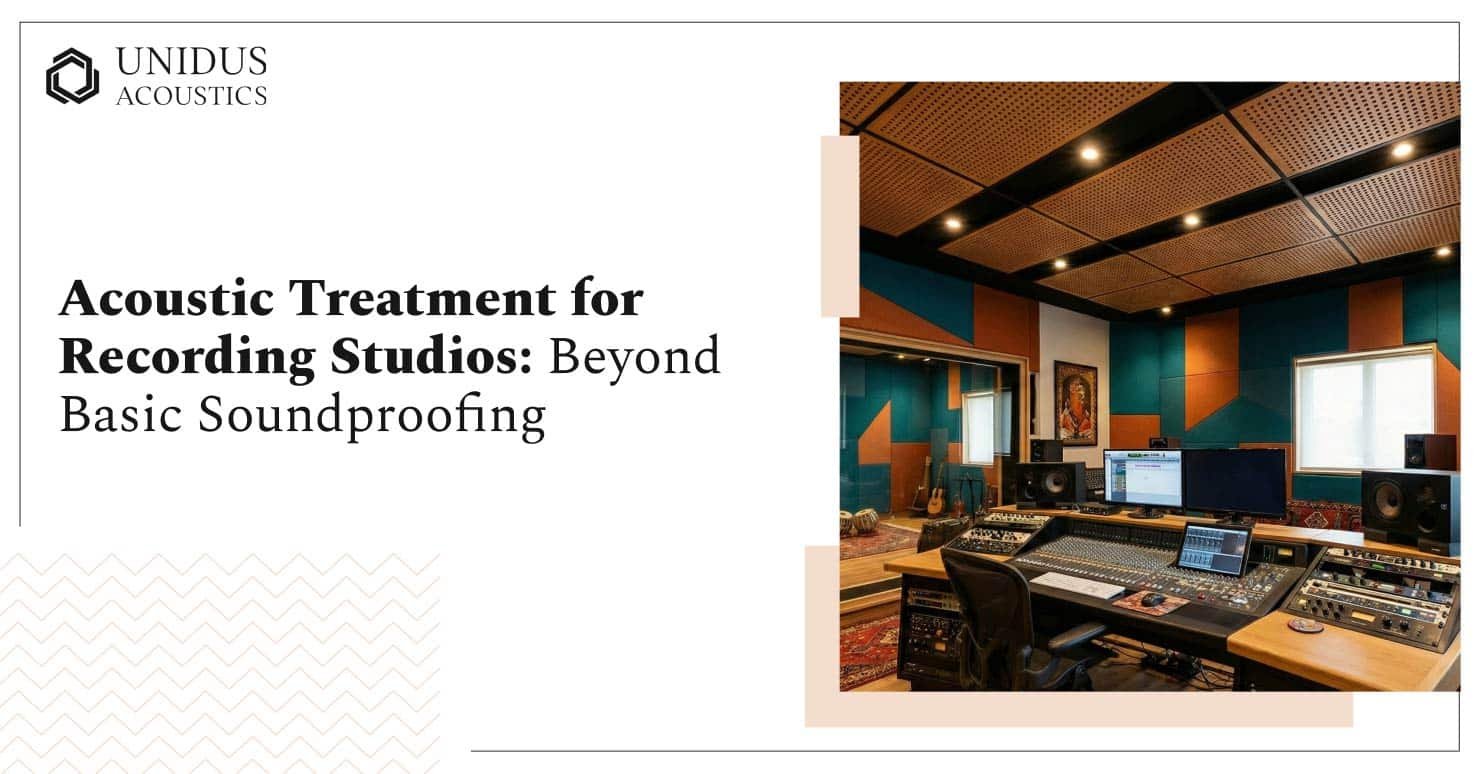
Designing a recording studio often looks easy on paper, but architects, studio planners, and creators know the real struggle begins when sound refuses to behave. A room may look impressive, yet uneven echoes, harsh reflections, and uncontrolled frequencies can disrupt every session. This is why acoustic solutions and strong sound management matter as much as lighting, layout, and equipment. The room must support creativity, not work against it.
With expertise and a deep understanding of studio behaviour, Unidus Acoustics treatment moves beyond basic soundproofing. We deliver clarity, accuracy, and a dependable creative space. With multi-material expertise in wood, metal, fabric, and premium insulation, and locally manufactured products built under strict quality control, architects, engineers, and studio owners get balanced, controlled, and consistent sound always.
Why Soundproofing Alone Doesn’t Fix Studio Acoustics
Once a studio is isolated from outside noise, the next challenge is managing how sound behaves within the room. Many studios struggle at this stage because reflections, echoes, and frequency imbalances can still distort recordings. This shows why soundproofing alone is not enough to achieve accurate, reliable audio.
Soundproofing stops unwanted noise from entering or escaping a studio. But it does not manage reflections, standing waves, echoes, or tonal imbalance inside the room. Even a fully soundproofed room can sound hollow, boomy, or harsh, which is why many visually impressive studios still produce mixes that feel inconsistent across headphones, speakers, or different listening areas.
Architects and studio designers often encounter spaces that look impressive but don’t offer acoustical precision. This is where recording studio acoustic solutions step in. They create a listening environment that reflects music’s true character.
Understanding Acoustic Treatment: The Foundation of Accurate Recording
After realising that soundproofing alone cannot fix all problems, the next step is learning how acoustic treatment balances a studio’s sound. Proper treatment creates spaces where recordings feel clear, natural, and reliable.
Acoustic treatment works by managing how sound waves behave when they hit surfaces. This includes absorbing unwanted noise, reducing echoes, diffusing sound evenly, and controlling frequencies. These steps help ensure that what you hear is as close as possible to the original sound.
In a recording studio, accuracy is crucial. Musicians, engineers, and producers rely on honest sound that is free from distortion or colouration. Effective treatment removes harsh echoes, controls bass buildup, and smooths reflections that can make recordings sound muddy.
Recording studio acoustic solutions are no longer just optional add-ons; they have become essential parts of the design. Solutions like wall panels, ceiling systems, and insulation materials not only improve sound quality but also integrate seamlessly with the studio’s look, letting spaces retain their style while delivering precise, high-quality audio.
As these needs become more specific, custom acoustic solutions become essential. Solutions that soften reflections, control bass, and align with each studio’s visual style require tailored colours, finishes, and materials that integrate seamlessly while maintaining reliable performance.
Essential Acoustic Solutions Every Studio Needs
Once the purpose of acoustic treatment is clear, it becomes easier to identify the solutions that shape a balanced, immersive recording environment. Each element plays a specific role in managing the studio’s internal soundscape.
1. Acoustic Wall Panels and Studio Sound Boards for Sound Absorption
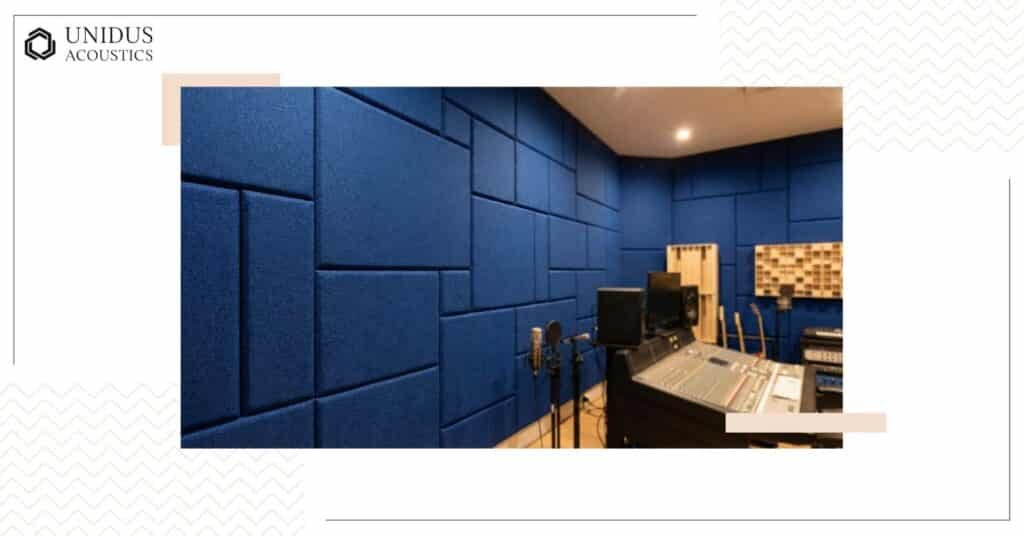
Acoustic wall panels and studio sound boards manage mid and high-frequency reflections through targeted sound absorption. These panels help control frequencies that can create sharp echoes or make the sound too bright. Custom panels can be made in different fabrics, 3D shapes, or perforated wood, allowing studios to match the panels to their own style and creative design.
2. Bass Traps for Low-Frequency Control
Bass frequencies are unpredictable and often collect in room corners, causing uneven low-end sound. Bass traps help reduce this buildup, providing a tight and controlled bass response. This control is especially important in mixing rooms, where weak or exaggerated bass can spoil the final mix. Using bass traps together with insulation materials like rockwool further improves their performance and stability.
Unidus Acoustics also offers eco-friendly material options in our bass traps and panels, supporting environmentally responsible studio design without compromising acoustic performance.
3. Ceiling Baffles and Clouds for Balanced Acoustics
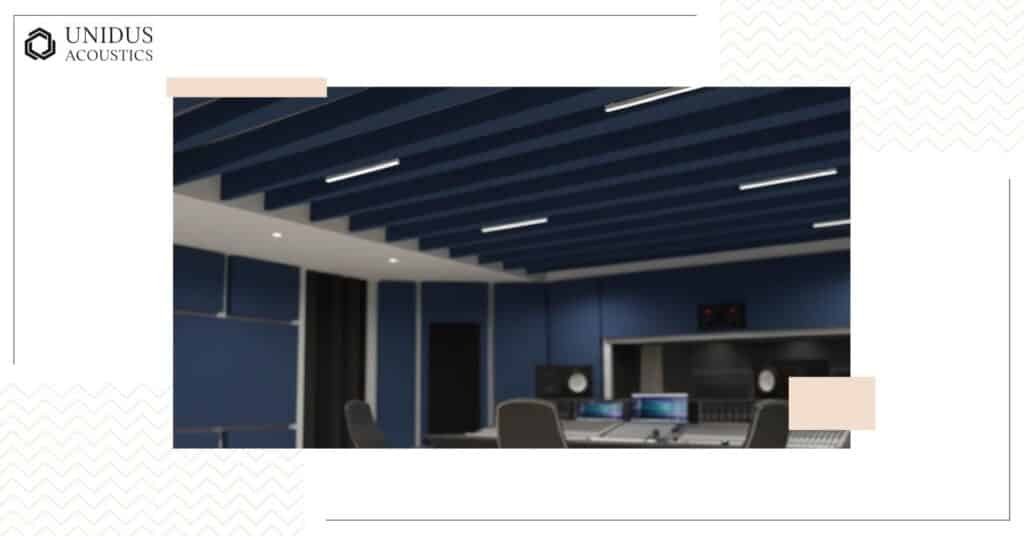
Vertical sound reflections often go unnoticed but have a major impact on clarity. Acoustic baffles and clouds help manage these reflections while adding depth to a studio’s design. These are vital components of recording studio acoustic solutions, ensuring sound remains consistent throughout the space.
4. Space Dividers and Movable Acoustic Screens
For studios that need flexibility, podcast corners, vocal booths, or collaborative spaces, movable acoustic screens are ideal. They create zones without requiring major renovation and support on-the-go sound management.
Designing an Acoustic Plan: Tailoring Solutions for Every Studio Size
Once the main acoustic issues are understood, the next step is to plan treatments that fit the studio’s size, shape, and purpose. A well-thought-out plan ensures even sound coverage, predictable behaviour, and consistent results during every session.
1. Small Studios
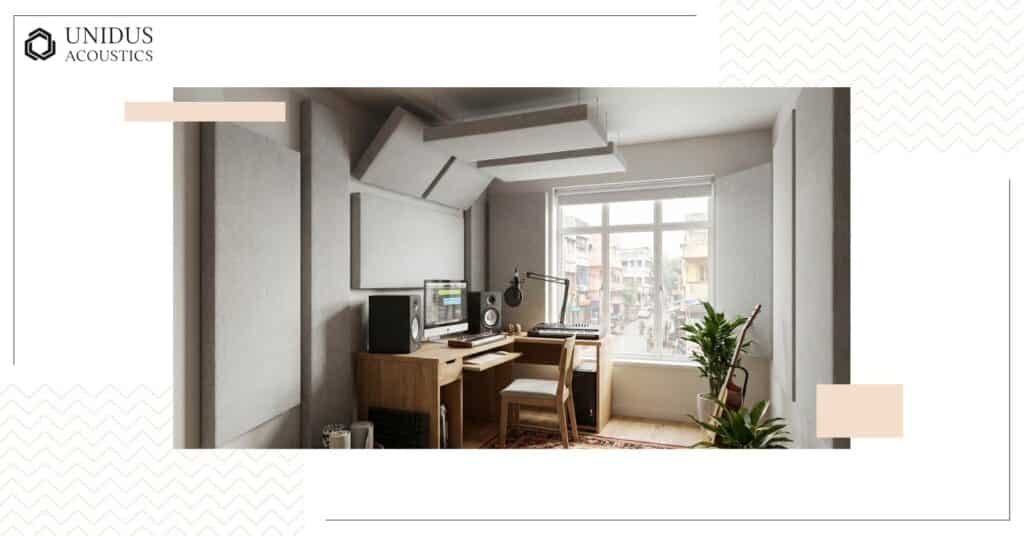
Small rooms often have bass building up in corners, strong early reflections, and a boxy sound because the space is too small for sound to settle naturally. This can make recordings feel muddy and unpredictable.
Acoustic solutions solve these problems by using corner bass traps, well-placed acoustic boards and wall panels, and compact ceiling clouds. These treatments absorb low frequencies and soften reflections without taking up too much space, keeping the room balanced and clear.
2. Medium Studios
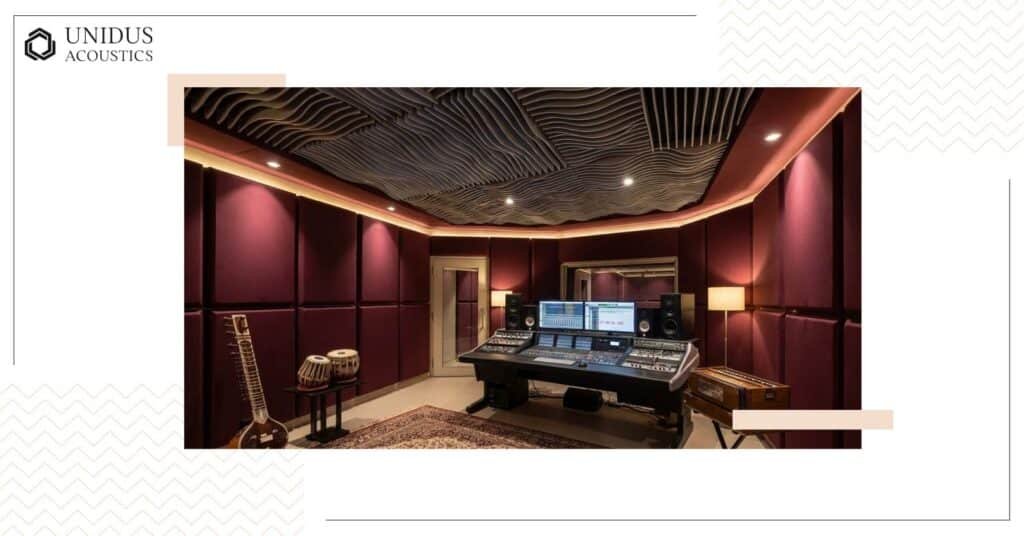
Medium-sized rooms often face problems with uneven sound. Some notes or instruments may sound too sharp, while others may seem weak or disappear entirely. Untreated walls, ceilings, and floors bounce sound in different directions. This makes the room feel unclear and can affect how recordings and mixes turn out.
To fix these issues, studios use a careful mix of absorption and diffusion. Wooden diffusers are placed on key walls to keep the room lively instead of dull. Ceiling baffles help control how frequencies move through the space and reduce flutter echoes. Together, these treatments create a more balanced, clear, and predictable sound, allowing musicians and engineers to work confidently.
3. Large Professional Studios
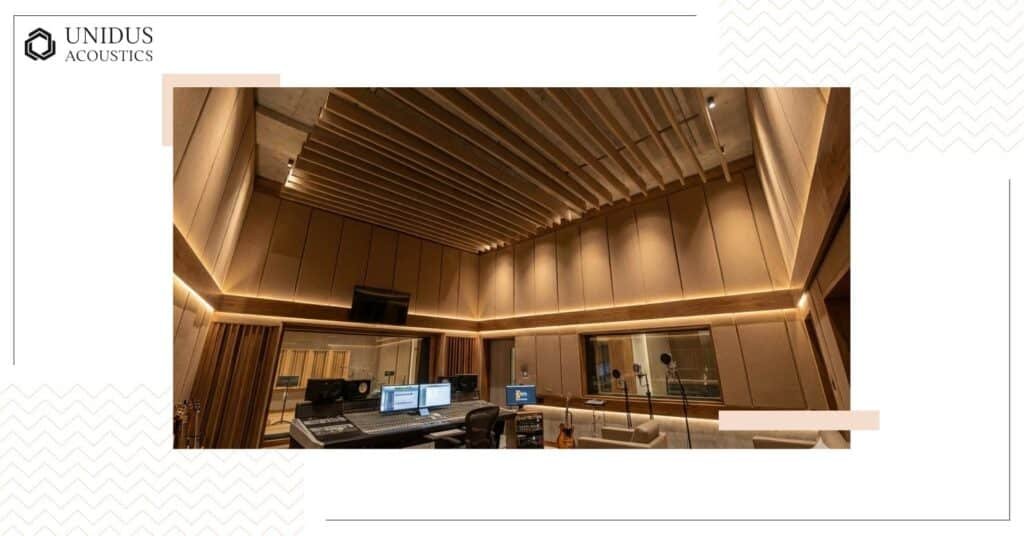
Large rooms often have uneven sound energy, delayed reflections, and “dead zones” where sound feels weak. Because the space is bigger, every problem becomes more noticeable. This makes careful planning very important to get the best results.
These studios need a comprehensive mix of treatments to work properly. Deep bass traps control low frequencies, while diffusers scatter sound evenly. Acoustic ceilings and custom wall panels help create a predictable and immersive listening experience. Since every large studio is different, custom recording studio acoustic solutions become essential to ensure the room sounds balanced, clear, and professional.
Conclusion
Thoughtful acoustic treatment transforms a studio from visually appealing to sonically reliable. While soundproofing protects the room from external noise, it is the custom treatments inside that shape accuracy, clarity, and immersion.
With 40 years of expertise, Unidus Acoustics supports architects, designers, and studio planners in crafting spaces where performance meets aesthetics and sound feels truly balanced. Our custom design capabilities, multi-material expertise (wood, metal, fabric, and insulation), and on-time installation services ensure your studio delivers reliable acoustic performance with minimal disruption.
Ready to create a recording studio where sound behaves exactly as it should? Explore our acoustic wall panels, ceiling systems, and UNIPOD phone booths, or connect with our team for a consultation tailored to your project requirements. Contact us now.