

You’ve unveiled a stunning new office or hotel lobby. The design is flawless, the furniture chic, and the lighting Instagram-worthy. But soon, a problem emerges: the space is unbearably loud, conversations carry across the room, and focus disappears.
This is a challenge many architects and designers face. Spaces can look impressive but feel acoustically chaotic. Ceilings often contribute to the problem by doing too little or serving only one function. But what if they could do more? Imagine a ceiling that not only illuminates but also absorbs sound Integrated acoustic ceiling light systems make this possible. By combining sound control with intentional lighting, they transform noisy, distracting spaces into calm, harmonious environments.
With 40 years of expertise, Unidus Acoustics designs bespoke acoustic ceiling systems. These systems not only control sound but also enhance lighting. The result is a comfortable, visually appealing environment, tailored to each unique project.
Understanding Acoustic Ceiling Light Integration
Modern workplaces, hotels, and institutional spaces need ceilings that do more than just provide light. They must also improve sound, comfort, and overall aesthetics. Acoustic ceiling-light integration is a design approach that combines lighting fixtures with sound-absorbing elements. This creates a unified, multi-functional ceiling system rather than two separate components.
Traditional ceilings keep lighting and acoustic elements apart. This limits coordination and provides only basic sound control. Integrated systems embed lighting within acoustic features, such as linear LEDs in acoustic clouds or pendant lights paired with baffles.
Architects and designers find it easier to plan and organise. The ceilings have less visual clutter, and each element serves two purposes. This creates a good balance of style and function, improving both the appearance and the sound quality of the space.
Know how Unidus Acoustics’ integrated lighting solutions can transform your space
Why Commercial Spaces Need Acoustic Plus Lighting Synergy
With acoustic and lighting elements no longer treated separately, it is clear that a seamless integration directly affects how people experience a space. It influences comfort, focus, and productivity in commercial environments.
1. The Impact of Poor Lighting and Acoustics
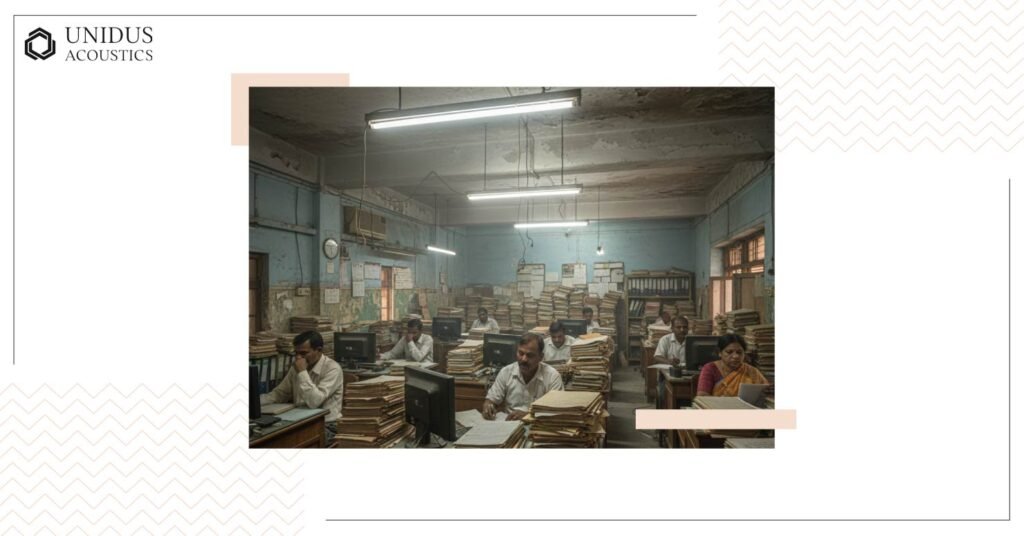
In modern commercial spaces, ceilings play a crucial role in shaping both sound and light. Poor lighting can cause eye strain and headaches, while excessive noise and reverberation increase stress and mental fatigue.
Poor acoustics can disrupt focus, teamwork, and overall well-being. In open-plan offices, employees without proper sound control are easily distracted, which can hurt productivity and cost businesses.
2. Integrated Solutions for Maximum Efficiency
Combining acoustics and lighting tackles these issues at the source. High-performance sound-absorbing materials reduce noise and echo, while integrated lighting ensures consistent, glare-free illumination. This synergy creates zones of acoustic privacy and visual comfort, directly supporting productivity and reducing fatigue.
3. Applications Across Commercial Spaces
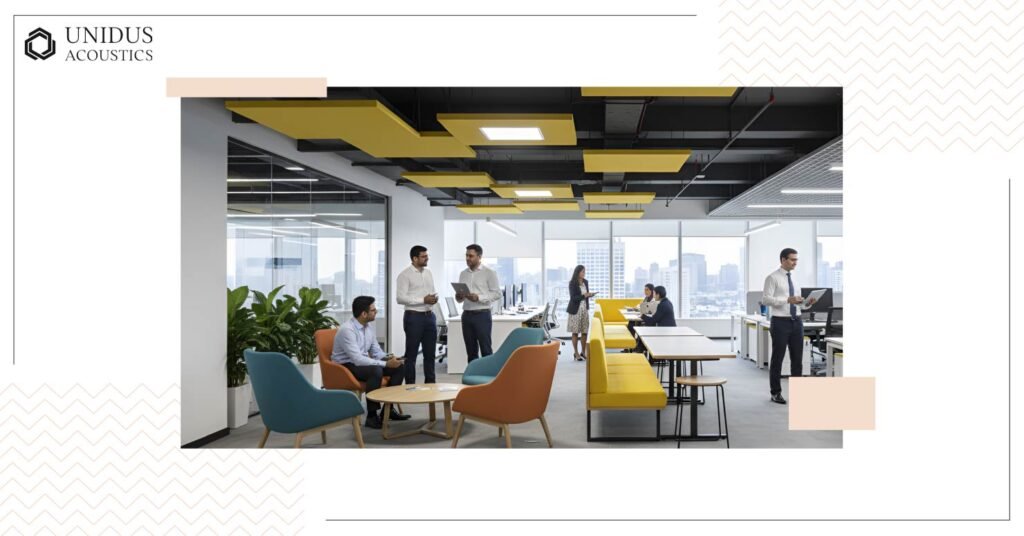
Integrated solutions’ benefits apply to many different places. In open-plan offices, quiet areas help employees concentrate better. Conference rooms become calm, making it easier to hold important meetings. Hotels and lobbies feel more peaceful, which makes visitors comfortable and relaxed. In classrooms, students can hear the teacher clearly, and steady lighting helps them pay attention and stay focused.
4. Strategic Design for Well-being and Performance
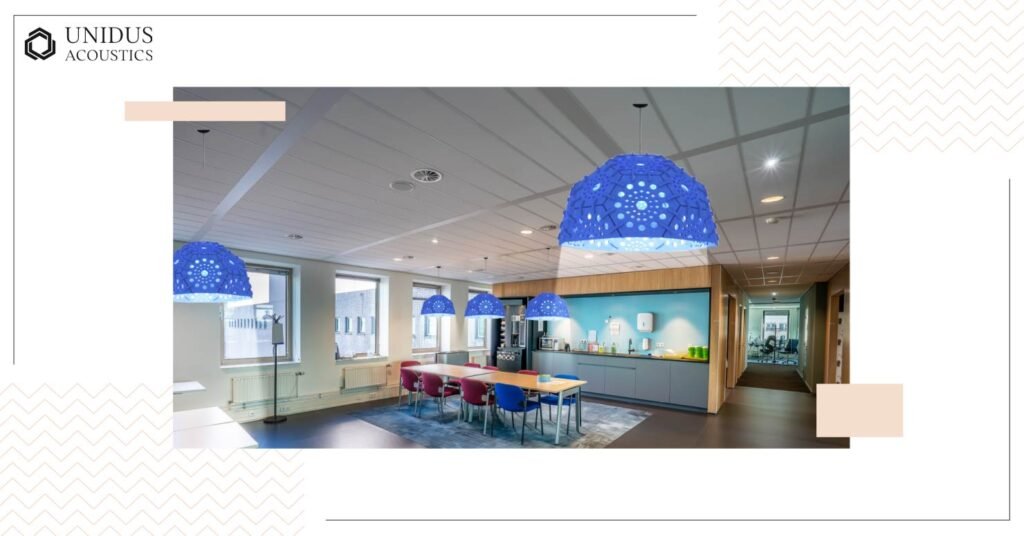
Acoustic and lighting integration is more than an aesthetic choice; it is a strategic design decision. By addressing sound and light together, commercial spaces enhance employee well-being, improve efficiency, and foster positive experiences. The ceiling, once a background element, becomes a powerful tool to transform the way people interact with and experience a space.
Core Components of an Integrated Acoustic Ceiling Lighting System
Once you understand the need, the next step is to explore how each element works together to deliver both sound control and high-quality illumination.
An integrated system is more than the sum of its parts. Its effectiveness hinges on the seamless collaboration of several key components:
1. Acoustic Elements
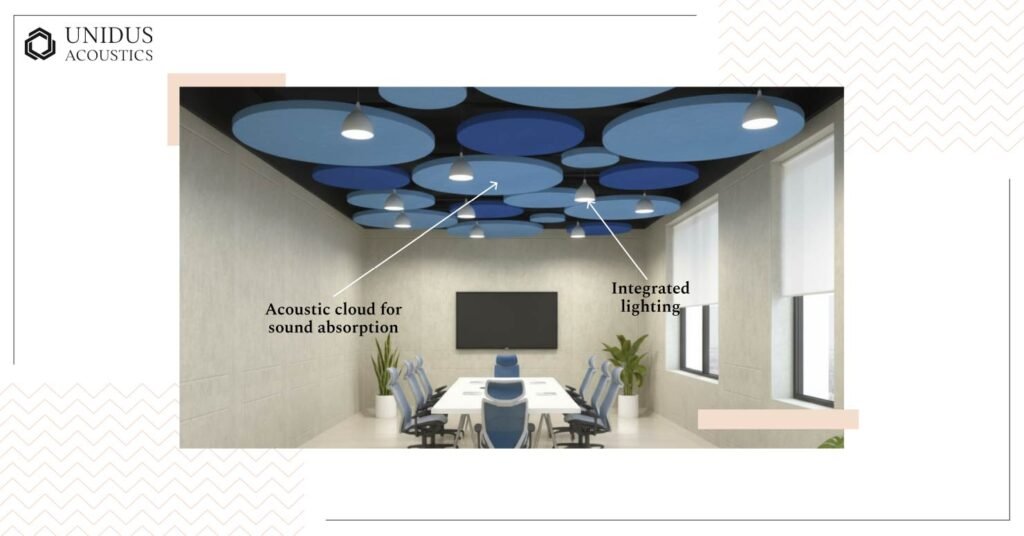
The core of any integrated system is its acoustic layer, designed to absorb sound waves and reduce reverberation. This can include acoustic baffles, suspended ceiling clouds, or panels fitted into a grid system. Materials vary widely: fabric-wrapped panels offer a soft, refined look; PET felt is lightweight yet effective; and perforated wood provides a natural, tactile aesthetic.
Each material choice impacts the system’s Noise Reduction Coefficient (NRC) and influences the visual style of the ceiling. Properly designed acoustic elements ensure that open-plan offices, conference rooms, and classrooms maintain clarity of speech while minimising distractions.
2. Integrated Lighting Fixtures
In integrated ceiling systems, the lights are specially designed to fit with the sound-absorbing elements. Linear LED strips integrate seamlessly within acoustic baffles, flat panel lights are positioned neatly inside acoustic clouds, and hanging pendant lights are arranged to work with acoustic canopies.
This careful design keeps the ceiling looking clean, avoids glare, and creates a balanced environment where both light and sound work together harmoniously.
3. Insulation Layers

Behind the visible panels are insulation layers such as glasswool or rockwool. These add mass and density to the ceiling system, improving sound absorption and preventing transmission to spaces above.
The insulation enhances acoustic performance and creates a quieter, more comfortable environment, especially in multi-storey offices or busy commercial spaces.
4. Suspension and Mounting Systems
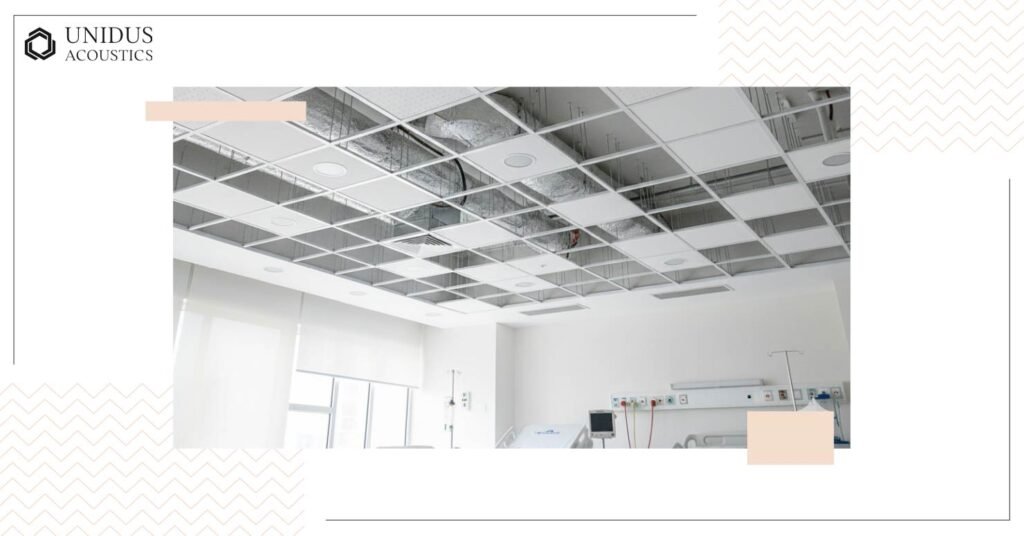
The suspension system is like the base or frame that holds everything in place. It has to be strong enough to carry the weight of the sound panels and lights. At the same time, it must let you adjust everything carefully so it looks professional. If the structure is weak, things can sag, be crooked, or shake, which can ruin both the look and the sound quality.
5. Smart Controls
For advanced functionality, integrated systems can include smart lighting controls. These allow for tuning colour temperature, adjusting brightness, and creating pre-set lighting scenes for various activities.
While the acoustic components continuously perform their sound-absorbing role, lighting adapts to the needs of the space, offering flexibility and comfort for users throughout the day.
Discover how Unidus Acoustics turns your ideas into high-quality, market-ready products effortlessly
Choosing the Right Materials for Sound and Style
After understanding the key components that make up an integrated acoustic ceiling and lighting system, the next step is to focus on the materials used in these elements. The goal is to manage sound effectively while creating a visually appealing space that aligns with your design intent and sustainability goals.
1. Fabric and PET Felt

Fabric and PET felt are excellent at absorbing sound while offering a soft, tactile texture. These materials are ideal for creating calm, comfortable spaces such as offices, conference rooms, and lobbies. PET felt, being lightweight and eco-friendly, also allows for versatile design applications, including panels, baffles, and ceiling clouds.
2. Wood Wool and Wooden Slats
Wood wool panels and wooden slats add warmth and a natural touch to interiors. Beyond aesthetics, their density and structure help capture and diffuse sound, improving acoustic performance. Wooden slats also provide flexibility in patterns and finishes, allowing designers to combine style with functionality.
3. Metal Ceiling Panels
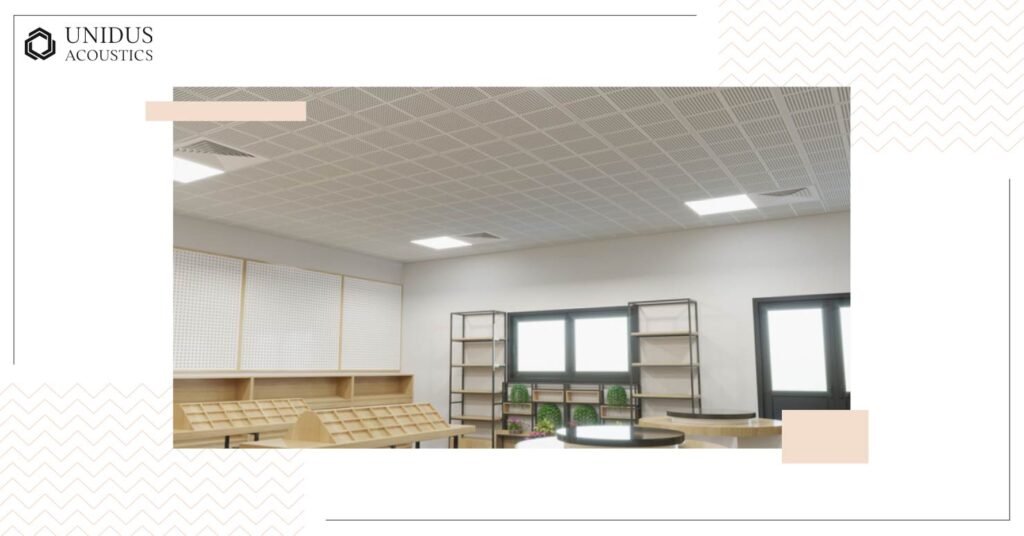
Metal panels lend a sleek, industrial look while providing structural strength. Perforated metal panels can also contribute to sound absorption when paired with insulation layers, making them suitable for modern commercial spaces with high ceilings.
Selecting the right material requires balancing acoustic needs, design intent, and budget. Unidus Acoustics provides a range of material options for acoustic solutions, with sustainability integrated into their approach. Alongside other materials like wood wool, wooden slats, and metal panels, they offer products made from recycled PET felt. This felt is created from post-consumer plastic bottles, turning waste into functional sound-absorbing products. This provides a practical, eco-conscious material choice for projects where reducing environmental impact is a consideration.
Learn how Unidus Acoustics embeds sustainability in acoustic solutions
Choosing the Right Acoustic Ceiling System for Light Integration
Once the appropriate materials are selected, the next step is to determine the ceiling system that will best support these materials while integrating lighting.
The choice of system not only ensures optimal acoustic performance but also shapes the way a space looks, feels, and functions. This directly influences comfort, productivity, and user experience.
1. Acoustic Tiles with Recessed Lighting

Acoustic tiles remain a classic choice, offering high-performance sound absorption in a clean, grid-based layout. When paired with recessed LED downlights or troffers, they provide uniform, shadow-free illumination. This is ideal for offices and corporate environments that require a polished, professional look.
Also, the combination ensures that speech is clear, background noise is controlled, and lighting remains consistent across large areas. This reduces eye strain and enhances visual comfort.
2. Acoustic Baffles with Linear Lights
Suspended acoustic baffles are long, narrow panels that excel at capturing sound in open spaces with high ceilings. Integrating linear LEDs along the baffles not only illuminates the space effectively but also creates a visually striking rhythm of light and shadow.
This system is especially suitable for atriums, airport lounges, or conference halls, where controlling echoes is important without fully closing the space. The baffles and linear lights also create a modern and visually appealing look.
3. Acoustic Clouds with Pendant Lights
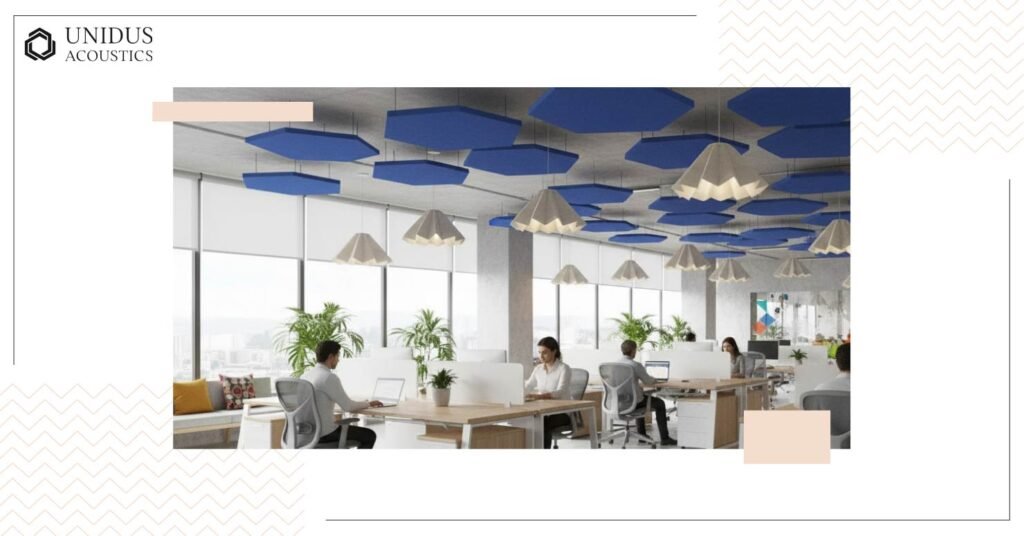
Floating acoustic clouds offer maximum design flexibility. They can be arranged at varying heights and positions to define zones within open-plan offices or collaboration areas.
Pendant lights integrated within these clusters provide focused task lighting while maintaining acoustic privacy. This approach allows designers to create visually interesting ceilings while directing attention to specific work zones or communal areas.
4. Space Division with Indirect Lighting
Large-scale acoustic panels or open-grid ceiling systems can separate areas in a room without using actual walls. LED lights are hidden above these panels, so the light spreads softly across the ceiling. This makes the room feel bigger and reduces harsh glare. This setup is perfect for spaces like lobbies, classrooms, or multipurpose halls where you want an open, calm, and comfortable environment.
Design Considerations for Architects and Interior Designers
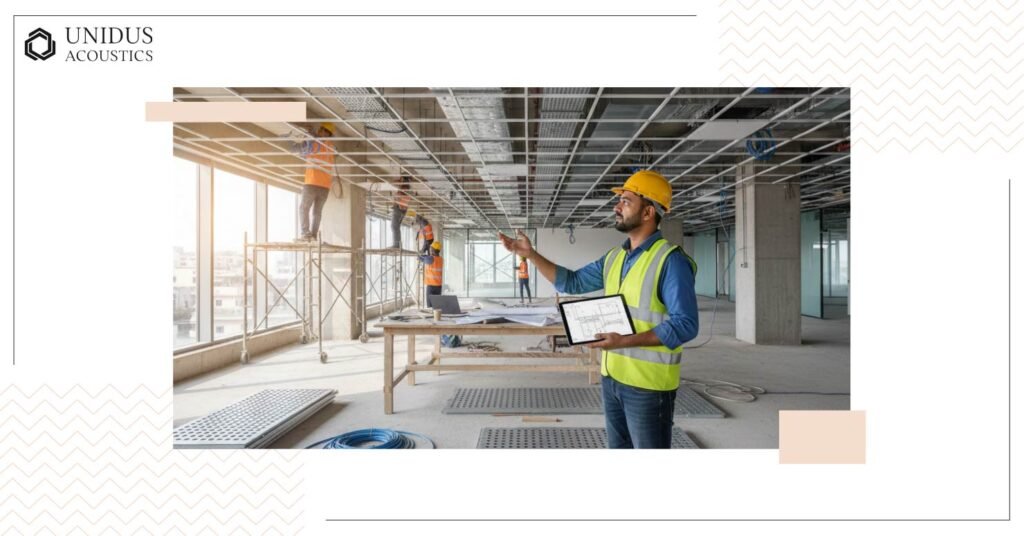
With integrated systems, success lies in precise planning, material selection, and an understanding of architectural requirements.
The integrated ceiling system should combine aesthetic appeal with practical performance from the start.
- Reverberation Time Control: The main goal is to manage sound effectively. Calculate the required sound absorption based on the room’s volume and intended use to specify the correct amount and type of acoustic material.
- Lux Levels and Distribution: Plan the lighting layout so that the space gets the right amount of light for every task. Make sure there are no overly bright spots or dark areas. The lighting should feel even, comfortable, and work well with the acoustic design of the room.
- Ceiling Height and Grid Layouts: Low ceilings work well with flat panel systems, while high ceilings can accommodate baffles and clouds more effectively. The layout of these elements should be planned and purposeful rather than random, aligning with the room’s architectural grid and furniture plan.
- Colour and Finish Options: The aesthetic impact is huge. Use coloured fabric-wrapped panels or custom-printed finishes to incorporate brand colours or create feature zones. The finish should harmonise with the lighting’s colour temperature.
- HVAC, Wiring, and MEP (Mechanical, Electrical, and Plumbing) Coordination: You need to plan your ceiling carefully with the rest of the team before you start building. This is because many things, like air vents, sprinklers, lights, and wires, all need to fit inside the ceiling. If you don’t plan together early, these things will bump into each other, causing expensive problems and delays that you will have to fix later.
- Fire Safety, Durability, and Sustainability: When choosing materials, always pick ones that are fire-safe, durable, and sustainable. Make sure everything meets local fire codes. For busy spaces, use strong, easy-to-clean finishes. A popular green choice is recycled felt panels, which are good for the planet and work very well.
Aesthetic Integration: Making the Ceiling a Design Feature
While technical planning ensures optimal acoustic performance and lighting efficiency, the ceiling also offers a unique opportunity to express design intent. Thoughtful material, form, and lighting choices transform it into a central visual feature that defines the space.
1. The Ceiling as a Fifth Elevation
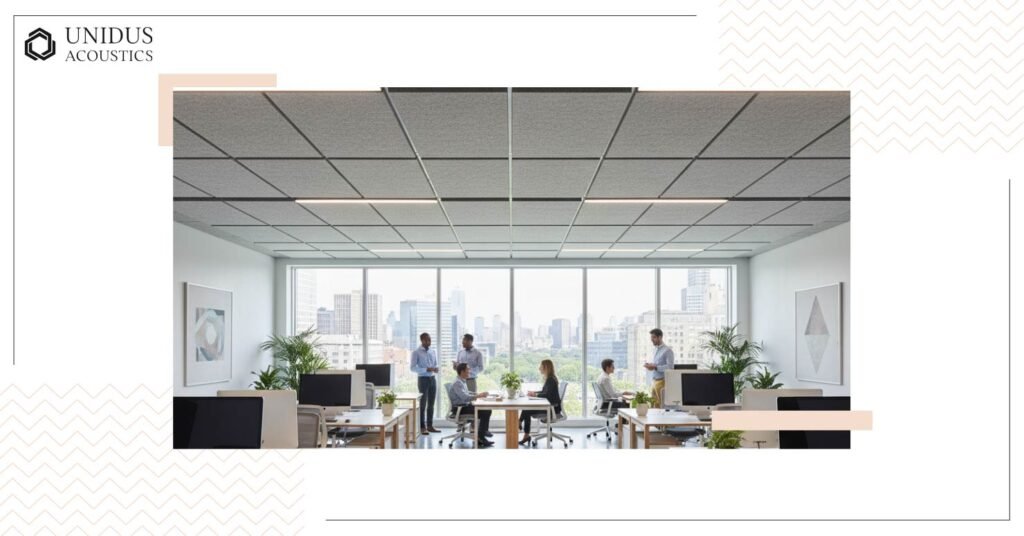
A well-designed acoustic ceiling does more than just control sound—it defines the entire space. Consider it the “fifth elevation” of a room, as important as the four walls. When its technical function is woven into the design from the beginning, the ceiling enhances both the experience and the aesthetics of the environment.
2. Combining Texture and Lines for Visual Impact
To make a ceiling visually striking, mix different textures and lines. The combination of a soft, fabric-like acoustic panel with the crisp light from an LED strip creates a compelling contrast that elevates the entire space. For a minimalist interior, arranging acoustic panels in clean, geometric patterns brings a sense of structured calm. The lighting then highlights this order, making the room feel both more beautiful and more spacious.
3. Using Colour to Enhance Harmony
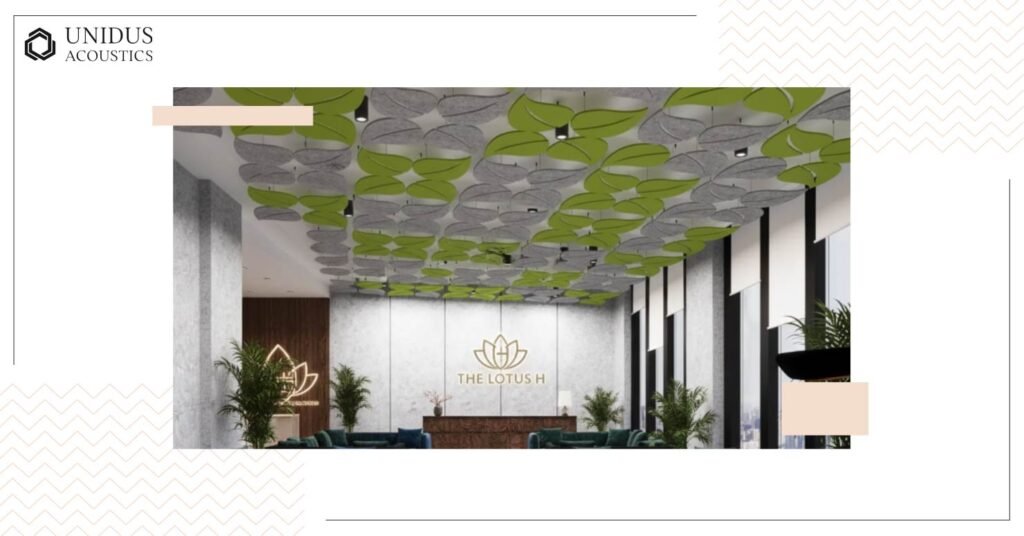
Colour is a powerful tool in ceiling design. A bold coloured acoustic baffle or panel against a neutral ceiling draws the eye and creates a memorable visual impact. Consistency across forms, colours, and lighting styles ensures harmony, even as different acoustic zones perform distinct functions beneath the ceiling.
4. Achieving Cohesion Across Spaces
To create a harmonious space, every area should feel connected. Designers can achieve this by using consistent materials, shapes, and lighting in the ceiling across different zones. This ensures the ceiling complements the overall design. The result is an integrated ceiling that not only controls noise but also tells a unified visual story, enhancing the experience for everyone in the space.
Acoustic Performance: What to Expect from Integrated Systems
Effective ceiling integration is not just visual—it must also deliver measurable improvements in sound absorption and noise reduction.
While aesthetics are crucial, the system must perform acoustically. Understanding the key metrics allows for informed specification and sets realistic client expectations.
1. NRC (Noise Reduction Coefficient)

This measures sound absorption. A standard ceiling tile might have an NRC of 0.50-0.60, absorbing 50-60% of sound that hits it. High-performance baffles or clouds can achieve an NRC of 0.90-1.00, absorbing nearly all sound and dramatically reducing reverberation.
2. STC (Sound Transmission Class)
This measures how well a partition blocks sound from travelling through it. While ceiling systems primarily absorb sound within a room, the inclusion of mass-loaded insulation can improve STC, reducing noise transfer from the plenum space above.
3. Impact on Different Spaces
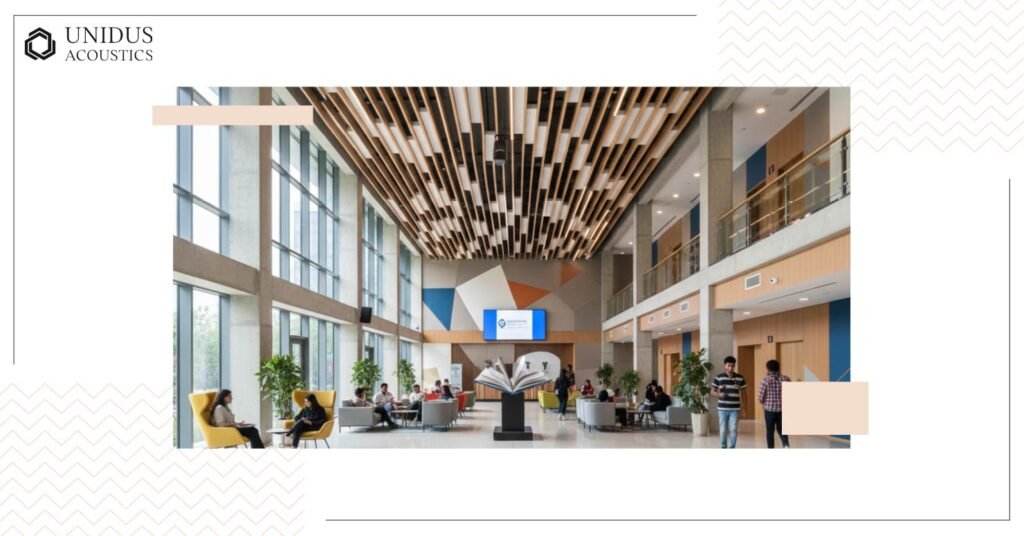
In meeting rooms, a high NRC ensures speech intelligibility. In open offices, it lowers the overall background noise, allowing for better concentration. In high-ceiling areas like lobbies, these systems are the most effective tool for eliminating distracting echoes.
Installation and On-Site Coordination
Even the best design can fail without smooth installation, especially in active commercial environments where downtime must be minimised. The transition from design to reality is a critical phase, and a poorly executed installation can undermine both the performance and aesthetics of the entire system.
1. The Importance of Flawless Coordination
Success relies on smooth coordination between everyone involved. Acoustic teams, electrical contractors, and MEP engineers must work from one unified set of drawings. Prefabrication helps make this possible. When custom acoustic panels—with pre-cut openings for lights—are made off-site, installation becomes faster, more accurate, and far less disruptive on-site.
2. Minimising Disruption on Site
This approach significantly reduces dust, noise, and downtime — a factor that is particularly crucial for retrofit projects or tenant fit-outs. Choosing a partner who guarantees on-time delivery is essential, as delays in the ceiling system can halt the entire project timeline.
3. Overcoming On-Site Challenges

Unexpected issues, such as hidden obstacles above the ceiling, are common during installation. You need a team that can spot these problems early and adjust quickly. With smart planning and experience, they can solve issues smoothly while keeping both the acoustic and lighting design perfectly intact.
Unidus Acoustics offers comprehensive acoustic installation services that bring your design to life seamlessly. Their expert team is equipped to handle wall panels, ceiling systems, customised lighting, and phone booths with precision.
By combining technical knowledge with hands-on experience, Unidus Acoustics ensures installations are executed professionally, with minimal disruption and maximum efficiency.
Discover how our expert team delivers precise, professional acoustic installations
Use Cases: How Integrated Acoustic Ceiling Lights Elevate Different Environments
From focused work zones to vibrant hospitality areas, integrated acoustic ceiling lights adapt to diverse spatial needs.
The versatility of these systems makes them applicable across nearly every commercial sector:
1. Open-Plan Offices
In open-plan offices, a mix of acoustic clouds over collaborative zones and baffle systems above individual workstations helps define areas while absorbing conversational noise. This creates quieter workspaces that improve concentration, while integrated lighting ensures balanced illumination for tasks and collaboration.
2. Conference Rooms
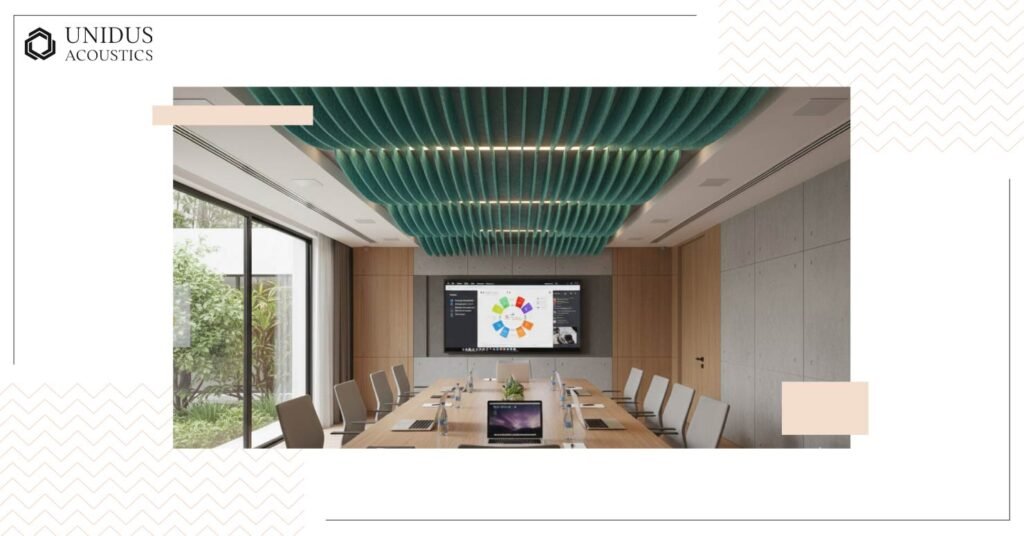
Conference rooms benefit from high-NRC ceiling panels paired with dimmable, integrated lighting. This combination ensures crystal-clear communication, making meetings, presentations, and video conferences more effective. Adjustable lighting adds flexibility for different formats and moods, supporting productivity and engagement.
3. Educational Institutions
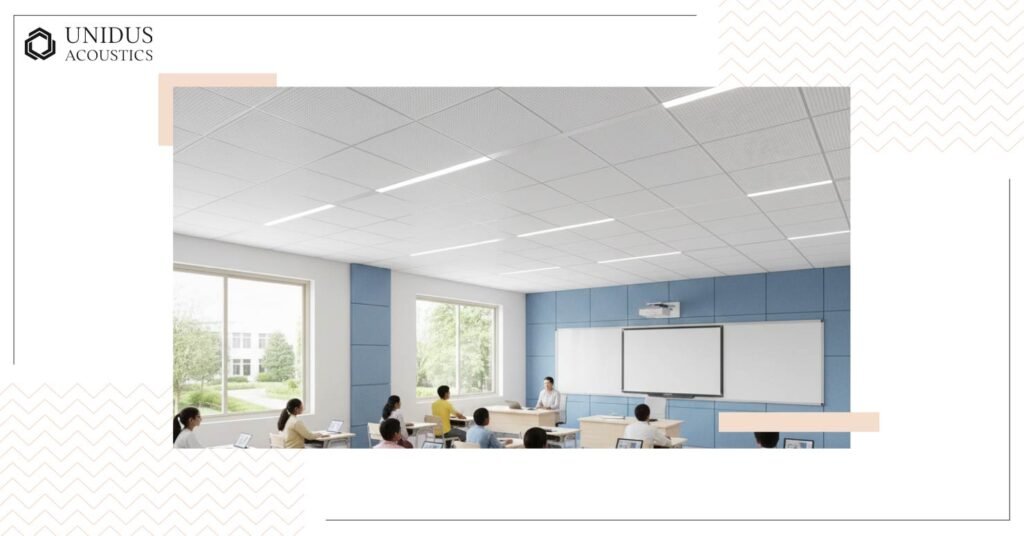
Classrooms, libraries, and study halls require environments that minimise distractions. Acoustic ceiling systems reduce noise levels and reverberation, improving comprehension and focus. Complementary lighting supports visual learning tasks, helping students read, write, and interact comfortably without strain.
4. Hotels, Lounges, and Restaurants
Acoustic solutions in hospitality spaces create intimate, welcoming atmospheres. Acoustic canopies and wood wool panels with warm integrated lighting define dining or lounge areas while controlling ambient noise. Guests experience comfort and style simultaneously, even in busy, lively settings.
5. Retail Environments
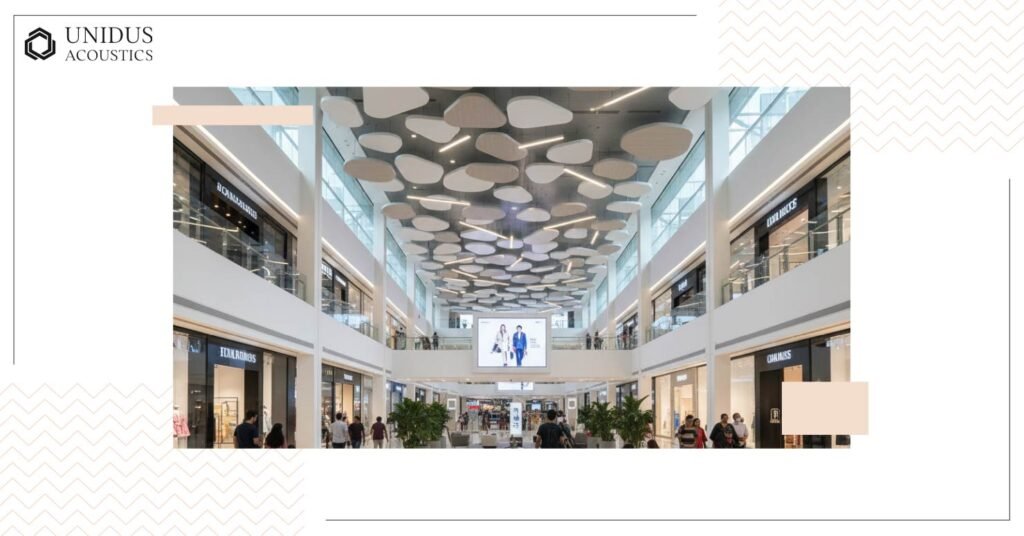
Retail spaces benefit from strategically placed baffles or acoustic clouds that guide customers while absorbing the noise of crowds and background music. Integrated lighting highlights pathways and products, enhancing the shopping experience while maintaining a calm, pleasant environment.
6. Auditoriums and Training Centres

For auditoriums and training centres, perforated metal ceilings or large custom panels provide exceptional speech clarity. These systems can be integrated with theatrical or task lighting to meet complex acoustic and illumination requirements, ensuring presentations, performances, and training sessions are both heard and seen perfectly.
Choosing the Right Acoustic Solutions Partner
Selecting the right acoustic solutions partner plays a crucial role in the success of any integrated ceiling or interior acoustics project. These projects demand a deep understanding of sound behaviour, aesthetic expectations, and commercial execution realities. The supplier you choose should function as an extension of your team, guiding you from concept to installation with both technical proficiency and design sensitivity.
Key factors to consider include:
- Consultancy expertise: Do they provide acoustic modelling or computational design support?
- Customisation capabilities: Can solutions be tailored to your project’s unique sound and design needs?
- Material flexibility: Do they work confidently with fabric, wood, metal, felt, or composite systems?
- Collaborative approach: Are they involved proactively from conceptualisation to installation?
- Sustainability focus: Do they follow responsible manufacturing practices and offer local production for faster delivery and better control?
Unidus Acoustics delivers expert guidance, personalised solutions, and multi-material proficiency suited to modern design needs. Their consultancy provides accurate acoustic modelling, tailored options, and seamless project support. With sustainable manufacturing and dependable local production, they ensure quick delivery, strong quality control, and spaces that balance sound performance with aesthetic appeal.
Learn more about our expert acoustic consultancy services
Conclusion
An integrated acoustic ceiling light system is no longer a luxury; it is a smart, necessary response to the demands of modern commercial design. It solves the twin problems of noise and poor lighting with a single, elegant solution that enhances productivity, well-being, and aesthetic appeal.
For architects and design-build teams, this integration simplifies the specification process, reduces on-site coordination headaches, and delivers a finished space that truly wows clients. It’s the definitive way to ensure your designs are experienced exactly as you intended—visually stunning and acoustically serene.
At Unidus Acoustics, we turn noise into harmony. Our expertise lies in creating bespoke integrated ceilings that balance impeccable form with uncompromising function, backed by reliable on-time delivery.
Ready to explore how integrated acoustic lighting can transform your next project?
Talk to our acoustic consultants today to discuss your specific needs and discover the perfect blend of sound and light for your space.