
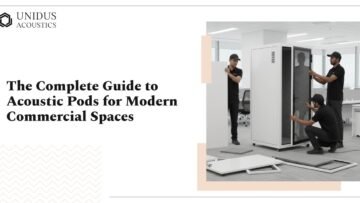
Acoustic pods are freestanding, self-contained enclosures designed to provide sound isolation within open or semi-open commercial spaces. They sit on the floor, require no civil work, and can be installed, repositioned, and relocated without touching the structure of the building.
The core purpose is fairly straightforward: to give occupants a defined, quieter zone for calls, focused work, or small meetings, without the permanence or cost of constructing new rooms. The enclosure itself does the heavy lifting. Composite wall structures, double-glazed glass panels, and multi-step door seals work together to contain sound inside the pod and reduce intrusion from outside.
Key Takeaways
- Acoustic pods are freestanding enclosures that provide sound isolation within open commercial spaces without any civil work or construction.
- Two main configurations serve different needs: single-person phone booths for calls and focused work, and multi-person pods for groups of four to six.
- Pods and acoustic wall or ceiling treatment solve different problems. Panels reduce ambient noise across a room; pods create contained private zones within it. Most commercial projects need both.
- Sound isolation quality depends on double-glazed glass, composite cavity wall construction, and multi-step door seals, not just the outer appearance of the product.
- Ventilation is a critical specification point. A pod without active airflow becomes uncomfortable within minutes and gets avoided by occupants.
- Pods with lockable castors can be repositioned as layouts change, which matters significantly in co-working environments and offices on short leases.
How Acoustic Pods Differ from Traditional Meeting Rooms
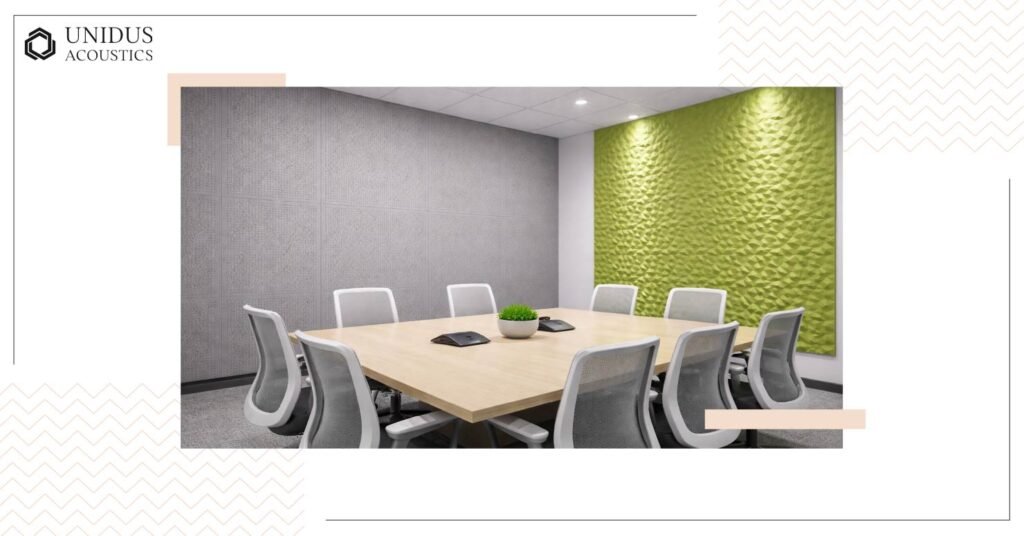
Traditional meeting rooms are built into the building. Once they’re in, they’re in. Acoustic pods are modular by nature. They can be repositioned as the layout of a space evolves, which is particularly relevant in co-working environments, corporate campuses, and hospitality projects where programming shifts over time. A pod that made sense in one corner of a floor plan can move when the business does.
The other meaningful difference is speed. A meeting room requires design coordination, contractor time, and often significant disruption to the surrounding area before it’s usable. A pod gets delivered and installed in a fraction of that time, with no mess and no downtime for the occupants around it.
There’s also the question of what happens when the project changes. Many commercial tenants are working on three or five-year leases. A permanent room is a capital investment that stays behind when they leave. A pod moves with the business.
Why Acoustic Pods Work in Open Commercial Spaces
The problem with open-plan design is not the aesthetic. It’s the acoustics. Hard surfaces, large floor plates, and high ceilings reflect sound rather than absorb it. When a significant number of people are working in the same room, the cumulative noise level climbs fast, even when no one is being deliberately loud. A floor of 80 people working quietly still generates considerable ambient noise, and that noise has nowhere to go.
This creates two related but distinct problems. People in the space are distracted by ambient noise. And people who need to make calls or hold confidential conversations have nowhere private to go. Both affect productivity. Both affect how the space functions day to day, not how it photographs.
Why Open-Plan Offices Create a Speech Privacy Problem
Speech privacy is one of the most consistently cited complaints in post-occupancy evaluations of open-plan offices. Employees don’t want colleagues overhearing sensitive conversations. HR discussions, client calls, performance reviews, confidential negotiations, these don’t belong in the open. Neither do long video calls, where background noise compromises the quality of communication from both ends.
This is a genuine functional gap that affects both how productive and how professional a space feels in daily use. And it’s a gap that was often overlooked during the planning phase, either because acoustic pods weren’t part of the original spec, or because the full implications of the open plan only became apparent once people started working on it.
Why Acoustic Panels Alone Don’t Solve the Privacy Problem
Acoustic wall panels, ceiling baffles, and clouds are the right response to managing reverberation across a large open space. They reduce echo, lower the overall noise floor, and make a room more comfortable to work in. But they don’t create privacy. They don’t give someone a contained space to take a call without being overheard, or without the background noise of the office bleeding into their audio.
Acoustic pods and acoustic treatment to the broader space aren’t competing solutions. They address different parts of the same problem. Treating the room improves the ambient acoustic environment. Pods contain zones of privacy within it. A well-specified commercial project typically needs both.
Types of Acoustic Pods
Not every pod suits every situation. The configuration you specify should match how the space is actually used, not just how it looks on a floor plan. There’s a meaningful difference between a phone booth for individual use and a meeting pod that seats a small team, and specifying the wrong type for the context is one of the more common mistakes in acoustic pod projects.
Single-Person Phone Booths
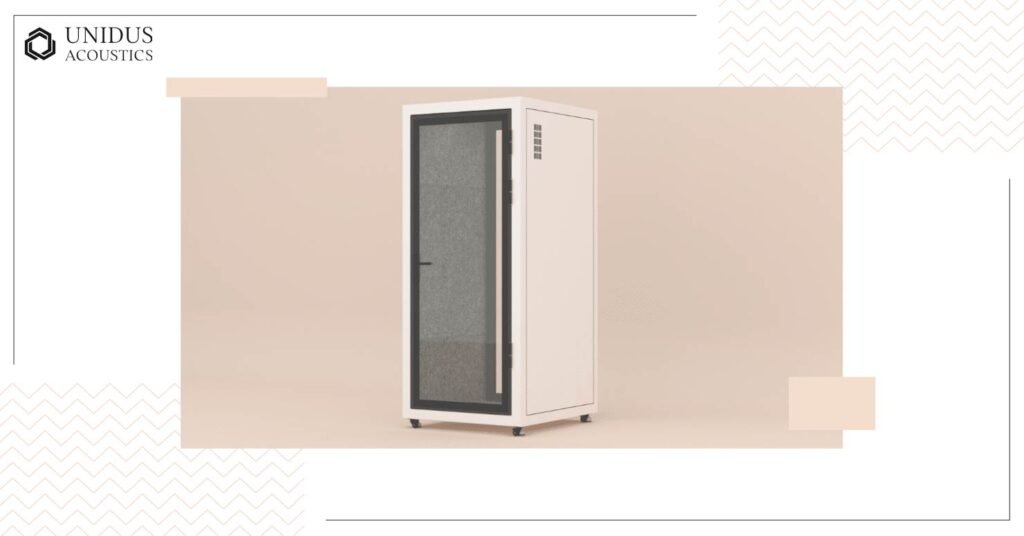
Often called acoustic phone booths or soundproof office pods, these are compact enclosures built for one occupant. The typical use case is private calls, video conferencing, or focused individual work that requires concentration without distraction. Because they take up a small footprint, they fit naturally into densely planned offices where floor space is at a premium.
What matters most in a single-person booth is the quality of the sound seal. The enclosure is small, which means any gap in the door seal or weakness in the wall construction is quickly apparent to the person inside. Double-glazed glass, composite cavity wall structures, and aluminium alloy handles with multi-step locking mechanisms are the details that separate a product that performs from one that merely looks the part.
Ventilation is the other critical factor. A compact enclosure can become uncomfortable within minutes if air circulation is poor. A certified ventilation fan that actively maintains airflow during use is not optional. It’s what determines whether the booth is used regularly or avoided.
Multi-Person Meeting Pods
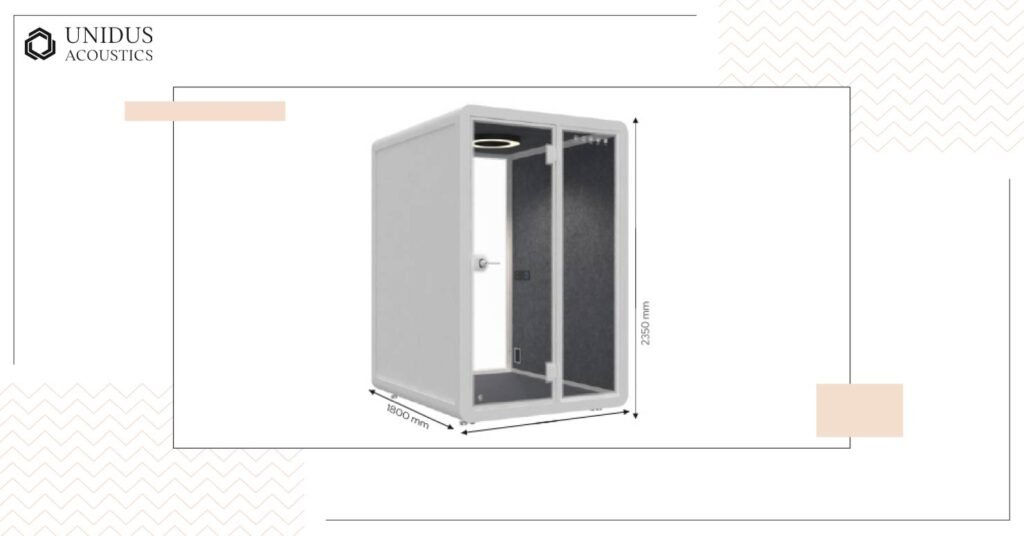
Larger pods accommodate small groups, typically between four and six people. They function as informal meeting rooms without any of the construction involved. The use cases are broader: collaborative working sessions, quick team huddles, client-facing conversations that don’t warrant a full boardroom, or breakout discussions during a longer working day.
The acoustic demands are also somewhat different. With more people inside, managing the internal acoustics of the pod itself becomes relevant, not just the sound isolation from outside. Fabric-wrapped interiors and sound-absorbing ceiling panels within the pod contribute to a more comfortable acoustic environment for the occupants, reducing internal reverberation.
The footprint of a team pod is larger, so placement within the floor plan needs more thought. It’s worth considering sightlines, access routes, and how the pod reads within the overall spatial composition of the space.
Lounge and Breakout Configurations
Some projects call for configurations that sit between focused work and informal meetings. Lounge pods or breakout enclosures can serve as informal collaboration zones, or quiet retreat spaces where occupants can decompress without fully stepping away from the floor. These tend to be more open in configuration than a sealed phone booth, and the acoustic performance is correspondingly different. They reduce noise intrusion rather than eliminating it, which is appropriate for the use case.
Where Acoustic Pods Work Best
Acoustic pods are not a universal solution. They work well in specific contexts, and understanding those contexts is part of specifying them appropriately.
Corporate Offices
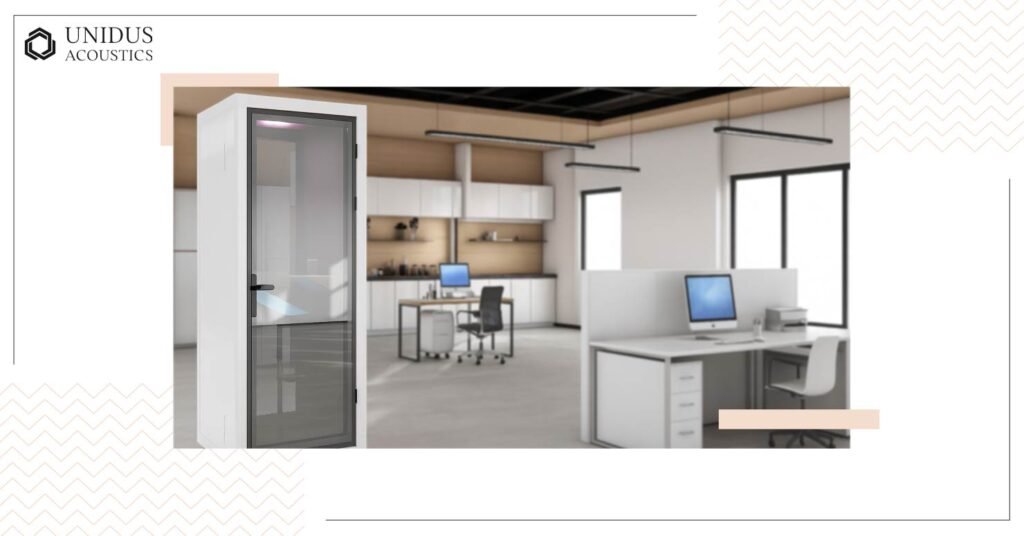
This is where demand is highest. Large corporate floors, particularly those that have moved away from private offices toward open-plan layouts, consistently struggle with noise and privacy. Acoustic pods, whether a single-person soundproof pod or a larger team enclosure, allow companies to retain the collaborative feel of an open plan while providing occupants with functional, contained spaces when they need them. They’re also a visible signal to employees that their working environment has been thought through.
Co-Working and Flex Spaces
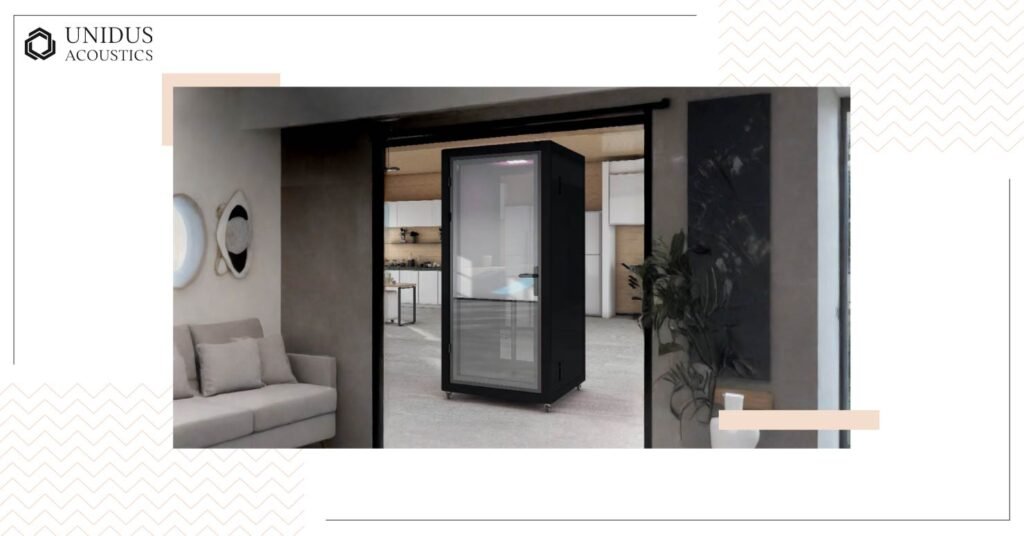
Co-working environments have an acute version of the privacy problem. Members from different organisations are sharing the same floor, and confidential conversations happen on both sides. Acoustic pods are a natural fit here, both as a practical product and as a differentiator for the space operator. The mobility of well-specified pods is particularly valuable in co-working contexts, where the layout of the floor may need to adapt as the membership mix changes.
Hospitality and Hotel Lobbies
Hotel lobbies, airport lounges, and high-end hospitality spaces are increasingly incorporating acoustic pods as both a functional offering and a design feature. A pod in a hotel lobby gives guests a contained space to take a call or hold a quick meeting without retreating to their room. Done well, the pod becomes part of the spatial composition rather than something that sits awkwardly in a corner.
Healthcare and Institutional Spaces
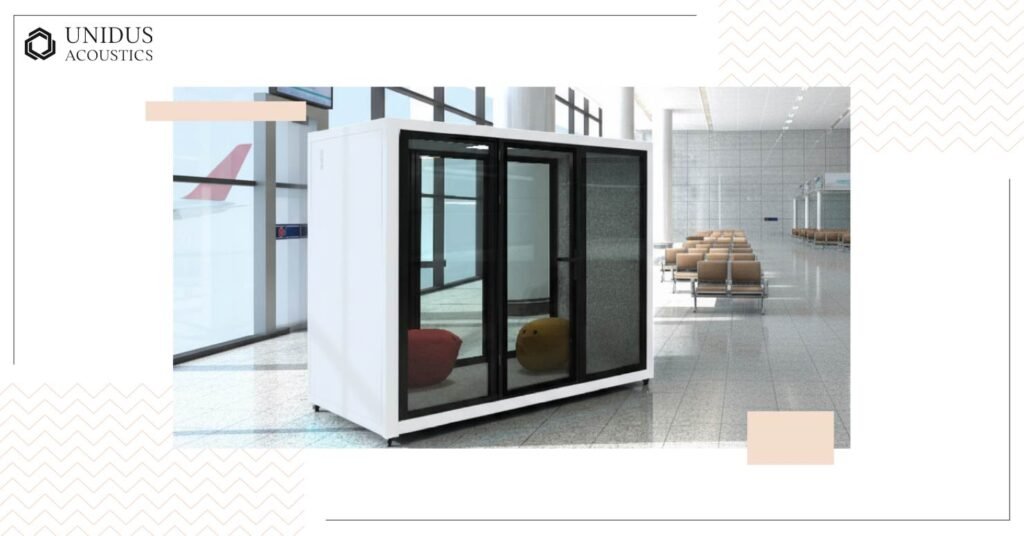
Confidentiality requirements in healthcare settings are significant. Consultation areas, administrative offices, and patient-facing reception spaces all benefit from contained acoustic environments. The no-civil-work installation profile of acoustic pods is particularly relevant in operational healthcare facilities, where disruption to the environment is a genuine constraint.
What to Look for When Specifying Acoustic Pods
Sound isolation is the starting point. Look beyond marketing language and check the actual construction: double-glazed glass panels, composite cavity wall structures, and multi-step door seal systems all contribute meaningfully to real-world performance. A pod with single-layer glass and a poorly sealed door will disappoint, regardless of how it photographs.
Does the Acoustic Pod Have Active Ventilation?
Ventilation is underestimated more often than it should be. A sealed enclosure that becomes stuffy within ten minutes is one that occupants actively avoid. Look for certified ventilation systems that maintain air quality during extended use, not passive gaps in the structure. This single factor determines whether a pod gets used regularly or quietly ignored after the first week.
What Is the Interior Finish Quality?
Fabric-wrapped walls and sound-absorbing ceiling interiors within the pod contribute to acoustic performance inside the enclosure, not just to appearance. Polypropylene carpet flooring adds to both acoustic quality and the sense of a properly fitted space. A bare, functional interior and a considered interior feel very different to someone spending 20–30 minutes on a call inside.
Can the Acoustic Pod Be Relocated?
Mobility is worth building into the specification from the start. Pods with lockable castors can be repositioned without specialist contractors, which gives the layout genuine long-term flexibility. This matters more than it seems at the time of initial installation, particularly for clients on three to five-year leases who may reconfigure the floor more than once.
Do Acoustic Pods Have Adequate Power and Connectivity?
Power and connectivity often get overlooked at the specification stage and become a source of frustration after handover. Universal power sockets, USB supply, and sensor-based interior lighting are the details that determine how useful a pod is day to day. A pod without adequate power access is one occupants leave as soon as their laptop battery runs low.
What Exterior Finish and Colour Options Are Available?
Exterior finish and colour range influence how well the pod integrates with the surrounding design. White and black are the most common options, but confirm what is available before the colour palette for the space is finalised. A pod that clashes with the interior reads as an afterthought rather than a designed element.
Looking for UNIPOD specifications for a tender document or project brief?
Contact us and the team will share technical documentation, dimensions, and product details for your project.
How to Integrate Acoustic Pods into a Design
Acoustic pods work best when they’re part of the spatial composition from the start of the design process, not added at the end because someone raised a concern about noise. When pods are incorporated early, they influence the floor plan positively, helping to define zones and create a sense of spatial variety within a large open floor.
How to Place Acoustic Pods Within a Commercial Floor Plan
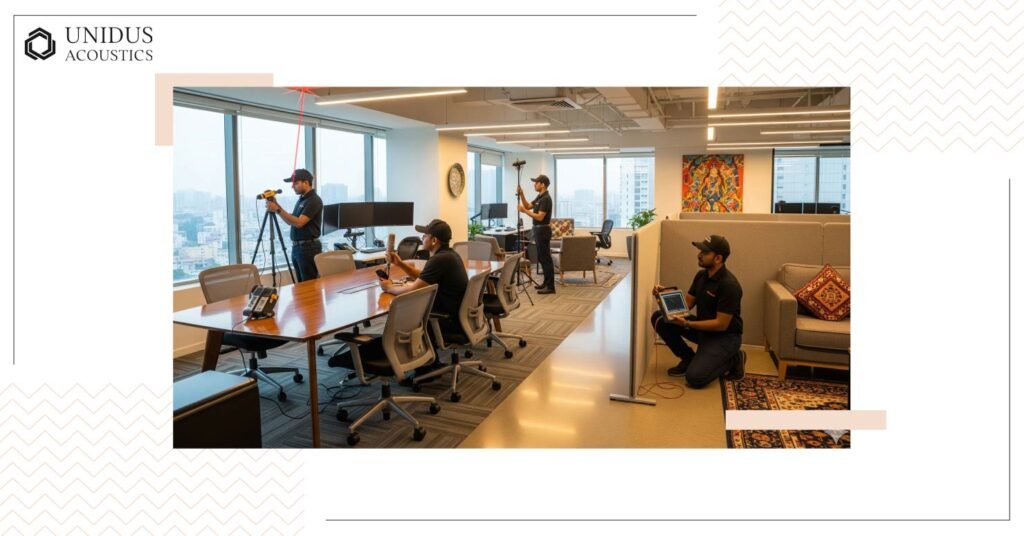
The placement of pods within a floor plan deserves the same attention as any other piece of the spatial puzzle. Pods positioned near high-traffic routes create queuing problems and reduce the sense of privacy they’re meant to provide. Pods tucked too far from the main working area get underused because the walk to them feels like a disruption to the working day.
Mid-floor placement, away from high-traffic corridors but accessible from the main desk clusters, tends to work well in corporate environments. In hospitality settings, placement near natural transition zones, between a lobby and a working lounge, for instance, allows pods to serve multiple user groups without feeling like they belong to none of them.
Integrating Acoustic Pods Into the Design Composition
A pod in a well-designed space should look like it belongs there. This is partly about colour, which should complement or deliberately contrast with the surrounding palette rather than simply defaulting to the first available option. It’s also about scale. A single-person booth in a very large open floor can look underscaled and isolated. Grouping two or three pods together, or positioning them adjacent to other spatial elements, gives them more presence in the composition.
Lighting inside and around the pod also contributes to integration. Sensor-based internal lighting means the pod reads differently when occupied versus empty, which adds a subtle layer of legibility to the floor without requiring signage.
Common Mistakes When Specifying Acoustic Pods
The most frequent mistake is treating acoustic pods or soundproof pods as an afterthought. They get added to the spec late, squeezed into corners that weren’t planned for them, and the result is a product that feels out of place rather than part of the design.
The second most common mistake is specifying aesthetics alone. A pod that looks good but has inadequate sound isolation, poor ventilation, or no power supply will generate complaints from day one. Performance and finish need to be evaluated together.
Underspecifying the number of pods relative to the size of the floor is also common. One phone booth for a floor of sixty people creates queuing, reduces perceived availability, and means occupants stop trying to use it. The right ratio depends on the nature of the work being done on the floor, but it’s worth factoring in during the planning phase rather than trying to add more pods after handover.
UNIPOD by Unidus Acoustics
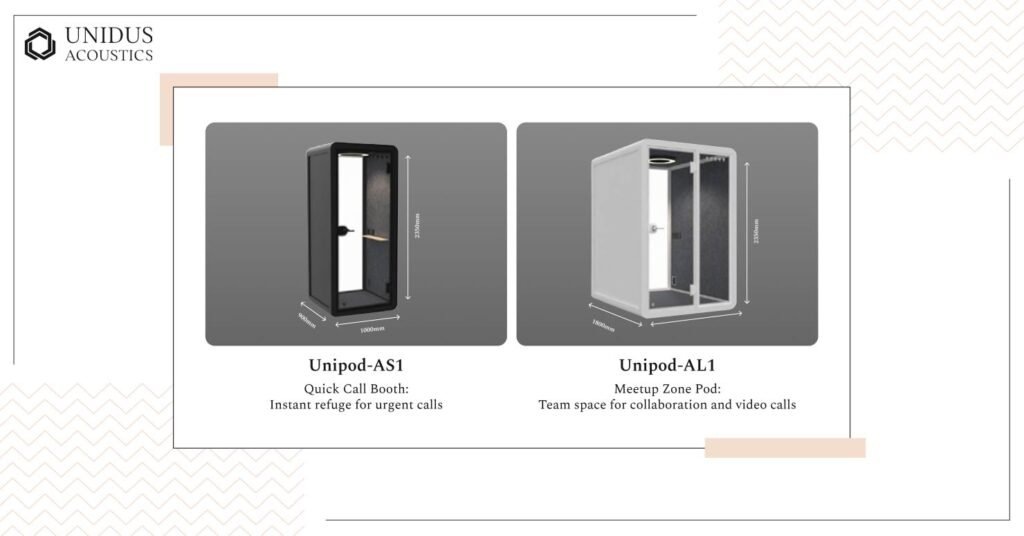
Unidus Acoustics has been designing and delivering acoustic solutions for commercial spaces across India for 40 years. From acoustic wall panels and ceiling systems to baffles, clouds, and space division solutions, the work spans every layer of a commercial acoustic project. The UNIPOD range brings that depth of experience into a pod product built specifically for modern Indian workplaces, with the structural and functional standards that architects and designers need when specifying for demanding clients.
The UNIPOD AS1 is a single-person quick call booth. It features double-glazed glass on both sides, a cavity wall structure with composite material and film veneer, a UL-certified multi-way ventilation fan, and sensor-based LED lighting at 4000K. The aluminium alloy handle uses a double-click locking mechanism for sound blocking. Interior finish includes polypropylene carpet and textured fabric-wrapped interiors. It comes in white and black, with outer frame dimensions of 1000 x 1200 x 2300mm and an inner frame of 840 x 1016 x 2040mm. Net weight is 340kg. Power supply is 11-220V/50Hz with 12V USB.
The UNIPOD AL1 is the larger format, a meetup zone pod for four to six people. It shares the same construction and material standards as the AS1, with an outer frame of 2200 x 1600 x 2300mm, an inner frame of 2040 x 1425 x 2040mm, and a net weight of 530kg. It functions as a flexible informal meeting room wherever a permanent room isn’t an option, and is particularly suited to co-working environments, corporate floors, and hospitality projects where team conversations happen throughout the day.
| UNIPOD AS1 | UNIPOD AL1 | |
|---|---|---|
| Configuration | Single-person quick call booth | Multi-person meetup pod |
| Occupancy | 1 person | 4 to 6 people |
| Outer Dimensions | 1000 x 1200 x 2300 mm | 2200 x 1600 x 2300 mm |
| Inner Dimensions | 840 x 1016 x 2040 mm | 2040 x 1425 x 2040 mm |
| Net Weight | 340 kg | 530 kg |
| Glazing | Double-glazed glass on both sides | Double-glazed glass on both sides |
| Wall Construction | Composite cavity with film veneer | Composite cavity with film veneer |
| Ventilation | UL-certified multi-way fan | UL-certified multi-way fan |
| Lighting | Sensor-based LED at 4000K | Sensor-based LED at 4000K |
| Door Seal | Double-click aluminium alloy, multi-step | Double-click aluminium alloy, multi-step |
| Interior Finish | Polypropylene carpet, fabric-wrapped walls | Polypropylene carpet, fabric-wrapped walls |
| Power | 11–220V / 50Hz, 12V USB | 11–220V / 50Hz, 12V USB |
| Mobility | Lockable castors | Lockable castors |
| Available Colours | White, Black | White, Black |
| Best Suited For | Individual calls, video meetings, focused work | Team huddles, informal meetings, and client conversations |
Both models include lockable wheels for repositioning, a universal power socket with USB, double-glazed glass on both sides, and two-step door seals for sound blocking. Furniture, transport, installation, and taxes are charged separately.
With 40 years of expertise, a presence across 16+ cities, and a client portfolio that includes Air India, AIIMS, TCS, Infosys, SBI, Reliance, and Ashoka University. Unidus Acoustics brings both the product range and the project experience to support acoustic pod specifications at any scale, across India.
To discuss UNIPOD options for your next project, contact the team now.
Frequently Asked Questions About Acoustic Pods
1. How do I choose between a single-person booth and a multi-person meeting pod?
The right configuration depends on how the space is actually used. A single-person phone booth suits individual calls, video conferencing, and focused work requiring concentration. A multi-person pod suits group discussions, team huddles, and client-facing conversations involving four to six people. In most corporate floors, both configurations are needed rather than just one.
2. Can acoustic pods be relocated after installation?
Yes. Pods with lockable castors can be repositioned without specialist contractors or structural work. This is one of the primary differences from built meeting rooms. A pod can move with a business when a lease changes or when the floor layout is reconfigured.
3. Do acoustic pods replace acoustic wall panels and ceiling treatment?
No. Pods and acoustic treatment to walls and ceilings solve different parts of the same problem. Treatment with baffles, clouds, and panels reduces ambient reverberation across a room, making the space more comfortable for everyone. Pods create contained zones of privacy within that space for calls and confidential conversations. A well-specified commercial project typically needs both, not one or the other.
4. What makes an acoustic pod actually effective at sound isolation?
Real-world isolation performance comes from three construction elements working together: double-glazed glass panels, a composite cavity wall structure, and a multi-step door seal system. A pod that has single-layer glass or a poorly fitted door will not perform to expectations, regardless of the NRC figures quoted in the brochure. Active ventilation also matters, as a properly sealed pod without airflow becomes uncomfortable and stops getting used.
5. How many acoustic pods does an office floor need?
This depends on the nature of the work being done and the number of people on the floor. As a rough starting point, one single-person booth for every 15 to 20 desk-based employees is a reasonable planning figure for an office with regular call activity. Underspecifying the number is the most common mistake. One booth for sixty people creates visible queuing and effectively puts the product out of use.