
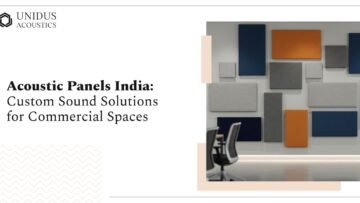
Acoustic panels are surface-mounted or suspended sound absorption panels designed to control how sound behaves within an enclosed space. They work by absorbing sound waves that would otherwise reflect off hard surfaces such as glass, concrete, or stone, converting that sound energy into a small amount of heat. This reduces echo, lowers reverberation, and improves speech intelligibility. Unlike soundproofing, which blocks sound from passing between rooms, acoustic panels manage sound within the room itself.
Key Takeaways
- Acoustic panels absorb sound waves rather than reflecting them, reducing echo and reverberation within a commercial space without changing the building’s structure.
- Acoustic panels manage sound within a room. They are not soundproofing, which blocks sound from travelling between rooms. For most commercial spaces, absorption delivers the greater impact.
- Custom solutions are necessary because every space has a unique sound signature driven by layout, ceiling height, surface materials, and occupancy patterns. Generic panels rarely solve deeper acoustic challenges.
- Five main panel types are used in Indian commercial spaces: fabric-wrapped, wooden and slatted, polyester and PET, perforated, and ceiling-mounted suspended systems.
- Panels work best as part of a layered acoustic strategy, combined with ceiling baffles, space dividers, and insulation rather than deployed as standalone wall fixes.
- The right manufacturer brings technical understanding of acoustics as a system, not a product catalogue. Space geometry, usage patterns, and surface interactions all influence the outcome.
Types of Acoustic Panels in India Used in Commercial Spaces
Modern commercial spaces demand acoustic solutions that perform well and integrate seamlessly with design intent. Acoustic panels in India today offer flexibility across materials, finishes, and applications.
1. Fabric-Wrapped Acoustic Panels
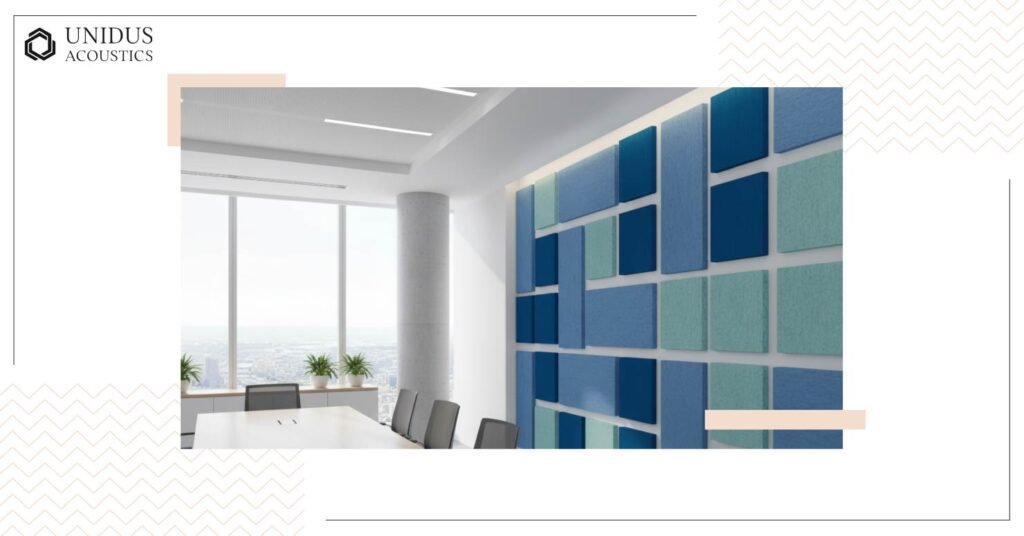
Fabric-wrapped panels remain one of the most effective sound absorption panels for commercial interiors. They feature an absorptive core wrapped in acoustically transparent fabric, allowing sound to pass through and dissipate.
These panels suit offices, meeting rooms, training centres, and healthcare spaces where speech clarity matters most. Designers often choose them for their flexibility in colour, texture, and form. Fabric-based systems integrate seamlessly with wall panels, partitions, and ceiling applications to enhance productivity and well-being without visual clutter.
2. Wooden & Slatted Acoustic Panels
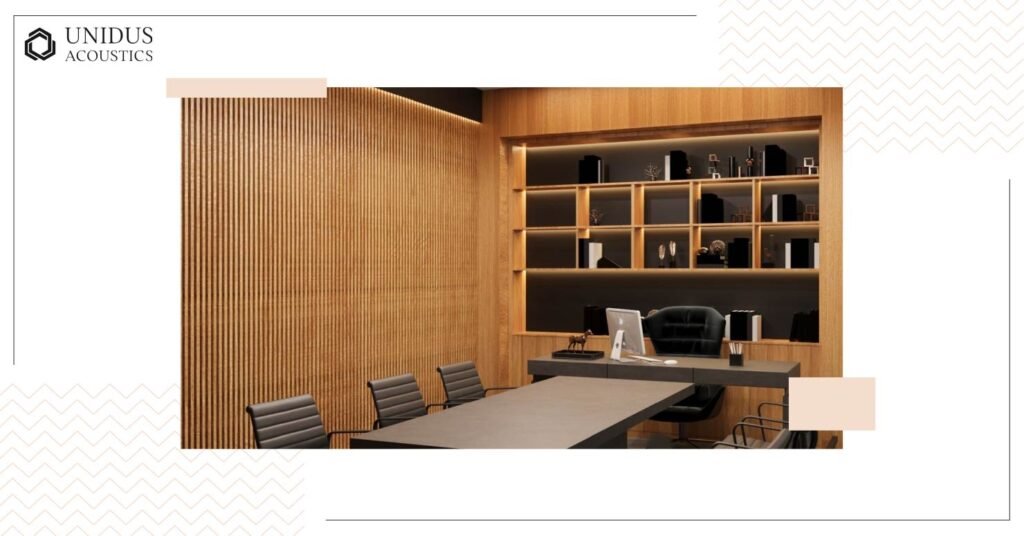
Wooden and slatted acoustic panels bring warmth and structure to interiors while delivering effective sound management. Their slatted design diffuses sound waves, reducing echo without fully absorbing all frequencies.
These panels work especially well in corporate lobbies, boardrooms, hospitality spaces, and auditoriums where aesthetics carry equal weight. Wooden acoustic panels balance form and function by pairing wooden finishes with acoustic backings, ensuring the space looks refined and sounds controlled.
3. Polyester & PET Acoustic Panels
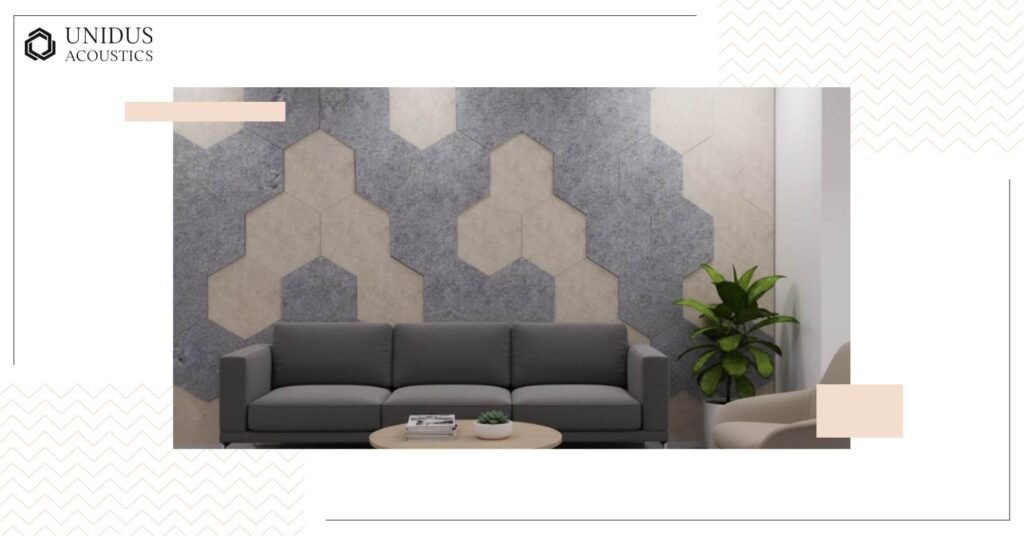
Polyester and PET panels offer sustainable, durable acoustic solutions for high-use environments. Made using recycled materials, they support eco-conscious design goals while delivering reliable noise reduction.
These panels suit educational institutions, collaborative offices, and public buildings. Their lightweight nature allows flexible installation across walls, ceilings, and space dividers. PET-based systems can be integrated into modular wall panels and ceiling solutions, offering value for money without compromising performance.
4. Perforated Panels
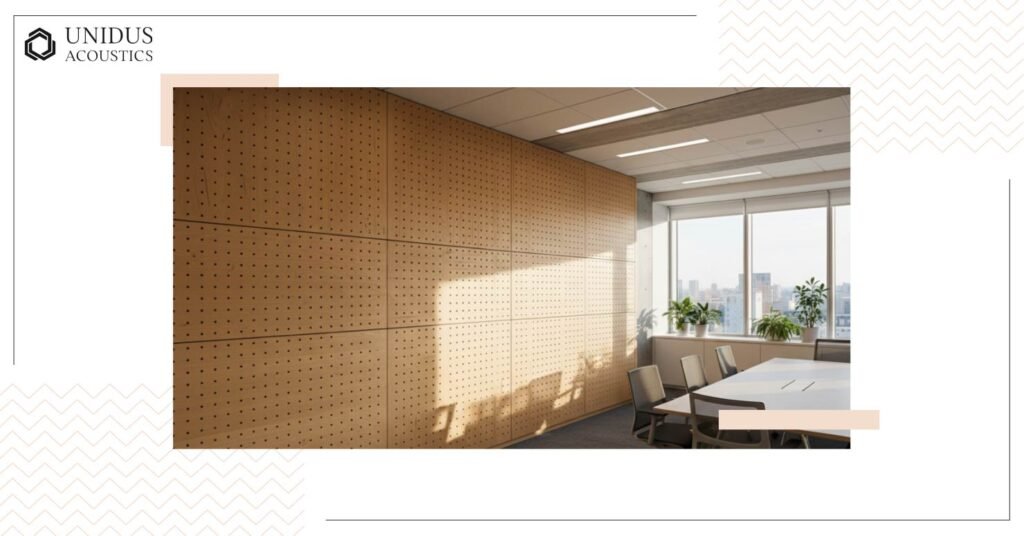
Perforated acoustic panels use precision-cut holes to manage sound absorption and diffusion. They combine structural strength with acoustic performance, making them suitable for high-traffic commercial spaces. Metal and wood perforated panels often appear in auditoriums, transport hubs, and large offices. Embossed acoustic wall panels further merge artistic expression with acoustic innovation, creating striking three-dimensional surfaces while improving sound diffusion and absorption across diverse environments.
5. Ceiling-Mounted & Suspended Panels
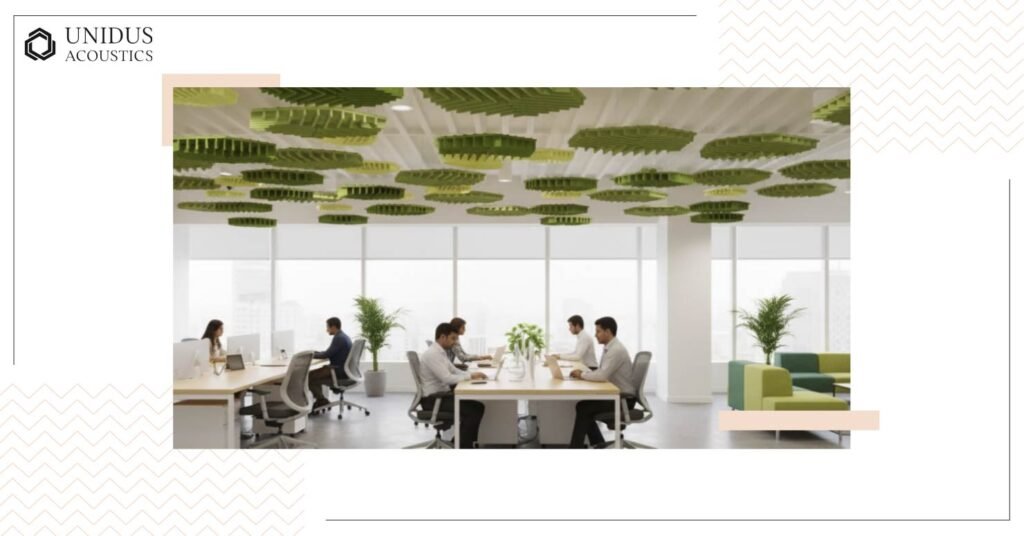
In large commercial interiors, ceilings play a crucial role in sound management. Suspended baffles, ceiling clouds, and acoustic rafts absorb sound from above, reducing overall reverberation. These solutions work well in open-plan offices, convention centres, and hospitality venues. Ceiling systems can also integrate lighting, insulation, and acoustic control, supported by reliable manufacturing and quality standards for consistent results.
Discover How Unidus Acoustic Panels Blend Style and Sound
Comparing Types of Acoustic Panels
| Panel Type | Primary Function | Best Application | Key Design Benefit |
|---|---|---|---|
| Fabric-Wrapped | Mid to high frequency absorption | Offices, meeting rooms, healthcare | Wide colour and texture customisation |
| Wooden / Slatted | Sound diffusion, moderate absorption | Boardrooms, lobbies, auditoriums | Warm natural aesthetic |
| PET / Polyester | Mid to high frequency absorption | Collaborative offices, educational institutions | Sustainable, lightweight, printable |
| Perforated | Absorption and diffusion | Auditoriums, transport hubs, large offices | Structural strength, contemporary finish |
| Ceiling-Mounted / Suspended | Overhead reverberation control | Open-plan offices, convention centres, hospitality | Integrates with lighting and insulation |
How Space Variables Shape the Acoustic Solution
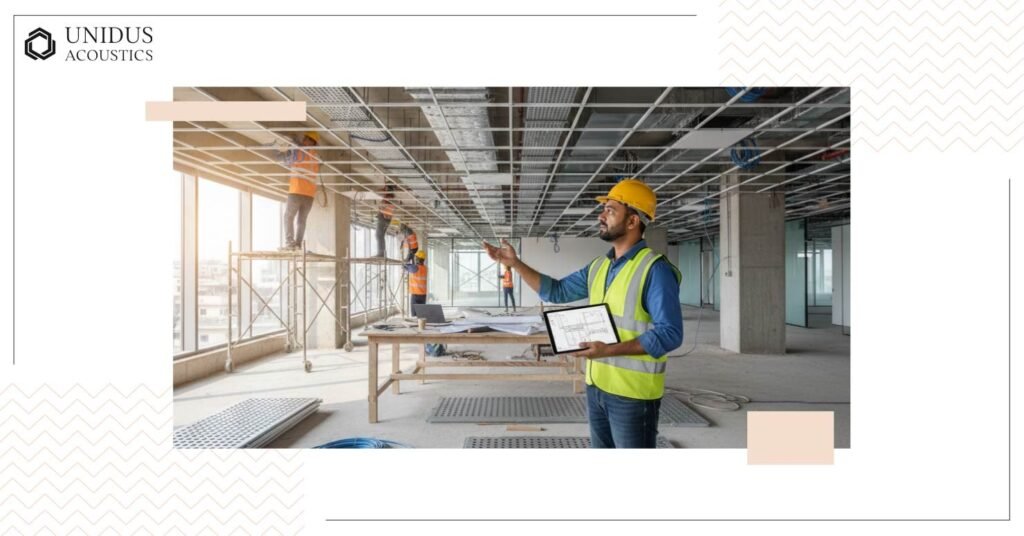
Large floor plates need different absorption strategies than compact rooms. Surface area, room volume, and occupancy density together guide how many panels are required and where they should sit. High ceilings are a compounding factor because they increase reverberation time significantly; panels must work both vertically and horizontally to bring that under control without overwhelming the design.
The dominant noise source also matters. Speech noise, mechanical equipment hum, and ambient crowd chatter sit in different frequency ranges and respond to different materials. A space where overlapping conversations are the main problem calls for high-absorption fabric or PET panels. A space with low-frequency mechanical noise needs denser solutions, often combined with insulation materials.
Interior layout affects how sound travels through a space before it even reaches a wall. Furniture placement, partition positions, glazed surfaces, and flooring all influence sound paths. Acoustic panels integrated early into layout planning work with the room rather than against it. Panels added after construction often end up addressing symptoms rather than causes.
Discover bespoke acoustic solutions tailored to your design and sound needs.
Applications of Acoustic Panels in Commercial Spaces
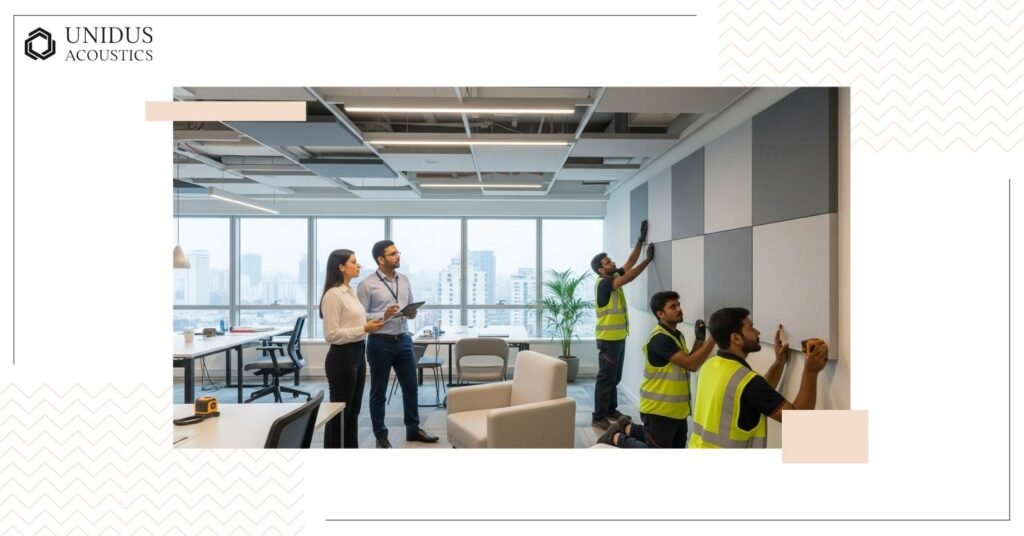
Acoustic panels in India influence far more than sound levels. They shape how people think, interact, and feel within a space. In commercial environments, acoustic panels work best when paired with complementary ceiling systems, dividers, lighting, and insulation to create a cohesive sound strategy rather than isolated fixes.Below is a list of how acoustic panels in India are applied in commercial spaces to manage sound and enhance the overall experience:
1. Acoustic Panels for Corporate Offices and Co-Working Spaces

In open-plan offices, acoustic panels play a key role in reducing background noise from conversations, phone calls, and constant movement. By absorbing sound at the wall level, they improve speech clarity, limit sound spill between teams, and help employees maintain concentration. Better acoustic control reduces mental fatigue, supports productivity, and allows collaboration to happen without creating distracting or stressful work environments.
When acoustic panels are integrated with ceiling baffles, sound control extends beyond wall surfaces. Panels manage lateral noise, while baffles absorb sound that builds up overhead in large floor plates. This layered approach improves overall balance, reduces reverberation, and maintains acoustic comfort without compromising openness or flexibility.
2. Acoustic Panels for Conference Rooms and Boardrooms
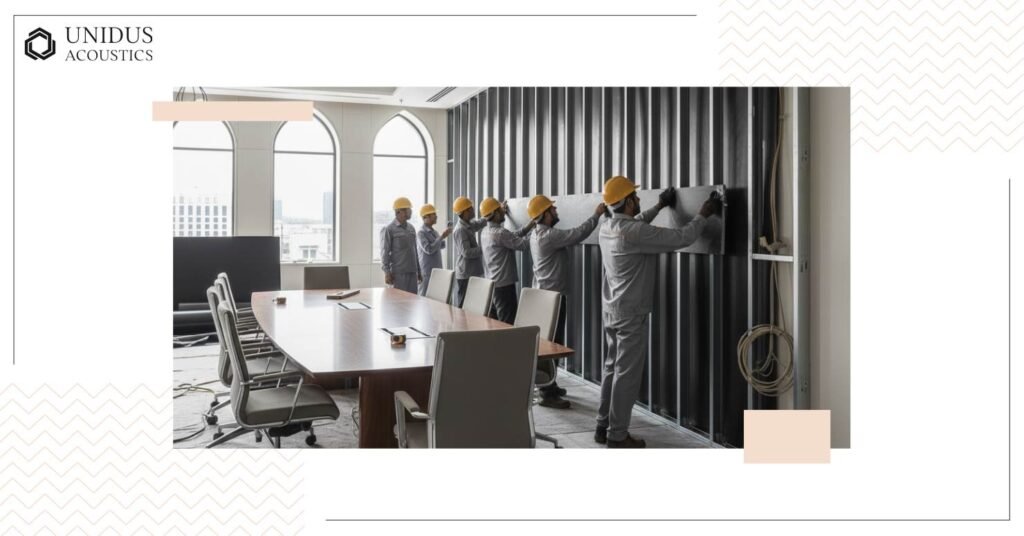
In conference rooms, acoustic panels improve communication by controlling sound reflections from walls. Hard finishes such as glass, wood, and stone often cause echo, making speech unclear and increasing listening effort. Panels help maintain consistent speech intelligibility across seating positions, supporting focused discussions, presentations, and virtual meetings without vocal strain or repeated clarification.
Integrating acoustic panels with ceiling-mounted acoustic clouds enhances this clarity further. Wall panels absorb reflected speech at listener height, while ceiling clouds manage overhead reverberation. Together, they create a balanced acoustic environment that supports clear dialogue throughout the room without altering the formal tone or visual character of the space.
3. Acoustic Panels for Restaurants, Hotels, and Hospitality Venues
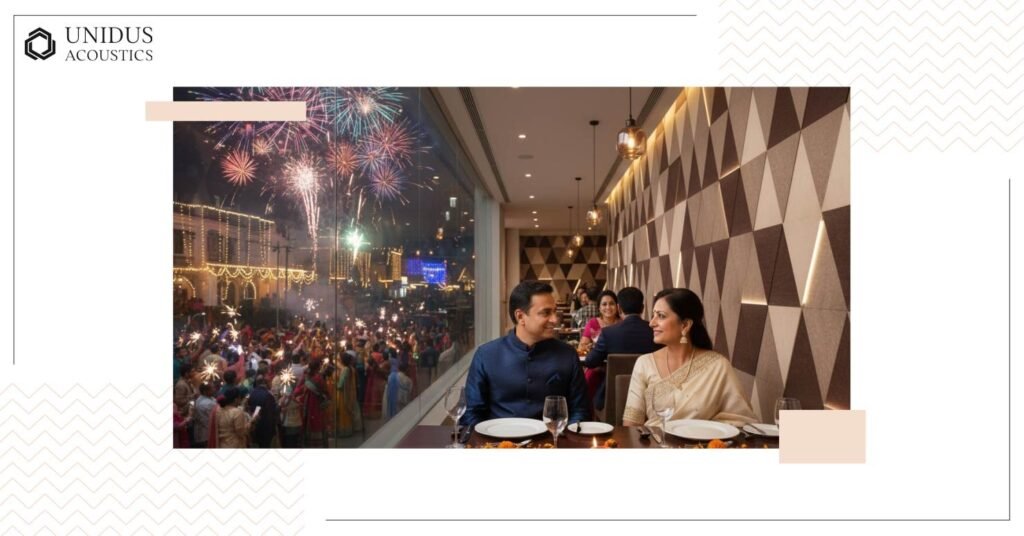
In hospitality settings, acoustic panels help manage excessive noise caused by conversations, crowd movement, and hard interior surfaces. By absorbing mid-range sound, they reduce overall loudness and improve speech comfort, allowing guests to converse easily. Effective sound control supports a relaxed atmosphere, encourages longer stays, and improves the overall dining or hospitality experience without dulling the space’s energy.
When acoustic panels are integrated with open-cell ceiling systems, sound management becomes more consistent across larger volumes. Wall panels control conversational noise, while ceiling systems reduce reverberation from high or open ceilings. This combination maintains visual openness while delivering better acoustic comfort throughout the space.
4. Acoustic Panels for Schools, Lecture Halls, and Training Centres
In classrooms and training environments, acoustic panels improve learning conditions by reducing echo and reflected noise from walls. Clear speech is essential for comprehension, attention, and retention, especially in larger rooms. Panels help ensure that students across all seating positions hear instructions clearly, while also reducing vocal strain for educators during extended teaching sessions.
Integrating acoustic panels with ceiling baffles strengthens sound control across the room. Wall panels enhance speech intelligibility at listening height, while ceiling baffles reduce reverberation in higher volumes. Together, they create balanced acoustic conditions that support lectures, discussions, and collaborative learning activities.
5. Acoustic Panels for Hospitals and Healthcare Environments
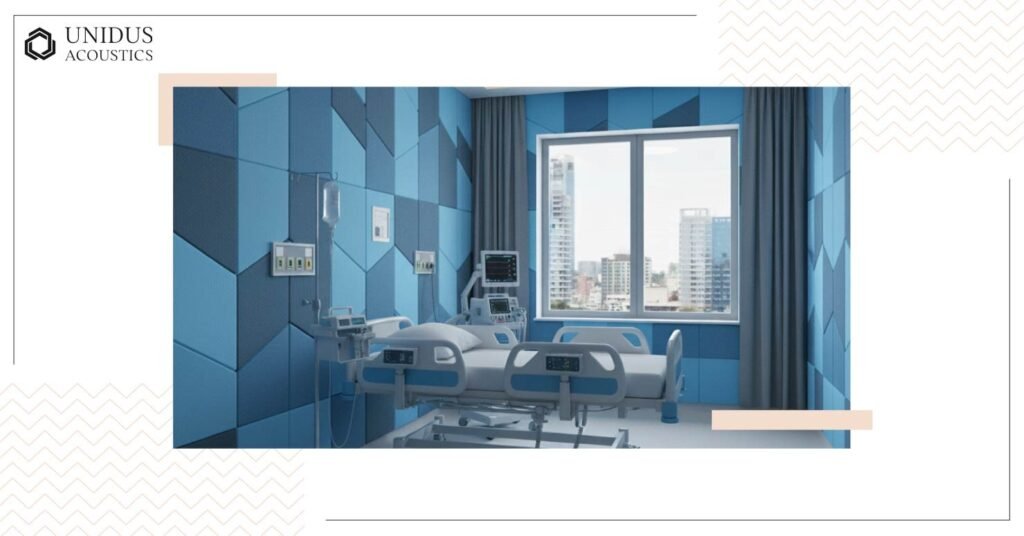
In healthcare environments, acoustic panels help reduce ambient noise in waiting areas, corridors, and consultation rooms. Excessive sound increases stress for patients and fatigue for staff, while also affecting privacy. By absorbing background noise, panels contribute to calmer spaces that support recovery, improve communication, and create a more reassuring environment.
When acoustic panels are integrated with acoustic dividers, sound control becomes more localised and effective. Panels manage overall noise levels, while dividers limit sound transfer between adjacent areas. This approach improves privacy and acoustic comfort without requiring permanent construction or disrupting clean, organised interiors.
6. Acoustic Panels for Auditoriums, Studios, and Performance Spaces
In performance spaces, acoustic panels help control sound reflections that affect clarity and balance. Without proper absorption, echoes and uneven sound distribution can distort music and speech. Panels manage excess sound energy, supporting consistent listening experiences across audience areas and improving overall sound quality.
Integrating acoustic panels with suspended ceiling elements adds further control. While panels provide targeted absorption and diffusion, ceiling systems manage reflections and vibration at height. Together, they create a layered acoustic strategy that enhances immersion while preserving the scale, character, and function of the space.
Discover how you can make every space sound better with Unidus Acoustics solutions
Benefits of Installing Acoustic Panels in Commercial Buildings
Acoustic panels in India do more than reduce noise—they shape experiences, influence behaviour, and enhance performance. In commercial spaces, well-designed panels improve productivity, comfort, and brand perception while keeping spaces functional and natural.
1. Enhanced Speech Intelligibility
Clear communication sits at the heart of every successful commercial environment. Acoustic panels reduce echo and control reverberation, allowing speech to travel cleanly without competing background noise. In offices, this means meetings feel more focused, and conversations remain intelligible across open layouts.
In hospitality and education spaces, it ensures voices carry naturally without strain. By managing how sound reflects within a room, acoustic panels create clarity without the need to raise voices or repeat information, making everyday interactions smoother and more effective.
2. Improved Employee Well-Being
Excessive noise often goes unnoticed until it begins to affect energy levels and concentration. Constant background chatter, ringing phones, and reverberation contribute to mental fatigue and stress. Acoustic panels absorb unwanted noise and create calmer sound environments, helping employees stay focused for longer periods. Controlled acoustics support enhanced productivity and well-being by reducing sensory overload. Over time, quieter, better-balanced spaces also contribute to improved morale and reduced burnout, particularly in open-plan workplaces and high-pressure environments.
3. Better Customer Experience
How a space sounds influences how long people choose to stay. In restaurants, cafés, hotels, and retail environments, excessive noise can shorten visits and affect overall satisfaction. Acoustic panels soften sound without dulling the atmosphere, allowing conversations to flow comfortably.
Guests feel more relaxed, engaged, and at ease when spaces sound welcoming rather than overwhelming. This positive experience subtly strengthens brand perception and encourages repeat visits, making sound management an important part of customer-focused design.
4. Compliance with Acoustic Standards
Many commercial buildings must meet specific acoustic standards and workplace guidelines, especially in offices, educational institutions, healthcare facilities, and public venues. Professional acoustic solutions help control reverberation times and background noise levels in line with these requirements.
Acoustic panels in India provide a practical way to achieve compliance without extensive structural changes. By addressing acoustic performance early, businesses avoid costly retrofits while creating environments that support comfort, clarity, and safety from day one.
5. Aesthetic Enhancement
In today’s post-pandemic work environment, where hybrid work models and flexible commercial spaces are the norm, acoustic panels play a vital role in both performance and design. Modern acoustic solutions no longer appear as technical add-ons. Instead, they combine form and function to support adaptable, visually engaging interiors.
Acoustic panels are now available in sustainable materials, modular formats, and trend-led finishes that reflect 2024/2025 interior design preferences, including natural textures, soft colour palettes, and customisable patterns. Whether used as subtle wall treatments or statement design features, these panels integrate seamlessly into contemporary interiors, enhancing visual appeal while supporting comfort, focus, and acoustic clarity.
6. Long-Term Cost Efficiency
Acoustic panels offer lasting value when designed and installed correctly. Durable materials maintain performance over time with minimal maintenance, while effective sound management reduces the need for frequent redesigns or disruptive modifications.
Improved productivity, enhanced user comfort, and better space utilisation all contribute to long-term returns. By addressing acoustic challenges at the design stage, businesses achieve value for money through reduced operational strain and more efficient use of their commercial environments.
Explore Unidus Acoustics Prototyping & Manufacturing and Bring Your Ideas to Life
Choosing the Right Acoustic Panel Manufacturer in India
Selecting the right acoustic panel manufacturer plays a decisive role in how effectively a space performs over time. Acoustic solutions are not decorative add-ons; they influence comfort, productivity, and long-term usability. The right partner brings technical understanding, design sensitivity, and execution discipline to every stage of the project.
Understanding Acoustic Solutions Beyond Products
A reliable manufacturer understands acoustics as a system, not a standalone product. Sound behaviour depends on space geometry, surface finishes, usage patterns, and occupancy.
Manufacturers who focus only on panels often miss the larger picture. The right partner evaluates how walls, ceilings, furniture, and materials interact, ensuring sound absorption and noise reduction work together to achieve balanced results.
Customisation Capabilities
Every commercial space presents unique acoustic challenges. A conference room, hospital corridor, open office, and auditorium cannot share the same solution.
Manufacturers should offer bespoke acoustic solutions that adapt to space size, ceiling height, layout, and sound sources. Customisation in materials, finishes, colours, and panel formats ensures acoustic performance integrates seamlessly with design intent rather than competing with it.
Material Quality and Certifications
Material selection directly affects acoustic performance and longevity. High-quality acoustic panels maintain consistent sound absorption over time and withstand daily commercial use.
Certifications and performance testing provide assurance that panels meet required standards. A manufacturer with multi-material expertise—across wood, metal, fabric, felt, and insulation—offers greater flexibility in balancing durability, sustainability, and aesthetic integration.
Installation Support and Execution
Even well-designed acoustic panels can underperform if installation lacks precision. Professional installation support ensures correct placement, alignment, and fixing, reducing disruptions on-site. On-time delivery and coordinated execution help projects stay on schedule, especially in operational commercial environments where downtime carries real cost.
After-Sales Service and Long-Term Support
Acoustic performance does not end at installation. Over time, spaces evolve, layouts change, and acoustic needs shift. Strong after-sales support helps maintain performance, address adjustments, and extend the life of acoustic solutions. This long-term partnership approach adds real value beyond the initial project phase.
Experience in Commercial Projects
Experience signals reliability. Manufacturers with a strong portfolio across offices, hospitality, healthcare, education, and performance spaces understand real-world constraints and collaboration dynamics. The ability to work confidently alongside architects, interior designers, and design-build firms ensures smoother coordination and better outcomes.
Unidus Acoustics provides professional acoustic consultancy in India, offering scientifically backed guidance to architects and installation teams. With local manufacturing and quality control, their solutions align performance with design, ensuring commercial spaces sound as refined as they look.
Get Expert Acoustic Advice – Explore Unidus Acoustics Consultancy Now
Installation Process: How Acoustic Panels in India Are Implemented
Successful acoustic outcomes rely on a clear, step-by-step execution process. When each stage is approached methodically, acoustic solutions deliver consistent performance while integrating seamlessly into commercial interiors.
Step 1: Acoustic Assessment
The process begins with a detailed acoustic assessment. Specialists study noise sources, room geometry, surface materials, and how the space is used throughout the day. This analysis helps identify problem areas and define clear performance goals for sound absorption and noise reduction.
Step 2: Design and Layout Planning
Once requirements are established, the focus shifts to design planning. Acoustic panels are positioned to work in harmony with architectural elements, lighting layouts, and interior finishes. This ensures aesthetic integration while addressing acoustic challenges without disrupting the visual flow of the space.
Step 3: Manufacturing and Quality Checks
After design approval, panels move into production. Local manufacturing enables close quality control across materials, finishes, and construction methods. Each element undergoes checks to ensure it meets performance and durability standards before installation.
Step 4: On-Site Installation
Professional installation teams handle placement and fixing with precision. Efficient coordination minimises disruption to ongoing operations and supports reliable, on-time delivery across commercial projects.
Step 5: Post-Installation Evaluation
The final stage involves performance evaluation. Acoustic measurements and visual checks confirm that sound absorption targets are met and the space performs as intended, completing a well-executed acoustic solution.
Unidus Acoustics offers professional acoustic installations for wall panels, ceiling systems, customised lighting, and phone booths. Their teams focus on precision, reliability, and seamless execution from start to finish.
Explore Unidus Acoustics Professional Acoustic Installations for Seamless Installation
Frequently Asked Questions About Acoustic Panels in India
1. What are acoustic panels?
Acoustic panels are surface-mounted or suspended panels engineered to absorb sound waves within a room. They reduce echo, lower reverberation, and improve speech clarity by converting reflected sound energy into a small amount of heat. They are used across commercial spaces, including offices, auditoriums, hospitals, and educational institutions.
2. What is the difference between acoustic panels and soundproofing?
Acoustic panels manage sound within a room by reducing echo and reverberation. Soundproofing blocks sound from passing between spaces, through walls, floors, or ceilings. For most commercial environments, the primary problem is internal sound quality, which acoustic panels address directly. Soundproofing requires structural intervention and is a separate, more involved undertaking.
3. Which type of acoustic panel is best for an open-plan office in India?
Fabric-wrapped panels and PET panels are the most commonly specified options for open-plan offices. Fabric panels absorb mid to high frequency speech noise effectively and are available in a wide range of colours and textures for design integration. PET panels offer similar acoustic performance with the added benefit of being made from recycled materials, which supports sustainability goals.
4. Can acoustic panels be customised to match an interior design scheme?
Yes. Modern acoustic panels are available in custom colours, finishes, shapes, and sizes. Fabric panels can be matched to brand palettes or upholstery. Wooden panels can be finished in a range of stains and veneers. Perforated metal panels are available in powder-coated finishes and custom perforation patterns. Custom fabrication is standard for most commercial specifications.
5. How long does acoustic panel installation take in a commercial space?
For most commercial environments, acoustic panel installation is completed within one to two days, depending on the scope. Panels are pre-cut and pre-finished before arriving on-site, which reduces the time spent in the space and minimises disruption to ongoing operations. No structural demolition is required.
6. Do acoustic panels help with compliance for commercial buildings in India?
Yes. Many commercial building categories in India, particularly offices, educational institutions, and healthcare facilities, are subject to acoustic performance expectations within broader building quality and occupant comfort standards. Acoustic panels help achieve and demonstrate appropriate reverberation control. For projects seeking green building certifications, panels made from recycled or low-VOC materials also contribute to certification criteria.
Conclusion
Sound shapes how commercial spaces function, feel, and perform. From offices and hospitality venues to healthcare and education environments, acoustic panels in India play a critical role in managing noise, improving clarity, and supporting wellbeing, without compromising design intent. When acoustic solutions are thoughtfully planned, customised, and professionally executed, they transform everyday environments into balanced, comfortable spaces that support productivity and experience.
Unidus Acoustics delivers custom acoustic panel solutions in India through scientifically guided design, local manufacturing, and precise installation. With a solution-led approach that aligns performance, materials, and aesthetics, Unidus Acoustics helps commercial spaces sound as refined as they look.
Ready to improve the acoustic performance of your space?
Connect with Unidus Acoustics for expert assessment and design guidance tailored to your environment. From custom solutions to seamless installation, their team ensures reliable sound control that fits your design vision.