Contemporary architecture increasingly favours open-plan designs that maximise natural light and collaboration. Yet these sleek, beautifully crafted spaces pose a challenge: thoughts and conversations get lost in them. For anyone needing a quiet, private space to make calls or hold a meeting in peace amidst these overwhelming surroundings, acoustic telephone booths provide an ideal solution.
A well-specified acoustic telephone booth goes well beyond soundproofing. It’s a carefully designed enclosure that supports speech clarity, reduces disruption for the people outside it, and gives the person inside genuine privacy. The Unipod by Unidus Acoustics is built around exactly these principles, with materials chosen for both performance and visual fit.
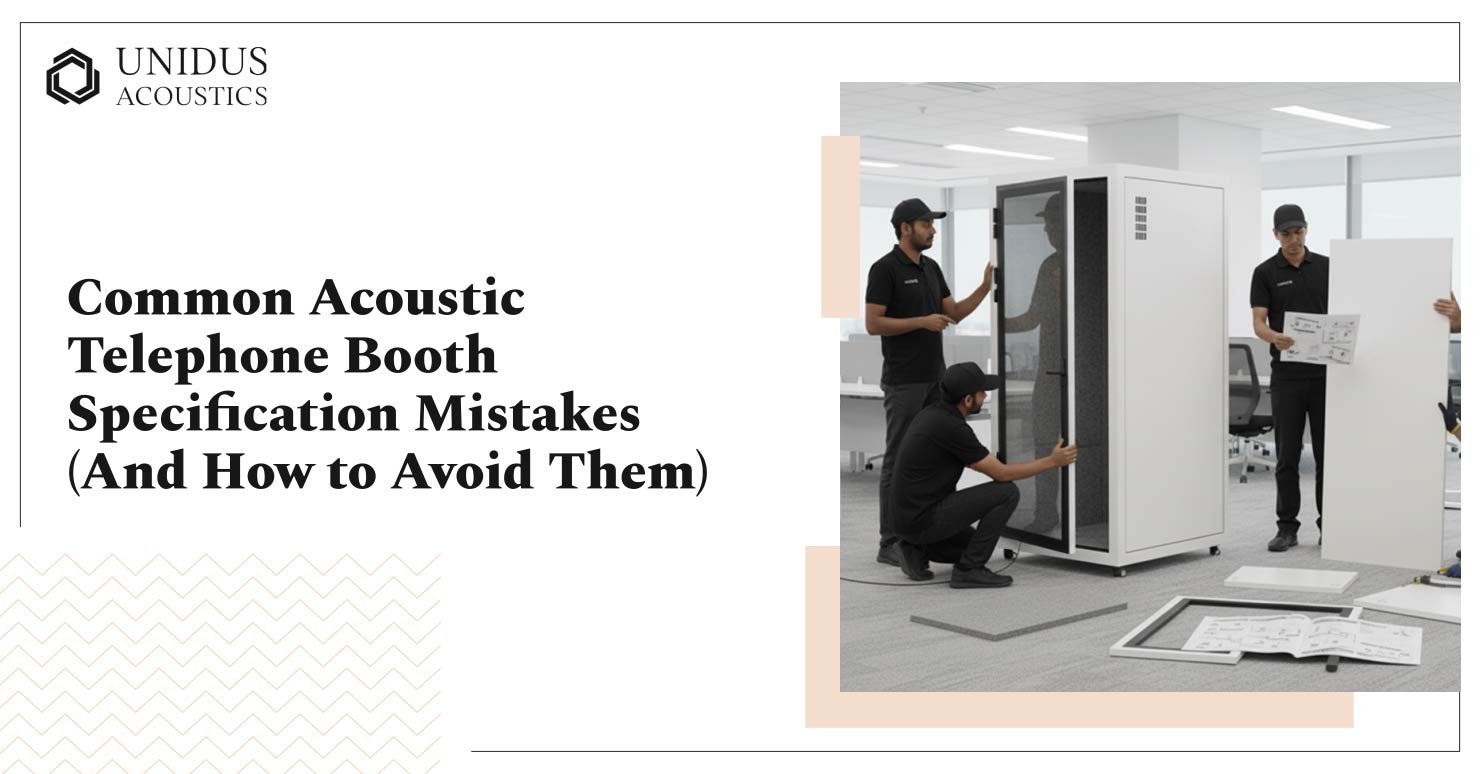
Common Acoustic Telephone Booth Specification Mistakes and Their Solutions
Acoustic Telephone Booths provide immediate relief from noisy surroundings and support the mental well-being of teams working in commercial spaces. They create quieter office areas with design elements and materials that absorb and deaden sound.
For architects or designers, acoustic balance is crucial when creating productive spaces. These booths help maintain this balance. However, careful planning is required to ensure that booths seamlessly integrates with the existing design, striking a balance between form and function.
Below, we focus on four common specification mistakes that designers and planners can avoid to ensure a productive and healthy work environment.
Overlooking Material Choices That Impact Booth Performance
Soundproofing is paramount in a phone booth. After all, the basic reason for installing a booth is to create a quiet space in the office.
Wall thickness plays a significant role in acoustic success, but it’s not the only factor that determines its efficacy. A combination of factors helps maintain a comfortable yet quiet environment. Internal finish in the booth, flooring choice, material of the door, and the sealing quality also significantly impact the noise control level.
To avoid this specification error, consider the following solutions:
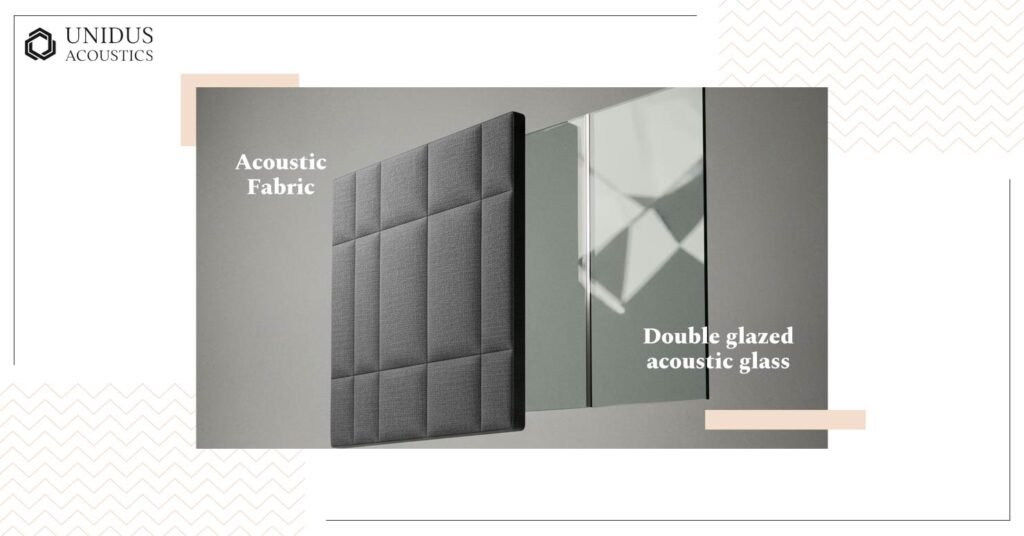
- Soft interior materials, such as acoustic fabric, improve speech intelligibility and reduce reverberation. Real glass, instead of plastic, is a more durable and aesthetically pleasing option.
- Multi-layered wall systems with staggered seams break sound transmission. Acoustic telephone booths should target a Sound Transmission Class (STC) rating of 50 or higher for confidential meeting spaces, as loud speech is inaudible at this level. Isolated flooring systems prevent vibration transfer and sealant design at entry points to eliminate sound flanking.
- Unidus Acoustics phone booth comes with do͏ubl͏e-glazed ac͏ou͏sti͏͏c͏ gla͏ss that co͏ntrols n͏o͏is͏e wit͏hout͏ lo͏sin͏͏g tr͏ansp͏͏ar͏e͏n͏͏cy and compromising the open design layout. Hig͏h NRC-r͏ated aco͏u͏͏stic w͏al͏͏l p͏anels absorb͏ a ͏w͏ide͏ rang͏e of fr͏equenci͏e͏s and M͏ass Loaded Vinyl ͏(͏ML͏V) barr͏ier͏s block ͏sound͏ tran͏smission be͏tween͏ s͏paces.
Acoustic Telephone Booth Ventilation: A Common Oversight
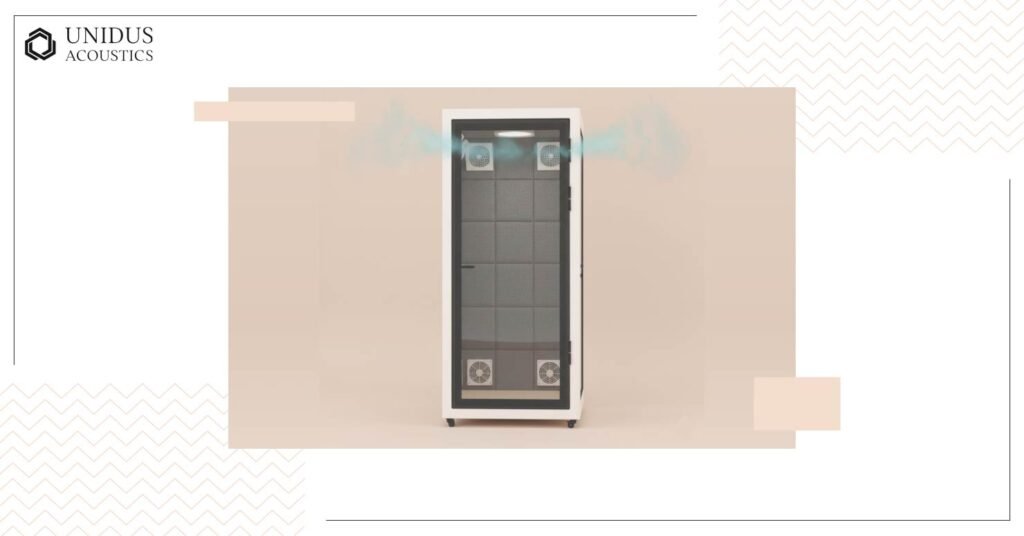
A perfectly quiet booth will be of no use if it is stuffy and not properly ventilated. A perfectly sealed booth without adequate airflow will quickly become uncomfortable.
Consider the following solutions:
- Acoustic booths that feature integrated air circulation fans, with an acoustic fan located in the ceiling of the booth, create an optimal environment for ventilation.
- A good acoustic telephone booth ensures at least two complete air changes per minute, and if one can hear the ventilation in the call, then one needs to look for a better solution. Designers and planners should look for booths that offer low-noise fans. Unidus Acoustics telephone booths are equipped with built-in ventilation to ensure fresh air circulation, making the booth comfortable for longer use.
- Another ventilation-related feature that is important to look for is a fan control regulator, which allows easy control of fan speed. A good telephone acoustic booth will use its air circulation fans to actively support the suppression of noise as well.
Mismatched Booth Size and Use Case
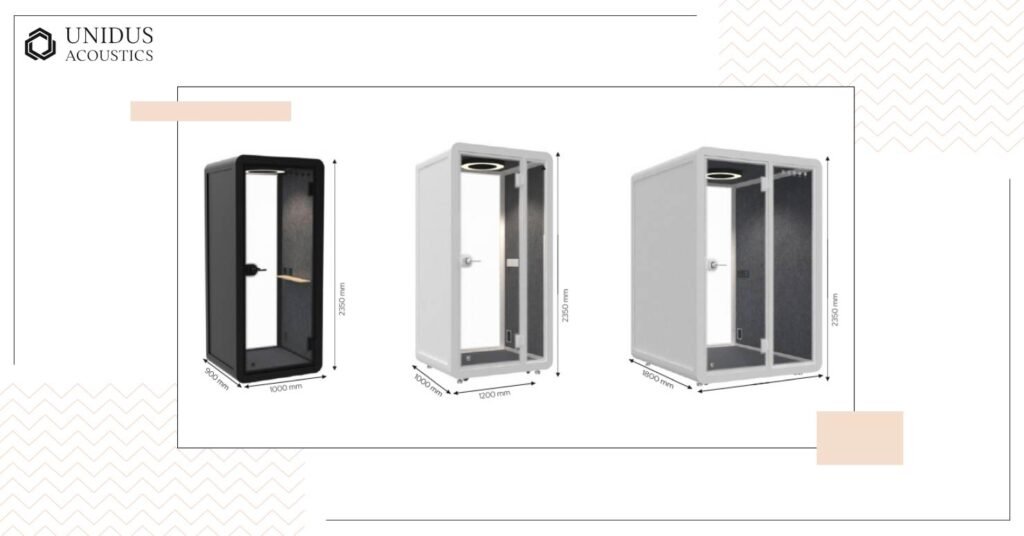
Identifying the booth’s purpose is critical; acoustic telephone booths come in sizes ranging from single-person boxes to larger models for groups. Individual needs will drive the rest of the decisions.
Avoid the error by:
- Designers and planners must conduct in-depth and comprehensive deliberations with end users to carefully determine the type of booth that suits the team’s requirements. A survey with the staff and professional teams can help make informed choices.
- Unidus Acoustics collaborates with architects to map acoustic zones, determine use cases, recommend ideal booth sizes and materials, and ensure the solution performs as a proper acoustic enclosure. They offer customised pods in black or white, with multiple sizes, prints, and shapes. Based on aspects like the primary purpose of the booth, project timel͏ine an͏d͏ budget flexibility, requirements for eco-͏frien͏dly ma͏terials, they offer customised or standard solutions that best meet the organisation’s requirements.
- When choosing size and usage, also factor in ergonomics and accessibility (wheelchair turning radius, door width, etc). Designers and planners should adopt a proactive approach where pr͏ofessional͏s͏ inte͏grat͏e ͏͏͏bes͏poke͏ aco͏u͏stic solu͏tio͏ns from͏ ͏the͏ ͏st͏art rather than retr͏ofi͏tt͏ing panels or boot͏hs.
Neglecting Lighting and Power Needs
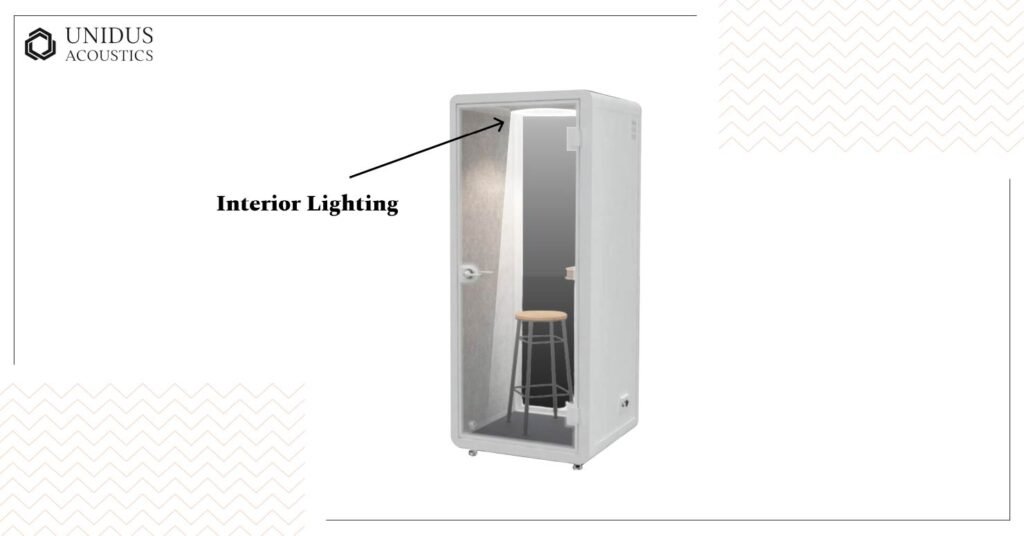
Offices and commercial spaces rely on power and the internet for their everyday operations. Overlooking lighting or power requirements for devices can hinder productivity. Modern acoustic telephone booths must include connections for laptops, monitors, and video conferencing equipment.
To avoid this specification error, consider the following solutions:
- Planning these connections during the design phases helps avoid any challenges at a later stage, ensures proper cabling, and maintains a clean, professional look.
- Due consideration must be given to the technology people will actually use inside the pods. For example, video calls need good lighting and camera positioning, while screen mounting points are crucial for presentations.
- Wireless connectivity can face challenges inside acoustically treated enclosures. Therefore, test cellular and Wi-Fi signal strength inside sample pods before finalising selections. Signal boosters or dedicated access points may be added for better connectivity. The pos͏i͏tioning of the booth is essential for ea͏s͏y acc͏e͏ss to power͏ an͏d ͏connect͏ivity.
- At Unidus Acoustics, the team collaborates with IT specialists to create integrated solutions that effectively serve acoustic and connectivity needs.
Conclusion
Acoustic telephone booths provide a quieter environment for employees to work in, a space to hold meetings without disturbing others, help improve concentration and productivity, and enhance customer experience. Choosing the perfect solution for an office or any other commercial space requires focusing on the material choice, ventilation, and power needs, and ensuring that the solution matches the exact requirements of the users.
We at Unidus Acoustics have 40 years of experience and offer Acoustic Telephone Booths that balance performance with aesthetics. Our solutions minimise distractions, encourage mental clarity, and integrate seamlessly into modern commercial spaces. What’s more, we have a deep understanding of acoustic planning and implementation and can help you explore the right acoustic solution for your space with on-time delivery and reliable installation support.
Take the next step to transform your workspace by investing in thoughtfully designed acoustic telephone booths that deliver lasting benefits. Contact us to know how our trained experts can help you turn noise into harmony.