
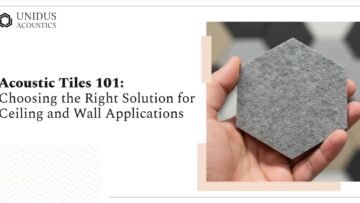
Acoustic tiles are engineered panels installed on ceilings and walls to control sound within a room. Unlike standard finishes, they absorb and diffuse sound waves rather than reflecting them, reducing echo, lowering reverberation, and improving speech clarity. They are used across commercial environments including offices, educational institutions, healthcare facilities, and hospitality spaces, and are available in a wide range of materials, finishes, and configurations to suit different acoustic and design requirements.
Key Takeaways
- Acoustic tiles are engineered panels installed on ceilings and walls to absorb and diffuse sound waves, reducing echo and reverberation in a room.
- The Noise Reduction Coefficient (NRC) is the key performance metric. Offices typically need NRC 0.65–0.75; auditoriums and classrooms require higher ratings.
- Ceiling tiles address vertical reflections from overhead surfaces; wall tiles handle horizontal echoes. Most commercial spaces benefit from treating both.
- Material choice determines both acoustic performance and design flexibility. Fabric and PET absorb efficiently; perforated metal and wood wool combine absorption with diffusion.
- Acoustic tile systems are non-invasive and can be installed in hours without demolition or structural changes to the building.
- Sustainable options, including recycled PET tiles and eco-friendly binders, are now available without compromising acoustic performance or design flexibility.
Understanding Acoustic Tiles
Acoustic tiles come in a wide range of materials, including fabric, PET fibre, mineral fibre, metal, and foam, each offering distinct acoustic and visual characteristics. For instance, fabric tiles bring warmth and colour, while PET tiles are known for sustainability and versatility. Foam tiles, on the other hand, excel at controlling mid- to high-frequency noise.
Acoustic Tiles are used both on walls and ceilings. Ceiling tiles reduce overhead reflections, while wall tiles handle side echoes and speech diffusion. The right combination can transform any space into an acoustically balanced haven. Understanding their role sets the foundation for exploring the science behind acoustics and how it shapes modern interiors.
The Science Behind Acoustic Tiles
Every acoustic tile is rated by how well it absorbs sound, a value called the noise reduction coefficient (NRC). It’s the single most useful number when comparing tile options, and understanding it helps you match the right material to the right space.
The NRC requirement depends on the environment. In corporate offices, a moderate NRC between 0.65 and 0.75 ensures clear speech without excessive silence. In auditoriums or classrooms, higher NRC ratings provide clarity and focus.
Material composition also plays a major role. Porous materials like PET and fabric absorb sound efficiently, while denser materials like perforated metal or wooden finishes add diffusion, scattering sound evenly.
Unidus Acoustics uses scientifically tested materials with a focus on sustainability and visual harmony. The tiles are designed to meet precise acoustic standards while complementing the aesthetics of modern interiors.
Once you understand the science behind how materials interact with sound, the next question naturally arises—where to start implementing them? Ceilings often make the most significant impact, so let’s explore how acoustic ceiling tiles shape your space.
To Know More About NRC, Click Here
Transforming Space with High-Performance Acoustic Ceiling Tiles
Ceilings are among the largest reflective surfaces in a room, meaning sound control here has a major influence on the acoustic comfort of an entire space.
When sound waves hit a hard, flat ceiling, they bounce and create echoes that can distort speech and cause discomfort. Installing acoustic ceiling tiles helps absorb these reflections, creating a smoother, more intelligible sound experience.
Ceiling tiles come in a variety of materials and designs, each addressing specific acoustic challenges. From managing echoes in open spaces to enhancing speech clarity in meeting rooms, these tiles balance sound control with aesthetic appeal.
1. Fabric Acoustic Ceiling Tiles
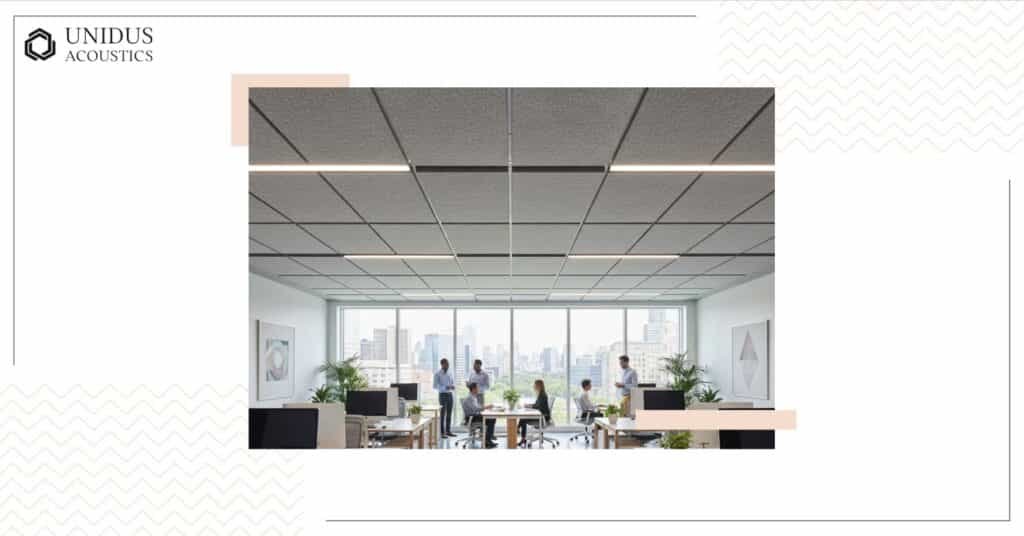
Fabric ceiling tiles are ideal for spaces with high foot traffic, such as offices, conference rooms, and hotels. Their porous fabric surface absorbs sound waves, reducing echoes and enhancing speech clarity. These tiles not only improve acoustic comfort but also add warmth and elegance to interiors. They can be customised in a wide range of colours, patterns, weaves, and textures, allowing designers to match branding or interior themes.
Fabric tiles can also be cut into different shapes or combined with other materials to create visually striking ceilings while maintaining excellent sound absorption.
2. PET Acoustic Ceiling Tiles
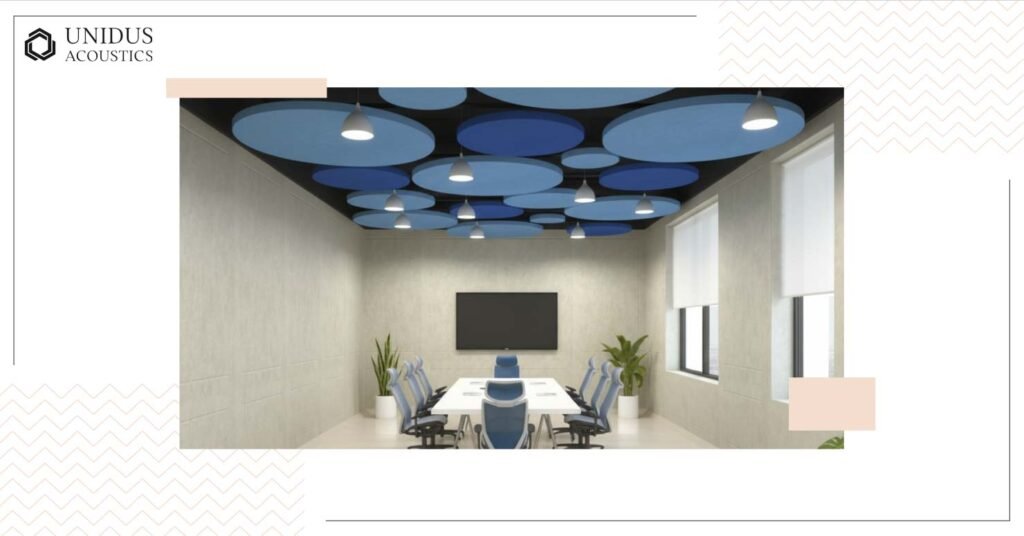
PET ceiling tiles, made from recycled polyester fibres, are perfect for modern workspaces, classrooms, and collaborative areas. Their dense fibre structure efficiently absorbs mid- to high-frequency sounds, reducing reverberation and creating a balanced acoustic environment.
PET tiles are highly versatile; they can be printed with custom patterns, painted in various colours, shaped into geometric or modular forms, and finished with matte or glossy textures, making them a sustainable yet design-forward choice. Their lightweight nature also allows easy installation and reconfiguration, supporting flexible interior layouts.
3. Mineral Fibre Acoustic Tiles
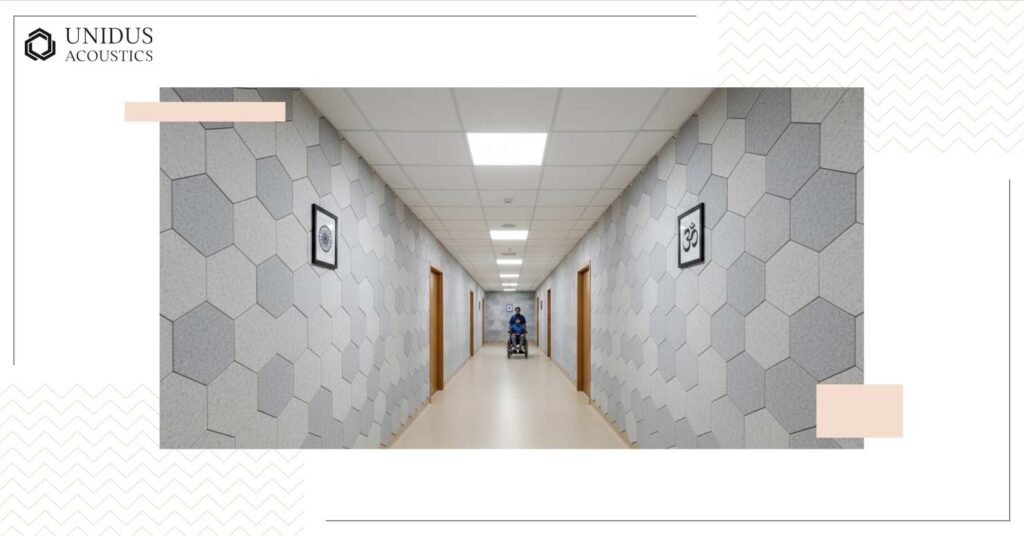
Mineral fibre tiles provide robust noise control, especially in large commercial, institutional, or healthcare settings. They absorb sound vibrations, reduce echoes, and help regulate indoor temperature and humidity. These tiles can be customised in thickness, size, surface texture, and colour, enabling designers to achieve both acoustic performance and aesthetic harmony.
Their durability makes them ideal for hospitals, schools, and offices where consistent acoustic performance and environmental stability are critical. Mineral fibre tiles can also be combined with lighting and ventilation systems for multifunctional ceiling solutions.
4. Perforated Metal Acoustic Tiles
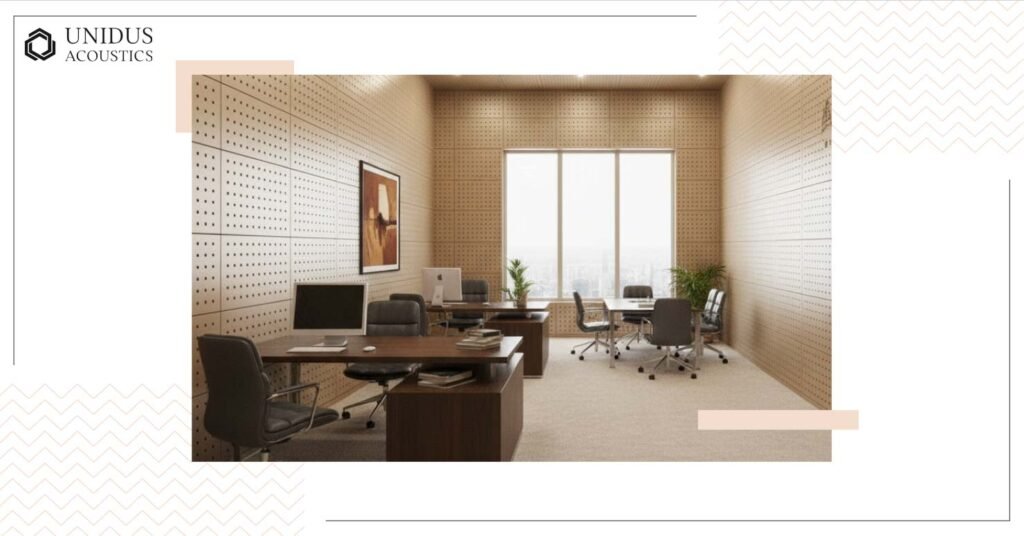
Perforated metal tiles are engineered to reduce reverberation while maintaining a contemporary, industrial aesthetic. Sound passes through perforations into an acoustic backing layer, effectively minimising echo.
These tiles are highly customisable, with options for powder-coated colours, different perforation patterns, brushed or matte finishes, edge designs, and modular shapes, allowing them to suit airports, auditoriums, or modern commercial spaces.
Their durability, fire resistance, and sleek appearance make them ideal for environments demanding both acoustic efficiency and architectural precision.
5. High Acoustic Tiles
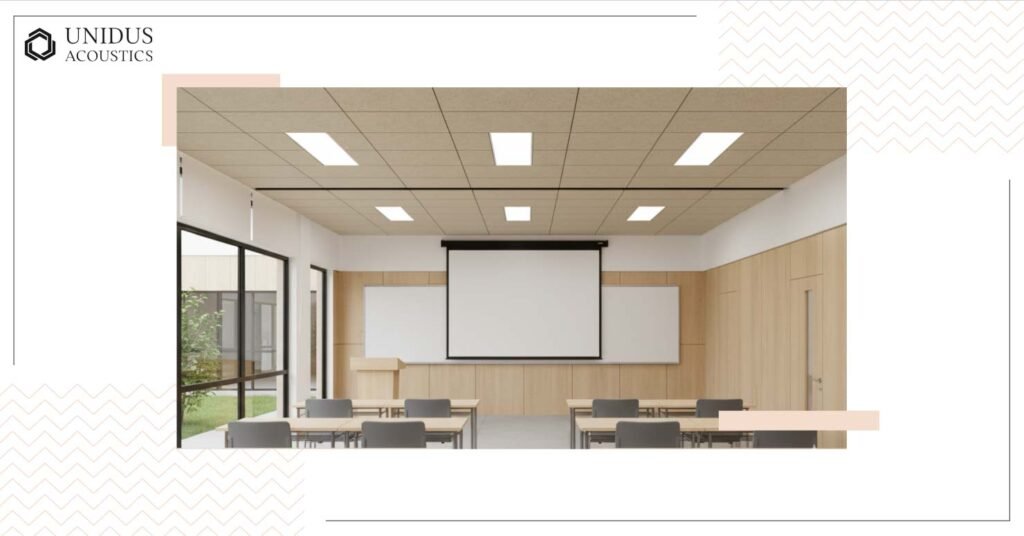
High acoustic tiles, crafted from durable materials such as galvanized iron or aluminum, are designed to absorb sound effectively while providing a clean, modern ceiling finish. They are available in square, rectangular, and modular edge designs and can be customised in panel size, colours, and finishes, enabling seamless integration with interior décor.
These tiles are ideal for offices, educational institutions, and commercial spaces, offering both superior acoustic performance and long-lasting durability, while maintaining sleek, contemporary aesthetics that elevate any ceiling design.
6. Felt Grid Acoustic Ceiling Tiles
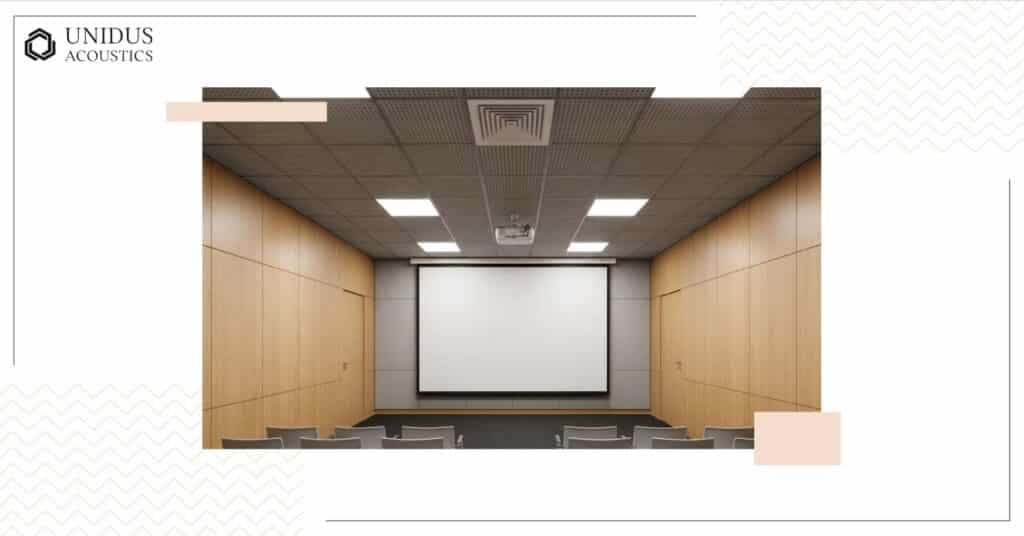
Felt grid ceiling tiles, made from recycled PET fibres, are lightweight, eco-friendly, and highly effective at absorbing mid- to high-frequency sound. They are available in various colours, sizes, and thicknesses and can be arranged in geometric patterns, layered, or cut into custom shapes to suit specific design themes.
These versatile panels improve acoustic comfort in collaborative workspaces, classrooms, lobbies, or studios, while offering aesthetic flexibility, easy installation, and environmentally responsible material benefits, combining function with visual appeal.
7. Wooden Acoustic Ceiling Tiles
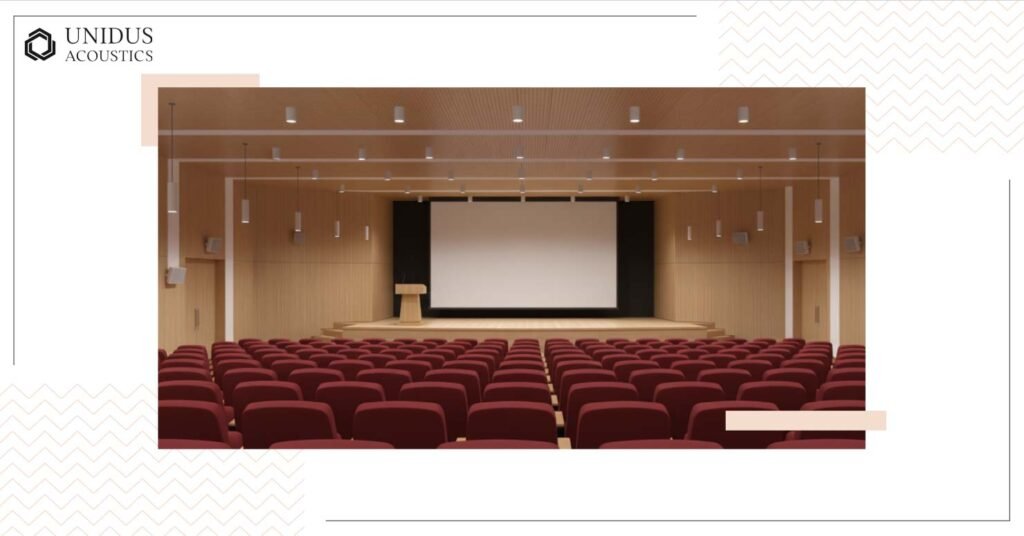
Wooden ceiling tiles provide natural warmth and enhanced sound absorption, reducing echoes and improving speech clarity in offices, auditoriums, hotels, and other hospitality spaces. Constructed from MDF or HDF, these tiles can be customised in size, shape, colour, texture, and finish, allowing designers to achieve seamless integration with interior décor.
In addition to acoustic efficiency, these panels create a premium, visually appealing ceiling that adds character and sophistication, making them a preferred choice for spaces requiring both performance and elegance.
8. Floating Acoustic Ceiling Panels
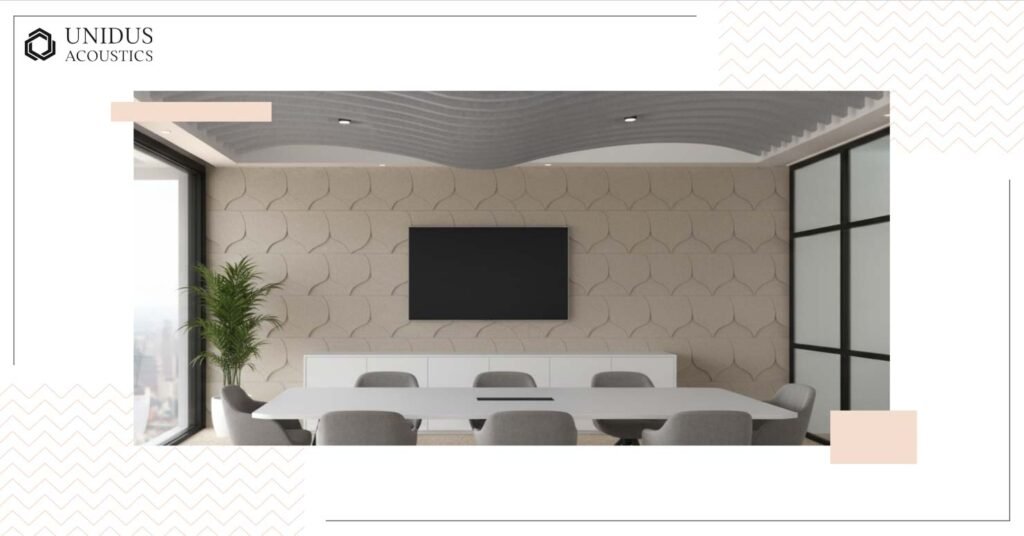
Floating or suspended ceiling panels combine visual drama with acoustic functionality, creating ceilings with depth and three-dimensional interest. These panels are available in different shapes, sizes, colours, textures, and finishes, enabling designers to craft dynamic layouts that complement modern interiors.
They efficiently absorb sound, reducing reverberation and echoes in large open spaces, lobbies, theaters, or collaborative office areas. Floating panels offer a striking aesthetic while improving acoustic comfort, making them ideal for environments that require both style and sound control.
Acoustic ceilings not only manage sound but also enhance design depth by adding texture and pattern to overhead surfaces. When paired with the right wall tiles, they create a cohesive soundscape.
Comparing Ceiling Acoustic Tile Materials
| Material | Primary Acoustic Function | Best Application | Key Design Benefit |
|---|---|---|---|
| Fabric | Sound absorption | Offices, hotels, conference rooms | Wide colour and texture range |
| PET (Recycled Polyester) | Mid to high frequency absorption | Workspaces, classrooms, collaborative areas | Printable, geometric-form capable |
| Mineral Fibre | Broad noise control | Healthcare, institutional, large commercial | Temperature and humidity regulation |
| Perforated Metal | Reverberation reduction via a backing layer | Airports, auditoriums, contemporary commercial | Fire-resistant, durable, industrial finish |
| High Acoustic (GI / Aluminium) | High-performance absorption | Offices, educational institutions | Clean, contemporary ceiling finish |
| Felt Grid (Recycled PET) | Mid to high frequency absorption | Studios, lobbies, collaborative workspaces | Lightweight, eco-friendly, geometric arrangements |
| Wooden (MDF / HDF) | Absorption and warmth | Offices, auditoriums, hospitality | Natural aesthetic, premium finish |
| Floating / Suspended Panels | Reverberation reduction in large volumes | Lobbies, theatres, and large open spaces | Three-dimensional visual depth |
Want to know how Unidus Acoustics Ceiling Panels enhance both sound and style? Click here
Creating Comfortable, Beautiful Spaces with Acoustic Wall Tiles
While ceilings manage vertical sound reflections, walls play a crucial role in controlling horizontal echoes and diffusions, shaping how we perceive sound clarity within a space. Acoustic wall tiles improve speech intelligibility, reduce background noise, and prevent sound from bouncing between hard surfaces, creating calm, balanced environments ideal for meetings, learning, or relaxation.
Wall acoustic tiles come in multiple options, each designed to combine performance and aesthetics:
1. Fabric Acoustic Wall Panels
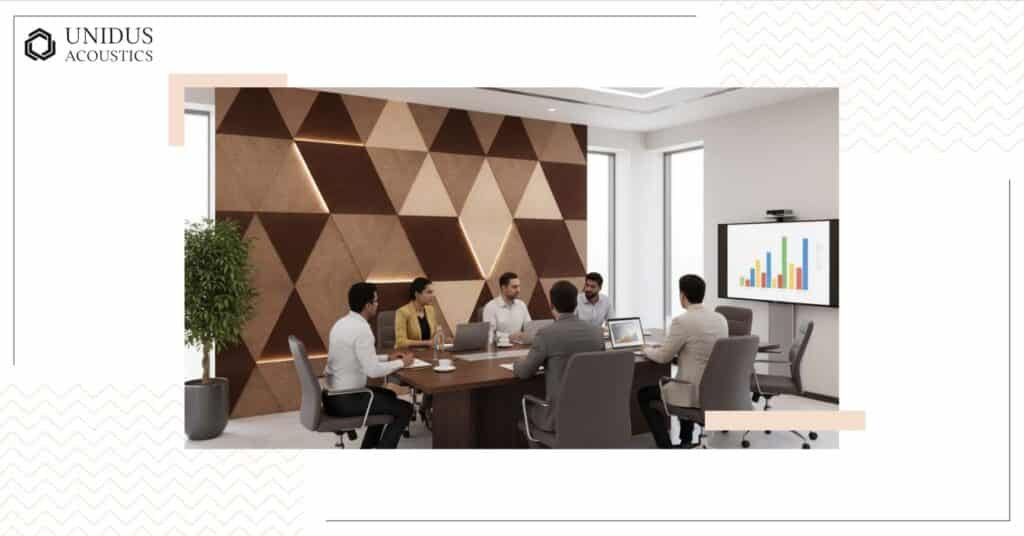
Fabric wall panels offer excellent sound absorption while adding warmth, colour, and texture to interiors. They reduce echo in spaces like offices, conference rooms, and hospitality areas, improving speech clarity and acoustic comfort. Panels can be customised in thickness, size, colour, patterns, and shapes, allowing designers to seamlessly integrate them with interior themes.
2. PET Acoustic Wall Tiles

PET wall tiles are lightweight, durable, and eco-friendly, made from recycled polyester fibres. They efficiently absorb mid- to high-frequency sounds, reducing reverberation in open or collaborative spaces such as classrooms, studios, and offices. These tiles can be printed with patterns, painted in various colours, or shaped into geometric forms, offering both acoustic efficiency and design flexibility.
3. Wood Wool Acoustic Panels
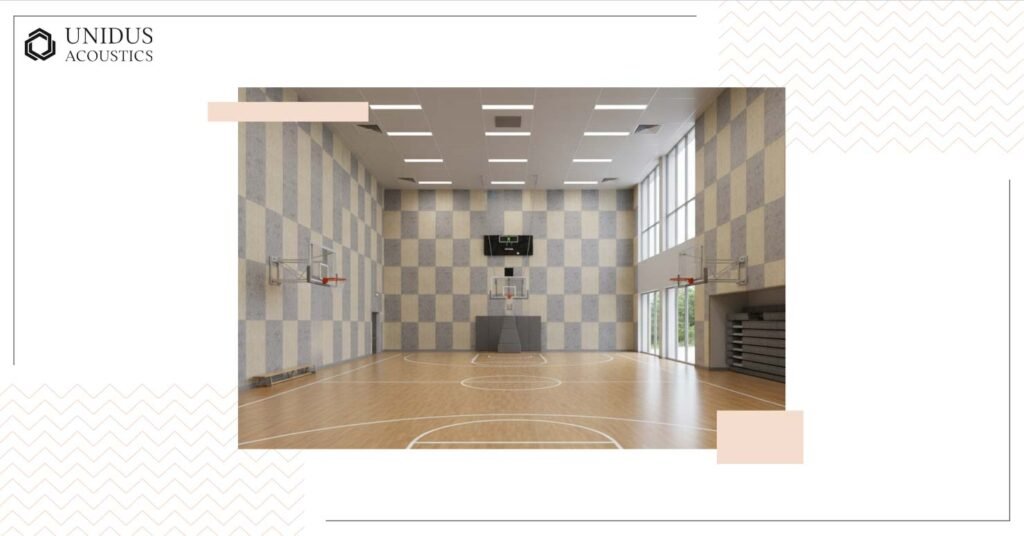
Wood wool panels provide robust sound absorption and help regulate temperature and humidity, making them suitable for hospitals, schools, offices, and large commercial spaces. They reduce echoes while offering a natural aesthetic. Available in various thicknesses, sizes, surface textures, and colours, they allow architects to balance acoustic performance with visual appeal.
4. Fluted Acoustic Wall Panels
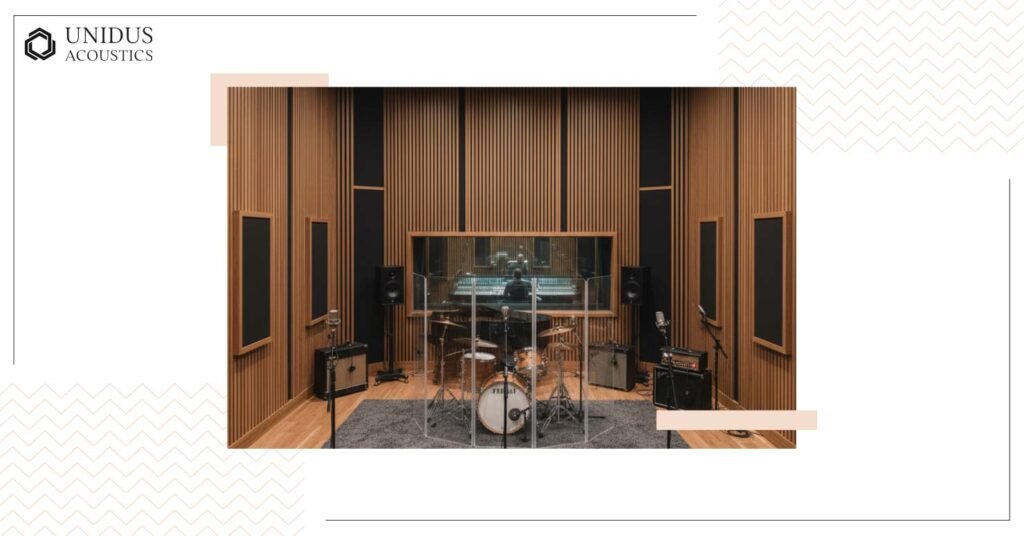
Fluted panels are designed to reduce reverberation while adding a modern, industrial aesthetic. Vertical grooves disperse sound evenly into the acoustic backing, lowering echo in airports, auditoriums, and contemporary office interiors. Panels can be customised in colour, pattern, shape, and finish, combining acoustic efficiency with striking architectural design.
5. 3D Decorative Acoustic Wall Panels
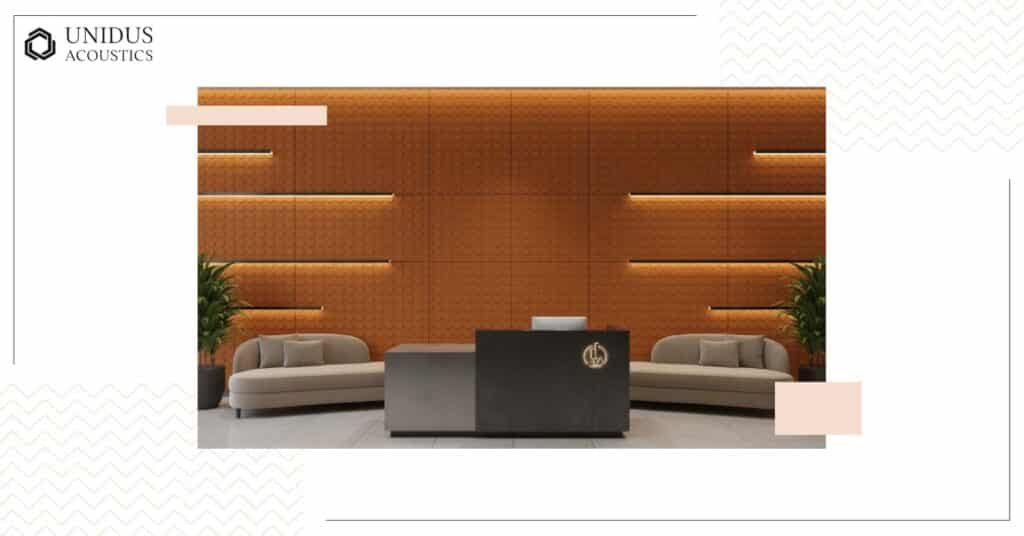
3D decorative panels combine artistic appeal with acoustic function, dispersing sound evenly while transforming walls into visually engaging elements. They are ideal for lobbies, creative studios, restaurants, or lounges. Panels can be customised in colours, textures, geometric patterns, or abstract forms, making them both functional and visually distinctive.
Proper installation and maintenance also matter. Panels are generally fixed using concealed clips or adhesives, maintaining seamless aesthetics while allowing easy removal for cleaning or replacement.
See How Our Acoustic Wall Panels Improve Sound and Create a Beautiful Atmosphere, Click Here
Choosing the Right Acoustic Tile
Once ceiling and wall applications are understood, the next logical step is knowing how to choose the perfect combination for your space.
Selecting the perfect acoustic tile involves understanding your space, its function, and the design statement you want to make. A careful approach ensures your interiors are both visually appealing and acoustically effective.
1. Identify Your Primary Objective
Start by defining the main goal of installing acoustic tiles. Are you aiming to improve speech clarity, reduce background noise, or enhance overall comfort? For instance, offices often prioritise speech clarity, whereas auditoriums and theaters require full-frequency sound absorption for a balanced acoustic experience.
2. Evaluate Acoustic Performance

Next, consider the acoustic performance of tiles. Check the NRC (Noise Reduction Coefficient) values appropriate for your environment. Spaces that require concentration, such as offices or study areas, benefit from higher NRC-rated materials, while areas with less stringent requirements can use moderate absorption tiles.
3. Align with Interior Design
Acoustic Tiles should complement your interior style. Choose textures, colours, and patterns that enhance your design vision. Modern tiles offer versatile finishes, from subtle neutrals to vibrant colours, metallic sheens, or geometric motifs, allowing seamless integration with contemporary or classic interiors.
4. Select the Right Material
Material choice affects both acoustic efficiency and sustainability. PET and fabric tiles offer excellent absorption and support eco-friendly objectives, while metal and wooden finishes provide sophistication, moderate diffusion, and durability. Consider both the functional and aesthetic benefits when choosing your material.
5. Avoid Common Mistakes
Be cautious of selecting tiles solely for appearance or ignoring installation compatibility. Incorrect choices can compromise acoustic performance or make installation difficult. Consulting an acoustic expert ensures your design not only looks appealing but also performs optimally.
6. Plan for Industry and Environment
Once selection is complete, consider the specific environment where the tiles will be installed. Offices, schools, auditoriums, hospitality spaces, and studios each have unique acoustic requirements. Choosing tiles tailored to these needs ensures maximum efficiency and comfort.
Discover the Perfect Acoustic Solutions for Every Industry
Different environments have unique acoustic challenges, and understanding these helps in selecting the most effective solution. Acoustic Tiles not only absorb sound but also enhance aesthetics, allowing a seamless balance of function and design.
1. Corporate Spaces
Open-plan offices, meeting rooms, and work pods require careful acoustic management to maintain focus and productivity. Acoustic ceiling and wall tiles reduce noise distractions and improve speech clarity, ensuring that team collaboration and private conversations are not compromised.
High acoustic tiles, PET panels, and fabric tiles offer both functional sound absorption and customisable colours, textures, and shapes, allowing companies to maintain a professional, visually cohesive interior while supporting a productive work environment.
2. Education

Classrooms, lecture halls, and training centres need clear communication and minimal reverberation for effective learning. Wall and ceiling acoustic solutions absorb background noise, reduce echoes, and improve speech intelligibility for both teachers and students.
Unidus Acoustics’ products, such as felt grid ceiling tiles, high acoustic ceiling panels, and wooden wall panels, can be tailored in size, colour, and pattern to match the educational space while delivering high-performance sound absorption that enhances comprehension and focus.
3. Hospitality
Restaurants, cafes, lounges, and hotels depend on ambience and comfort to create a welcoming environment. Acoustic Tiles allow conversation privacy while controlling background noise, contributing to a relaxed atmosphere.
Unidus Acoustics solutions, including decorative 3D wall panels, floating ceiling panels, and PET or fabric tiles, provide both sound control and visual appeal, allowing designers to integrate bespoke textures, colours, and finishes that complement branding and interior aesthetics.
4. Healthcare and Institutional Spaces
Hospitals, clinics, and government office buildings have distinct acoustic requirements centred on confidentiality, operational continuity, and compliance. Patient consultation areas, administrative floors, and reception spaces all benefit from reduced reverberation and improved speech intelligibility, without disrupting active operations. Mineral fibre ceiling tiles and wood wool wall panels are well-suited here, given their durability, humidity regulation properties, and non-disruptive installation profile.
To Know More About How to Select the Perfect Acoustic Solution, Click Here
Sustainable Acoustic Tiles: Eco-Friendly Options Worth Knowing
As design awareness grows, sustainable materials play a major role in choosing acoustic solutions. PET and fabric tiles made from recycled materials support eco-friendly objectives without compromising acoustic performance. Unidus Acoustics offers environmentally conscious options across ceiling and wall products, combining durable, high-performance acoustic solutions with responsible material selection. By integrating sustainable tiles strategically, each project achieves balanced sound, refined aesthetics, and eco-friendly design.
Modern acoustic tiles are now manufactured using recycled PET fibres, bio-based binders, and low-VOC adhesives. These eco-conscious choices ensure that performance doesn’t come at the cost of the environment.
Modern acoustic solutions use recycled PET fibres, bio-based binders, and low-VOC adhesives, ensuring performance while reducing environmental impact. The sustainable range includes lightweight, recyclable wall and ceiling tiles available in versatile finishes, making them suitable for offices, auditoriums, educational spaces, and hospitality interiors.
Responsible production further enhances sustainability. Energy-efficient manufacturing, local sourcing, and recyclable packaging minimise carbon footprints, while the long-lasting nature of these tiles reduces waste and maintenance costs.
Selecting eco-friendly acoustic solutions also supports healthier indoor air quality and helps projects meet green building certifications. Designers and architects can now address both functional acoustic needs and environmental goals seamlessly.
With sustainability integrated, the next focus naturally turns to creativity—how these tiles can blend function with art.
Click Hereto Learn How Architects and Designers Choose Top-Quality Acoustic Materials
Fix Acoustics Without Major Renovations

Many people wonder if it’s possible to enhance room acoustics without extensive construction. The answer is yes. Modern acoustic solutions are designed to integrate seamlessly into existing spaces, reducing echo, improving speech clarity, and creating a more comfortable sound environment without major structural changes.
Key Approaches to Acoustic Improvement
1. Non-Invasive Treatments
Acoustic wall panels, ceiling baffles, and modular systems are designed to attach directly to existing surfaces. These solutions absorb unwanted reflections and reduce echo without requiring demolition, preserving the original architecture and aesthetics of the room.
2. Tailored Designs
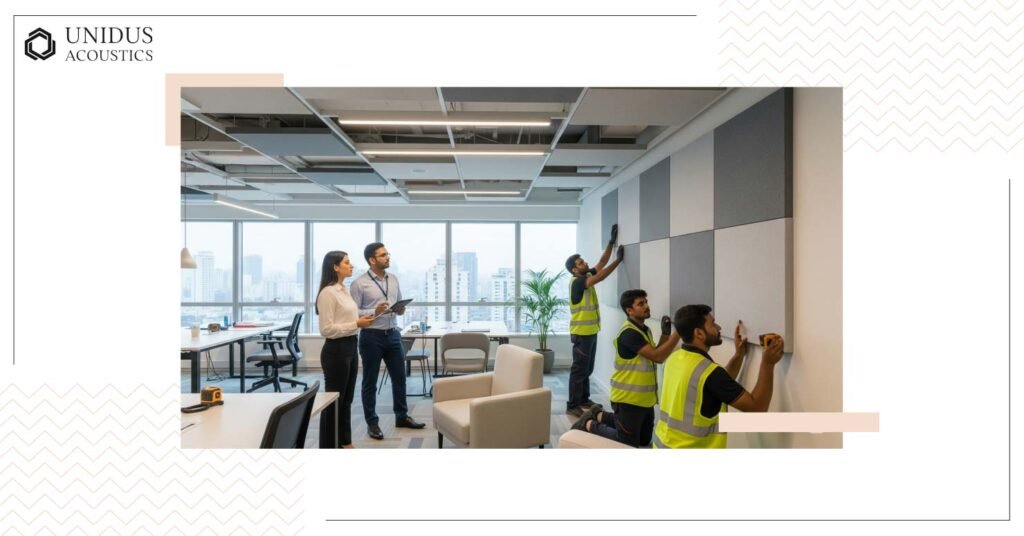
Each solution is customised to the room’s dimensions, ceiling height, and intended use. Experts consider factors such as material density, placement, and sound absorption coefficients to optimise speech clarity, music fidelity, or ambient noise reduction.
3. Efficient Implementation
Advanced modular components and pre-fabricated panels allow most installations to be completed within hours. This ensures minimal disruption to work, teaching, or daily life while maintaining professional-grade acoustic performance.
4. Versatile Applications
These systems adapt to a variety of environments—from open-plan offices and lecture halls to recording studios and residential spaces. Solutions can be combined or scaled to suit complex layouts, irregular shapes, or multi-purpose areas, providing consistent acoustic improvement across different settings.
For expert guidance and professional support, Unidus Acoustics provides tailored solutions that maximise acoustic performance while keeping installation simple, stress-free, and free from major renovations.
To Understand How Acoustic Installations Work in Commercial Spaces, Click Here.
Frequently Asked Questions About Acoustic Tiles
1. What is the difference between acoustic ceiling tiles and acoustic wall tiles?
Ceiling tiles address vertical sound reflections from the largest overhead surface in a room. Wall tiles handle horizontal echoes and side reflections, shaping how sound moves between surfaces at occupant level. In most commercial spaces, treating both ceiling and walls together delivers noticeably better results than treating either surface alone.
2. Can acoustic tiles be installed without major renovation?
Yes. Modern acoustic tile systems are designed to attach directly to existing surfaces using concealed clips, adhesives, or suspension systems. Most commercial installations are completed within hours and require no demolition or structural changes. This makes acoustic tiles a practical upgrade for occupied buildings, operational offices, and spaces that cannot afford extended downtime.
3. Which acoustic tile material is best for a classroom or lecture hall?
For classrooms and lecture halls, the priority is speech intelligibility rather than background noise reduction alone. PET tiles, felt grid panels, and mineral fibre tiles all perform well in educational settings because they absorb mid-to-high frequency sound, which is where speech sits in the acoustic spectrum. The material choice often comes down to budget, ceiling height, and the design requirements of the space.
4. Which acoustic tile option is the most sustainable?
PET tiles made from recycled polyester fibres are the most sustainable option currently available, combining strong acoustic performance (NRC 0.70–0.90) with responsible material sourcing. Felt grid ceiling tiles, also made from recycled PET, offer similar environmental credentials with additional design flexibility. Both materials are available with low-VOC adhesives and recyclable packaging to support green building certifications.
Conclusion
Acoustic tiles are more than just functional elements—they transform spaces into environments where comfort, clarity, and style coexist. By carefully selecting ceiling and wall solutions, you can control echoes, enhance speech intelligibility, and elevate the visual appeal of any room.
Whether it’s PET and fabric panels for modern offices, decorative 3D tiles for hospitality spaces, or high-performance metal and wooden solutions for large commercial settings, the right acoustic tile makes a tangible difference in how a space feels and functions.
At Unidus Acoustics, we bring 40 years of expertise alongside tailored solutions, ensuring every project achieves optimal sound, aesthetic harmony, and sustainability. Don’t wait for noise to disrupt your environment—invest in smart acoustic design today.
Take the first step: Consult our experts to select, customise, and install the perfect acoustic tiles for your space
Our team will assess your needs, recommend the right tiles, and guide you from selection to installation, ensuring your environment sounds as good as it looks.