
When you’re deep into a commercial project, and the acoustics aren’t working, it’s frustrating. The space looks perfect on paper, but sound transmission between rooms is becoming a deal-breaker. You need a solution that doesn’t require tearing down walls or blowing the budget.
That’s where Mass Loaded Vinyl comes in.
At Unidus Acoustics, we’ve spent 40 years helping architects balance form and function in commercial spaces. MLV has become a go-to specification for architects and interior designers who need effective sound blocking without major structural changes. But here’s the thing: not every acoustic challenge needs MLV, and knowing when to specify it (versus other solutions) separates good acoustic design from guesswork.
This guide walks you through the practical side of specifying MLV for commercial projects. We’ll cover what it is, when it makes sense, where to use it, and how to specify it properly so your project delivers the acoustic performance your client expects.
What Is Mass-Loaded Vinyl (And Why Should Architects Care)?
Mass Loaded Vinyl is a dense, flexible membrane engineered specifically for sound blocking. Unlike sound-absorbing materials that reduce echo and reverberation within a space, MLV’s job is to stop sound from traveling between spaces.
The physics are straightforward. Sound transmission depends heavily on mass. The denser and heavier a barrier, the harder it is for sound waves to pass through it. MLV packs significant mass into a thin, flexible sheet that can be integrated into walls, floors, and ceilings without eating up valuable square footage or requiring major structural modifications.
For architects, this matters because acoustic problems often emerge late in the design process. By the time someone realises that conference rooms share too much sound with adjacent workspaces, or that mechanical rooms are transmitting vibration through floors, major structural changes aren’t feasible. MLV offers a retrofit-friendly option that can be specified without redesigning entire systems.
Unidus Acoustics specialises in custom acoustic solutions that address these challenges. Our approach combines MLV with complementary materials like acoustic panels and ceiling systems to deliver comprehensive sound control—enhancing both the functionality and aesthetics of your space.
How MLV Actually Works: The Material Science Basics
MLV blocks sound transmission through mass law principles. When sound waves hit a surface, the surface must vibrate to transmit that sound to the other side. Heavier, denser materials are harder to vibrate, so less sound gets through.
Traditional solutions like double-wythe masonry or thick concrete achieve this through sheer bulk. MLV achieves similar performance through density engineering. The material is loaded with high-density mineral compounds (often barium sulfate or calcium carbonate) that pack maximum mass into minimal thickness.
MLV’s flexibility matters just as much. Unlike rigid mass barriers, MLV can wrap around penetrations, conform to irregular surfaces, and layer into existing assemblies. This makes it practical for renovation projects where access is limited or structural modifications aren’t allowed.
Also Read: When to Invest in Acoustic Consultancy: Key Project Stages for Maximum Benefit
When to Specify MLV: The Right Tool for the Right Job
MLV isn’t a universal solution. It excels in specific scenarios where sound blocking is the primary goal and space constraints or retrofit conditions limit other options.
Scenario 1: Sound Transmission Between Adjacent Spaces
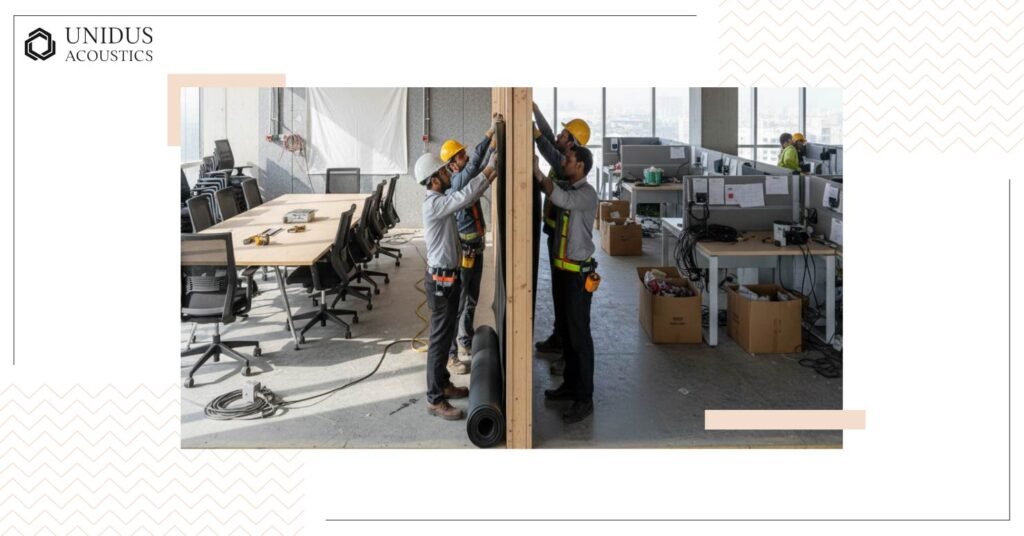
When two spaces share a common wall and privacy is critical, MLV can boost the wall’s Sound Transmission Class (STC) rating without adding significant thickness. Conference rooms, private offices, therapy rooms, and consultation spaces all benefit from this approach.
Standard drywall partitions might deliver STC ratings in the 30-40 range, which means normal speech is clearly audible on the other side. Adding MLV to the assembly can push ratings higher, creating genuine speech privacy. We’ve seen this approach enhance productivity and well-being in corporate offices where confidential conversations occur throughout the day.
Scenario 2: Mechanical and Equipment Noise Control
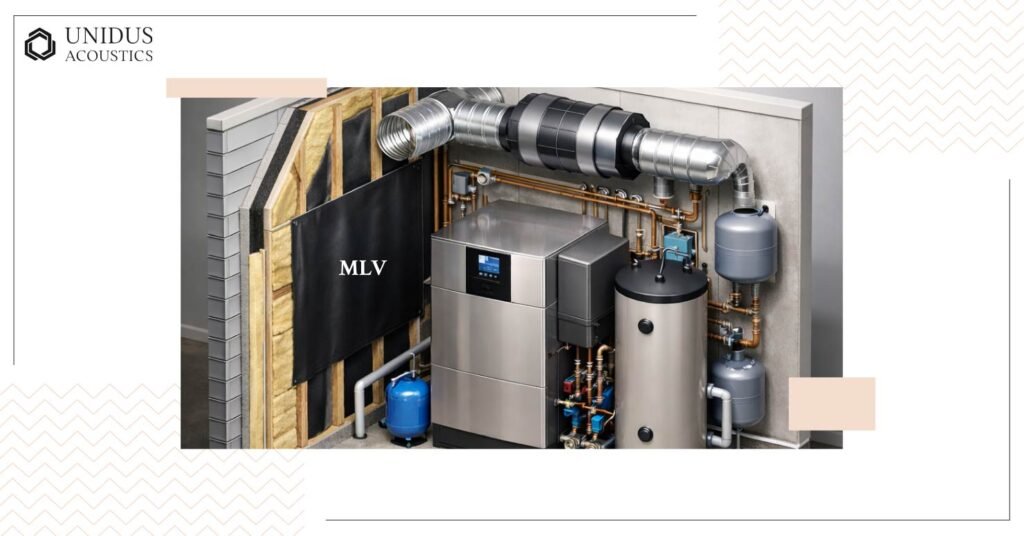
HVAC units, generators, pumps, and other mechanical equipment generate both airborne and structure-borne noise. MLV can be used to wrap ductwork, line mechanical room walls, or create barriers between equipment and occupied spaces.
This is particularly useful in mixed-use developments where mechanical spaces sit adjacent to or below residential or office areas. Noise complaints are expensive to fix after occupancy, so specifying MLV during construction prevents problems before they start.
Scenario 3: Retrofit and Renovation Projects
Existing buildings rarely offer the luxury of rebuilding walls from scratch. When you’re working within a constrained envelope, MLV can be surface-mounted or sandwiched into existing assemblies with minimal disruption.
This is common in commercial office retrofits where tenants need improved acoustic performance but can’t afford extended downtime or major construction. MLV layers can be installed over weekends or during off-hours, then concealed with finish materials.
Scenario 4: Floor-Ceiling Assemblies
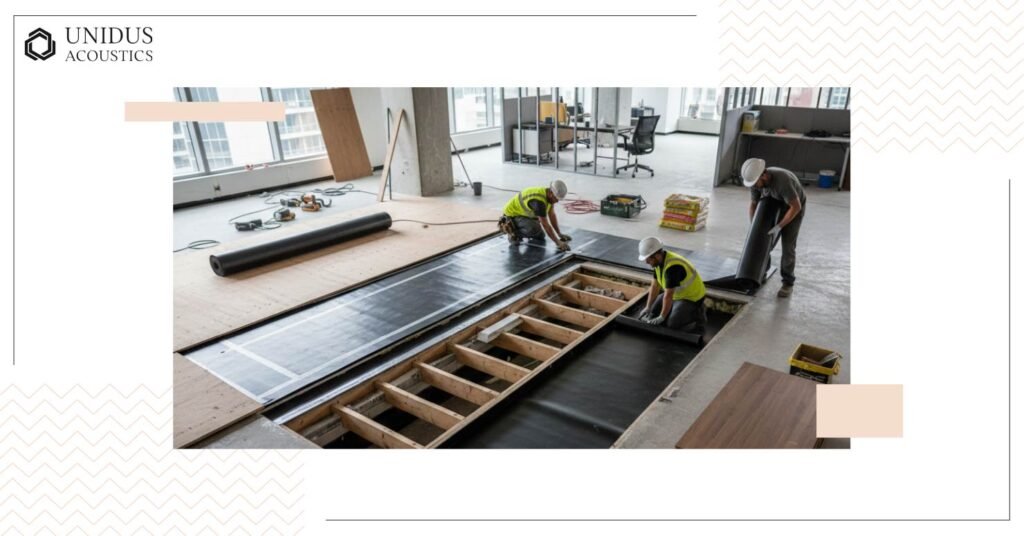
Impact noise from footfall, rolling chairs, and equipment is a persistent complaint in multi-story buildings. MLV can be integrated into floor-ceiling assemblies to reduce both impact and airborne noise transmission between levels.
This works well in hospitality projects, residential buildings, and commercial offices where floor-to-floor sound transmission impacts occupant comfort.
When NOT to Specify MLV
MLV doesn’t fix echo or reverberation problems within a room. If the issue is excessive sound bouncing around inside a space (common in large open offices, lobbies, or conference rooms), you need sound-absorbing materials like acoustic panels, ceiling systems, or baffles instead.
MLV also isn’t a standalone solution. It performs best as part of a complete acoustic assembly that includes proper sealing, isolation, and in some cases, absorptive materials on the room side.
Also Read: What Separates Leading Acoustic Panel Companies from Generic Suppliers
Where to Use MLV: Specific Applications in Commercial Design
Understanding where MLV fits into commercial projects helps architects make better specification decisions. Here are the most common applications where architects specify MLV, along with practical considerations for each.
Walls and Partitions
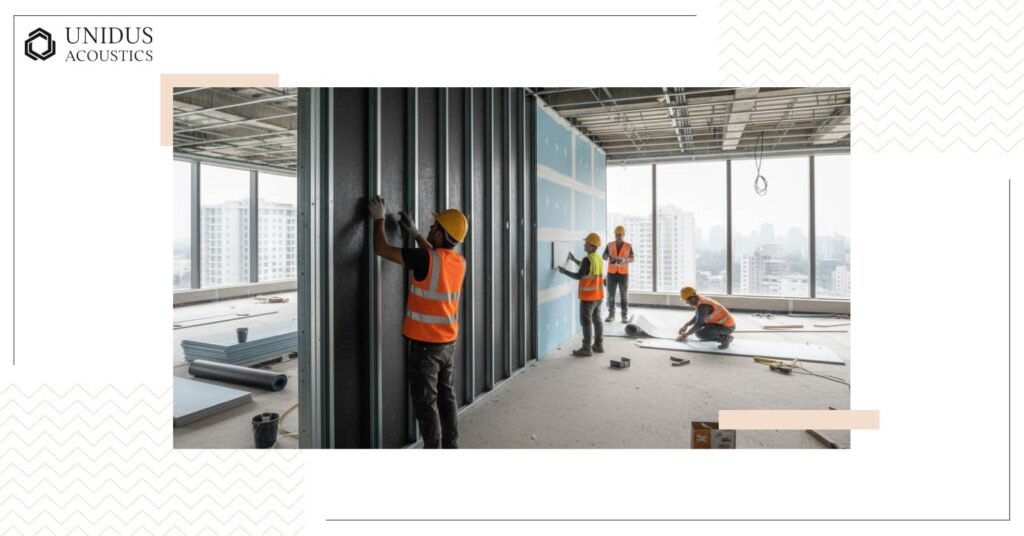
MLV integrates into wall assemblies in several ways. It can be sandwiched between layers of drywall, applied directly to studs before drywall installation, or surface-mounted on existing walls before adding a finish layer.
For maximum effectiveness, MLV should extend from the floor to the underside of the deck (not just to the suspended ceiling). Sound flanks around partial-height partitions, so sealing the full height is critical for speech privacy.
Ceilings
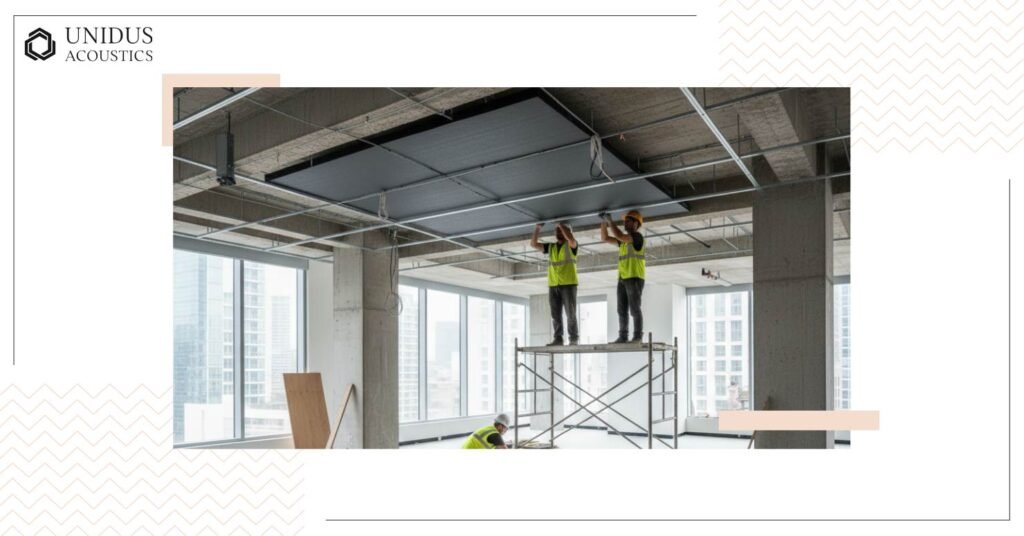
In floor-ceiling assemblies, MLV can be installed on the underside of the floor above, often in combination with resilient channels or isolation clips to decouple the ceiling from the structure. This addresses both airborne noise (voices, media) and impact noise (footsteps).
Ceiling applications require proper support. MLV is heavy, and the assembly must be engineered to carry the additional dead load without sagging or failure.
Floors
MLV works well as an underlayment beneath finish flooring. This addresses impact noise in hospitality projects and multi-story buildings where footfall from upper floors becomes a problem.
Doors and Openings
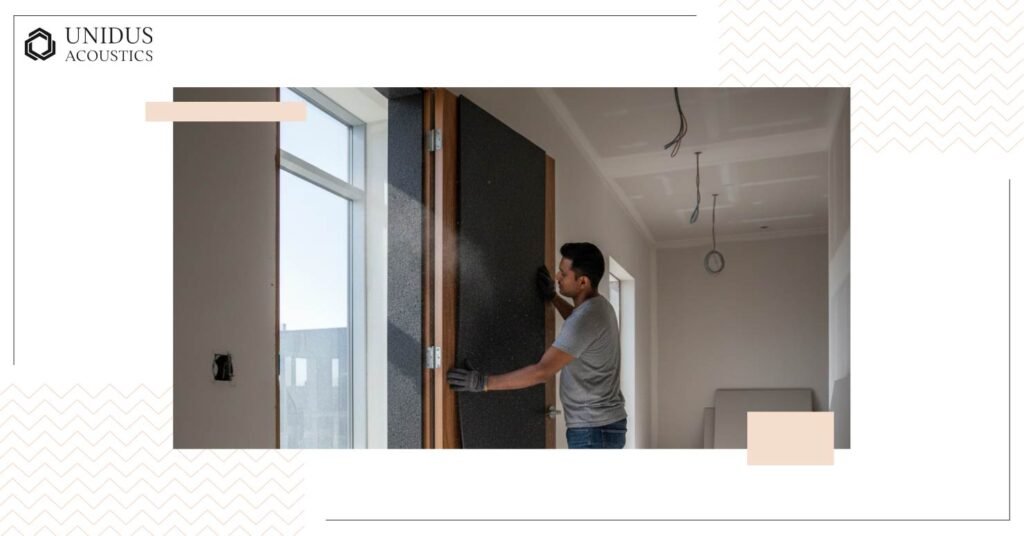
Doors are notorious weak points in acoustic assemblies. Even with a high-STC wall, an unsealed or poorly rated door will undermine the entire system. MLV can be used to create acoustic door seals or to line hollow-core doors for improved performance.
Mechanical Spaces and Equipment
Wrapping ductwork, lining mechanical room walls, and creating enclosures around noisy equipment all benefit from MLV. The flexibility allows it to conform to irregular shapes and penetrations that rigid barriers can’t accommodate.
How to Specify MLV: Technical Considerations for Architects
Specifying MLV properly requires attention to several technical factors. Get these wrong, and performance suffers even with high-quality material.
Weight and Density
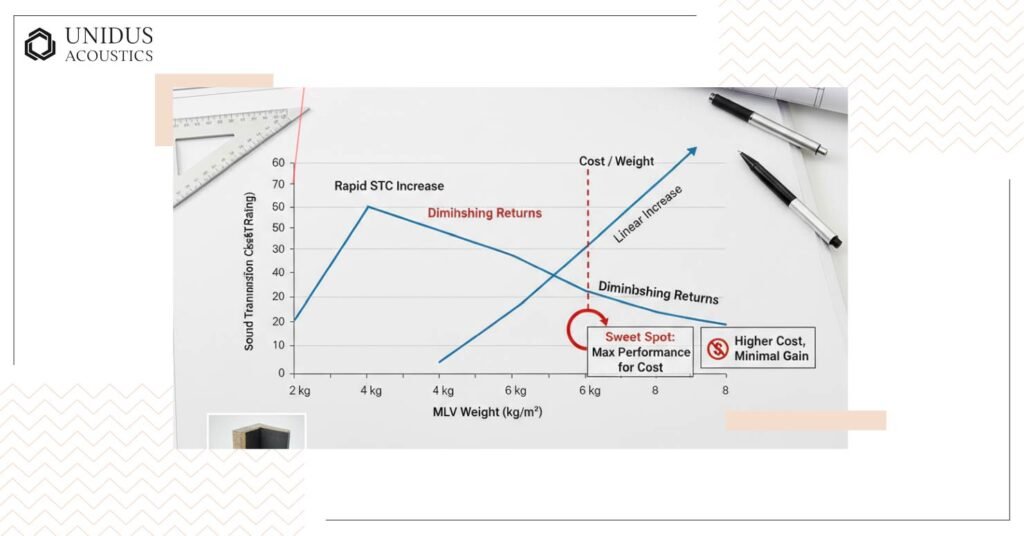
Heavier MLV generally blocks more sound, but there’s a point of diminishing returns where additional weight doesn’t justify the cost or structural implications. The appropriate weight depends on the specific application and target STC rating.
Thickness
MLV comes in various thicknesses. Thinner versions work well where space is extremely limited, but thicker options may perform better in certain assemblies. The choice depends on the available space and the rest of the wall, floor, or ceiling build-up.
Sealing and Continuity
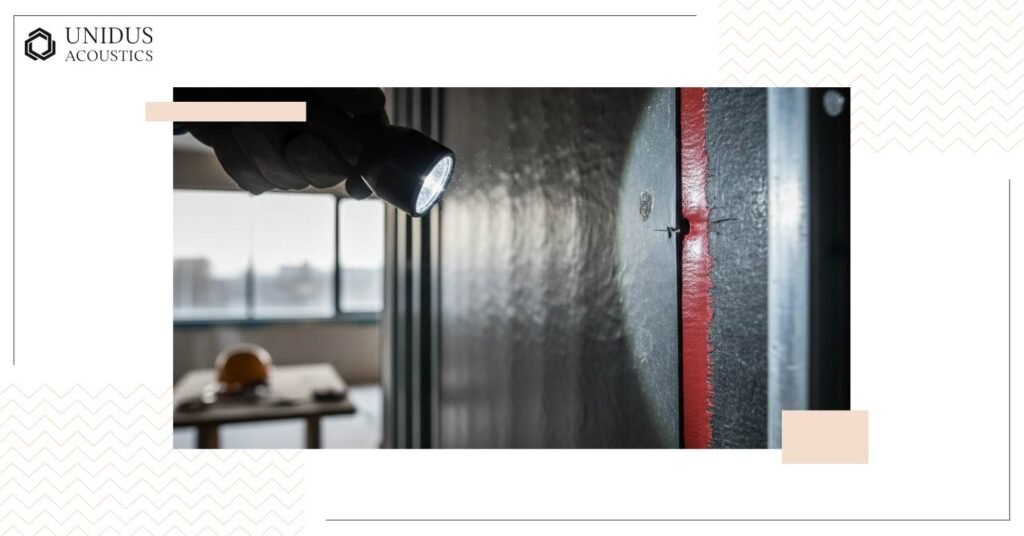
This cannot be overstated: MLV only works if it’s installed as a continuous, sealed barrier. Any gap, hole, or unsealed penetration creates a weak point for sound leakage.
Seams should overlap and be sealed with acoustic sealant. Penetrations for electrical boxes, plumbing, or HVAC must be carefully sealed. The MLV should extend fully to adjoining surfaces without gaps at the perimeter.
Many MLV failures come down to poor installation, not poor material. Your specifications should include detailed installation requirements and quality control measures.
Integration with Other Assembly Components
MLV performs best when combined with other acoustic strategies. A complete wall assembly might include:
- MLV for mass and sound blocking
- Resilient channels or isolation clips for decoupling
- Acoustic insulation in the cavity for absorption
- Multiple layers of drywall for additional mass
- Proper sealing at all joints and penetrations
Specifying MLV in isolation won’t deliver the performance you need. Think about the entire assembly.
Fire Safety and Code Compliance
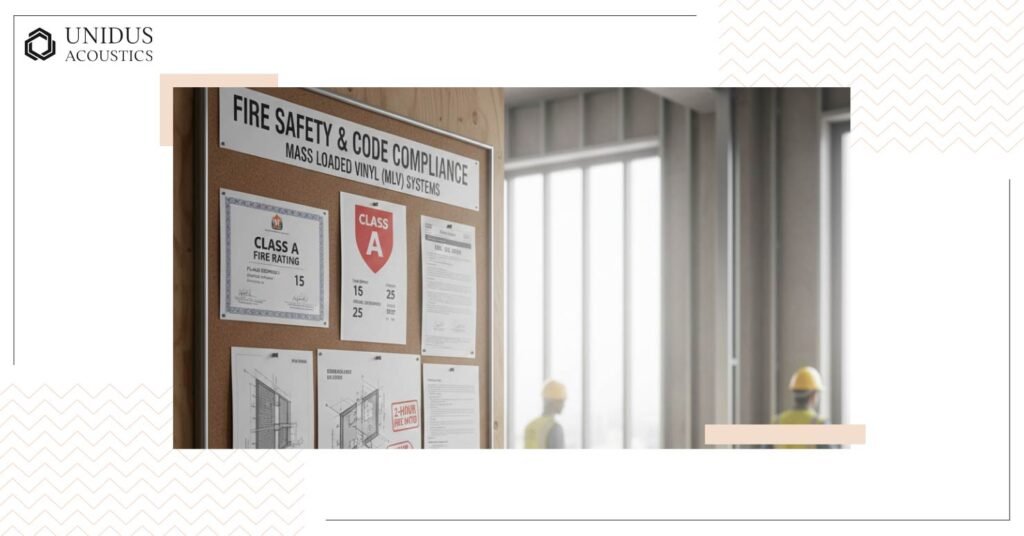
MLV must meet applicable fire and building codes. Check for flame spread and smoke development ratings, compliance with local building codes, and compatibility with fire-rated assemblies. If the wall or floor must maintain a fire rating, the MLV and installation method must not compromise that rating.
Structural Considerations
MLV adds weight to assemblies. While it’s not typically a major structural concern in walls, floor and ceiling applications need engineering review to ensure the assembly can support the additional dead load without deflection or failure.
Coordinate with structural engineers early if you’re adding MLV to suspended ceilings or floor assemblies, especially in renovation projects where the existing structure may have limited capacity.
Also Read: Difference Between Insulation and Isolation
Integrating MLV into Your Overall Acoustic Strategy
Effective acoustic design starts with understanding the problems you’re solving. Not every project needs MLV, and specifying it without a clear acoustic goal wastes money and complicates construction.
Start with an acoustic assessment. What are the specific noise concerns? Is sound leaking between rooms (transmission problem), or bouncing around inside rooms (reverberation problem)? Those require different solutions.
If transmission is the issue, consider:
- Can you increase wall mass through additional drywall layers?
- Would decoupling (resilient channels, staggered studs) be more effective?
- Is MLV the most cost-effective way to achieve the target STC rating?
Sometimes MLV is the hero. Other times, it’s one component in a larger system. And occasionally, different solutions make more sense altogether.
At Unidus Acoustics, we’ve spent 40 years working with architects on projects where acoustic performance can’t be an afterthought. Custom acoustic solutions often combine MLV with other materials (acoustic panels, ceiling systems, specialised insulation) to address both sound transmission and interior acoustics.
Common Questions Architects Ask About MLV
Here are four common questions that architects usually ask about MLV.
Does MLV Require Special Tools or Trades to Install?
Installation isn’t complicated, but it does require attention to detail. Standard cutting tools work fine, but proper sealing and continuity are critical. Some projects bring in acoustic specialists to ensure the assembly is built correctly.
Can MLV be Painted or Finished?
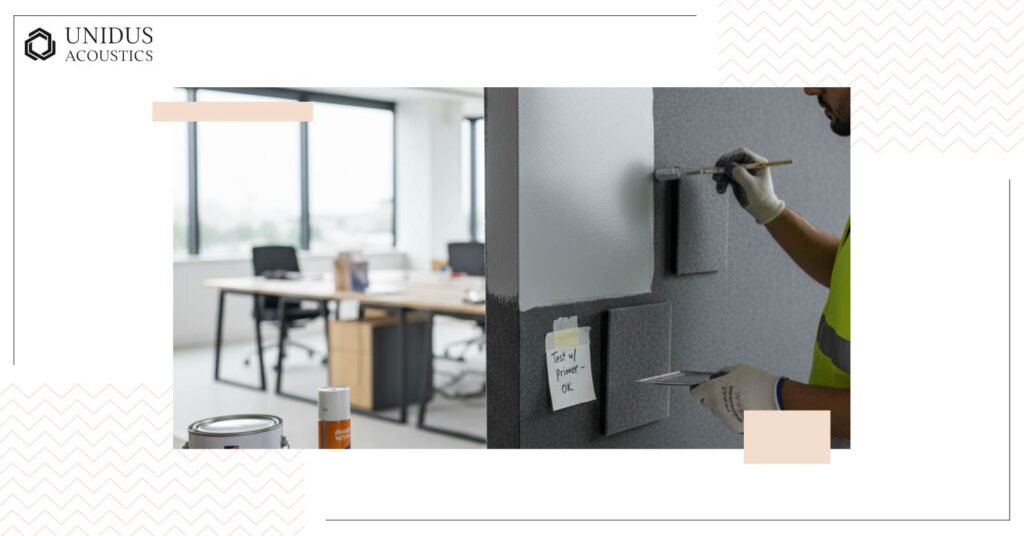
MLV is typically concealed behind finish materials like drywall or flooring. If it’s exposed, check with the manufacturer about finish compatibility. Not all MLV products accept paint or adhesives equally.
How Much Does MLV Add to Project Costs?
That depends on the scope, weight specified, and labour rates in your market. In renovation projects where structural modifications aren’t feasible, MLV often costs less than alternatives like building new walls or adding heavy masonry veneers.
Can MLV be Used in Sustainable or LEED Projects?
Some MLV products incorporate recycled content or meet environmental standards. If sustainability is a project goal, verify the specific product’s credentials.
Working with Acoustic Solution Providers
Specifying MLV effectively often means collaborating with manufacturers or acoustic consultants who understand how it integrates into complete assemblies.
When evaluating providers, look for:
- Technical support during specification development
- Performance data backed by testing (not just marketing claims)
- Installation guidance and details
- Experience with similar project types
- On-time delivery commitments (acoustic materials often arrive late, which holds up entire schedules)
Clear communication with your acoustic solution provider early in the design phase prevents expensive changes later. Share your project goals, space constraints, and budget parameters so they can recommend the right approach.
Also Read: When Does Your Project Need Acoustic Consultancy? A Decision Guide for Architects
Final Thoughts: MLV as Part of Thoughtful Acoustic Design
Mass Loaded Vinyl solves real problems when specified correctly. It gives architects a practical tool for controlling sound transmission without major structural changes or space penalties.
But it’s not magic. MLV works when it’s part of a complete acoustic strategy that addresses the specific challenges of your project. That means understanding what you’re trying to accomplish, specifying the right assembly, and ensuring proper installation.
If you’re working on a project where sound transmission is a concern, or if existing acoustic solutions aren’t delivering the performance your client needs, MLV might be the answer. But it’s worth having a conversation with an acoustic solutions provider who can assess your specific situation and recommend the most effective approach.
At Unidus Acoustics, we specialise in custom acoustic solutions that balance performance, aesthetics, and practical constraints. Whether you need MLV, acoustic panels, ceiling systems, or a combination, we can help you develop specifications that work for your project.
With 40 years of expertise in acoustic solutions, we provide custom-designed acoustic panels, ceilings, partitions, insulation, andsound-blocking materials for commercial projects across India. We combine technical performance with aesthetic integration, delivering solutions that enhance both the sound and style of your spaces.
Ready to discuss your project’s acoustic requirements?
Contact our team for a consultation. We’ll review your design, identify potential challenges, and recommend solutions that deliver the performance you need on schedule.