Designing a productive workplace goes beyond just aesthetics — it’s about creating an environment that supports focus, collaboration, and flexibility. In open office settings, maintaining this balance often comes down to one crucial factor: managing noise and privacy. The right spatial solution can make a significant difference in how teams communicate and perform.
Acoustic Scree͏͏͏ns and traditional partitions are two effective approaches to address this challenge. While both define areas within an open space, they differ in how they handle sound, design integration, and adaptability. The question isn’t simply which one looks better — it’s about which solution best aligns with your workspace’s current and future needs.
At Unidus Acoustics, we specialise in delivering bespoke acoustic solutions tailored to the unique requirements of modern workplaces. Our custom designs not only enhance sound quality but also integrate seamlessly into your office environment, offering a perfect balance of functionality and visual appeal.
Tackling Noise and Privacy in Open Offices
Open offices are designed for collaboration and agility. But too often, they create soundscapes where conversations, calls, and movement merge into one constant distraction. Research consistently shows that uncontrolled noise can reduce focus and increase stress, two factors that directly impact employee performance.
The challenge lies in maintaining the openness of the layout while providing enough privacy for concentration and comfort. The solution? Acoustic interventions that manage sound, define zones, and enhance the workspace experience.
Why Acoustic Solutions Matter
- Reduce noise distractions and improve concentration
- Support privacy without isolating teams
- Enhance the aesthetic appeal of the space
- Contribute to employee well-being and productivity
While traditional partitions have long been used for dividing space, Acoustic Screens offer a more flexible, sound-conscious approach that complements the design of modern offices.
Understanding Acoustic Screens: Where Flexibility Meets Sound Control
Unlike conventional barriers, acoustic screens are designed not just to divide space but to control the way sound moves within it. These screens use sound-absorbing materials—such as polyester fibre, acoustic foam, or fabric panels—to reduce echo and background noise.
At Unidus Acoustics, our range of Acoustic Screens is fully customisable to match the design intent of any commercial environment. They can be paired with U-Tone Acoustic Baffles or Acoustic Wall Panels for enhanced sound absorption across multiple surfaces. From flexible desk dividers to freestanding panels, every product is engineered for performance, aesthetic integration, and adaptability.
Key Benefits of Acoustic Screens
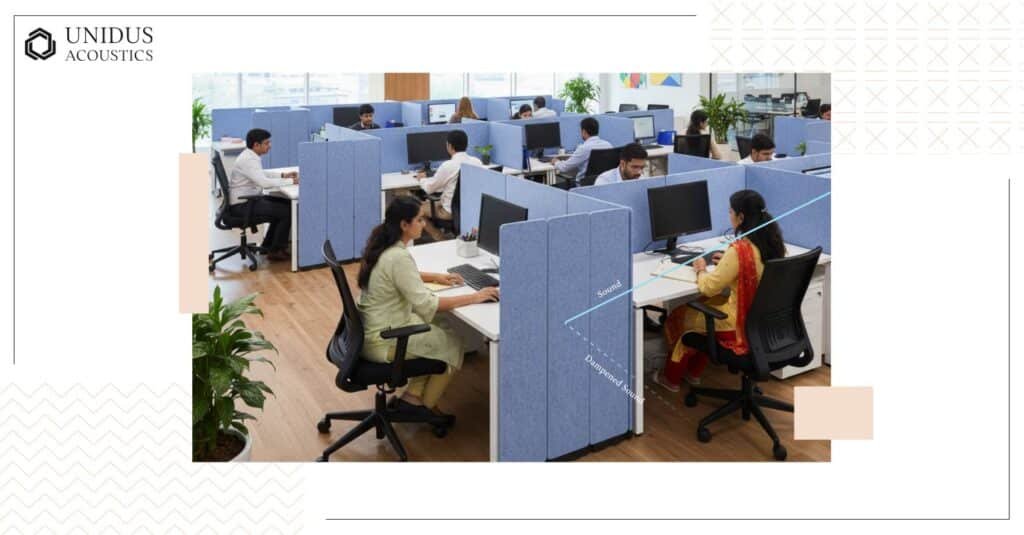
Acoustic Screens help offices achieve acoustic balance without compromising design intent. Their benefits extend beyond noise reduction to include:
- Effective Sound Absorption: Control reverberation and background noise to create a focused workspace.
- Privacy Without Restriction: Provide visual and acoustic separation while maintaining an open, collaborative atmosphere.
- Modular and Flexible: Rearrange or reconfigure screens easily to adapt to evolving team structures.
- Design Integration: Available in varied colours, textures, and materials that align with modern interiors.
- Balanced Performance: Combine acoustic efficiency with sleek aesthetics for spaces that feel cohesive and functional.
Products such as freestanding Acoustic Screens or desk-mounted dividers work seamlessly with other Unidus systems like Acoustic Ceiling Baffles or Wall Panels, ensuring complete spatial harmony.
Traditional Partitions: The Classic Divider Revisited
Traditional partitions have long been the go-to solution for dividing office spaces. Constructed from solid materials such as glass, wood, or metal, they offer visual privacy and structural permanence. While effective in creating enclosed areas, their limitation lies in sound management and adaptability.
Traditional partitions work best where full privacy and long-term division are required—such as executive offices or meeting rooms—but they often lack the flexibility modern offices demand.
Benefits:
- Provide strong visual separation and clear spatial definition
- Offer complete privacy for confidential tasks
- Create long-term, stable divisions within fixed layouts
Limitations:
- Limited noise control; block sightlines but not sound
- Difficult to relocate or reconfigure
- Can reduce openness and restrict collaboration
In contrast, acoustic screens bridge this gap—offering adaptable design with measurable acoustic performance.
Acoustic Screens vs. Traditional Partitions: A Comparative Look
When designing for sound and style, choosing between Acoustic Screens and traditional partitions depends on how you want your office to function. Below is a comparison that highlights their core distinctions:
| Aspect | Acoustic Screens | Traditional Partitions |
| Sound Control | Excellent noise absorption and echo reduction | Limited noise isolation |
| Flexibility | Modular, movable, and reconfigurable | Fixed and difficult to adjust |
| Privacy | Provides partial acoustic and visual separation | Complete but rigid privacy |
| Aesthetic Appeal | Customisable with varied materials and colours | More utilitarian in design |
| Cost & Installation | Faster installation and scalable | Higher cost and longer installation |
Types of Acoustic Screens: Choosing the Right Fit
Transitioning from the “why” to the “how,” it’s essential to understand that acoustic screens come in different configurations to meet varied workspace needs. Selecting the right type depends on how you want to shape sound and flow within your office.
1. Freestanding Acoustic Screens
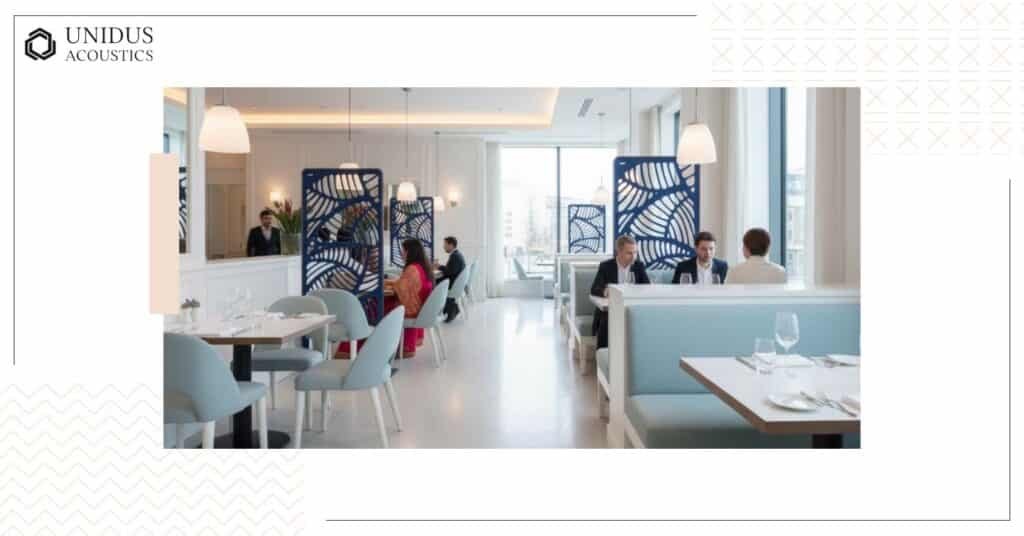
Best suited for open layouts, these standalone units create quiet zones without altering the office structure. They work well with u-tone baffles or acoustic ceiling systems to manage both horizontal and vertical sound travel.
2. Desk-Mounted Acoustic Panels
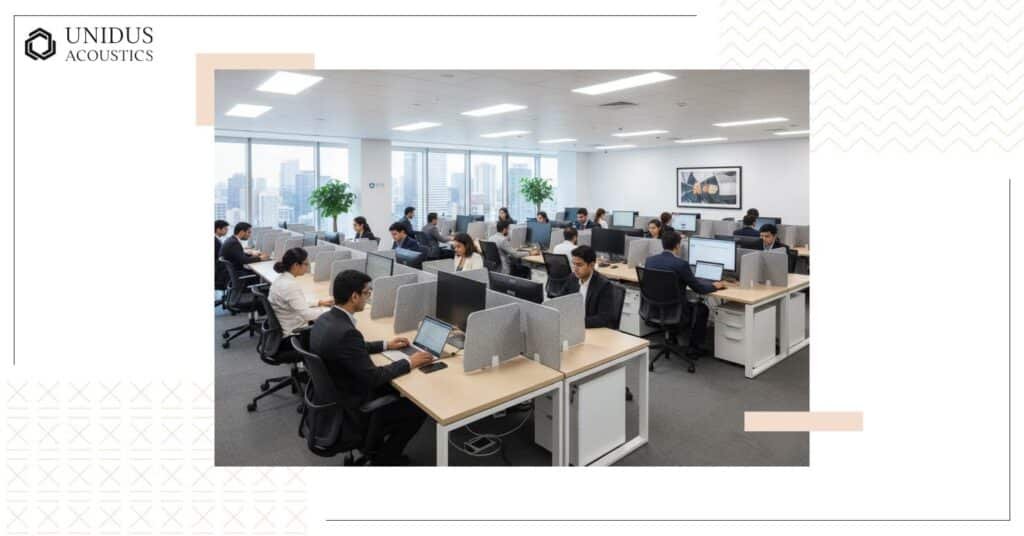
Ideal for workstations where individuals need focus without isolation. These panels minimise noise between desks and integrate easily with Unidus Acoustic wall panels for a cohesive look.
3. Modular Acoustic Partition
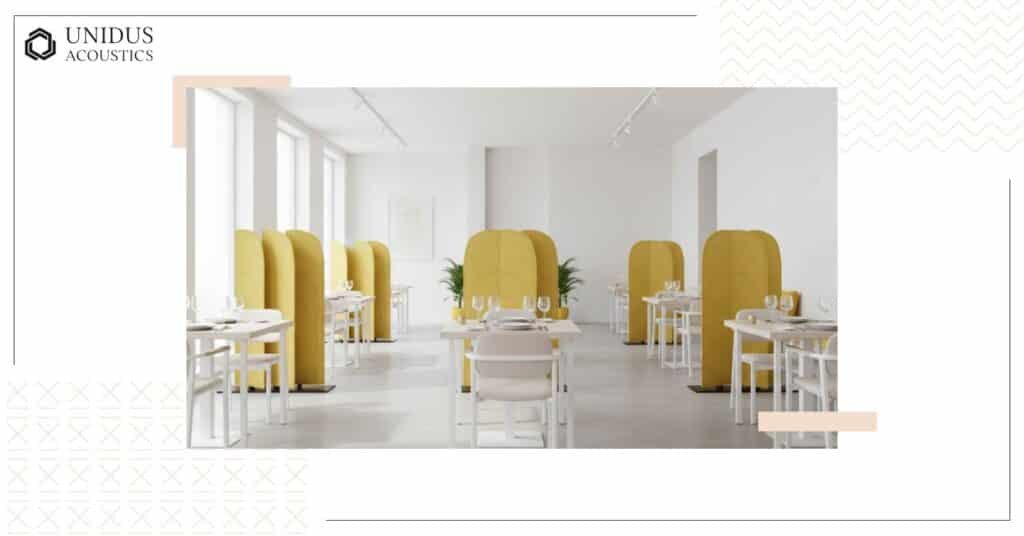
Designed for evolving offices, these partitions can expand or rearrange to create defined yet flexible spaces. They provide an adaptable solution for teams that grow or restructure frequently.
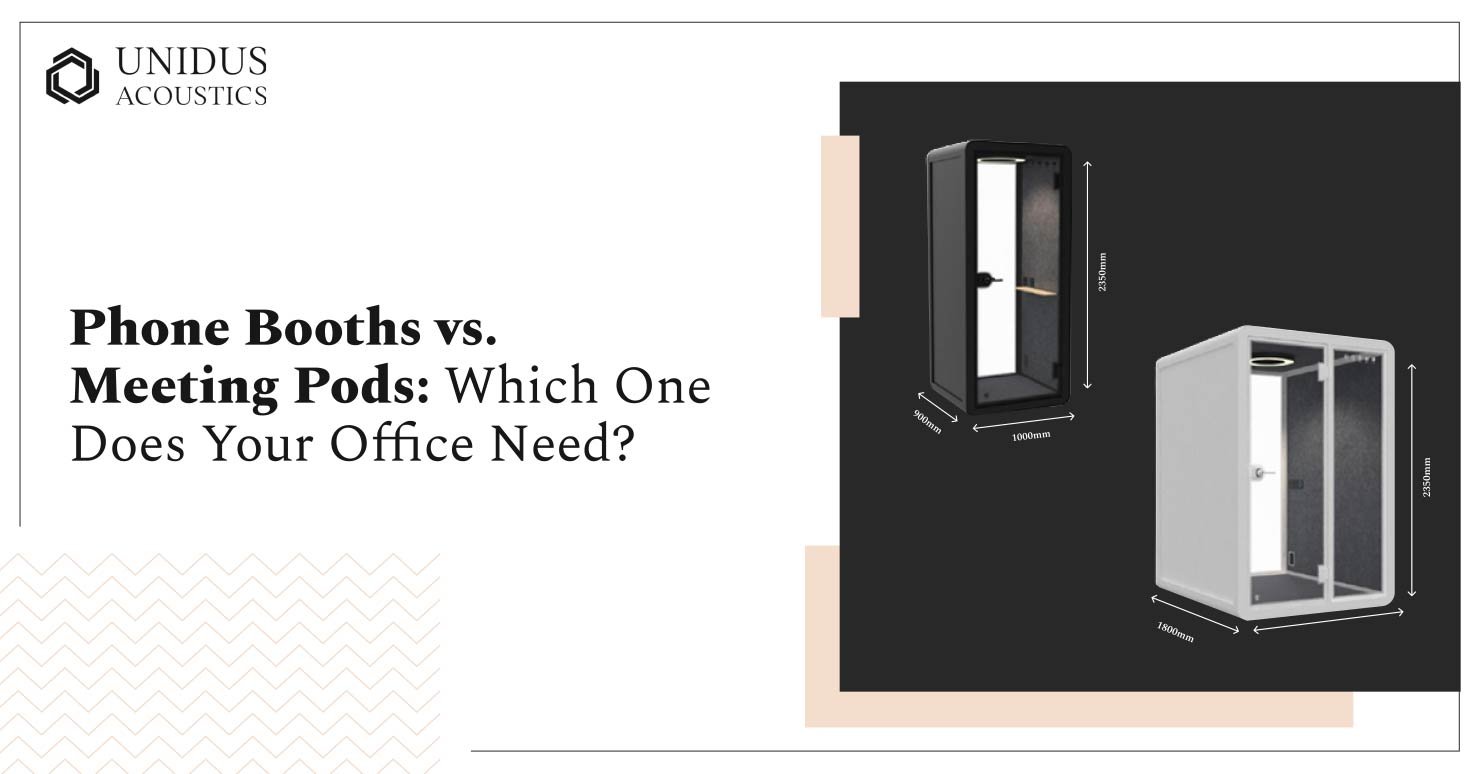
4. Acoustic Pods and Booths
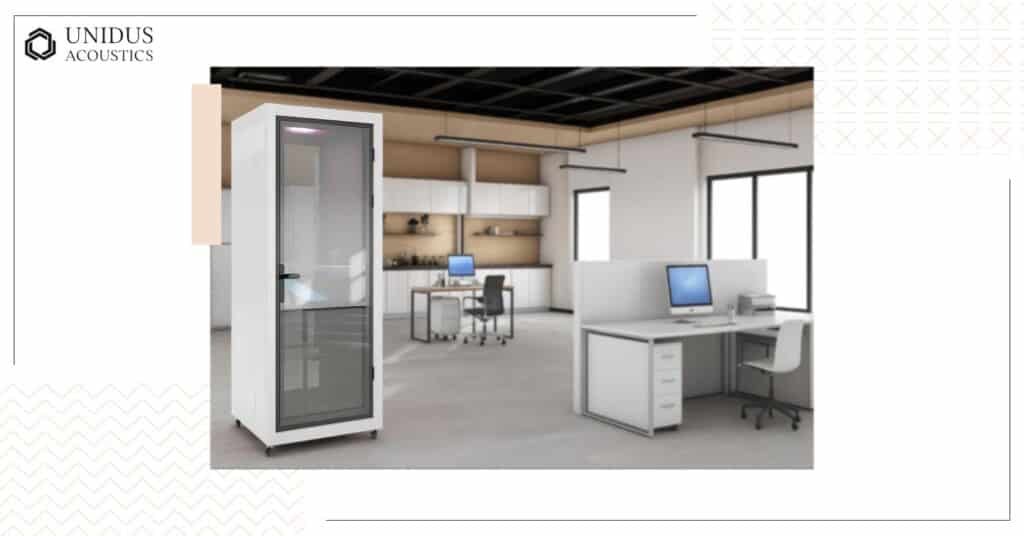
For offices that need focused areas or private call zones, acoustic booths and acoustic pods provide high sound absorption and privacy. Combined with acoustic ceiling systems, they create quiet, immersive environments within open spaces.
5. Portable Acoustic Dividers
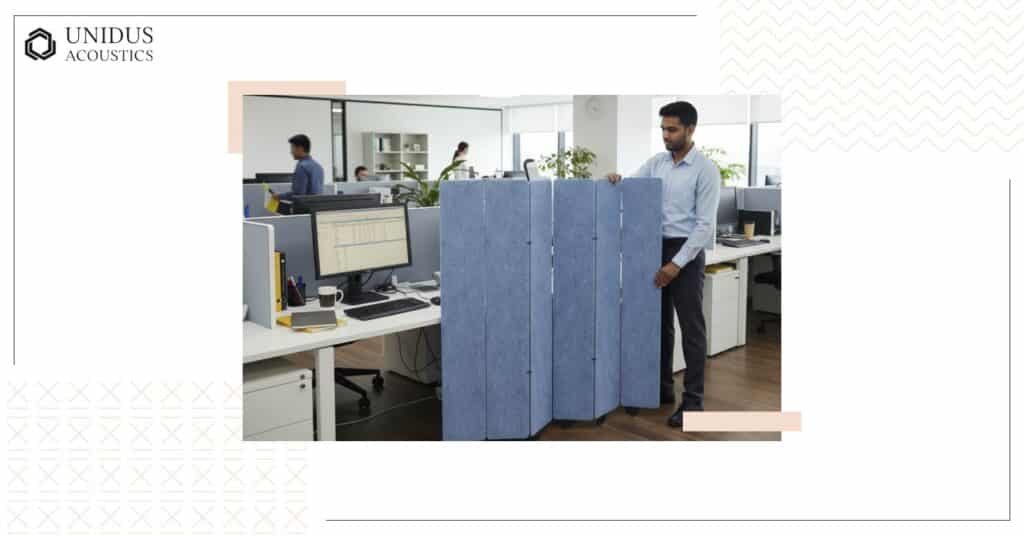
Perfect for agile teams, portable acoustic dividers allow quick spatial changes without installation. They are lightweight, durable, and suitable for collaborative environments where adaptability is key.
Each type of acoustic screen enhances both the acoustic comfort and aesthetic value of modern workplaces—helping teams perform better while staying connected.
Applications of Acoustic Screens vs. Traditional Partitions
| Type | Best Used For | Application Example | Traditional Partition Alternative |
| Freestanding Acoustic Screens | Flexible sound zoning | Creating collaborative yet quiet areas | Fixed cubicles or panels |
| Desk-Mounted Panels | Personal focus and noise control | Reducing distractions in shared desks | Solid cubicle walls |
| Acoustic Booths | Confidential calls or deep work | Private pods for meetings | Enclosed conference rooms |
| Wall-Mounted Acoustic Panels | Enhancing sound absorption | Noise control in meeting areas | Hard wall partitions |
| Ceiling Baffles / Hanging Screens | Reducing echo in large spaces | Cafeterias or lobbies | None (traditional systems lack this) |
Conclusion
Creating an office that sounds as good as it looks requires thoughtful design—and the right partner. Acoustic Screens offer a future-ready alternative to traditional partitions, bringing together flexibility, noise control, and aesthetic integration in one solution.
At Unidus Acoustics we bring 40+ years of expertise in crafting custom acoustic solutions, from U-Tone Acoustic Baffles to Acoustic Wall Panels and Ceiling Systems, that enhance productivity, comfort, and well-being. With on-time delivery, value for money, and an unwavering commitment to quality, we help you balance form and function to transform every space into a place of focus and collaboration.
Let’s design spaces that sound as exceptional as they look. Contact us today to explore the right acoustic solution for your next project.