You’ve designed a corporate workspace where every detail has been considered carefully: ceiling height, exposed services, spatial drama, materials palette. Then the acoustic consultant’s report lands, recommending a dropped ceiling with standard tiles. It’s a moment most architects dread because it feels like choosing between the design and the acoustic false ceiling solutions being proposed, as if both can’t coexist.
This is the moment many architects face: choosing between design vision and acoustic function. But acoustic false ceiling solutions have evolved far beyond the utilitarian grid-and-tile systems that justified this fear. At Unidus Acoustics, we’ve spent 40 years proving that modern acoustic ceiling systems deliver serious acoustic performance while enhancing, not compromising, your design intent. We turn noise into harmony without sacrificing the aesthetic vision that makes your projects distinctive.
Why Ceilings Matter Acoustically
Ceilings are the largest uninterrupted surface in most commercial spaces. This makes them acoustically critical. Sound reflects off hard ceilings, creating echo and reverberation that makes spaces uncomfortable and unusable. In open offices, sound bounces from desk areas to the ceiling and across the entire floor, destroying any hope of acoustic privacy or concentration.
The ceiling is also frequently the only surface available for acoustic treatment without disrupting how the space actually functions. Walls are occupied by equipment, windows, and circulation paths. Floors carry people and furniture. That leaves the ceiling as the most practical and highest-impact surface to work with.
This is why acoustic false ceiling solutions are so effective. They address the largest acoustic surface in the space, providing substantial sound absorption exactly where it has the most impact. When properly specified, acoustic ceiling panels can achieve NRC ratings between 0.70 and 0.95, dramatically reducing reverberation times and improving speech intelligibility across the entire space.
How Acoustic False Ceiling Solutions Have Moved Beyond the Basic Grid
When most people think of “acoustic ceiling,” they picture dated office spaces with sagging tiles in a visible grid. This association is what makes architects reluctant to specify acoustic false ceiling systems. But that’s one outdated approach to ceiling acoustics, not a definition of what’s possible.
Modern acoustic false ceiling solutions include systems that are visually seamless, dramatically sculptural, or intentionally industrial. The acoustic function doesn’t dictate a particular aesthetic—it works with whatever design language your project demands. Whether you need minimalist sophistication, bold geometric patterns, or exposed industrial charm, acoustic ceiling systems can balance form and function without compromise.
Material and Design Options That Support Your Vision
The versatility of contemporary acoustic false ceilings comes from the range of available systems and materials, each offering distinct design possibilities alongside acoustic performance.
Acoustic Ceiling Tiles
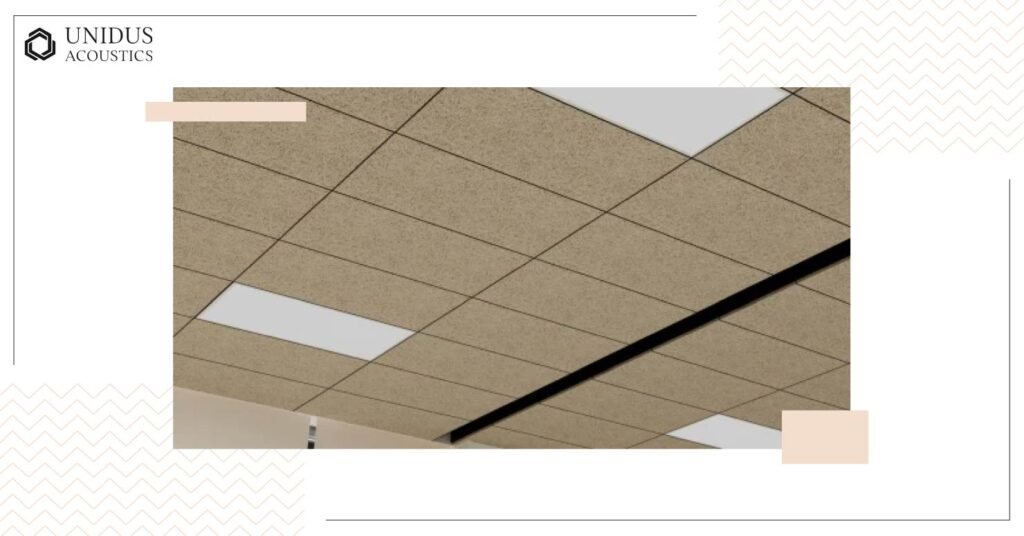
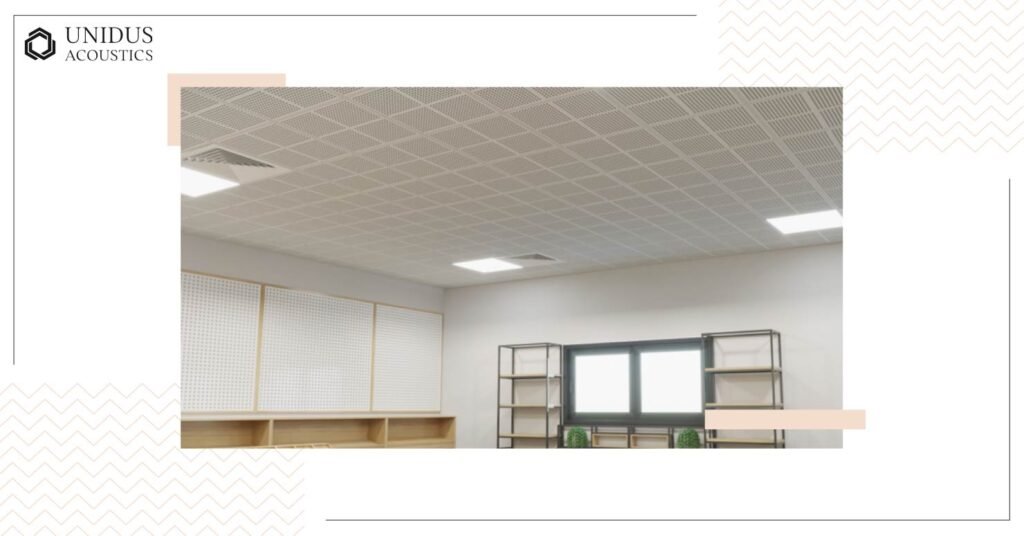
Acoustic ceiling tiles remain relevant but have evolved dramatically. Beyond standard mineral fibre, acoustic drop ceiling tiles now include metal perforated options, gypsum, and fibreglass, each with different acoustic properties and visual characteristics. Tiles can be smooth or textured, painted in custom colours, or finished to complement other materials in the space. The grid system itself can be concealed, creating a monolithic ceiling appearance rather than an obvious tile pattern.
At Unidus Acoustics, our acoustic ceiling tiles are available in customised finishes, colours, and perforation patterns that match your exact specifications. With NRC ratings up to 0.85 and fire-safety certifications, they deliver serious performance wrapped in whatever aesthetic your project requires.
Ceiling Baffles
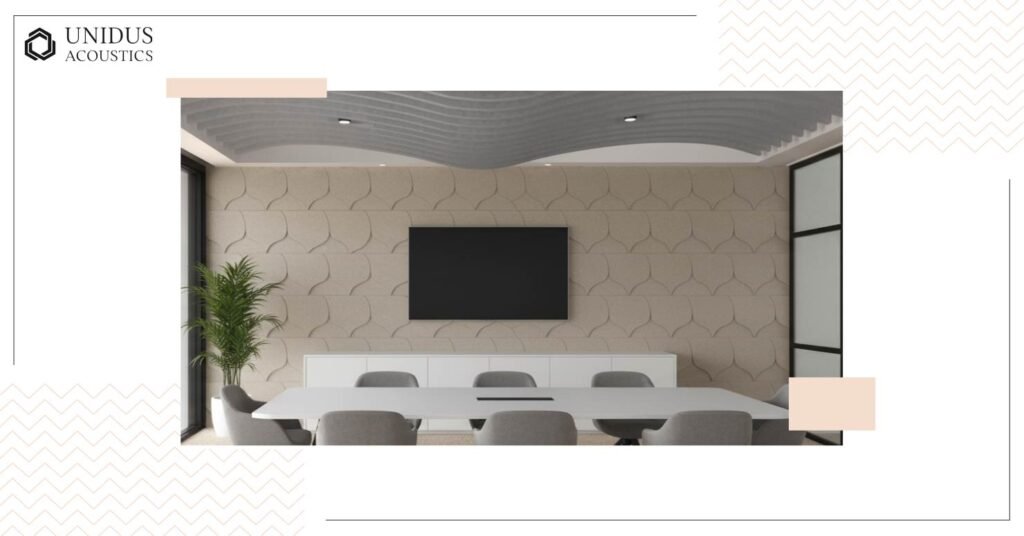
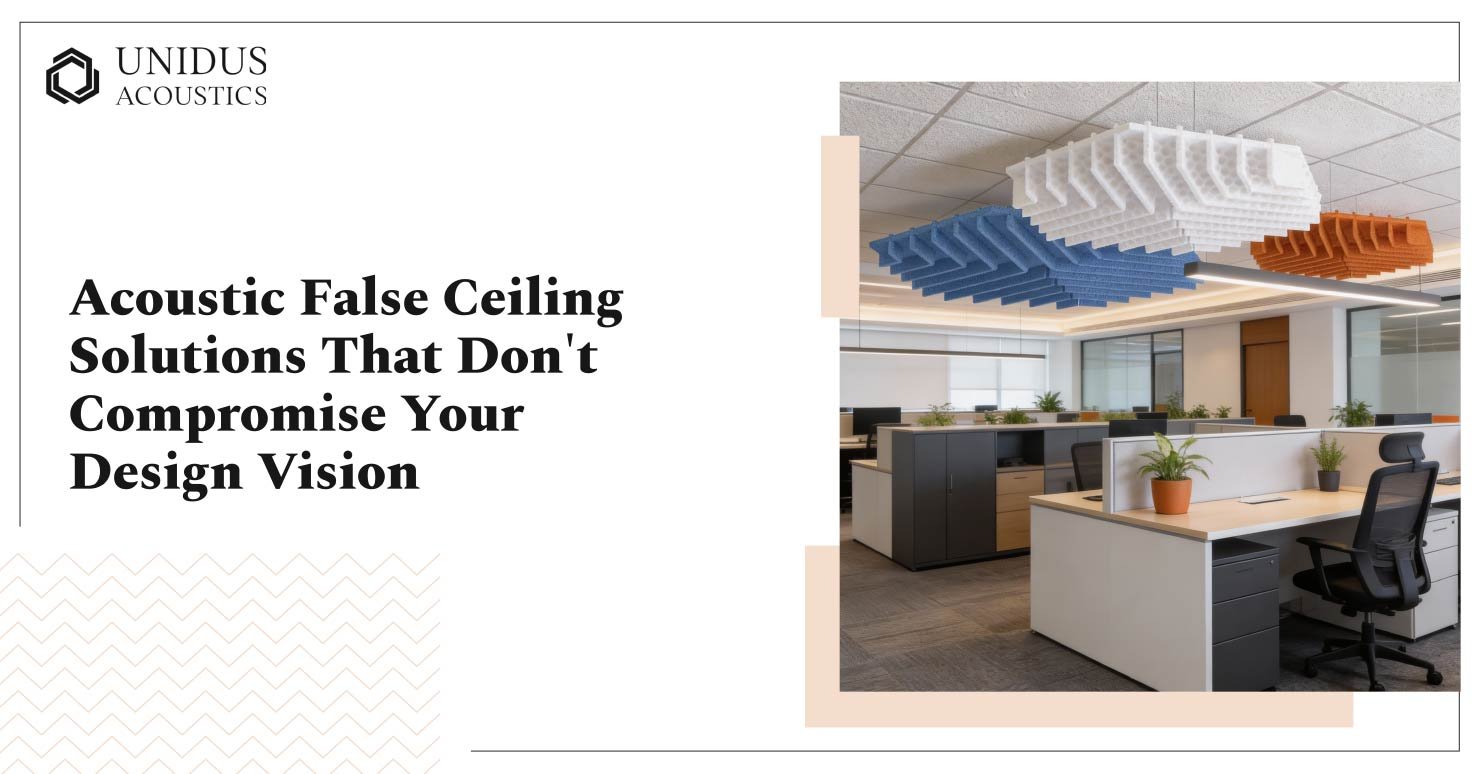
They introduce verticality and visual rhythm. Suspended acoustic ceiling baffles create strong geometric patterns while providing excellent sound absorption. These work particularly well in spaces with high ceilings where horizontal tiles would feel too distant. Baffles can be specified in wood, metal, or fabric-wrapped panels, arranged in regular or irregular patterns, and sized to suit the space’s proportions.
We’ve delivered ceiling baffles in corporate offices where they define circulation paths, in restaurants where they create intimate zones within open spaces, and in institutional buildings where they manage reverberation in double-height atriums. Each installation demonstrates how acoustic treatment can be a design feature, not a design compromise.
Ceiling Clouds
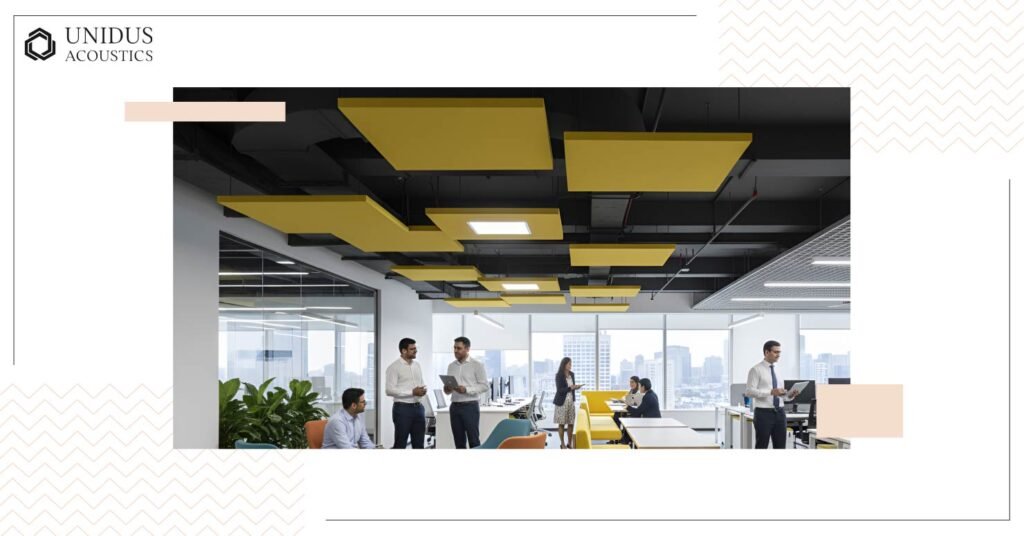
Ceiling Cloud offers sculptural possibilities. Individual acoustic ceiling panels suspended at varying heights create visual interest, define zones within open spaces, and allow services to remain visible where desired. This approach works beautifully in contemporary offices where exposing MEP systems is part of the design concept. The clouds provide acoustic control without concealing the ceiling entirely.
Acoustic clouds are particularly effective in ceiling panels for office environments where flexibility matters. As workspace needs change, clouds can be reconfigured more easily than fixed ceiling systems, offering both acoustic performance and adaptability.
Metal Perforated Ceiling Systems
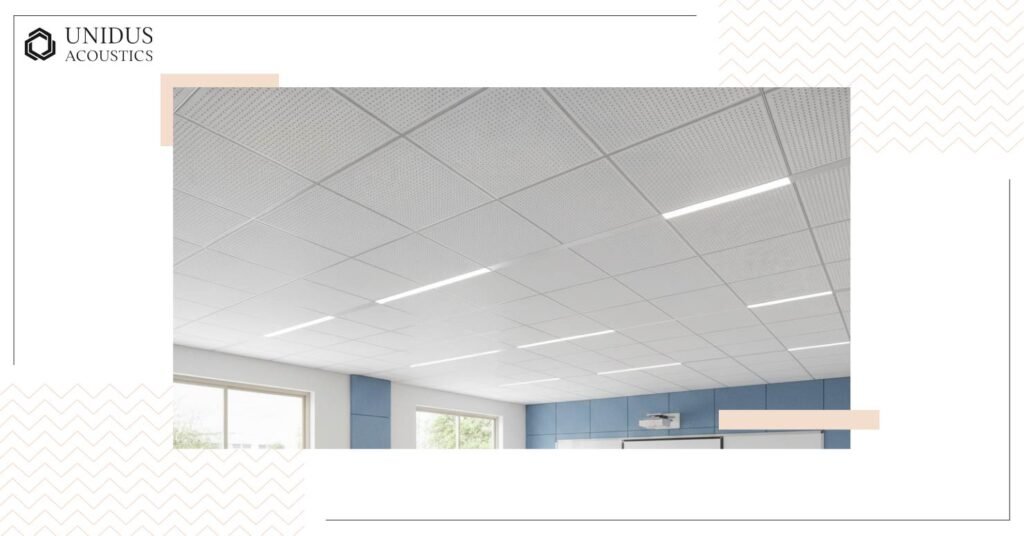
Metal perforated ceiling systems deliver an industrial aesthetic with acoustic performance. Perforated metal ceiling tiles create depth and shadow play while absorbing sound through strategic perforation patterns backed by acoustic insulation. They suit spaces where the ceiling should feel present but not solid, maintaining visual connection to the structure above while controlling sound reflection.
Open Cell Designs
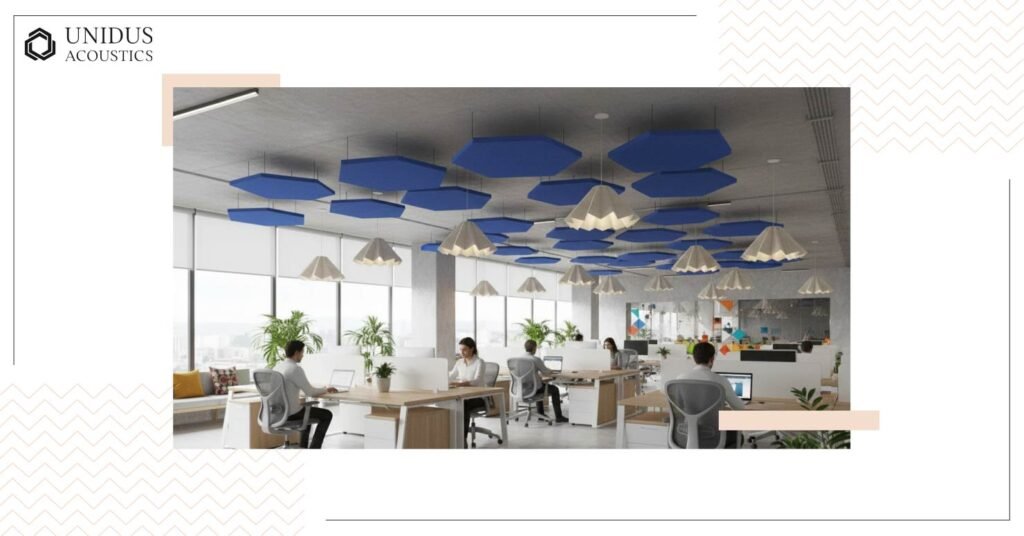
It takes the exposed ceiling concept further, creating three-dimensional geometric patterns that are visually striking while functioning acoustically. These systems work in spaces demanding bold design statements where conventional ceiling approaches would feel too conservative.
Design Flexibility in Acoustic False Ceiling Solutions
What separates contemporary acoustic false ceiling solutions from dated systems is customisation. Standard sizes and configurations rarely suit specific design requirements. At Unidus Acoustics, our custom acoustic solutions allow you to specify dimensions, colours, patterns, and suspension methods that integrate with your overall design concept.
This might mean acoustic ceiling tiles in a specific colour that matches your materials palette exactly. Or baffles arranged in a custom pattern that reinforces circulation paths or defines zones. Or clouds shaped and sized to create visual focal points while solving acoustic problems in specific areas.
The suspension system itself offers design opportunities. Visible grids can be detailed to read as intentional geometric patterns. Concealed systems create seamless surfaces. Cable-suspended elements introduce an industrial elegance.
Our approach combines 40 years of manufacturing expertise with computational design capabilities, allowing us to model acoustic performance digitally before fabrication begins. This ensures the ceiling system delivers the performance you need with the aesthetics you want—on time, every time.
Integration Considerations for Acoustic False Ceiling Solutions
Successful acoustic false ceiling implementation requires coordination with other building systems. This is where working with an experienced acoustic solutions company matters. We don’t just deliver ceiling components; we provide complete integration support that ensures acoustic treatments work seamlessly with your building systems.
Lighting Integration
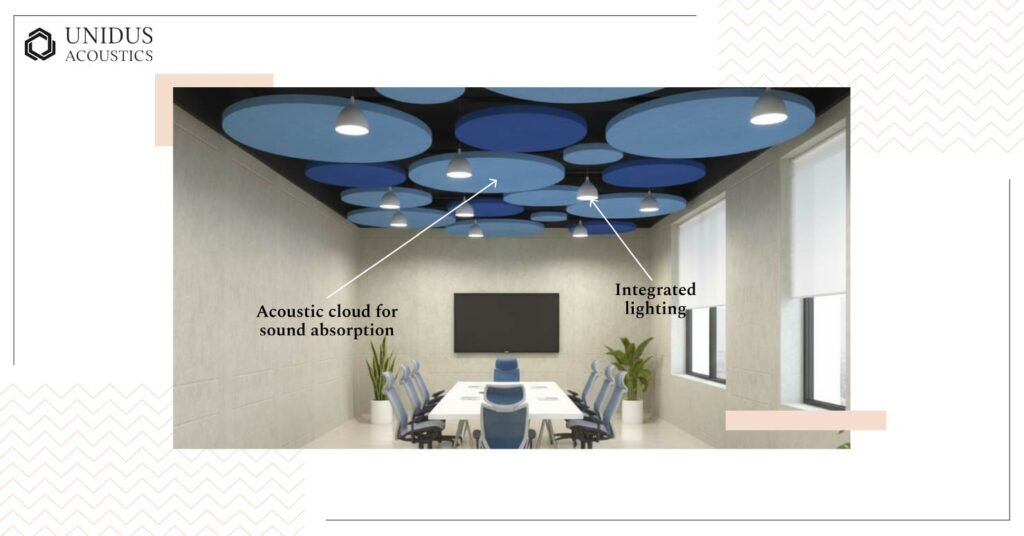
Acoustic ceiling systems must accommodate recessed fixtures, suspended fixtures, or integrated lighting solutions. Our U-TONE lighting systems integrate acoustic performance directly into lighting elements, creating ceiling solutions that address both functions simultaneously without visual clutter or coordination conflicts.
HVAC Systems
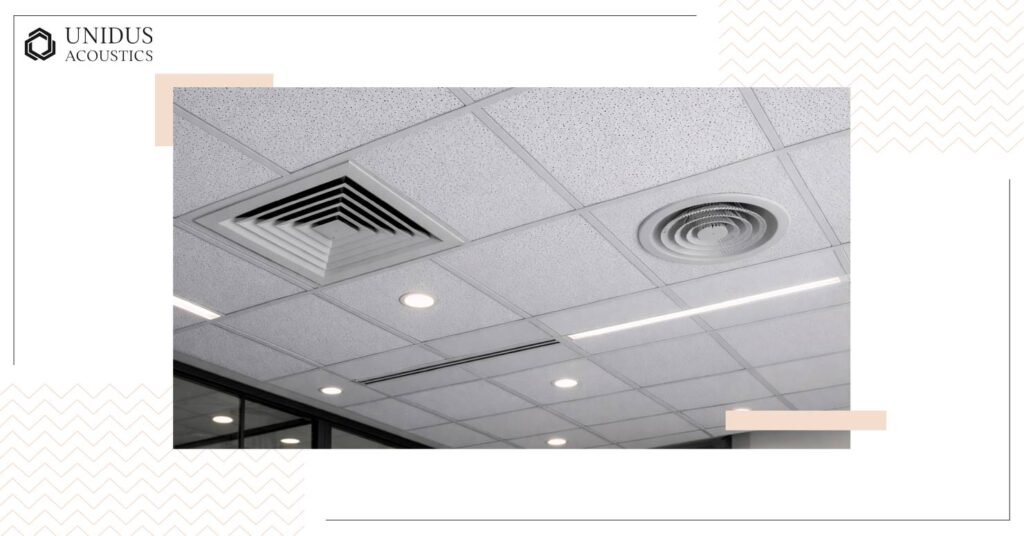
Supply and return air must work with the ceiling configuration. Some acoustic ceiling systems integrate HVAC diffusers seamlessly, while others require careful detailing to maintain visual consistency. We coordinate with mechanical engineers during design to ensure acoustic performance doesn’t compromise air distribution.
Sprinkler Systems, Speakers, and Services
These elements need to penetrate or integrate with the acoustic false ceiling. This requires detailed coordination during design and installation. Our installation team manages these coordination challenges, ensuring services integrate cleanly without creating acoustic weak points or visual disruptions.
Making Acoustic False Ceiling Solutions Work for Your Project
The key to successful acoustic false ceiling specification is treating acoustics as a design consideration from the beginning, not an afterthought. When acoustic performance is integrated into the design process, the ceiling solution enhances your vision rather than compromising it.
This means involving acoustic expertise early, understanding your space’s specific acoustic challenges, and selecting ceiling systems that deliver the performance you need with the aesthetics you want. With value for money and on-time delivery, the right acoustic partner doesn’t just solve problems—they create opportunities for design innovation.
At Unidus Acoustics, we specialise in custom acoustic solutions that respect your design vision while delivering measurable acoustic performance. Whether you need acoustic ceiling tiles, suspended baffles, sculptural clouds, or metal perforated systems, we approach each project as a design opportunity, not a technical constraint.
With 40 years of expertise in custom acoustic solutions, computational design capabilities, and a commitment to on-time delivery, we turn ceiling challenges into design opportunities. From concept through installation, we ensure your acoustic ceiling enhances rather than compromises your vision.
Ready to explore acoustic false ceiling solutions that support your design vision?
Get in Touch. Or simply reply with your project details and ceiling specifications, and our team will provide guidance on ceiling systems that deliver both acoustic performance and aesthetic excellence.