Gurgaon’s project pipeline has shifted considerably. Commercial towers, institutional campuses, and co-working developments now carry acoustic requirements that appear in briefs far more regularly than they did a decade ago. Clients are more aware of the problem, and occupants are quicker to raise complaints once a space is occupied. With building typologies ranging from glass-heavy corporate headquarters to multi-use auditoriums, the acoustic demands vary sharply from one project to the next.
For architects and designers working in this corridor, understanding what an acoustic consultant in Gurgaon is expected to deliver, and when that expertise needs to enter the process, matters more than most briefs acknowledge.
Why Gurgaon’s Project Mix Raises the Acoustic Bar
Gurgaon is not a single building type. Within a few kilometres, you might be simultaneously working on a large open-plan tech office, a hospital OPD wing, and a five-star hospitality lobby, each with its own acoustic performance targets and construction constraints. That variety is what makes acoustic specification here harder to generalise across projects, and harder to defer to a late design stage.
Open-Plan Corporate Offices

The corporate belt in Gurgaon has a strong preference for open-plan layouts and exposed ceiling treatments. Both choices, while visually effective, tend to amplify ambient noise in ways that only become obvious once a space fills up with people. Activity-based working, phone booths sitting next to quiet workstations, and collaboration zones placed adjacent to focused work areas create competing acoustic zones that need to be resolved well before the reflected ceiling plan is finalised. Getting material specifications confirmed at that stage keeps options open. Once MEP runs are coordinated and slab heights are set, the viable choices narrow considerably.
Institutional Projects and Documentation Expectations

Institutional clients bring a different set of requirements. Speech clarity across a large hall, uniform sound distribution, fire-rated materials, and complete documentation are not negotiable points. An acoustic consultant in Gurgaon working on these projects is expected to produce specifications that survive scrutiny from procurement committees and compliance reviewers, not simply improve the listening experience for the end user. Reliability and paper trail matter as much as the performance numbers themselves.
What Acoustic Consultant in Gurgaon Actually Covers
There is a common misconception in project teams about where acoustic consultancy ends and acoustic product selection begins. The two are related but not the same, and treating them as interchangeable creates gaps in both the specification and the procurement process.
The Consultant’s Scope of Work
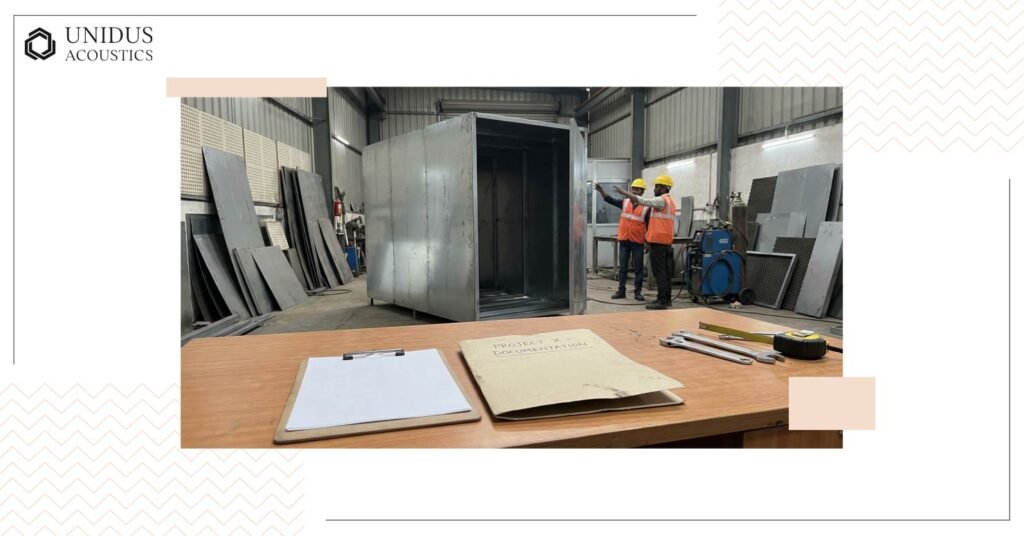
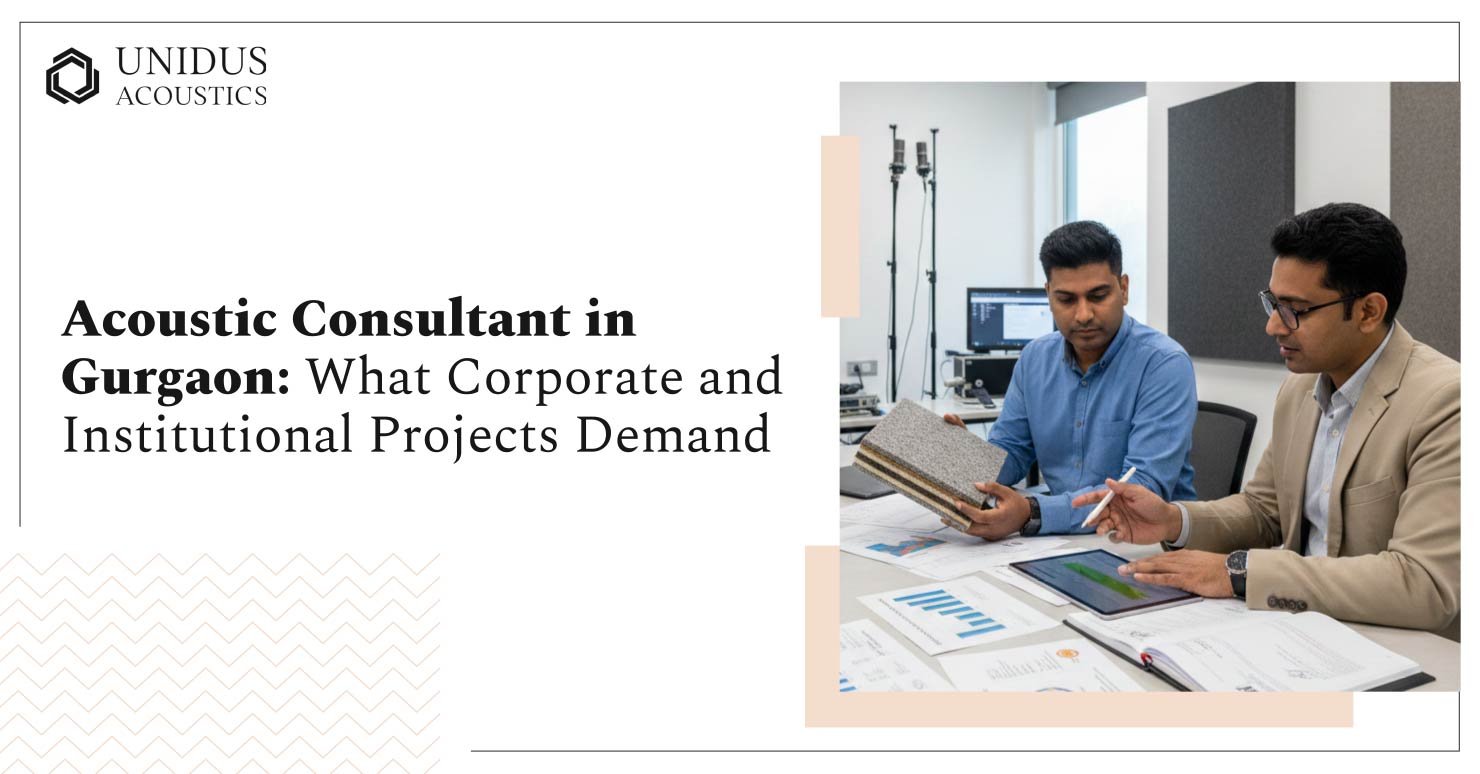
An acoustic consultant in Gurgaon working on a commercial project is typically responsible for site measurement, acoustic modelling, setting reverberation time goals, reviewing construction details that affect sound transmission, and signing off on the final installation. On institutional projects, the scope often extends to coordinating with MEP teams on duct noise, fan noise, and HVAC vibration, because these sources need to be addressed at the design stage rather than after the ceiling is closed. What consultants generally do not do is source or supply the materials themselves. That is where a product partner enters.
Finding Product Partners Who Match Your Specification
Sourcing acoustic products that match a written specification is a familiar challenge. Vendors commit to custom colours or specific finishes and deliver standard catalogue options. Fire certificates arrive late. Lead times drift past programme dates without warning. The result is that acoustic products often end up selected under pressure or installed as a compromise. A product partner that works alongside your design intent from early in the process, and provides NRC ratings, fire compliance documentation, and sample approvals as standard, removes a meaningful source of friction from the workflow.
What Good Acoustic Specification Looks Like in Practice
Acoustic specifications that hold up through construction share certain qualities: they are anchored to measurable performance targets, they account for the dominant sound paths in the space, and they are realistic about how installation sequences actually work on site. The sequence matters more than most specifications acknowledge.
Setting Targets Before Selecting Materials

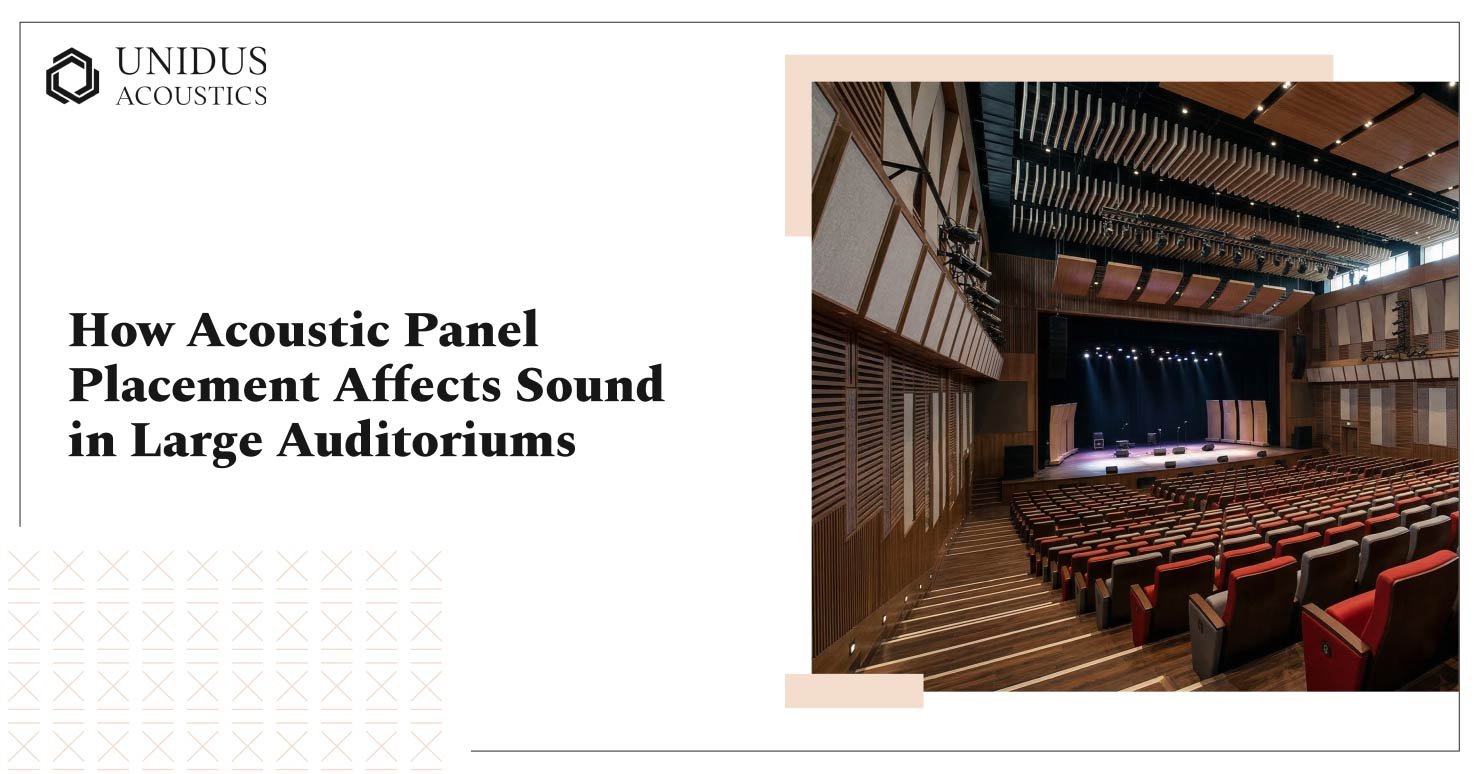
Reverberation time targets for a 500-seat auditorium differ substantially from what a 25-person boardroom requires. Specifying panels without a performance target to work toward is, at best, an educated guess. For open-plan offices, absorption at mid and high frequencies tends to be the priority. For auditoriums and lecture halls, low-frequency control is as important as speech clarity. These differences directly influence which product categories are appropriate and how much surface area needs treatment.
Getting Dimensions into the Coordination Drawings Early
Acoustic ceiling baffles, clouds, and suspended panel systems interact with lighting layouts, sprinkler positions, and HVAC distribution in ways that require early coordination. Bringing product dimensions and suspension details into the coordination drawings before MEP runs are finalised is the kind of decision that looks like unnecessary effort early on and saves significant rework costs later.
How Unidus Acoustics Works with Design Teams in Gurgaon
Unidus Acoustics brings 40 years of expertise to commercial acoustic projects across India, with a presence across 16 cities and active project work in the Delhi NCR region. The client roster spans corporate offices, educational institutions, healthcare facilities, and hospitality projects.
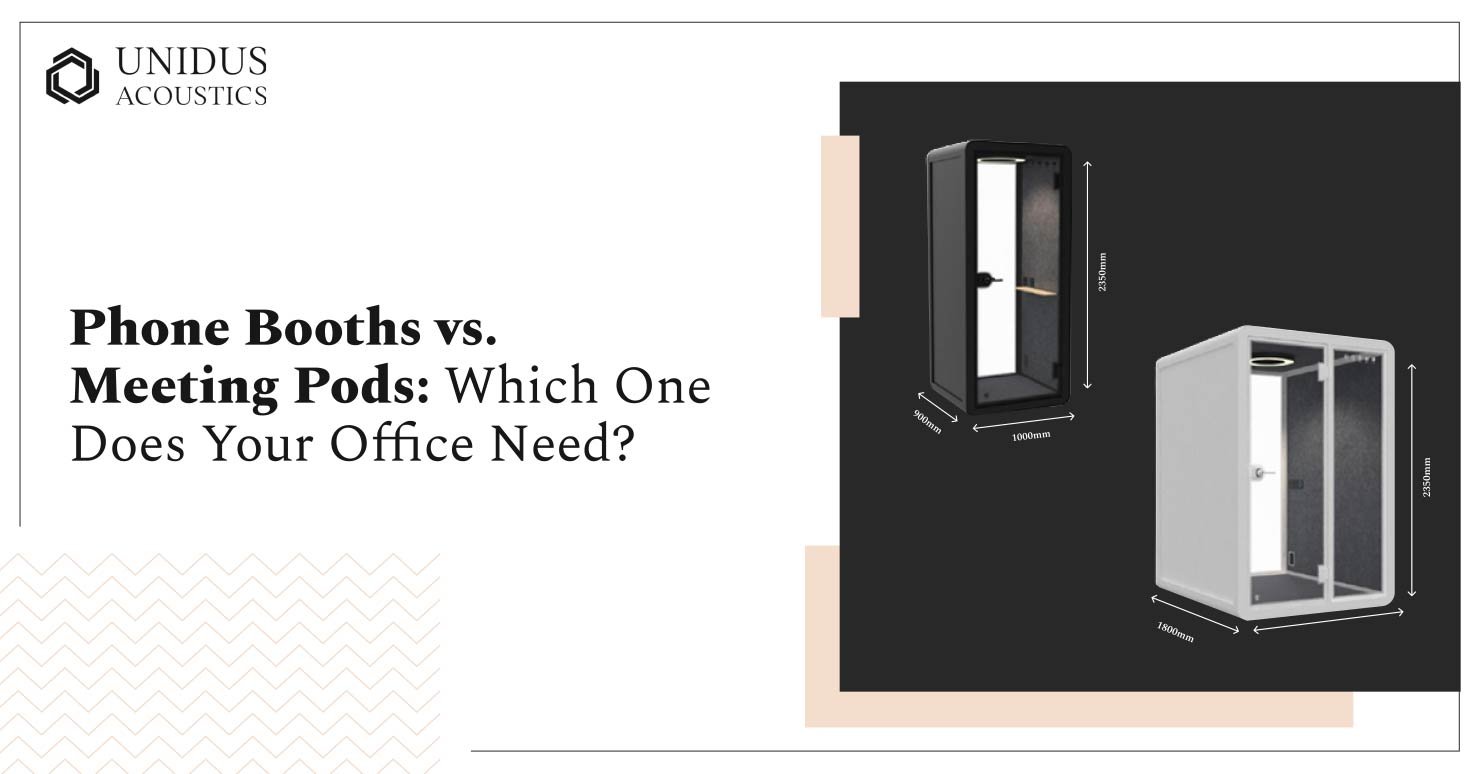
The product range covers acoustic wall panels, ceiling baffles and clouds, U-TONE acoustic baffles and lighting systems, space division solutions, and UNIPOD acoustic pods and phone booths. Products are customisable to match material palettes, colour specifications, and dimensional requirements. Technical documentation for tender submissions, including NRC ratings and fire certificates, is part of the standard process.
For architects and interior designers working on corporate or institutional projects in Gurgaon, the goal is product recommendations that fit your design intent and technical specifications, ready for your tender documents — solutions that balance form and function, delivered on time so your programme stays intact.
Looking for an acoustic consultant in Gurgaon? Contact us now to discuss product options for your next project.